Sponsored

Post bbq tick users. WHICH OIL?

Condor1970

Well-Known Member
Joined
Oct 4, 2018
Threads
95
Messages
1,567
Reaction score
582
Location
Port Orchard WA
Vehicle(s)
2018 Mustang GT
Well, I got the pony back today with the new clutch installed. It chatters a bit when blipping the throttle in neutral with the clutch pedal out, but not when pressed in.

Anyway, for some reason after driving home, I've noticed the BBQ tick is all but gone while parked in the garage. I also did some revving up to 2,000rpm, and still no tick. It sounded like there might be remnants of it, but nothing like before. Keep in mind, I ran this baby at 3,500 for 10 mins straight before I took it in for the clutch replacement.

I'm still on the Mobil 1 EP 5w20 at 3,300 miles. I ordered the PUP 5w30, and should be here next week. I also ordered a bottle of Ceratec. I may just add a tiny bit to increase the Boron level a smidge, but not the whole bottle. Maybe just 50-100ml or so. That way one bottle of Ceratec will last for several oil changes adding just a little to supplement each time.
Sponsored
 

Condor1970

Well-Known Member
Joined
Oct 4, 2018
Threads
95
Messages
1,567
Reaction score
582
Location
Port Orchard WA
Vehicle(s)
2018 Mustang GT
The Pennzoil UP 5W30 that I purchased and what’s available at Walmart is the SN rated version and is rated at 99,000 psi. #58 on the list. I don’t have BBQ Tick after changing to it but I did use TriboTex in the oil previous to this change.
You're right. I was referring to the older test done on the version they had a few years ago. I too am going to switch to PUP 5w30 and a small amount of Ceratec to supplement to Boron content. But that's about it.

When I found out that the Mobil1 5w20 I put in, is marginally better than the Motorcraft 5w20 in shear strength, no wonder my BBQ tick didn't change much. Since it seems to be pretty much gone right now, I want to switch to something better like PUP 5w30, and hopefully never have it come back.
 

OneFordGT

Well-Known Member
Joined
Mar 21, 2016
Threads
3
Messages
213
Reaction score
71
Location
Ohio
Vehicle(s)
16 GT
You're right. I was referring to the older test done on the version they had a few years ago. I too am going to switch to PUP 5w30 and a small amount of Ceratec to supplement to Boron content. But that's about it.

When I found out that the Mobil1 5w20 I put in, is marginally better than the Motorcraft 5w20 in shear strength, no wonder my BBQ tick didn't change much. Since it seems to be pretty much gone right now, I want to switch to something better like PUP 5w30, and hopefully never have it come back.
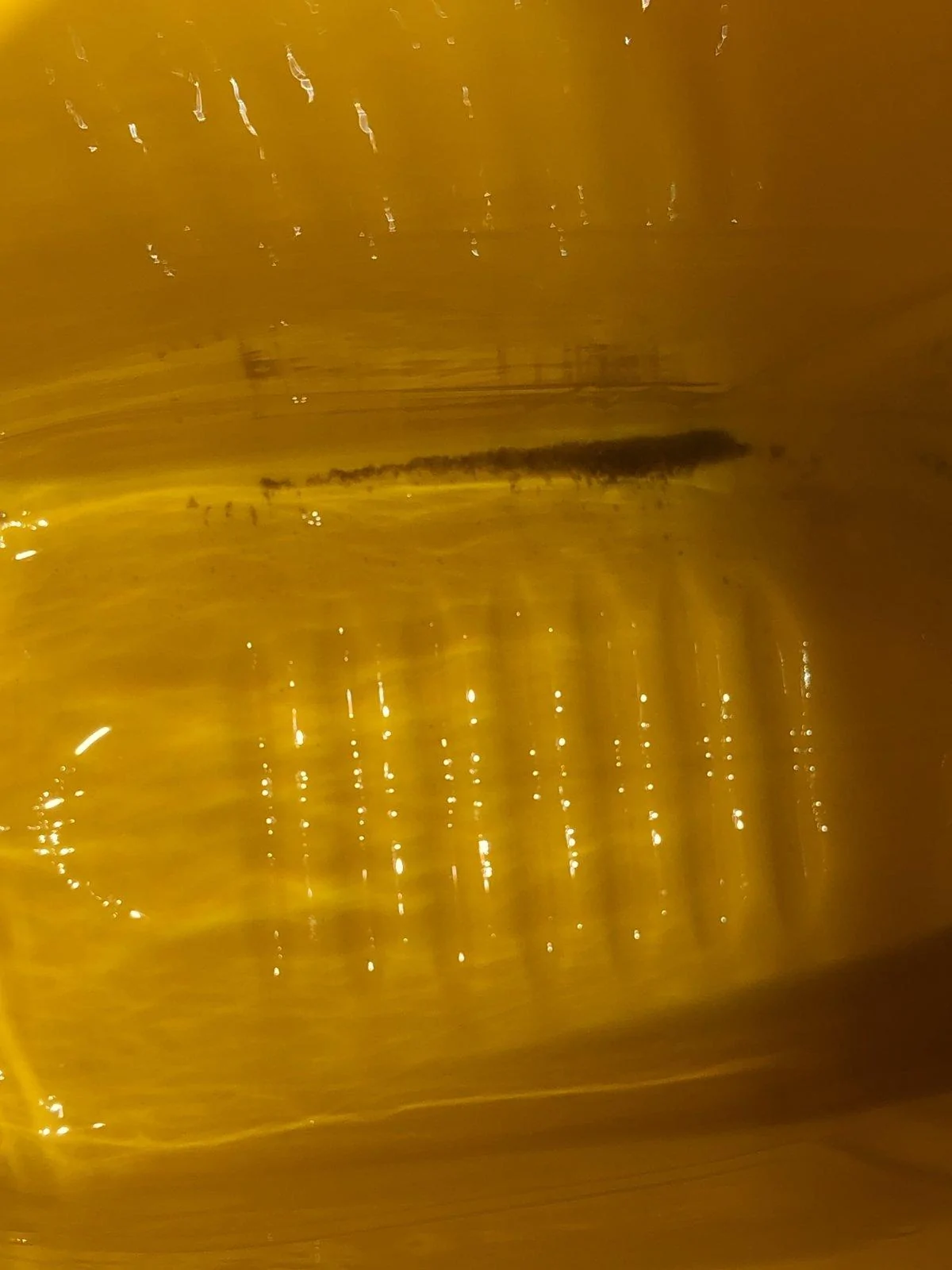
Remember to check for this when you get your Pup.
E5A5546D-5C89-456F-A3B6-3F28BFFD6A8A.webp
 

NastyPumpkin

Well-Known Member
Joined
Oct 13, 2018
Threads
0
Messages
300
Reaction score
259
Location
Michigan
Vehicle(s)
2018 Boosted Mustang GT
I just switched to Pennzoil Ultra Platinum 5W-30 and my BBQ tick is completely GONE! 100 miles in so far.
 
Last edited:

Sponsored

GregO

Well-Known Member
Joined
Mar 5, 2018
Threads
41
Messages
3,320
Reaction score
2,470
Location
Illinois
Vehicle(s)
S550 GTPP
I just switched to Pennzoil Ultra Platinum 5W-30 and my BBQ tick is completely GONE! 100's mile in so far.
So what’s the magic in Shell’s GTL oil’s ?
It’s great this stuff has such positive feedback.
 

Condor1970

Well-Known Member
Joined
Oct 4, 2018
Threads
95
Messages
1,567
Reaction score
582
Location
Port Orchard WA
Vehicle(s)
2018 Mustang GT
So what’s the magic in Shell’s GTL oil’s ?
It’s great this stuff has such positive feedback.
I think it's 2 things.

1. PUP is derived from pure base stock using natural gas, not petroleum, which ensures almost ZERO contaminants. Their formula has a much higher shear strength than most regular petroleum base stocks. (About 100,000psi for 5w30)

2. They use about 3 times more Boron as a lubricating additive than most others, and slightly less Zinc (ZDDP). Boron is proving to be much more slippery than zinc.
 

GregO

Well-Known Member
Joined
Mar 5, 2018
Threads
41
Messages
3,320
Reaction score
2,470
Location
Illinois
Vehicle(s)
S550 GTPP
I think it's 2 things.

1. PUP is derived from pure base stock using natural gas, not petroleum, which ensures almost ZERO contaminants. Their formula has a much higher shear strength than most regular petroleum base stocks. (About 100,000psi for 5w30)

2. They use about 3 times more Boron as a lubricating additive than most others, and slightly less Zinc (ZDDP). Boron is proving to be much more slippery than zinc.
Spending much time in the Two-Stroke world I know without a doubt it takes a blend of group III, IV, V to build a reliable oil that protects both piston / rings and bearings.
Shell’s the only game in town doing GTL base stock, so it’s probably safe to assume the Rotella lineup is close to Pennzoil UP series of oil.
Any thoughts ?
 

Condor1970

Well-Known Member
Joined
Oct 4, 2018
Threads
95
Messages
1,567
Reaction score
582
Location
Port Orchard WA
Vehicle(s)
2018 Mustang GT
Spending much time in the Two-Stroke world I know without a doubt it takes a blend of group III, IV, V to build a reliable oil that protects both piston / rings and bearings.
Shell’s the only game in town doing GTL base stock, so it’s probably safe to assume the Rotella lineup is close to Pennzoil UP series of oil.
Any thoughts ?
Well, correct me if I'm wrong, but I think Rotella still uses petroleum as a base stock. The Rotella T6 5w40 synthetic has a rather disappointing shear strength of only about 75,000psi. However, Rotella uses gobs of additives, like ZDDP and other goodies to help with cleansing and lubrication. That enormous amount of Zinc helps with a lot of cushioning of parts under pressure that experience high impact, especially found in diesel engines. I think the high Zinc content and lower shear strength is why they don't certify it as good for use in gasoline engines anymore.
Also, I'm pretty sure Rotella is not using a natural gas derivation as a base stock (that's a guess).
 

barron64

Well-Known Member
Joined
Jul 25, 2018
Threads
26
Messages
536
Reaction score
649
Location
Auburn, AL
Vehicle(s)
2018 Mustang GT convertible PP1, 6sp, 2006 Toyota Tundra Dbl Cab 4x4, 2009 Acura MDX, 2007 Toyota FJ Cruiser
1st oil change at 4500mi...Went with 5w-30 Mobile 1. Had the tick at cold start and warm re-start with oem fill. Same results with Mobile 1. Added I bottle of Ceratic and all is now good.
 

Sponsored

markbehr

Well-Known Member
Joined
Oct 10, 2016
Threads
9
Messages
111
Reaction score
14
Location
Baltimore
First Name
Mark
Vehicle(s)
2020 Mustang GT
should i stay with the stock Ford oil filter or go with another
 

NastyPumpkin

Well-Known Member
Joined
Oct 13, 2018
Threads
0
Messages
300
Reaction score
259
Location
Michigan
Vehicle(s)
2018 Boosted Mustang GT

Condor1970

Well-Known Member
Joined
Oct 4, 2018
Threads
95
Messages
1,567
Reaction score
582
Location
Port Orchard WA
Vehicle(s)
2018 Mustang GT
The stock Ford oil filter is good. I still use them.
On my first oil change, I switched to a Mobil 1 filter for $10 at Walmart. Super overbuilt filters that I soon realized is a bit over kill if I intend to change my oil every 5,000 miles.

So, from here on out, I bought the Motorcraft FL-500S filter, which is very similar to the Mobil1, only a little cheaper at $6.
 

TheLion

Well-Known Member
Joined
Jul 1, 2016
Threads
68
Messages
1,621
Reaction score
601
Location
US
Vehicle(s)
Ruby Red 2016 Mustang GT PP 6-MT
Mobil 1 EP isn't really designed for high performance applications and it's a different formula than Mobil 1 Advanced Full Synthetic which is very popular with the 5th Gen LT1 owners (Corvettes and 6th Gen Camaros) and is OE for spec oil from the factory for the following mfg's:

Aston Martin
Bentley
Cadillac (ATS-V and CTS-V)
Chevrolet (Camaro SS, Corvette)
McLaren
Mercedes-AMG
Nissan GT-R
Porsche

Mobil 1 EP is designed for extended drain intervals and to minimize cold start wear, not for high temperature / high load / high RPM operation and consequently it's formula is tweaked just for that application. You have no idea what anti-wear additives or how the base stocks are blended even if they have the same viscosity. One variant may shear down faster than the other from the same brand because their goals are different in how they are formulated.

I ran Mobil 1 EP in my NA 2007 Focus ST (2.3L) and 2001 Impala 9C1 Police Interceptor without any issues, both cars had over 175k on them when I sold them and no engine related issues. But those were not high revving V8's making 465HP+.

Interestingly Mobil 1 Advanced Synthetic has the best HTHS Viscosity of the common off the shelf oils (Valvoline, PUP, Motorcraft) of about 2.75 cSt which is very good for a 5W-20 multi-grade oil. I'm not sure how fast it shears down compared to Valvoline, but it has slightly better HTHS viscosity rating according to the ASTM D4683 test specifications. How well each oil maintains that viscosity over its service life is up for debate as I haven't found any officail testing on their newer Advanced Full Synthetic formula compared to Valvoline. But both Valvoline and Mobil 1 meet Ford's and GM's current specs and I have not found any evidence of anyone on this forum having oil related issues due to either oil.

People keep citing sources that are 2,3 or even 4 years old that are NOT representative of current formulas. Even if the oil has the same name, it's formula now is not what it's formula was. Take PUP for example over on Bob is the Oil Guy. Penzoil changed their formula and it's performance dramatically changed despite having the same viscosity grade and branding.

For you AMSOIL fan boys, one forum member ran Signature Series 5W-20 since his car was new, changed it at 5k intervals and got the BBQ tick at 40k miles....I forget the OP, but he's on my list of 51 BBQ Tickers. I don't believe it was oil related and AMSOIL makes some of the most robust oil formulas on the market, bar none, well AMSOIL and Driven (Joe Gibbs) who both use either Group IV PAO's or group V Esters. But something still changed...it's not always about the absolute "best", but about what's good enough. Some times there is no further benefit to "better", while other times there is.

Comparing Mobil 1 EP to Valvoline Advanced Synthetic is disingenuous and absurd, they simply aren't formulated for the same type of applications. Why in the world would you compare a passenger car motor oil designed for extended drain intervals to Valvoline's top full synthetic designed for standard drain intervals? And having more ZDDP alone isn't going to make it a better oil for wear if that's what your thinking for Mobil 1 EP useres, there are chemical additives that go along with ZDDP to make it function properly, ZDDP is always paired with chemical friction modifiers as it has rather poor friction properties by itself, it's there almost entirely for anti-wear purposes in boundary, mixed and elastohydrodrnamic lubrication regimes. Those friction modifiers play a key role in viscosity and friction properties and vary from formula to formula even among grades and within the same mfg.

Mobil 1 Advanced Synthetic is 8.9 cSt @ 100C vs. Valvoline's 8.1 cSt. Valvoline lists their HTHS viscosity at 2.7 cSt @ 150C, so Valvoline is very temp stable and close to Mobile 1's Advanced Synthetic at 2.75 cSt@150C. 2.75 vs. 2.7....and we're going to sit here an debate one being better than the other?

Provide me some data on the CURRENT Mobil 1Advanced Full Synthetic formula ,the one that is Dexos 1 gen 2 now in production for just the last 6 months...on how fast it shears down compared to Valvoline's CURRENT formula which has been out for about 1 year.

If the data shows Valvoline is superior at resisting shear I'll switch back over (I ran Valvoline Full Synthetic 5W-30 in my Ecoboost because it was one of the first LSPI rated oils to market with good over all performance). In fact if Valvoline is cheaper with nearly the same HTHS performance I'll run their oil instead.

I have no data on HTHS for PUP which I did run for one change interval in my GT for about 5k miles. They don't publish that data so unless some one has some ASTM D4683 tests performed on their CURRENT formula, not from 2 or 3 years ago...it's just conjecture and speculation. Even the ASMOIL 3rd party tests are now 5 years old, none of those formulas are the same any longer...I'd wager that Mobil 1, Valvoline and PUP will all out perform Motorcraft Semi-Syn in HTHS performance...yet Ford does all their OE testing with MC Semi-Syn and Ford Performance also tests with MC Semi-Syn as most of their customers actually run OE oils. They beat the these engines extremely hard, more so than 99% of us could ever achieve and they run just fine.

Valvoline, PUP, Motorcraft, Mobil 1 and AMSOIL are all rated for either API SN Plus or Dexos 1 Gen 2 both of which address knock issues as far as motor oil is concerned. Yes even the new blends of MC, both Semi and Full syn are now API SN Plus, says right on their website now: https://www.fcsdchemicalsandlubricants.com/main/product.asp?product=SAE 5W-20 Synthetic Blend Motor Oil&category=Motor Oil

Motorcraft® SAE 5W-20 Synthetic Blend Motor Oil is manufactured with high-viscosity index, premium-quality, synthetic/hydroprocessed base oils and specially designed performance additives, which help minimize engine deposits and wear, protect against high-temperature oxidation and turbocharger deposits, low-temperature gelling, rust corrosion and foaming. The friction-reducing technology in this motor oil provides superior wear protection and energy-conserving characteristics, which result in significant improvement in fuel economy when compared to SAE 5W-30 and 10W-30 motor oils. This oil also meets WSS-M2C945-B1 and SN PLUS, therefore it can reduce oil derived low speed pre-ignition
Here are the specs as per the mfg.

MC 5W-20 Semi-Syn: Viscosity@40C = 50, Viscosity@100C = 8.7, Viscosity Index = 164, Pour Point C = <-42, Flash Point C = 185, HTHS Viscosity@150C = Not Published, Noack Loss = 15.2

MC 5W-20 Full-Syn: Viscosity@40C = 45.9, Viscosity@100C = 8.3, Viscosity Index = 159, Pour Point C = <-45, Flash Point C = 185, HTHS Viscosity@150C = Not Published, Noack Loss = 13.2

Mobil 1 Advanced Full Synthetic 5W-20: Viscosity@40C = 49.8, Viscosity@100C = 8.9, Viscosity Index = 160, Pour Point C = <-43, Flash Point C = 230, HTHS Viscosity@150C = 2.75 cSt, Noack Loss = Not Published

Valvoline Advanced Synthetic 5W-20: Viscosity@40C = 46.5, Viscosity@100C = 8.7, Viscosity Index = 147, Pour Point C = <-36, Flash Point C = Not Published, HTHS Viscosity@150C = 2.7 cSt, Noack Loss = 7.6

Penzoil Ultra Platinum Full Synthetic GTL 5W-20: Viscosity@40C = 48, Viscosity@100C = 8.8, Viscosity Index = 164, Pour Point C = <-48, Flash Point C = 207, HTHS Viscosity@150C = Not Published, Noack Loss = Not Published

AMSOIL Signature Series 5W-20: Viscosity@40C = 50.6, Viscosity@100C = 8.8, Viscosity Index = 153, Pour Point C = <-50, Flash Point C = 220, HTHS Viscosity@150C = 2.67 cSt, Noack Loss = 5.8

But remember that both Mobil 1 Advanced Synthetic and Valvoline Advanced Synthetic meet both GM's and Ford's OE specs with GM's being extremely difficult to pass. Dexos 1 Gen 2 either meets or exceeds Ford's WSS specs in most areas and both oils are Dexos 1 Gen 2 certified including for use in the LT1 6.2L.

I see no reason either would be inadequate for the 5.0, modified or otherwise. For extreme power applications there are better oils than either such as Driven's Street Car formula which is specifically designed for maximum HTHS performance in high powered street car V8's. AMSOIL is designed more as an all around performer over long drain intervals rather than geared towards "track type" use but should perform about on par with Mobil 1 or Valvoline in HTHS. They are all pretty close.

But I can guarantee you that Mobil 1 at 3k~5k intervals will provide better protection than AMSOIL at 10k intervals. So it all depends on your goals, uses and condition of your engine. BTW that's another benefit of TriboTEX, CeraTec or Archoil. They provide a self honing function to the ring and cylinder walls, thus reducing blow by which thins your oil. Using these nano ceramic surface re-conditioners helps you oil maintain it's viscosity over what ever service interval you run it at regardless of formula by reducing exposure to acids that thin it out and reducing peak temperatures during high rpm / high load operation. A win win for your motor oil and it's ability to protect.

You could take the best performing HTHS formula and subject it to brutal heat cycles and high blow by and it's performance will degrade faster than a lesser oil under much more "ideal" conditions. Engineering is about efficiency and making the most of what you have. Some times that does mean a better lubricant or better oil or better design, other times it means using what you have more efficiently. I'm a fan of pursuing the latter first and then looking to the former if there's no practical way to better utilize what's on hand.

Mobil 1 Advanced Synthetic is a very good oil for 3k~5k intervals if you do a lot of sustained high rpm / high load driving. So is Valvoline. Ford Performance reps backed up that Mobil 1 is a good oil when I asked them about an alternative to Motorcraft and one they would recommend for off the shelf types. I'm sure they would have said the same thing for Valvoline had I asked. So pick what is best suited for you and your application. There IS NO BEST OIL. Only oils that are better in different at different things, weather it's cost / availability, long service intervals, maintaining viscosity under high temperature / high shear conditions etc.
Sponsored

 
Last edited:


Top