Sponsored

CHT running hot? BCM issue?

Berlin261

New Member
Joined
Jun 24, 2026
Threads
1
Messages
4
Reaction score
1
Location
Ga, USA
First Name
Benjamen
Vehicle(s)
2015 Mustang GT
Hello, so I'll try and keep this pretty short, the last 4-5 weeks, my CHT has slowly been climbing up, when I bought this mustang, it would max around 225-230 and that's with me leaning into it keeping it around 80 or 90 in 6th.

As of recently, it's been hitting 245 every night on my way home, I've done the basic mods, intake, exhaust, tune, also put in a cold case radiator, and aluminum coolant tank ( stock was beaten and weathered from a hood scoop )

I started trouble shooting with the normal, checked coolant, changed oil, cleaned intake etc. but none of that helped, this morning I installed a new thermostat, hoping that was it, still nothing.

I had my Uncle use his scanner on the car since his is a bit more fancier, and he was able to monitor CHT directly, on the scanner it looked fine, I ran it up the road and it stayed between 217-223F, yet on the gauge screen, it still showed between 230-245.

I did a little bit of digging and found a few people saying it could be a bad BCM, causing the screen to display the wrong info, and I should note I've also had other issues with the interior electronics, my heated/cooled seats "turn on" but don't work, the radio every now and then just random says something like window.exe has failed to start and must shut down, and the interior lights don't rlly work, maybe twice a month the passenger side light will come on for a flicker, or a few minutes, then back to nothing.

Anyone have any clue what's potentially happening here? Should I try replacing the whole BCM? Not really sure the best route to take here as I'd like to avoid a dealer or mechanic if possible. Thanks
Sponsored


 

horsepower addiction

Well-Known Member
Joined
Jan 30, 2023
Threads
14
Messages
257
Reaction score
90
Location
Arizona
First Name
Nate
Vehicle(s)
s550
The information that the scanner gets comes from the same spot that your sensors information comes from, they both get their readings from the body control module. At what temperature is your fan turning on?
 
OP
OP

Berlin261

New Member
Joined
Jun 24, 2026
Threads
1
Messages
4
Reaction score
1
Location
Ga, USA
First Name
Benjamen
Vehicle(s)
2015 Mustang GT
The information that the scanner gets comes from the same spot that your sensors information comes from, they both get their readings from the body control module. At what temperature is your fan turning on?

I'm not sure what temp it comes on, id assume whatever factory setting would be, and if they're both getting the info from the same place, then why would his scanner be reading a much cooler temp than my dash?
 

ihasnostang

Well-Known Member
Joined
Sep 28, 2018
Threads
36
Messages
660
Reaction score
417
Location
MN
Website
www.youtube.com
Vehicle(s)
Saturn ion, 2019 201A, EB PP1, Ruby Red
at least on my car there are two values in forscan, ECT and CHT2. dash says cylinder head: 186F (86c) , while forscan says ECT: 86c, CHT2: 92c. this 6 degree difference translates to 40f. AFAIK CHT2 is the metal temp of cylinder head.
 

horsepower addiction

Well-Known Member
Joined
Jan 30, 2023
Threads
14
Messages
257
Reaction score
90
Location
Arizona
First Name
Nate
Vehicle(s)
s550
at least on my car there are two values in forscan, ECT and CHT2. dash says cylinder head: 186F (86c) , while forscan says ECT: 86c, CHT2: 92c. this 6 degree difference translates to 40f. AFAIK CHT2 is the metal temp of cylinder head.
I’m pretty sure it doesn’t have the engine coolant temperature sensor. It only takes the cylinder head temperature sensor and infers the coolant temperature from that
 

Sponsored

G.T.

Well-Known Member
Joined
Apr 12, 2025
Threads
15
Messages
423
Reaction score
348
Location
Asia
First Name
Glenn
Vehicle(s)
2016 Ford Mustang GT Premium
What are the fans doing at 230-245F temps on the gauge?
 
OP
OP

Berlin261

New Member
Joined
Jun 24, 2026
Threads
1
Messages
4
Reaction score
1
Location
Ga, USA
First Name
Benjamen
Vehicle(s)
2015 Mustang GT
What are the fans doing at 230-245F temps on the gauge?
They sound like normal, the fans have always been a bit louder than my first mustang was, but I mean they don't seem to be doing anything odd
 

G.T.

Well-Known Member
Joined
Apr 12, 2025
Threads
15
Messages
423
Reaction score
348
Location
Asia
First Name
Glenn
Vehicle(s)
2016 Ford Mustang GT Premium
They sound like normal, the fans have always been a bit louder than my first mustang was, but I mean they don't seem to be doing anything odd
Ok.

Thinking about it, if the temp was really as high as the cluster says, both fans should be on and at high speed.

The way you describe it though does make it seem like a module issue though.

I'm also wondering if the tune is a factor in this? Can you flash back to stock and see if it changes anything?
 

Skye

Well-Known Member
Joined
Jan 18, 2022
Threads
13
Messages
2,959
Reaction score
4,145
Location
≈39N
Vehicle(s)
"Skye" Mach1 N2144
Several variables affecting: a new to the OP car, the state of GA in the Summer, a tune, aftermarket radiator and interior electrical problems.

I'd at least do a good review of all electrical connections, starting at the battery. Just confirm the cable ends are good and secure at the battery, the chassis ground near the strut tower, then do a general review everywhere.

The Sync system rebooting, lights being intermittent and seats not working, those could be their own issues, a system-wide electrical problem or signs of a water-damaged salvage car. Could be anything. The only guidance I can provide is focus on one problem and work towards correcting that. Along the way, you might find more things to resolve or a root cause to all of them.

Specific to the Body Control Module, one thing you can do is remove the cover and physically inspect it. Take a look at the floor, cables and connectors. There are areas in the S550s that leak. Seals in the cowl and door areas. Water in/around the BCM could have an impact on virtually anything.

If the battery is more than three years old, I'd get it checked. In-light of the electrical issues, it might be a good idea to evaluate the battery and charging system, to clear that. You might not know the history of the car. You live in GA, where strains will be higher on the batt and system throughout Summer.

I'd also review the tune with the tuner. Ask if there is anything unique to this tune that other drivers normally don't do. Who is the tuner BTW?

With respect to the temperatures, what you're seeing with the scanner is normal.

What's seen on a scanner and what's seen on a dash gauge are two different readings. That you're seeing a cooler temperature with the scanner is OK. That you're seeing a spread between the two readings is common.

The Coyote engine does not have an Engine Coolant Temperature sensor. There is not an ECT sensor in a coolant passageway. However, ECT is a derived reading present in the Powertrain Control Module. It's my belief ECT is a snapshot, one reference point, of temperature. ECT is generally cooler than CHT, sometimes by several degrees.

In contrast, Cylinder Head Temperature is derived from a sensor in the cylinder head. The sensor is a thermistor, which changes resistance with temperature. CHT is the reading which is displayed in the dash gauge. CHT is a measure of temperature, engine load, RPM, etc. CHT is something of a composite displayed reading. CHT is sometimes equal to, but most often always hotter, than ECT.

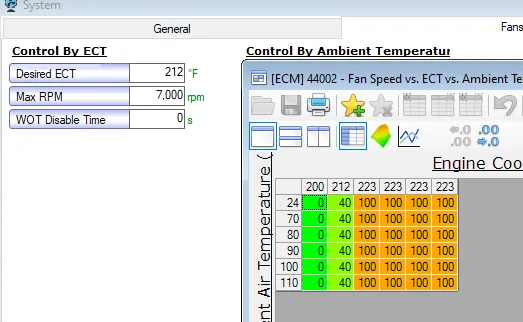
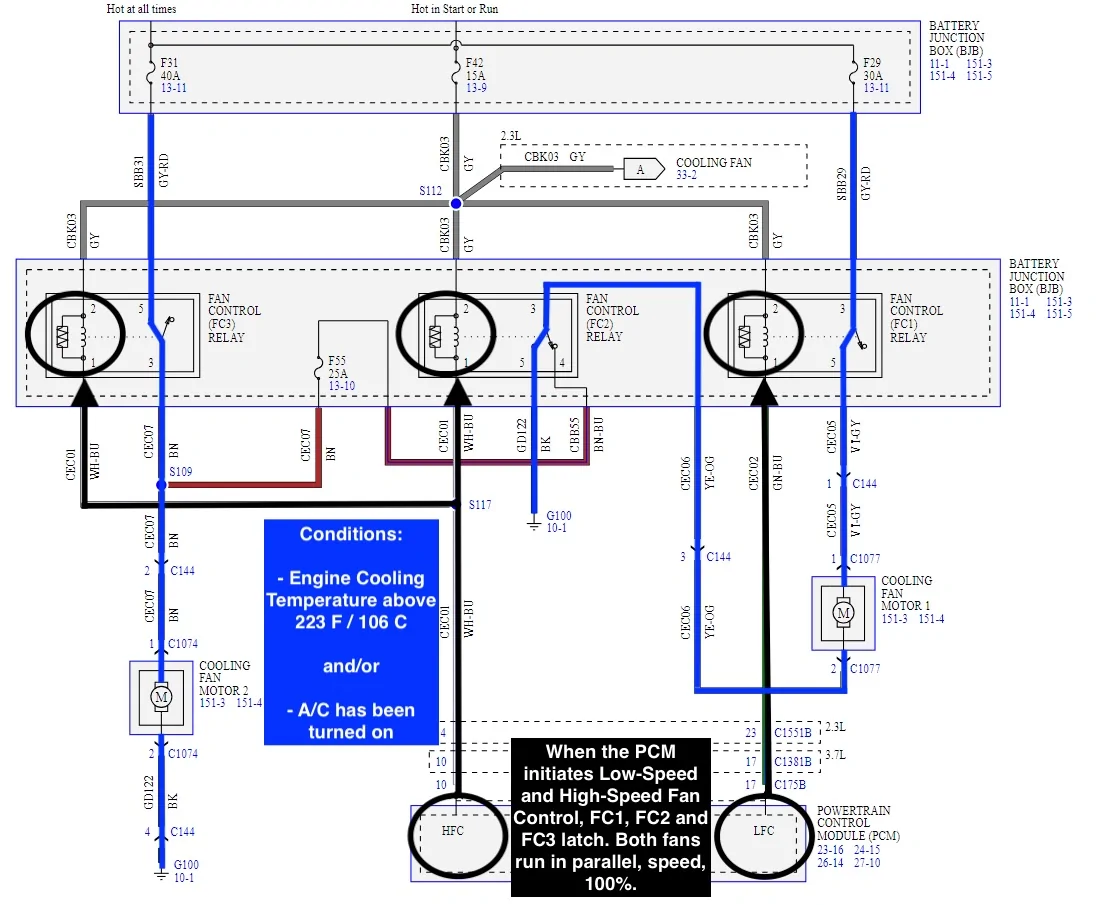
If driving normally with a properly operating cooling system, an in-dash display of 245 F / 118 C is toasty. Both fans should have already been running at 100% (starting at 223F) in an effort to cool the engine down. Airflow while driving should keep temps lower. Fans at idle should keep temps cooler.

In contrast, the highest temp I register on a stock car is 220 F or so, the most strenuous being sitting at a light with the A/C on in Summer. Moving and driving normally, temps are in the 190s.

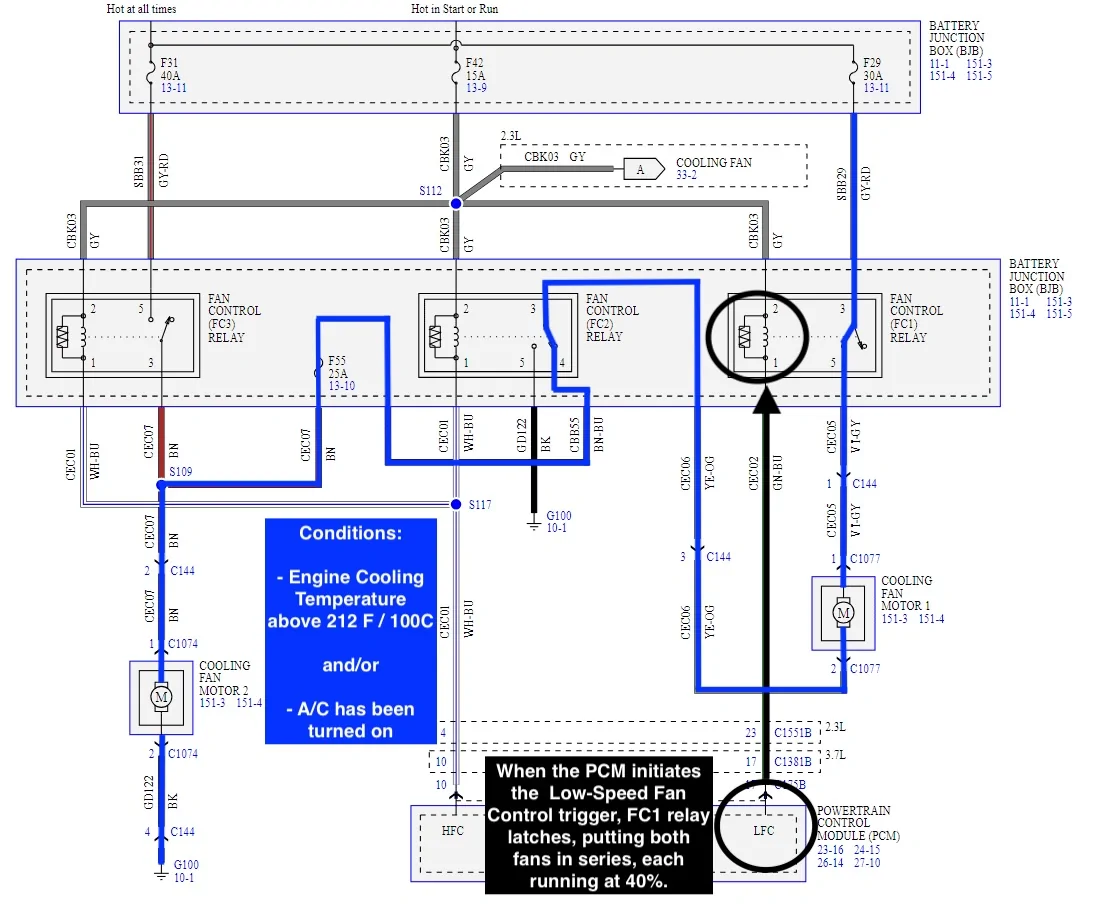
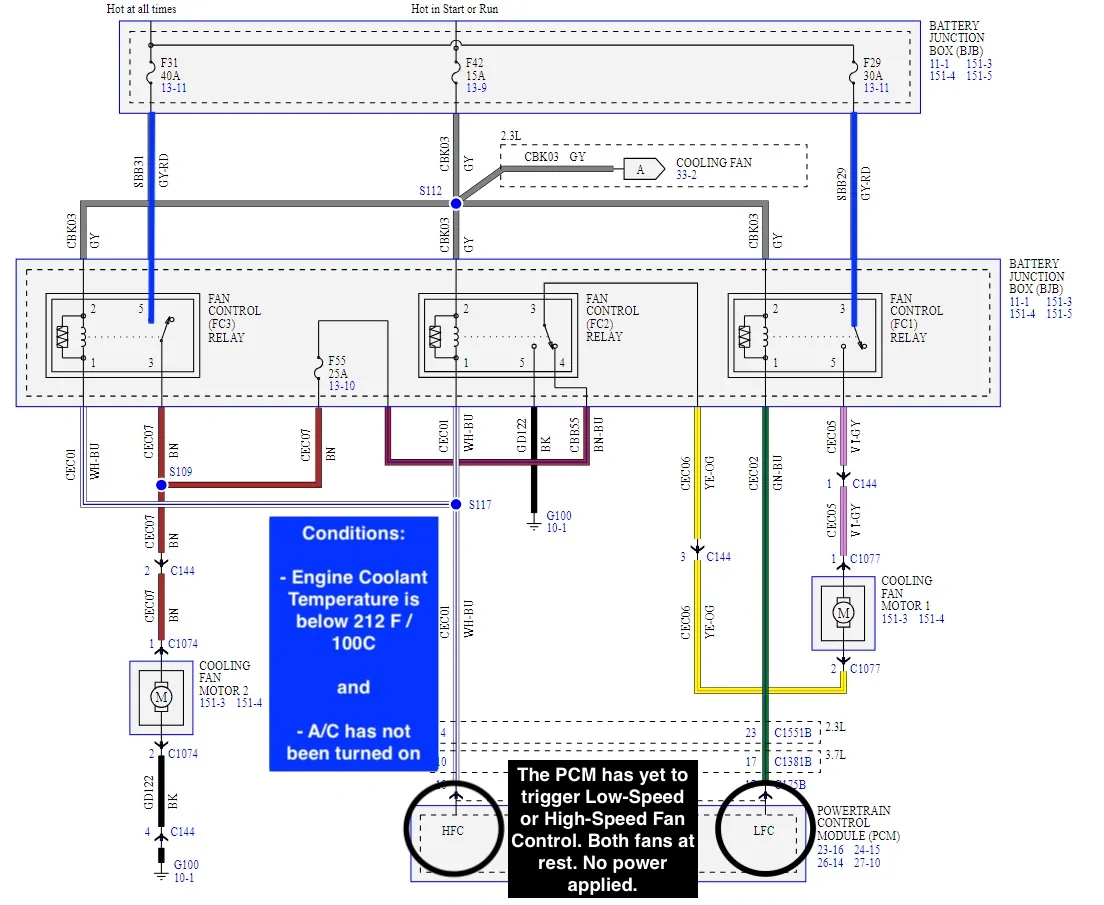
I'd confirm the fans are operating as expected. T-shooting the fans could uncover more electrical issues.. T-shooting the existing electrical problems could identify impacts to the fans. I see powertrain cooling as more important and could focus on the fans first.

There's an aftermarket radiator installed. It's at least the same size as the original or larger, yes?

What happened to the factory electric fans (2)? And the shroud? They are still there, yes? What is their operating logic with the tune? Is it the same as before? Different?

With the aftermarket radiator, how did its installation affect the airflow around it? Through it? Are there a lot of gaps between the radiator body and the rest of the car? That could limit the airflow through the core of the radiator itself.

There's a new thermostat installed. Is it the same temperature as previous?

Is there a proper mix of coolant/water in the system? Too much coolant or too much water can have an effect. Air in the system could certainly have an affect.

Just some thoughts.

Edit,

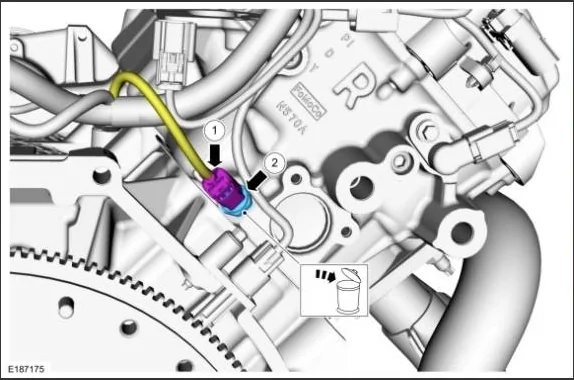
There's a chance the CHT sensor itself is faulty. But before considering that, I'd evaluate the other areas first.

cooling fan speed ect trigger temps.webp


cooling cht sensor location.webp


cooling fan schema high speed.webp


cooling fan schema low speed.webp


cooling fan schema no speed.webp
 

Attachments

Last edited:

Skye

Well-Known Member
Joined
Jan 18, 2022
Threads
13
Messages
2,959
Reaction score
4,145
Location
≈39N
Vehicle(s)
"Skye" Mach1 N2144
 

Attachments

Last edited:

Sponsored

Mike Pfeifer

Well-Known Member
Joined
Feb 4, 2021
Threads
11
Messages
1,537
Reaction score
1,885
Location
Wesley Chapel, FL
First Name
Mike
Vehicle(s)
2019 Ruby Red Mustang GT A10
Several variables affecting: a new to the OP car, the state of GA in the Summer, a tune, aftermarket radiator and interior electrical problems.

While I don't think the Body Control Module is at fault, you highlight multiple electrical problems with the car. This car is new to you, has a tune and several aftermarket bits. I'd at least do a good review of all electrical connections, starting at the battery. Just confirm the cable ends are good and secure at the battery, the chassis ground near the strut tower, then do a general review everywhere.

The Sync system rebooting, lights being intermittent and seats not working, those could be their own issues, a system-wide electrical problem or signs of a water-damaged salvage car. Could be anything. The only guidance I can provide is focus on one problem and work towards correcting that. Along the way, you might find more things to resolve or a root cause to all of them.

Specific to the BCM, one thing you can do is remove the cover and physically inspect it. Take a look at the floor, cables and connectors.

If the battery is more than three years old, I'd get it checked. In-light of the electrical issues, it might be a good idea to evaluate the battery and charging system, to clear that. You might not know the history of the car. You live in GA, where strains will be higher on the batt and system throughout Summer.

I'd also review the tune with the tuner. Ask if there is anything unique to this tune that other drivers normally don't do.

What you're seeing with the scanner is normal.

What's seen on a scanner and what's seen on a dash gauge are two different readings. That you're seeing a cooler temperature with the scanner is OK. That you're seeing a spread between the two readings is common.

The Coyote engine does not have an Engine Coolant Temperature sensor. There is not an ECT sensor in a coolant passageway. However, ECT is a derived reading present in the Powertrain Control Module. It's my belief ECT is a snapshot, one reference point, of temperature. ECT is generally cooler than CHT, sometimes by several degrees.

In contrast, Cylinder Head Temperature is derived from a sensor in the cylinder head. The sensor is a thermistor, which changes resistance with temperature. CHT is the reading which is displayed in the dash gauge. CHT is a measure of temperature, engine load, RPM, etc. CHT is something of a composite displayed reading. CHT is sometimes equal to, but most often always hotter, than ECT.

If driving normally with a properly operating cooling system, an in-dash display of 245 F / 118 C is toasty. Both fans should have already been running at 100% (starting at 223F) in an effort to cool the engine down. Airflow while driving should keep temps lower. Fans at idle should keep temps cooler.

In contrast, the highest temp I register on a stock car is 220 F or so, the most strenuous being sitting at a light with the A/C on in Summer. Moving and driving normally, temps are in the 190s.

I'd confirm the fans are operating as expected. T-shooting the fans could uncover more electrical issues.. T-shooting the existing electrical problems could identify impacts to the fans. I see powertrain cooling as more important and could focus on the fans first.

There's an aftermarket radiator installed. It's at least the same size as the original or larger, yes?

What happened to the factory electric fans (2)? And the shroud? They are still there, yes? What is their operating logic with the tune? Is it the same as before? Different?

With the aftermarket radiator, how did its installation affect the airflow around it? Through it? Are there a lot of gaps between the radiator body and the rest of the car? That could limit the airflow through the core of the radiator itself.

There's a new thermostat installed. Is it the same temperature as previous?

Is there a proper mix of coolant/water in the system? Too much coolant or too much water can have an effect. Air in the system could certainly have an affect.

Just some thoughts.

Edit,

There's a chance the CHT sensor itself is faulty. But before considering that, I'd evaluate the other areas first.

Who is the tuner BTW?

cooling fan speed ect trigger temps.webp


cooling cht sensor location.webp


cooling fan schema high speed.webp


cooling fan schema low speed.webp


cooling fan schema no speed.webp
A lot of this makes sense, and I would agree with focusing on the fans, ducting around the fans, and how they interact with the tune. The tune is a potential wildcard, esp if it’s not really known what it is.
 
OP
OP

Berlin261

New Member
Joined
Jun 24, 2026
Threads
1
Messages
4
Reaction score
1
Location
Ga, USA
First Name
Benjamen
Vehicle(s)
2015 Mustang GT
I have 2 different tunes + stock, ones the 93 tune I daily, and ones a ghost cam tune both done by separate, well known and trusted tuners in my area, and neither ever made any mention of the fans

I'll be sure to do a little more digging electrical wise, I did a general look over of Bcm-A, checked fuses, etc. but found nothing. I'll read through some of those links and do a little more work later today.

Thanks for such a in depth response!
 

Jjmoberg

Well-Known Member
Joined
Aug 3, 2022
Threads
8
Messages
433
Reaction score
558
Location
KC, MO
First Name
Jeremy
Vehicle(s)
2022 Mach 1
at least on my car there are two values in forscan, ECT and CHT2. dash says cylinder head: 186F (86c) , while forscan says ECT: 86c, CHT2: 92c. this 6 degree difference translates to 40f. AFAIK CHT2 is the metal temp of cylinder head.

6 deg C is 40 deg F, however the difference in 2 C values of 6 is not a 40 degree difference. Those 2 values are 186.8 and 197.6 F.
Sponsored


Top