
Sponsored
Zrussian13
Well-Known Member
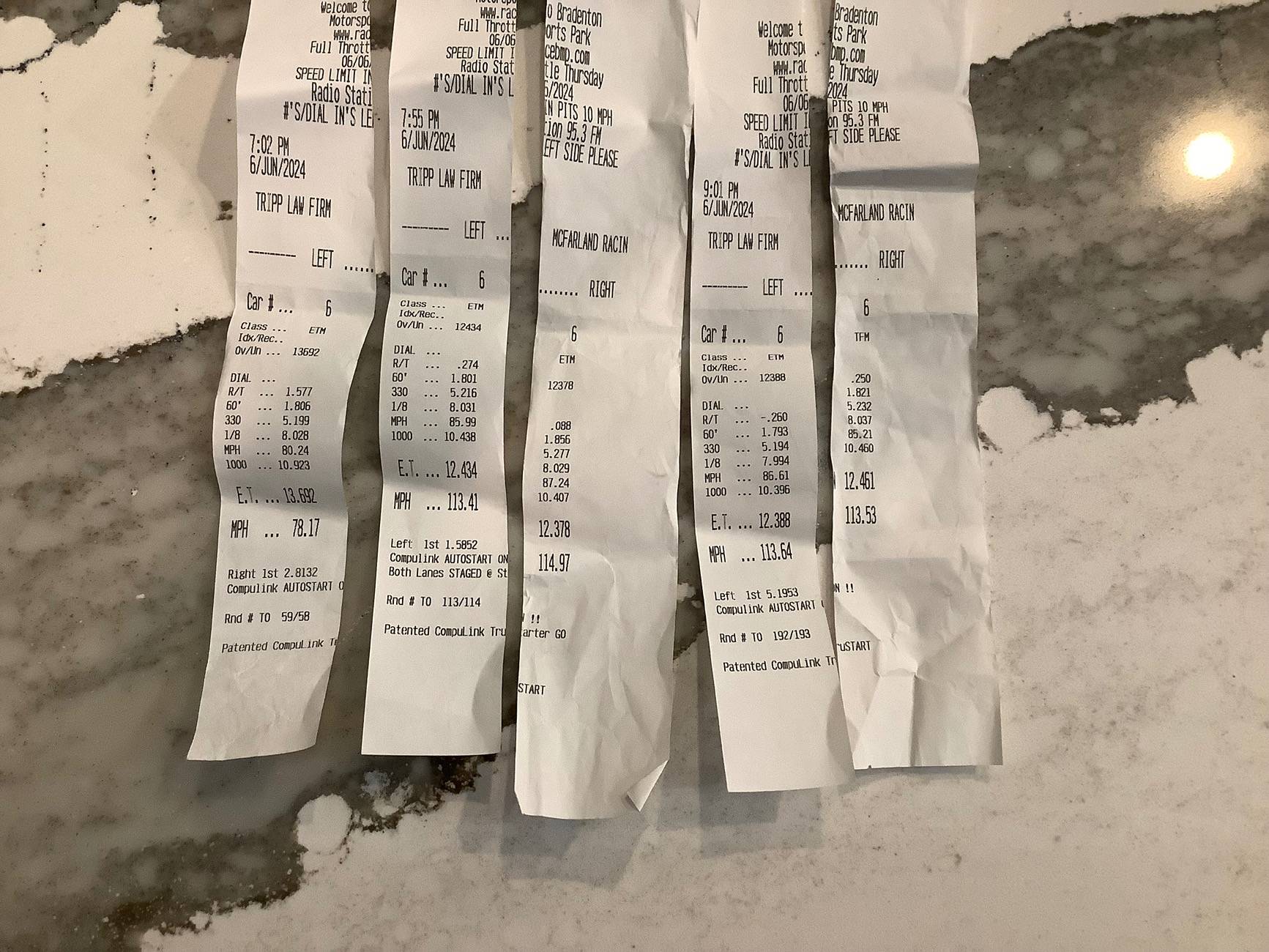
Your NA mph's are very similar to mine actually. I was trapping 112-113 stock and 114-115 on e85 before I boosted it. I still can't provide any good times because I've never ran it at the track. I built it to be a fun street car so I think my best NA was 13 flat. In Mexico of course. I need to get a helmet and hit a track but I also dont want to break shit. My suspension is a mild basic build perfect for a high hp street Cruiser but definitely won't hold up long at the track. I hate to upgrade from where I am at because it's perfect for my intended use.@cbrtrx my NA times are a full second slower than yours, with much lower MPH. I need to get away from 1.7-1.8 short times and into the 1.4-1.5 range and then I’ll see my car’s true potential.

cbrtrx
Well-Known Member
Yes a boost controller is a game charger on a turbo car.The A10 is a beast. No doubt. I still can't bring myself to give up shifting though. I've been lucky to this point. 97k on my mt82 and still kicking. 124 on a full weight NA car is nice. I only trapped 129mph on spring pressure in my TT car. Don't have an accurate time because it was on the street in mexico and traction was non-existent. Havent had a chance to try full 1320 again since the newest round of tuning and the boost controller with my engine issues the past year but hopefully soon. The boost controller was a game changer.
NGOT8R
Well-Known Member
I can certainly respect that. I’ve always had breakage on my mind and that’s why I’ve tried to address all of the weak links in my setup. I wanted to have peace of mind that my upgrades would at least reduce the chances of breakage.Your NA mph's are very similar to mine actually. I was trapping 112-113 stock and 114-115 on e85 before I boosted it. I still can't provide any good times because I've never ran it at the track. I built it to be a fun street car so I think my best NA was 13 flat. In Mexico of course. I need to get a helmet and hit a track but I also dont want to break shit. My suspension is a mild basic build perfect for a high hp street Cruiser but definitely won't hold up long at the track. I hate to upgrade from where I am at because it's perfect for my intended use.
Mod list:
Steeda
- Subframe braces
- Diff. bushing kit with through bolt kit (black bushings)
- Subframe bushing supports
- Hardcore diff. bracket
- Subframe alignment kit
- Adj. rear camber arms
- RLCA Spherical bearings
- Adj. toe links
- Billet vertical links (delrin bushings)
- 1 piece driveshaft
- Driveshaft safety loop
- Tri-ax Race shifter
- Adj. motor mounts (set to drag race configuration)
- Idler and tensioner pulleys
Other suspension/drivetrain components
- KellTrac Ultra Spec Viking Inverted double adjustable rear shocks
- Forgestar D5 17X10 beadlock drag wheels with Hoosier QTPs and 18X5 Hoosier front runners
- Ram Pro Street Twin Disc Cerametalic clutch with lightened aluminum flywheel
- Built MT82-D4 transmission with Cryo and WPC treated hard parts, carbon fiber lined synchros and a Setrab external fluid pump for cooling purposes
- Ford Performance half shafts
Engine/bolt on mods
- Ultimate Headers catted long tube headers
- Steeda X-pipe
- Steeda axle back exhaust
- PMAS CAI (no tune required version)
Power adder and tuning
- Nitrous Outlet GT350 plate nitrous system (jetted for 150 hp and E85 fuel) and ProMax progressive controller
- Lund Racing tunes for 93 octane, Flex, E85 and Nitrous
- JMS Boost-a-Pump
Miscellaneous components
- N2MB WOT Box 2 step controller with No Lift Shifting
Sponsored
cbrtrx
Well-Known Member
Yes I don't care to use more then a 150 on a coyote.Problem is you can only add so much HP with nitrous. Nowhere near what you can add with 20psi of boost
Back in 2012 I went 10.80 @132 with a 125 shot in a gen1 mt82 car. I was definitely taking it easy on the shifts those old mt82s were extremely fragile. Nitrous is great for a quick 125 hp on a coyote but can't come close to boost on these cars.
NGOT8R
Well-Known Member
I’ve been thinking long and hard about adding boost, while still keeping my nitrous as well, but if I do, I’ll obviously want to either dial back the boost or nitrous to help maintain some sort of reliability. I wouldn’t want to exceed 900 rwhp.
cbrtrx
Well-Known Member
Once you go boost you'll ditch the nitrous and not look back.I’ve been thinking long and hard about adding boost, while still keeping my nitrous as well, but if I do, I’ll obviously want to either dial back the boost or nitrous to help maintain some sort of reliability. I wouldn’t want to exceed 900 rwhp.
NGOT8R
Well-Known Member
I agree! I’ve had two boosted Mustangs in the past and they were a lot of fun. The more I try and talk myself out of adding boost, the more I want to do it, lol.Once you go boost you'll ditch the nitrous and not look back.

shogun32
Well-Known Member
- Joined
- Feb 8, 2019
- Threads
- 92
- Messages
- 16,223
- Reaction score
- 14,019
- Location
- Northern VA
- First Name
- Matt
- Vehicle(s)
- '19 GT/PP, '23 GB Mach1, '12 Audi S5 (v8+6mt)
- Vehicle Showcase
- 2
it matters NOT what you said. What matters is what SHE *thinks* she heard.you remind me of my ex wife how you bring up fifty different things and try to re-word what I say
So who's bringing the bats, the chains, and the switchblades? It's Jets vs Sharks baby! cue West Side Story soundtrack. Most importantly, who is playing Maria?Imagine if all the people from this forum that chat/debate/argue met up with everyone in real life. It would be something to see.
how many months to get the track to rubber in after God used his scrubber brush to wipe the place clean?I am excited to see how Gainesville’s track compares to Bradenton’s though.
Last edited:
Sponsored
engineermike
Well-Known Member
Good write up. Speaking of overall efficiency I wonder which blower consumes less power to make power? I know in the end what it consumes doesn't really matter and the boost levels would make a difference as well as to the efficiency and to what it makes but still something to think about.
Hard to test. I think the most straightforward way would be take a Coyote and put it on engine stand, and pulley both superchargers to make say, 10psi, and see which one dynos higher?
The other thing is you would have to dyno something like a P1SC vs a Whipple 3.0 at 10psi/700hp, but then you'd have to put a big honkin F1 blower on to make a fair comparison to the Whipple at say 24psi
@Wolfys11 Oh goodness no.It would be whatever force it takes to spin the gearset, i would assume the centri takes less as less weight to spin, but maybe theres more to it like gear oil choices etc
The majority of the power it takes to drive a supercharger is used to compress the air. The second consumer is inefficiency of compression, and drive losses (gears, bearings, inertia) are a distant third.
For starters, understand that it takes x amount of hp to compress a gas even at 100% efficiency. Any additional amount of hp it takes due to inefficiency of compression is put into the air as heat. So when a compressor is <100% efficient, then you are using extra power to drive the supercharger and also heating the air charge. I'm talking about the compressor head unit itself, not the intercooler. The compressor map I've referred to many times tells you the speed, pressure, flow, and efficiency characteristics of the compressor head unit.
Compression and drive power is very well understood and have been for a long time.
Lets take two examples...I've stated several times that both the modern PD and centrif are in the 70-80% efficient range. I can argue either end of both, so let's compare. For arguments' sake I'll assume 10 psi boost and 75 lb/min air flow, ambient being 85 deg.
- At 70% efficiency, the power required to drive the supercharger is about 52 hp and the discharge temp is about 228 deg.
- At 80% efficiency, the power required to drive the supercharger is about 46 hp at a discharge temp of 210 deg.
So whether it's 70 or 80 doesn't even matter as dramatically as you'd think. We can call the compressor efficiency, drive power, discharge temp, etc between the two styles of compressor a wash, as I've said many times.
If you really wanted to test this, you could measure the suction temp, discharge temp, suction pressure, discharge pressure, and airflow and calculate the power input pretty easily.
Forestlump
Well-Known Member
Yeah without almost lab conditions, it's impossible to compare any accurate data, the slightest variable error and you read in to something totally wrong.@Wolfys11 Oh goodness no.
The majority of the power it takes to drive a supercharger is used to compress the air. The second consumer is inefficiency of compression, and drive losses (gears, bearings, inertia) are a distant third.
For starters, understand that it takes x amount of hp to compress a gas even at 100% efficiency. Any additional amount of hp it takes due to inefficiency of compression is put into the air as heat. So when a compressor is <100% efficient, then you are using extra power to drive the supercharger and also heating the air charge. I'm talking about the compressor head unit itself, not the intercooler. The compressor map I've referred to many times tells you the speed, pressure, flow, and efficiency characteristics of the compressor head unit.
Compression and drive power is very well understood and have been for a long time.
Lets take two examples...I've stated several times that both the modern PD and centrif are in the 70-80% efficient range. I can argue either end of both, so let's compare. For arguments' sake I'll assume 10 psi boost and 75 lb/min air flow, ambient being 85 deg.
- At 70% efficiency, the power required to drive the supercharger is about 52 hp and the discharge temp is about 228 deg.
- At 80% efficiency, the power required to drive the supercharger is about 46 hp at a discharge temp of 210 deg.
So whether it's 70 or 80 doesn't even matter as dramatically as you'd think. We can call the compressor efficiency, drive power, discharge temp, etc between the two styles of compressor a wash, as I've said many times.
If you really wanted to test this, you could measure the suction temp, discharge temp, suction pressure, discharge pressure, and airflow and calculate the power input pretty easily.
How I made my choice is visualise it all happening in my head and picked the one I thought would fit my requirement best. Works good to silence those voices too

Last edited:
engineermike
Well-Known Member
The Whipple and gt500 log data don’t agree with your belief so you are applying selective scrutiny through hypotheses with no supporting data. Why aren’t you applying the same scrutiny to the centrif IAT data or to the hear-say anecdotes you’ve been told?Yes you are right about noticing the patterns, they are different. The whipple does have an almost minute rise, you didn't believe this yourself when you saw it and that led you to investigate by testing the Mapt accuracy. However, that convinced you to believe something untrustworthy.
Like if I put my iat sensor hidden at the back of my manifold, surrounded by a heatsink and cooled by the water cooler, it would also make it numb and skew the readings. It will give a higher reading off boost but also a lower reading in a wot pull. It's working like a capacitor in electronics or an accumulator in hydraulics and smoothing out the signal, which you are reading wrong and believing the data from it to be truthful of what's happening.
That location will make it rise and fall slower compared to the Maf which is reacting much faster. We are talking about a few seconds of heating, the Mapt and it's location is buffered by the aluminium all around it.
Luckily we have data. The Roush kit uses the same exact sensor as Whipple, mounted similarly if not worse. Yet I’ve shown a data log that had 34 deg temp rise in 8 seconds in a Roush. Is that not fast enough response? And kevinvan6000 posted that his temps read 15-20 deg hotter with the sensor closer to the cylinder vs closer to the tb. This supports what I posted earlier that the air picks up additional heat from the intake manifold, so your centrif readings could actually be erroneously low as compared to the Whipple measurement.
Literally no one is arguing heat moves from cold to hot, nor did my data suggest it.Heat will only lose energy to something colder. Once you move towards temperature parity, there's no more transfer of heat, no matter how long the boost touches the cooler and at wot 4krpm+ we are talking milliseconds. I know your data says otherwise but you are being fooled by it. It's impossible to cool the boost that fast with such a small cooler and so little delta T. It defies physics. I know your data says different but it's wrong because of how it's being collected.
The sensor is at the entrance of the runner.The only way to have reliable data from the whipple setup is to have a sensor in the intake runner,
That would be interesting data. My bet is that the MCT and the water entering the intercooler are nearly unison.if it was me I'd put a coolant temp sensor at the hot side of the whipple coolant pipe (exactly like a boiler or the engines own coolant sensor).
Literally no one is arguing this.It's impossible to have a boost temperature lower than the temperature of the hottest water leaving to cooler.(think coolant temp Vs cylinder head temp, the coolant is always cooler than the cylinder head it's cooling, to be the other way around defies physics as you go above 100% efficiency and Einstein won't let that happen.)
No one is arguing otherwise.There's no doubt Whipple have made great advancements with the gen 5 and the counter flow cooler and the rotor design against the competition but it still has to behave in the realms of physics,
No one is arguing the PD blower is at or above 100% efficient.it's still working on the principle of a spur gear pump and they can never be 100% efficient because they leak from high side to low. That's why they get worse with higher and higher pressures, the leak gets more and more. It's not an attack on you or the brand, it's physics.
engineermike
Well-Known Member
There is no reason why it can’t.my point is theres no way a whipple running 16+ psi will run 15degrees charge temp delta …
A turbo is most efficient as a system (not to be confused with compressor efficiency) because it is recouping exhaust heat for drive power. It would be a mistake to think the system efficiency is remotely comparable to a centrif sc just because they share the same compressor style.A turbo is most effecient, we all know that
A centri is most similar in how it works with a turbo, just add in pully loss. Yet you say a pd which soaks heat from the motor is running twice cooler temps
ridiculous
Sponsored
Similar threads


- Poll

- Replies
- 34
- Views
- 3,387


