Sponsored

Do you regret choosing your power adder?

Wolfys11

Well-Known Member
Joined
Aug 27, 2023
Threads
3
Messages
1,037
Reaction score
753
Location
New york
First Name
Jakub
Vehicle(s)
2023 Mustang Gt
The sensors are reading the correct data. From the article:

“Almost always, we incorporate the IAT sensors post-intercooler,” Dustin elaborated. “Therefore, we have the actual temperatures entering the combustion chamber. The other part of that is, in a lot of our systems, we have the advantage of being able to rewrite Ford’s software to allow us to run two sensors. We’ve run one sensor on the inlet side at the MAF where the air is being taken in, and another sensor post-intercooler – so we’re actually able to get the Delta between the two.”

What number/logic whipple uses...you don't know and neither do I.

But then again you said IAT doesn't matter for tuning and you also don't understand that A2W is better than A2A.
If your so great at quoting, quote where i said iat doesnt matter to tuning

I said its not the most important factor to care about while tuning, especially when talking about the temps we are talking about
Sponsored


 

Angrey

Well-Known Member
Joined
Jun 21, 2020
Threads
104
Messages
2,794
Reaction score
2,984
Location
Coral Gables
Vehicle(s)
2016 GT350
I think the summary of the argument here is that efficiency isn't a static value. The adiabatic efficiency of any compressor type changes depending upon the conditions you operate it.

An analog would be two vehicles, one that's rated at 35mpg and one that's rated at 33mpg.

While the higher rated vehicle might fair better at 55 mph with limited cargo loading (on flat ground), it's entirely possible that when operating these vehicles at "typical" conditions (stop and go, cruising at 70 instead of 55, having 5 people and their luggage in the vehicle, going up and down hills etc) we observe that the more efficient vehicle either loses it's efficiency advantage or in some cases, operates less efficiently than it's counterpart.

The idea that centrifugal compressors are slightly more efficient than twin screw compressors isn't challenged or contested.

But it's entirely possible to run both compressors somewhere along their curve that is NOT optimal and therefore it's possible, LIKELY even that we'd observe data that doesn't line up with the optimal vs optimal expectations.

Furthermore, we're not talking about HUGE theoretical advantages here.

Lastly, when you throw in the complexity of air-water vs air-air intercooling, again, in MANY scenarios and typical uses, the A/W intercooler provides a thermal advantage that the A/A just can not compete with. So any adiabatic efficiency is washed away or even reversed when measuring outputs like IAT2 and all the down stream benefits and follow on outputs (like timing, power, torque, etc).

As I wrote earlier, we can use real world behavior as an artifact. Centri blowers tend to be slightly better for continuous, heat soaked conditions (i.e. circuit racing) however, additional cooling modifications can be employed to either negate that or reverse it entirely.

Point in fact. You can take a 5.2L GT500 stock setup and I guarantee you it will run around a track at the same sustained, elevated outputs longer and easier than a centri installed kit with no other cooling modifications. Why? Because Ford gave it the cooling chops to handle sustained track use. So even though the centri is markedly more efficient than the roots blower, the fact is in the real world configuration, other elements are at play.

So comparing centri vs twin screw in a theoretical sense is fun, but largely useless. When you begin to add in complicating factors like intercooling systems, etc, the whole idea about a couple of theoretical percent efficiencies kinda goes out the window. They're not apples/apples.

A true apples/apples comparison would be both blower types with no intercooling or both blower types with air-water (or an air-water-air exchanger on the centri). Obviously an air-air on the PD blower is difficult or impossible, but that brings us to the finale of this post.

Like many things, we find that PD blowers may indeed be slightly less efficient (at optimized efficiency curve points). They're heavier than centri components. Generally cost more, are more complicated to install, etc. But they're also inherently advantageous for the layout of passenger vehicle for employing an air-water heat exchanger which is advantageous compared to the typical air-air intercoolers on turbos and centris.

An analog would be to compare the pros and cons of different types of differentials, from torsen to clutch type, each with their associated benefits and drawbacks depending on the type of use you're asking from is.

In the end, if you're happy with your choice, hats off. But I think this thread has beaten the horse to death and then burned the remnants. The real world applications and various factors are much too complicated to make simplistic comparisons about theoretical efficiency advantages.
 

Forestlump

Well-Known Member
Joined
Apr 1, 2022
Threads
5
Messages
210
Reaction score
148
Location
uk
Vehicle(s)
2017 Mustang GT
This is a straw man argument. No one has said or implied otherwise.


I see you've resorted to lying.


When cooling a gas using a liquid, the gas can very easily get close to the liquid temp due to the density difference.


If ambient is 70, then the water can easily be 85 and the charge temp can very easily be 90. Nothing is inherently wrong with this situation. No one is claiming the charge temp is below the intercooler water temp.


Another lie.


This is just incorrect. You can actually cool surprisingly high volumes of gas down to near-ambient using cooling water in very compact spaces.


No one is saying a heat exchanger is getting over "100%".


I've posted up my personal car data and data from cars I've tuned. Exploded_muffin posted up his personal data as well.


Eaton actually publishes their compressor maps and you can see they are 70% efficient right in the flow/pressure/speed range where we run them. The larger Whipple is more efficient, but like ESS, they don't publish their maps. A centrif can very easily be 65-75% depending on where you're running it. With the data we have, it's a wash. Industrial PD compressors can reach 98% while the very most efficient industrial axial compressors barely break 90%. Industrial centrifs can run 70-85%.


The reason they don't use PD blowers in gas turbine engines is two-fold. For one, a large axial flow compressor spinning 30,000 rpm moves prodigious amounts of air that are impractical for a PD blower. Secondly, the shaft speeds are much too fast, so it would require a large and heavy gearbox. It just doesn't make sense for the application, but it's not due to the efficiency.


Let me make sure I understand what you're saying here...even if data proves something, you still don't believe it because "it's still how it is"?


Aside from preconceived notions, why would you choose to believe his external sensor over the Whipple IAT2/GT500 sensor? Did you see his calibration data where he tested it in boiling water and an ice bath? I can show you mine if you want. Did you see his actual mounting location? I showed you mine. Why aren't you scrutinizing his data the same way you are mine?

One other thing interesting about his data is that even if you go by his higher-reading external temp sensor, he gained 5 deg on a 60-120 pull. Yes, he upgraded the coolant side of the setup, but he was also running the older, less-efficient Gen4 supercharger, intercooler in the hotter valley location, old single-pass non-counterflow intercooler, and had increased the boost to about 14 psi. Wolfys11's data log was also single gear, 50-120, 8 psi boost centrif, G4 intercooler, and gained 16 deg. If anything, that dataset supports my argument.


If you have compressor maps for the Whipple 3.0 and ESS blowers, please post up. I cited my sources above and can show you more. The efficiency is a wash.


Look up the Eaton R2650 map and plot out where we run it and you'll see it's running near peak efficiency up to about 12 psi boost. The Whipple is more efficient.


For starters, you can change the update rate in vcmscanner. Secondly, don't make the mistake of assuming the logger update rate is the same as the PCM logic's internal sample rate.


Did you miss the part where I tested the sensor in boiling water, an ice bath, and several data points in between to get a calibration curve? I stated this early in the thread and several times since then, and even offered to share the response curves. I actually used vcmscanner to log what the PCM is measuring and cross checked with a thermocouple in addition to the known water temps. It was +/-2 deg from 32 to about 120 deg F IIRC.

What purpose would lying serve? That's just wasted energy.

I'm only scrutinising your data because it doesn't seem correct. It's part of gaining reliable data, if you believe any data, just because it's in a graph or presented well, it could lead you down many wrong paths.
I clearly said that I have no guarantee on that guys accuracy as that is the truth, but it's an example of a different result from yours. My experience and qualifications suggest that your data is wrong. However I might be completely wrong as you may have stumbled on something genius and physics defying. However what I suspect is that your data is skewed, just down to inaccuracies in sensor placement and calibration.

To add some context,

90f is the temperature your bath gets when you think "I'm getting out, it's chilly in here!"

101f is the comfortable temperature for a shower.

This is gut feeling as I have no accurate data to prove (neither do you). I highly doubt your Whipple coolant outlet is as low as 85f with a ambient of 72f and your boost temp at wot only 5f above that while the outlet temp of the supercharger is 200+. Even if it was a perfect example and doing 70% adiabatic efficiency at 15psi, it would have the same boost start temp as a centrif at 70% which they actually are. Plus you have the added loss of secondary heat induced from the cylinder heads that a centrif doesn't, so the cooler has to work doubly hard in that arrangement and all the while having greatly less space and surface area to achieve this.

Yes the gen 5 Whipple might be one of the best examples of PD, but it can't defy physics and what you are proposing is likely not possible, so it makes me and others question the results. If you're they type that believes everything on a whim fair enough, continue in your world of blissful obliviousness, however, you won't convince the most eagle eyed with two random data logs comparing such with data accuracy challenges like what you have.
 

Forestlump

Well-Known Member
Joined
Apr 1, 2022
Threads
5
Messages
210
Reaction score
148
Location
uk
Vehicle(s)
2017 Mustang GT
I think the summary of the argument here is that efficiency isn't a static value. The adiabatic efficiency of any compressor type changes depending upon the conditions you operate it.

An analog would be two vehicles, one that's rated at 35mpg and one that's rated at 33mpg.

While the higher rated vehicle might fair better at 55 mph with limited cargo loading (on flat ground), it's entirely possible that when operating these vehicles at "typical" conditions (stop and go, cruising at 70 instead of 55, having 5 people and their luggage in the vehicle, going up and down hills etc) we observe that the more efficient vehicle either loses it's efficiency advantage or in some cases, operates less efficiently than it's counterpart.

The idea that centrifugal compressors are slightly more efficient than twin screw compressors isn't challenged or contested.

But it's entirely possible to run both compressors somewhere along their curve that is NOT optimal and therefore it's possible, LIKELY even that we'd observe data that doesn't line up with the optimal vs optimal expectations.

Furthermore, we're not talking about HUGE theoretical advantages here.

Lastly, when you throw in the complexity of air-water vs air-air intercooling, again, in MANY scenarios and typical uses, the A/W intercooler provides a thermal advantage that the A/A just can not compete with. So any adiabatic efficiency is washed away or even reversed when measuring outputs like IAT2 and all the down stream benefits and follow on outputs (like timing, power, torque, etc).

As I wrote earlier, we can use real world behavior as an artifact. Centri blowers tend to be slightly better for continuous, heat soaked conditions (i.e. circuit racing) however, additional cooling modifications can be employed to either negate that or reverse it entirely.

Point in fact. You can take a 5.2L GT500 stock setup and I guarantee you it will run around a track at the same sustained, elevated outputs longer and easier than a centri installed kit with no other cooling modifications. Why? Because Ford gave it the cooling chops to handle sustained track use. So even though the centri is markedly more efficient than the roots blower, the fact is in the real world configuration, other elements are at play.

So comparing centri vs twin screw in a theoretical sense is fun, but largely useless. When you begin to add in complicating factors like intercooling systems, etc, the whole idea about a couple of theoretical percent efficiencies kinda goes out the window. They're not apples/apples.

A true apples/apples comparison would be both blower types with no intercooling or both blower types with air-water (or an air-water-air exchanger on the centri). Obviously an air-air on the PD blower is difficult or impossible, but that brings us to the finale of this post.

Like many things, we find that PD blowers may indeed be slightly less efficient (at optimized efficiency curve points). They're heavier than centri components. Generally cost more, are more complicated to install, etc. But they're also inherently advantageous for the layout of passenger vehicle for employing an air-water heat exchanger which is advantageous compared to the typical air-air intercoolers on turbos and centris.

An analog would be to compare the pros and cons of different types of differentials, from torsen to clutch type, each with their associated benefits and drawbacks depending on the type of use you're asking from is.

In the end, if you're happy with your choice, hats off. But I think this thread has beaten the horse to death and then burned the remnants. The real world applications and various factors are much too complicated to make simplistic comparisons about theoretical efficiency advantages.
You are exactly on the money and a far better writer than me.
 

Sponsored

OP
OP
Milktasd

Milktasd

Well-Known Member
Joined
Jul 30, 2021
Threads
16
Messages
128
Reaction score
116
Location
Mississippi
Vehicle(s)
1996 cobra, 2000 Sonoma LSx, 2021 velocity blue gt
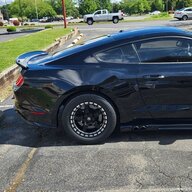
Cool front came in so I decided to take advantage of it. 13 pounds on a centrifugal. No regrets.😎

20241017_035322.jpg
that is moving sir.
 

Wolfys11

Well-Known Member
Joined
Aug 27, 2023
Threads
3
Messages
1,037
Reaction score
753
Location
New york
First Name
Jakub
Vehicle(s)
2023 Mustang Gt
I think the summary of the argument here is that efficiency isn't a static value. The adiabatic efficiency of any compressor type changes depending upon the conditions you operate it.

An analog would be two vehicles, one that's rated at 35mpg and one that's rated at 33mpg.

While the higher rated vehicle might fair better at 55 mph with limited cargo loading (on flat ground), it's entirely possible that when operating these vehicles at "typical" conditions (stop and go, cruising at 70 instead of 55, having 5 people and their luggage in the vehicle, going up and down hills etc) we observe that the more efficient vehicle either loses it's efficiency advantage or in some cases, operates less efficiently than it's counterpart.

The idea that centrifugal compressors are slightly more efficient than twin screw compressors isn't challenged or contested.

But it's entirely possible to run both compressors somewhere along their curve that is NOT optimal and therefore it's possible, LIKELY even that we'd observe data that doesn't line up with the optimal vs optimal expectations.

Furthermore, we're not talking about HUGE theoretical advantages here.

Lastly, when you throw in the complexity of air-water vs air-air intercooling, again, in MANY scenarios and typical uses, the A/W intercooler provides a thermal advantage that the A/A just can not compete with. So any adiabatic efficiency is washed away or even reversed when measuring outputs like IAT2 and all the down stream benefits and follow on outputs (like timing, power, torque, etc).

As I wrote earlier, we can use real world behavior as an artifact. Centri blowers tend to be slightly better for continuous, heat soaked conditions (i.e. circuit racing) however, additional cooling modifications can be employed to either negate that or reverse it entirely.

Point in fact. You can take a 5.2L GT500 stock setup and I guarantee you it will run around a track at the same sustained, elevated outputs longer and easier than a centri installed kit with no other cooling modifications. Why? Because Ford gave it the cooling chops to handle sustained track use. So even though the centri is markedly more efficient than the roots blower, the fact is in the real world configuration, other elements are at play.

So comparing centri vs twin screw in a theoretical sense is fun, but largely useless. When you begin to add in complicating factors like intercooling systems, etc, the whole idea about a couple of theoretical percent efficiencies kinda goes out the window. They're not apples/apples.

A true apples/apples comparison would be both blower types with no intercooling or both blower types with air-water (or an air-water-air exchanger on the centri). Obviously an air-air on the PD blower is difficult or impossible, but that brings us to the finale of this post.

Like many things, we find that PD blowers may indeed be slightly less efficient (at optimized efficiency curve points). They're heavier than centri components. Generally cost more, are more complicated to install, etc. But they're also inherently advantageous for the layout of passenger vehicle for employing an air-water heat exchanger which is advantageous compared to the typical air-air intercoolers on turbos and centris.

An analog would be to compare the pros and cons of different types of differentials, from torsen to clutch type, each with their associated benefits and drawbacks depending on the type of use you're asking from is.

In the end, if you're happy with your choice, hats off. But I think this thread has beaten the horse to death and then burned the remnants. The real world applications and various factors are much too complicated to make simplistic comparisons about theoretical efficiency advantages.
Agreed to all of that, except they indeed are arguing that the whipple is more effecient than a ess, but like you said the horse is dead already so lets stop beating it
 

TheShit

Well-Known Member
Joined
Jun 22, 2021
Threads
50
Messages
116
Reaction score
106
Location
Memphis TN
Vehicle(s)
2021 Mustang GT Manual
Vehicle Showcase
1
If I could go back, I would have done the t56 swap first, then do the blower. But that's about the only thing I would change.
 

NGOT8R

Well-Known Member
Joined
Jul 19, 2020
Threads
153
Messages
9,219
Reaction score
7,676
Location
Florida
First Name
Adrian
Vehicle(s)
2019 Bullitt
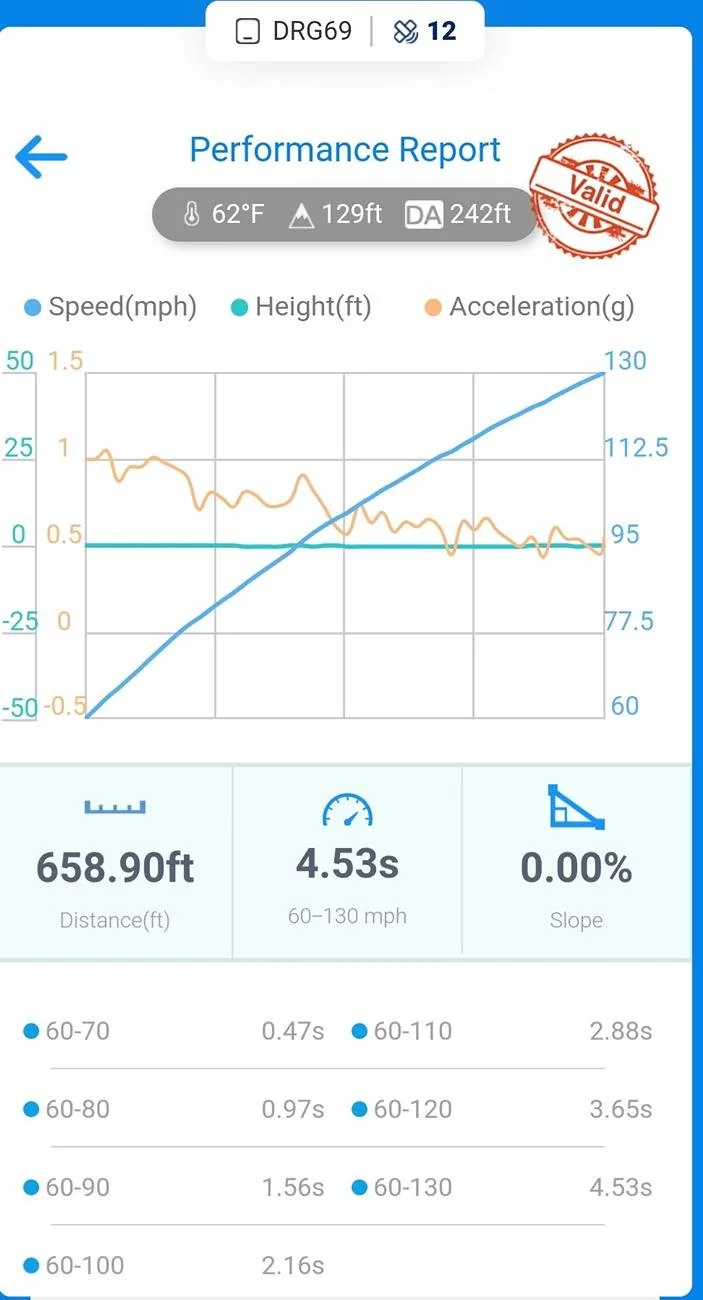
Here are a few videos I found during my SC research. He doesn’t say exactly how much power the GT500 makes (only that it’s close to 1000 rwhp) at the time of the Dragy run.


This one is the same 2019 GT with the ESS SC dyno’ing the 120MM and 110MM pulleys on the stock fuel system with BAP


Finally, the same 2019 GT 60-130 Dragy run.

 
Last edited:

engineermike

Well-Known Member
Joined
Jul 15, 2018
Threads
31
Messages
6,189
Reaction score
6,454
Location
La
Vehicle(s)
2018 GTPP A10
I said its not the most important factor to care about while tuning, especially when talking about the temps we are talking about
Charge temp changes borderline knock by 1 deg for every 10-15 deg F. So, you can see that 30 deg charge temp rise can mean 2-3 deg timing. Of course, this assumes your tuner isn't locking your timing regardless of charge temp, which many of them do.
 

Sponsored

engineermike

Well-Known Member
Joined
Jul 15, 2018
Threads
31
Messages
6,189
Reaction score
6,454
Location
La
Vehicle(s)
2018 GTPP A10
The idea that centrifugal compressors are slightly more efficient than twin screw compressors isn't challenged or contested.
Actually, I could argue this either way. Take for instance that Whipple's peak efficiency chart shows the 2.9 at 78% and the 3.3 also at 78%. They've said the 3.0 is higher, so let's just call it 78-80%. Of course, we're assuming they aren't outright lying, but the efficiency numbers are in line with what Eaton is telling us and that large OEM-supplier is unlikely to lie about it. ESS doesn't give us any efficiency numbers or maps, but they have told us max cfm and we know the approximate inducer diameter. These numbers line up very well with the Vortech JT-B, which we do have maps for. The JT-B peak efficiency is also advertised at 78% peak. I do realize we don't have great data on either one, but this example just shows the PD can be a little higher, a little lower, or the same.

But it's entirely possible to run both compressors somewhere along their curve that is NOT optimal and therefore it's possible, LIKELY even that we'd observe data that doesn't line up with the optimal vs optimal expectations.
Absolutely. Once again, we can compare similar units. The Eaton R2650 is run at "peak minus about 2% efficiency" at our pressures/flows/speeds. If you assume the same for the Whipple 3.0, that would put us at 76-78%. With the ESS, again assuming the Vortech JT-B is close, we can plot the operating point on the map and see it's in the 75% range.

If anyone has better curves or more applicable comparisons, please post them up. This is the closest I could find and is only used to demonstrate the point that they aren't very far apart.

Furthermore, we're not talking about HUGE theoretical advantages here.
Also true! We already showed the difference between 70 and 80% has a fairly small effect on the engine brake power.

Lastly, when you throw in the complexity of air-water vs air-air intercooling, again, in MANY scenarios and typical uses, the A/W intercooler provides a thermal advantage that the A/A just can not compete with. So any adiabatic efficiency is washed away or even reversed when measuring outputs like IAT2 and all the down stream benefits and follow on outputs (like timing, power, torque, etc).
For sure!
 

HKusp

Well-Known Member
Joined
Jul 22, 2021
Threads
37
Messages
2,228
Reaction score
2,876
Location
Hampton, Md.
First Name
Jason
Vehicle(s)
2018 Mustang GT
I want to add some information to the qualifications that may be being missed here on @engineermike 's part because he won't say it himself. He isn't just some guy who has tinkered with the idea of collecting data on his Whippled car and his Roush supercharged F150 and formulates an opinion based off of a few data sets collected by himself on his vehicles. He ACTUALLY tunes cars. He tunes MANY cars for people on this very forum. As someone who is currently tuned by him, I believe I AM qualified to speak about how methodical his data collection process is having been privy to how he does it.

He looks at data sets from many different set-ups in many different scenarios across the country. Cars at or below sea level. Cars at 5,000+ feet elevation. Cars with access to E80+, cars with only 91 octane availability. When he makes a change, it is in small increments and data logged then examined. If the data looks good another incremental change is made and then logged and the process repeated. He is NOT making these claims based off only his data from his cars, he's making these claims based off of MULTIPLE unique users data collected over several years, in MULTIPLE different locations, with MULTIPLE different conditions being represented. I know there is a lot of theory being thrown around, and there are some highly qualified people making their claims, but to suggest Mike's data is erroneous because of implicit bias, or lack of varied data is a mistake when challenging his assertions or conclusions.

I see some very intelligent people making assertions based off of their own bias and/or education and their conclusions are based off of their reading other people's data and taking it as gospel, but are discounting Mike's methodology, as erroneous. It is a bit perplexing to me to see this playing out as it has so far, which has prompted me to make this post.
 

Wolfys11

Well-Known Member
Joined
Aug 27, 2023
Threads
3
Messages
1,037
Reaction score
753
Location
New york
First Name
Jakub
Vehicle(s)
2023 Mustang Gt
I want to add some information to the qualifications that may be being missed here on @engineermike 's part because he won't say it himself. He isn't just some guy who has tinkered with the idea of collecting data on his Whippled car and his Roush supercharged F150 and formulates an opinion based off of a few data sets collected by himself on his vehicles. He ACTUALLY tunes cars. He tunes MANY cars for people on this very forum. As someone who is currently tuned by him, I believe I AM qualified to speak about how methodical his data collection process is having been privy to how he does it.

He looks at data sets from many different set-ups in many different scenarios across the country. Cars at or below sea level. Cars at 5,000+ feet elevation. Cars with access to E80+, cars with only 91 octane availability. When he makes a change, it is in small increments and data logged then examined. If the data looks good another incremental change is made and then logged and the process repeated. He is NOT making these claims based off only his data from his cars, he's making these claims based off of MULTIPLE unique users data collected over several years, in MULTIPLE different locations, with MULTIPLE different conditions being represented. I know there is a lot of theory being thrown around, and there are some highly qualified people making their claims, but to suggest Mike's data is erroneous because of implicit bias, or lack of varied data is a mistake when challenging his assertions or conclusions.

I see some very intelligent people making assertions based off of their own bias and/or education and their conclusions are based off of their reading other people's data and taking it as gospel, but are discounting Mike's methodology, as erroneous. It is a bit perplexing to me to see this playing out as it has so far, which has prompted me to make this post.
No one here is discounting his engineering knowledge, tuning knowledge, etc

Im very admiring of his accomplishments, and take his word to a high degree

But i have my beliefs with the stuff i know, and make my own case

But just because hes a great tuner doesnt mean he doesnt make a mistake or do the best job or have some detail thats skewing our conversation

Lund is a name brand tuner, everyone says theyre great

I tuned an ecoboost with them, they tuned the car to a different model than mine so i had sensor issues, they refused to give me any type of checkover of my tune just in case when my motor blew 15 minutes after loading their tune, and then after getting their claimed 50whp gains tune, went to a different tuner and got 100whp gains on a dyno on the same setup. Should i be trusting lund just because theyre good? After an account like this^

Im not discounting mike, but remember we have a theory discussion and we are discussing it, not saying to eachother the other one is stupid
 

HKusp

Well-Known Member
Joined
Jul 22, 2021
Threads
37
Messages
2,228
Reaction score
2,876
Location
Hampton, Md.
First Name
Jason
Vehicle(s)
2018 Mustang GT
Lund is a name brand tuner, everyone says theyre great

I tuned an ecoboost with them, they tuned the car to a different model than mine so i had sensor issues, they refused to give me any type of checkover of my tune just in case when my motor blew 15 minutes after loading their tune, and then after getting their claimed 50whp gains tune, went to a different tuner and got 100whp gains on a dyno on the same setup. Should i be trusting lund just because theyre good? After an account like this^

Im not discounting mike, but remember we have a theory discussion and we are discussing it, not saying to eachother the other one is stupid
Not everyone says Lund is great. If they were the last tuner on earth, I wouldn't use them. I'd drive the car stock tune.

I didn't say anyone said he was stupid, but I have seen some assertions that he weights IAT2 too much and basses his tunes almost exclusively off of that data, that is patently false. You should see the PID's he had me set-up just to get a handle on one specific issue I was having.

I have seen people in this thread dispute the data he shared as it being only a few data points and not enough to back up what his conclusions are. His data he shared is REPRESENTATIVE of many many more sets of data, and conclusions based off of more data usually make a strong argument for said conclusion versus just of few data sets, would you not agree?
 

nnnnnn

Well-Known Member
Joined
Mar 25, 2017
Threads
6
Messages
193
Reaction score
127
Location
C-A
Vehicle(s)
Mustang GT Premium
  • Specific heat capacity (Cp ) air at 0°C and 1 bara: 1.006 kJ/kgK = 0.24028 Btu(IT)/(lbm °F) or kcal/(kg K)
  • Specific heat capacity (Cv ) air at 0°C and 1 bara: 0.7171 kJ/kgK = 0.17128 Btu(IT)/(lbm °F) or kcal/(kg K)
  • Thermal conductivity at 0°C and 1 bara: 24.35 mW/(m K) = 0.02094 kcal(IT)/(h m K) = 0.01407 Btu(IT)/(h ft °F)

  • Specific heat (Cp ) water (at 15°C/60°F): 4.187 kJ/kgK = 1.001 Btu(IT)/(lbm °F) or kcal/(kg K)

This is why people use water. The 'to-air' heat shedding of the cold side is ~same since the size of the radiator is ~same and made of the same materials and fin structure etc.

Water is simply a buffer that can absorb 4x as many J or btu than air for a unit of volume, till it reaches saturation and is then gated by the ability of the cold side to shed the heat. But on a 10 second pull nobody cares that it takes 2 hours to cool the water system down before it's next run. It absorbed the heat out fo the intake charge and thats what matters.
Thanks for posting this. I was wondering when it would be posted lol. It simply takes more energy to raise the temperature of water than air. Simple physics.

If someone is making a lot of power, air to water, drag racing, intercooling will work for short bursts or runs that way the car can stay cool within that time frame. PD blowers aren't used on tracks for the same reason.

So, OP I have a PD blower, I drag race and I am happy. Do I regret something with the PD power adder? Yes, with PD blower, the more power you make the harder they are to launch due to lots of torque, so you may need a complex system like Motec to manage traction properly and truly take advantage of it in my opinion. Turbos have an advantage in that regard.
Sponsored


Top