Sponsored

Interchiller install (whipple GT350) and initial report

OP
OP
Angrey

Angrey

Well-Known Member
Joined
Jun 21, 2020
Threads
104
Messages
2,794
Reaction score
2,984
Location
Coral Gables
Vehicle(s)
2016 GT350
People forget Air density (oxygen molecules) doesn't increase after it's compressed. It allows you to stuff MORE air in yes, but unless you spin your blower faster to make up for that, you gain NOTHING.
I know what you're attempting to convey, but if you compress a gas, you absolutely increase the density, that's how density work, smaller volume, same mass, more density.
Sponsored

 
OP
OP
Angrey

Angrey

Well-Known Member
Joined
Jun 21, 2020
Threads
104
Messages
2,794
Reaction score
2,984
Location
Coral Gables
Vehicle(s)
2016 GT350
Agreed, that said your timing table will be identical for the situation you just described. You’re not pulling timing at either 100 degree IAT nor are you pulling timing at 135 degree IAT. There won’t be any power difference at all at that time. On E it will take extremely high IAT to justify pulling any timing at all.


Very well said. I guess this is how I wished I had explained it LMAO. 🍻
Every tune has features at where it starts to yank timing and even if it's not prescribed, the knock sensors will start doing it as you crossover borderline into actual knock. If I was running something pedestrian, I wouldn't worry about it. At 12:1 with 19 lbs, if I allow my next tune to give full send, I'll be creeping up on 1200 rwhp. On a hot day, that's concerning enough for me to add insurance. If I was anything below 4 digits on a full sauce setup, I'd probably not worry as much about it.
 

Cory S

Well-Known Member
Joined
Dec 10, 2019
Threads
47
Messages
3,355
Reaction score
3,751
Location
Bradford, NH
First Name
Cory
Vehicle(s)
2016 Mustang GT Premium
When you "hot lap" and you begin a pull immediately following a pull, you start with higher IAT2 and therefore end with higher IAT2. All of which is a threat to knock resistance and safety of the motor ultimately. The only other choice, irrespective of the fuel is to reduce timing which in turn saps power.

Even on E85 or race fuel, MOST people tend to want it tuned to borderline knock. I would agree if you leave a few degrees of flexibility on the table, but if you run it out to what the fuel will allow (at a given temp) then having cooler IAT's simply helps to ensure you don't run into scenarios where you heat soak and smoke the motor.

Go watch Stangmode's video where he smokes his high dollar L&M motor because he hot laps it.

Like most people, I dyno'd from a fairly cold condition (the intercooler system hadn't reached steady/warm state) and so my IAT's even in a very hot shop were really great for the whole rip. In reality, we should have probably heat soaked the car and tuned it to keep it safer.

Having the interchiller helps keep IAT's lower and helps it to recover for sustained or consecutive rips.

The Dodge crowd has been enjoying this setup for years. While I agree that it's more of a concern with 93, even E85 isn't infallible if you flog it hard enough, back to back to back in hot conditions. I don't like to do a rip and then have to wait to bring temps back down again, I wanna go again, immediately. At 12:1 compression with 19 psi on hot South Florida days, it's enough concern for me to want to add some more insurance to protect my investment.
Yes, hot lapping is a whole different scenario. Absolutely. Hot lapping on the drag strip is also great for stock slow cars. If you need to hot lap, you need to get the setup doing what it can within a run or 2. No hot lapping needed. it’s just wasted abuse really.

I’d rather give a proper cooldown than adding an entire interchiller apparatus on the car, with more potential things to leak/fail etc. Thats just me. KISS.
 

Cory S

Well-Known Member
Joined
Dec 10, 2019
Threads
47
Messages
3,355
Reaction score
3,751
Location
Bradford, NH
First Name
Cory
Vehicle(s)
2016 Mustang GT Premium
I know what you're attempting to convey, but if you compress a gas, you absolutely increase the density, that's how density work, smaller volume, same mass, more density.
Only if you have an unlimited source to compress.
Take a balloon. Blow it up with oxygen at 100° and seal it. Now put it in the freezer at 0°
What happens. Ballon gets smaller. Oxygen content inside is the same. Get it now?

you can’t raise oxygen density after the compressor unless oxygen density is increased PRE-compressor. (Ambient air temperature drop).
 
OP
OP
Angrey

Angrey

Well-Known Member
Joined
Jun 21, 2020
Threads
104
Messages
2,794
Reaction score
2,984
Location
Coral Gables
Vehicle(s)
2016 GT350
Only if you have an unlimited source to compress.
Take a balloon. Blow it up with oxygen at 100° and seal it. Now put it in the freezer at 0°
What happens. Ballon gets smaller. Oxygen content inside is the same. Get it now?

you can’t raise oxygen density after the compressor unless oxygen density is increased PRE-compressor. (Ambient air temperature drop).
Listen, I'm not sure you understand the concept of density. If you take a fixed mass of air or any fluid and you cool it, the volume decreases and the density increases. The mass stays the same. Density is a function of mass and volume. If you change the volume and keep the mass the same, the density MUST change. I think you're trying to convey that the mass is constant, but in any case, because we deal in flow in terms of volume/time, the mass invariably changes (i.e. your blower doesn't shrink or grow). So a blower moving 1000 cubic feet/minute will move more mass if it's moving denser air (i.e. air at 1 atmosphere gauge vs air at 0 atmosphere gauge pressure).
 

Sponsored

OP
OP
Angrey

Angrey

Well-Known Member
Joined
Jun 21, 2020
Threads
104
Messages
2,794
Reaction score
2,984
Location
Coral Gables
Vehicle(s)
2016 GT350
Yes, hot lapping is a whole different scenario. Absolutely. Hot lapping on the drag strip is also great for stock slow cars. If you need to hot lap, you need to get the setup doing what it can within a run or 2. No hot lapping needed. it’s just wasted abuse really.

I’d rather give a proper cooldown than adding an entire interchiller apparatus on the car, with more potential things to leak/fail etc. Thats just me. KISS.
Not disagreeing. It's unlikely to hot lap at the track unless it's a private rental, it's a more likely scenario that I'm out cruising and it's hot AF and I do a rip and now I'm compelled to wait several minutes (cruising) to get the coolant temps back down to reasonable starting point so I don't run high triple digits at the end of the run, which again, either requires additional risk with no timing reduction OR managed risk with a couple of degrees yanked (the dreaded Roush condition).

I also like driving my car on longer trip and don't really enjoy watching the knock retard peg at -6 when trying to accelerate slightly in high gear (i.e. I'm cruising at 75 and want to pass, I like the option of smoothly accelerating in 6th gear rather than dropping to 5 and terrorizing everyone or giving the impression I'm hooning). Having sub ambient temps helps guard against low rpm loaded knock, which is just as much a threat to the motor (if not moreso) than high spirited heat soak knock.

I've personally observed in cooler weather at E% around 70-72 I get less knock retard where my IAT's are around 92F than when it's hot as ballz out, same E content and now the IATs are at 110-112.

Do I "need" the interchiller, nope. It just adds another element of insurance to give me more safety and expand my confidence in flogging the motor in any/all conditions/scenarios.

If you haven't gotten the impression, I don't like the whole "racecar" answer when having to restrict my use of the car (even though it's extreme). I want to mash when I want to mash, how I want to mash and that comes with either more risk or things to manage it. I could certainly adjust my use habits, but that's the point.

And yes, it comes at a cost, both up front and more stuff to break. The good news is that if/when something fails with it, I deliberately set it up to be slightly less optimal, but have a default back to pre-interchiller. If the A/C system fails, it goes right back to what I had before with a better pump and bigger coolant reservoir (still retaining the intercooler). Because of the custom location/bracket I also don't disrupt the previous stack of exchangers in the front.
 

Cory S

Well-Known Member
Joined
Dec 10, 2019
Threads
47
Messages
3,355
Reaction score
3,751
Location
Bradford, NH
First Name
Cory
Vehicle(s)
2016 Mustang GT Premium
Not disagreeing. It's unlikely to hot lap at the track unless it's a private rental, it's a more likely scenario that I'm out cruising and it's hot AF and I do a rip and now I'm compelled to wait several minutes (cruising) to get the coolant temps back down to reasonable starting point so I don't run high triple digits at the end of the run, which again, either requires additional risk with no timing reduction OR managed risk with a couple of degrees yanked (the dreaded Roush condition).

I also like driving my car on longer trip and don't really enjoy watching the knock retard peg at -6 when trying to accelerate slightly in high gear (i.e. I'm cruising at 75 and want to pass, I like the option of smoothly accelerating in 6th gear rather than dropping to 5 and terrorizing everyone or giving the impression I'm hooning). Having sub ambient temps helps guard against low rpm loaded knock, which is just as much a threat to the motor (if not moreso) than high spirited heat soak knock.

I've personally observed in cooler weather at E% around 70-72 I get less knock retard where my IAT's are around 92F than when it's hot as ballz out, same E content and now the IATs are at 110-112.

Do I "need" the interchiller, nope. It just adds another element of insurance to give me more safety and expand my confidence in flogging the motor in any/all conditions/scenarios.

If you haven't gotten the impression, I don't like the whole "racecar" answer when having to restrict my use of the car (even though it's extreme). I want to mash when I want to mash, how I want to mash and that comes with either more risk or things to manage it. I could certainly adjust my use habits, but that's the point.

And yes, it comes at a cost, both up front and more stuff to break. The good news is that if/when something fails with it, I deliberately set it up to be slightly less optimal, but have a default back to pre-interchiller. If the A/C system fails, it goes right back to what I had before with a better pump and bigger coolant reservoir (still retaining the intercooler). Because of the custom location/bracket I also don't disrupt the previous stack of exchangers in the front.
Thought you are always on Ethanol? Why are you seeing ANY knock?
 

Cory S

Well-Known Member
Joined
Dec 10, 2019
Threads
47
Messages
3,355
Reaction score
3,751
Location
Bradford, NH
First Name
Cory
Vehicle(s)
2016 Mustang GT Premium
So a blower moving 1000 cubic feet/minute will move more mass if it's moving denser air (i.e. air at 1 atmosphere gauge vs air at 0 atmosphere gauge pressure).
I understand that, but in order for it to take advantage of being able to move more mass and compress more, more has to be sucked in before it’s compressed at any given RPM as well. Compressor speed given the same engine RPM point, can only draw in what’s available pre-compressor. Hence why when the DA is lower, the compressor ingests far more mass and manifold pressure rises.

If you compress X amount of air, THEN cool it down, pressure drops. I’ve done this testing years ago and witnessed it myself on many occasions. I did many blower sizing tests and IC tests. All of them lost boost and power when going to an IC that dropped IAT lower post compressor. Mind you, I always got power back by spinning the compressor more, and it could also tolerate another ° of spark or 2 as well from the drop in IAC.
 

engineermike

Well-Known Member
Joined
Jul 15, 2018
Threads
31
Messages
6,188
Reaction score
6,450
Location
La
Vehicle(s)
2018 GTPP A10
I also like driving my car on longer trip and don't really enjoy watching the knock retard peg at -6 when trying to accelerate slightly in high gear (i.e. I'm cruising at 75 and want to pass, I like the option of smoothly accelerating in 6th gear rather than dropping to 5 and terrorizing everyone or giving the impression I'm hooning). Having sub ambient temps helps guard against low rpm loaded knock, which is just as much a threat to the motor (if not moreso) than high spirited heat soak knock.

I've personally observed in cooler weather at E% around 70-72 I get less knock retard where my IAT's are around 92F than when it's hot as ballz out, same E content and now the IATs are at 110-112.
If you're seeing this much knock retard on Ethanol, then either it's false or your tuner needs to make some changes. If it's real knock and only at high charge temp, then there is a table that will proactively pull timing only at high IAT. The knock response shouldn't be any different at high vs low MCT, coolant temp, lambda, load, cam timing, etc.
 
OP
OP
Angrey

Angrey

Well-Known Member
Joined
Jun 21, 2020
Threads
104
Messages
2,794
Reaction score
2,984
Location
Coral Gables
Vehicle(s)
2016 GT350
If you're seeing this much knock retard on Ethanol, then either it's false or your tuner needs to make some changes. If it's real knock and only at high charge temp, then there is a table that will proactively pull timing only at high IAT. The knock response shouldn't be any different at high vs low MCT, coolant temp, lambda, load, cam timing, etc.
It was the same with the Lund tune and it's only under load. It doesn't peg -6 often, but in 6th gear, with an incline maintaining cruise control or trying to accelerate slightly in the same gear it's usually a few degrees. Seems to be a few degrees worse when it's hot(ter).
 

Sponsored

engineermike

Well-Known Member
Joined
Jul 15, 2018
Threads
31
Messages
6,188
Reaction score
6,450
Location
La
Vehicle(s)
2018 GTPP A10
It was the same with the Lund tune and it's only under load. It doesn't peg -6 often, but in 6th gear, with an incline maintaining cruise control or trying to accelerate slightly in the same gear it's usually a few degrees. Seems to be a few degrees worse when it's hot(ter).
If it’s real knock, then it can be fixed in 5 minutes.
 

Cory S

Well-Known Member
Joined
Dec 10, 2019
Threads
47
Messages
3,355
Reaction score
3,751
Location
Bradford, NH
First Name
Cory
Vehicle(s)
2016 Mustang GT Premium
It was the same with the Lund tune and it's only under load. It doesn't peg -6 often, but in 6th gear, with an incline maintaining cruise control or trying to accelerate slightly in the same gear it's usually a few degrees. Seems to be a few degrees worse when it's hot(ter).
-6 on the knock adder is adding spark still. What are you actually referring to?
 

HKusp

Well-Known Member
Joined
Jul 22, 2021
Threads
37
Messages
2,227
Reaction score
2,875
Location
Hampton, Md.
First Name
Jason
Vehicle(s)
2018 Mustang GT
I thought negative numbers were good to have on the knock sensors.
 

DougS550

Well-Known Member
Joined
May 18, 2020
Threads
317
Messages
4,735
Reaction score
2,703
Location
Fishers, Indiana
First Name
Doug
Vehicle(s)
2019 GT Premium A10 PP1 Whipple Stage 2
I’m more into drag racing and roll racing so I’m wanting those quick bursts of max cooling. I also drive with the windows down between 60-90 degrees so I want to retain the heat exchanger when I’m not running ac/defrost. I definitely plan on going with interchiller, just looking at killer chillers valve. Anything is better than current set up though, I have a mishimoto oil cooler that the air hits before the heat exchanger that’s trying to cool the notoriously inefficient intercooler of a roush.

Surely you would have sustained below ambient temps with the pnr tank you’re running. That’s a lot of fluid to heat up lol

What simple/reliable system could we add to program/control the 3 way switch to intake and ambient temp? Say iat2 gets hotter than ambient, valve flows through heat exchanger and once cool again, bypasses it.
I am thinking about installing a FI stage 2 interchiller. Is FI the one you went with? I also have a 2019 GT PP1. I don't know if I want to remove my whipple oversized heat exchanger? what did you do? Maybe I would also install a higher flower intercooler pump from my stock whipple.
Thank You
 
OP
OP
Angrey

Angrey

Well-Known Member
Joined
Jun 21, 2020
Threads
104
Messages
2,794
Reaction score
2,984
Location
Coral Gables
Vehicle(s)
2016 GT350
I am thinking about installing a FI stage 2 interchiller. Is FI the one you went with? I also have a 2019 GT PP1. I don't know if I want to remove my whipple oversized heat exchanger? what did you do? Maybe I would also install a higher flower intercooler pump from my stock whipple.
Thank You
Yes, I went with FI.

I did however ignore his rantings because I don't trust ditching the heat exchanger and I'm not looking to get the IAT "chilly" as much as I am trying to keep it from getting hot.

I just need it to not get into deep triple digits and I'm more concerned with the steady state performance than some sorta of stored, build up max chill at the drag strip.

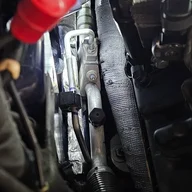
So I plumbed the system in sequence. I have an ice tank (no ice) in the rear for more fluid capacity (more heat sink) with a PB400 pump that pushes coolant forward, through the blower/intercooler, from there it goes to the heat exchanger, from the heat exchanger it goes to through the chiller and then from the chiller back to the reservoir.

In this setup, if the discharge from the blower is cooler than ambient temps, then the heat exchangers actually HEATS the coolant. In most loaded situations, the discharge from the blower is above ambient, so the heat exchanger serves it's original purpose, just at reduced temps.

In this configuration, if the A/C system takes a shit, then my car simply returns back to a traditional heat exchanger setup. That way I'm not stuck on long trips if the compressor craps out or the compressor clutch, etc (which I've had happen).

To minimize temps, they want to eliminate the H/E and the more stored solution is a loop to/from the reservoir and a loop to and from the reservoir to the blower.

I considered having a middle ground and doing a loop to/from the reservoir and the chiller and then just have my normal loop from the reservoir-blower-h/e-back to reservoir, but this would require running two pumps and I'm already over budget on electrical load with a modest radio amp and fuel system. So I elected to go with a single serial loop.

If electrical loads weren't an issue I'd have done the split loop.

IN their recommended configuration, the chiller tries to super cool the fluid under low load conditions and then when you mash, the fluid going to the blower is cooler. This is why they don't want the H/E because again, in low load, if the fluid comes out of the intercooler at lower than ambient, the H/E actually adds heat back.

So in the end, it's all about a combination of what risks you're willing to accept.

I also don't really like the operational/power configuration and I may update that in the future. The way it is right now is that the A/C system operates the chiller all the time and the interior cabin A/C some of the time. I would rather have full flexibility to turn both branches off or turn one or the other on or both. But living in FL, it's not the end of the world because I don't drive the car in conditions where I would want to cut the A/C all that often (it can damage it if you try to run it in too cold of temps) and I don't go to the drag strip (despite claims, I'm really worried that even with all the insulation and shielding that the car will still drip on the track if it's really hot/humid even with the cabin loop cutoff).
Sponsored


Top