Sponsored

Transmission Tuning (advanced tech)

Robottrainer

Well-Known Member
Joined
Apr 25, 2021
Threads
79
Messages
992
Reaction score
422
Location
Canada
First Name
John
Vehicle(s)
2018 Ford Escape. 2020 Jeep Cherokee. 2021 Ford Mustang GT Stage 2 Roush
Just curious if you can see evidence of actual learning in any of the logs etc? As in where a parameter is different after a period of time that wasn’t manually changed in the trans tune.
It has a learning disability. Hey Mike, changing those number in that table you suggested made a Huge difference.
Sponsored

 
OP
OP

engineermike

Well-Known Member
Joined
Jul 15, 2018
Threads
31
Messages
6,188
Reaction score
6,450
Location
La
Vehicle(s)
2018 GTPP A10
@Robottrainer I happened onto a table for Flare Detection Threshold and it's set to 500 rpm in the Gen3. Interestingly, the Gen4 is set much lower like under 50. Might be something else to try one day. Glad the character change helped.
 

K4fxd

Well-Known Member
Joined
Apr 2, 2020
Threads
121
Messages
13,455
Reaction score
12,262
Location
NKY
First Name
Dan
Vehicle(s)
2017 gt, 2002 FXDWG, 2008 C6,

Sponsored

Qcman17

Well-Known Member
Joined
May 14, 2019
Threads
6
Messages
1,140
Reaction score
3,211
Location
Ottawa, Canada
First Name
Cam
Vehicle(s)
2019 Mustang GT A10 Velocity Blue 301A
@Robottrainer I happened onto a table for Flare Detection Threshold and it's set to 500 rpm in the Gen3. Interestingly, the Gen4 is set much lower like under 50. Might be something else to try one day. Glad the character change helped.
So it thinks 500 RPM flare is okay. SMH.
 

K4fxd

Well-Known Member
Joined
Apr 2, 2020
Threads
121
Messages
13,455
Reaction score
12,262
Location
NKY
First Name
Dan
Vehicle(s)
2017 gt, 2002 FXDWG, 2008 C6,

Robottrainer

Well-Known Member
Joined
Apr 25, 2021
Threads
79
Messages
992
Reaction score
422
Location
Canada
First Name
John
Vehicle(s)
2018 Ford Escape. 2020 Jeep Cherokee. 2021 Ford Mustang GT Stage 2 Roush
@Robottrainer I happened onto a table for Flare Detection Threshold and it's set to 500 rpm in the Gen3. Interestingly, the Gen4 is set much lower like under 50. Might be something else to try one day. Glad the character change helped.
That's funny because that exactly how much flare it had. 100 to 500 max. Sounds like they planned it for some reason. Drumming up business perhaps?
 
OP
OP

engineermike

Well-Known Member
Joined
Jul 15, 2018
Threads
31
Messages
6,188
Reaction score
6,450
Location
La
Vehicle(s)
2018 GTPP A10
Looks like PCMTec has it defined for Gen2. auF28958 and it's set to all 10000 rpm.
 

K4fxd

Well-Known Member
Joined
Apr 2, 2020
Threads
121
Messages
13,455
Reaction score
12,262
Location
NKY
First Name
Dan
Vehicle(s)
2017 gt, 2002 FXDWG, 2008 C6,

Sponsored
OP
OP

engineermike

Well-Known Member
Joined
Jul 15, 2018
Threads
31
Messages
6,188
Reaction score
6,450
Location
La
Vehicle(s)
2018 GTPP A10
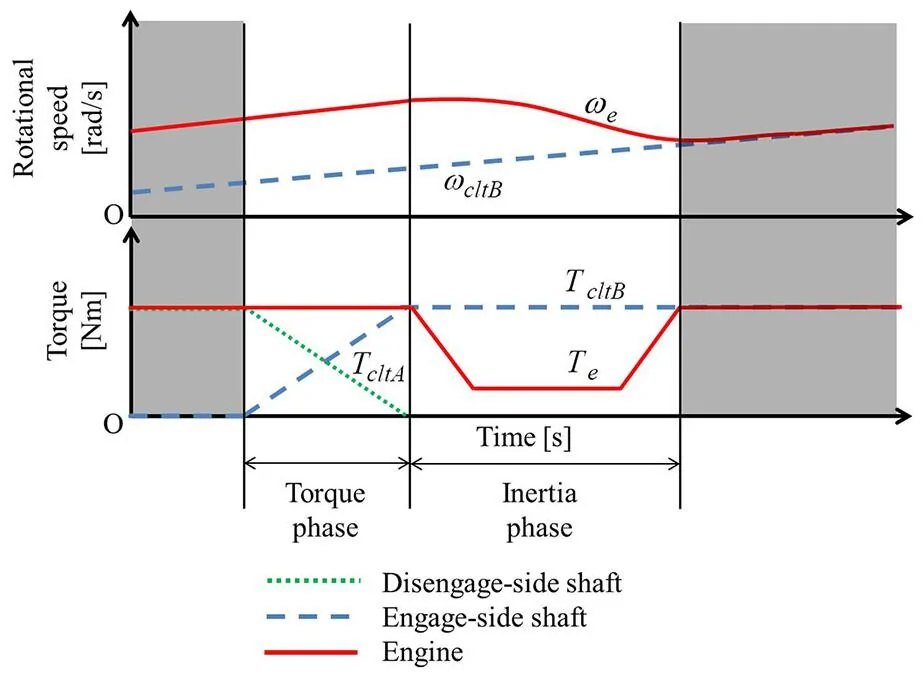
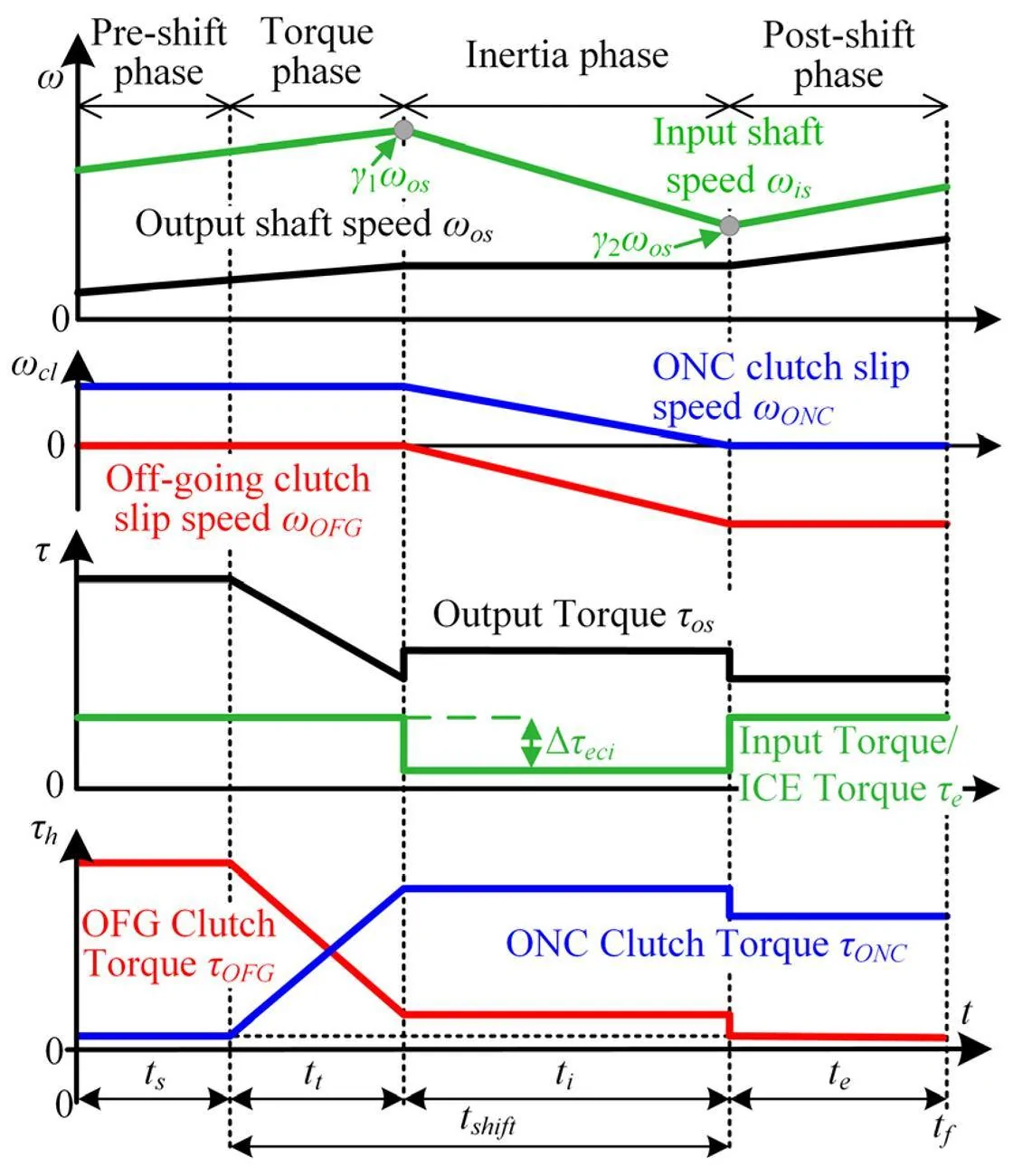
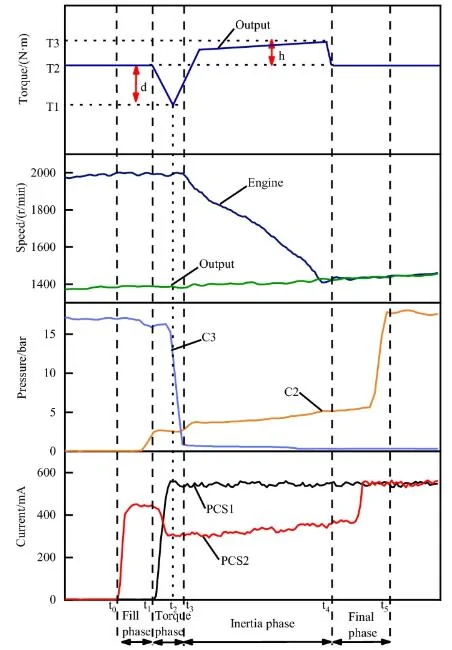
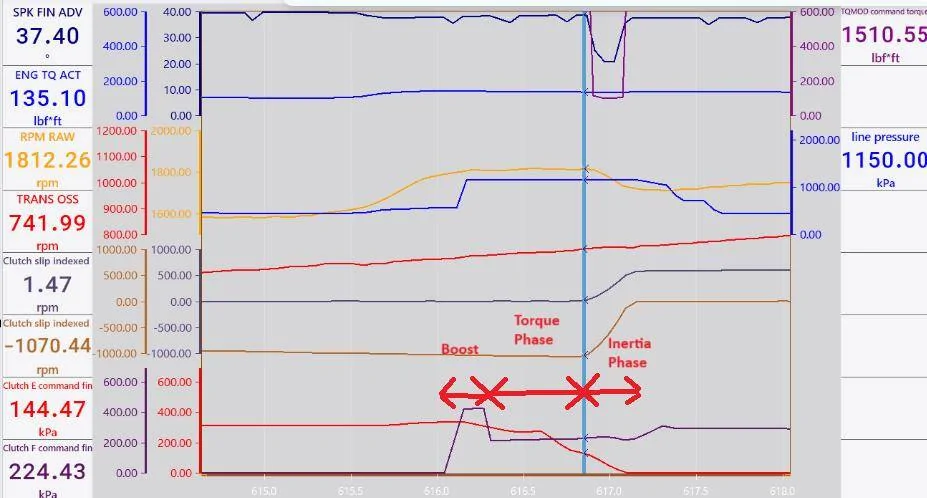
I've found some interesting information out there that helps explain what's going on in my log on page 1. My mind is a bit blown to learn that there are, in fact, 2 phases of the shift. Before phase 1, the torque phase, there is a boost pressure that simply fills the empty fluid cavities and makes the oncoming clutch plates "kiss". Then phase 1 "torque phase" happens which transfers torque from the offgoing to the oncoming clutch without actually changing the input shaft speed. Both gears are partially engaged and this is the loss in acceleration you feel. Next is phase 2 "inertia phase" when the engine speed drops and you get the spike in acceleration, and this is also when torque modulation happens. Ford takes it a step further by splitting this phase up into 5 parts that are defined in the tune.

This is a simplified graphic:

1726699639958-xk.jpg


This one adds a bit more detail:
1726699672560-vx.jpg

You can see the clutch slip curves match my log well.

And this one adds some solenoid current and pressure actual data:
1726699829604-oj.jpg

You can see the fill phase current matches my pressure curve closely.

This link has a really good explanation of the phases just after Figure 3:
Research on shifting process control of automatic transmission | Scientific Reports (nature.com)

Here's my log with some parts labelled:
1726700195450-63.jpg


It's starting to make a little more sense what all the trans parameters are for, but still a long way from clear. For any given shift, the following are the parameters that control it:

- Ramp time oncoming, ramps 0 and 1 (PCMTec puts this under the transmission torque rate branch)
- Ramp time offgoing, ramps 0 and 1 (PCMTec puts this under the transmission torque rate branch)
- Inertia phase time and multiplier, split up into 5 parts
- Torque transfer offgoing (PCMTec puts this under the torque reduction branch, with modulation)
- Torque rate offgoing, ramps 0 to 3
- Torque rate oncoming, ramp 1 only
(this list excludes all of the pressure settings, which seem to be less significant to 10r80 operation)

If you go by the PCMTec locations and hpt descriptions, it would appear that ramp times and torque rates all apply to the torque phase of the shift, and the inertia phase times and multipliers control the inertia phase of the shift. That leaves the "torque transfer offgoing" as a bit of a mystery what it controls, but it may be a clue that PCMTec puts it under the torque reduction branch with modulation. Conversely, the PCMTec description is "torque transfer before ratio change" which would seem to indicate it's the offgoing clutch rate of change during the torque phase, how could the "torque rate offgoing", a different parameter, be the same thing? It seems as there there are one too many offgoing torques, and that's if you ignore that there are anywhere from 1 to 4 different "ramps" specified.
 

Robottrainer

Well-Known Member
Joined
Apr 25, 2021
Threads
79
Messages
992
Reaction score
422
Location
Canada
First Name
John
Vehicle(s)
2018 Ford Escape. 2020 Jeep Cherokee. 2021 Ford Mustang GT Stage 2 Roush
I've found some interesting information out there that helps explain what's going on in my log on page 1. My mind is a bit blown to learn that there are, in fact, 2 phases of the shift. Before phase 1, the torque phase, there is a boost pressure that simply fills the empty fluid cavities and makes the oncoming clutch plates "kiss". Then phase 1 "torque phase" happens which transfers torque from the offgoing to the oncoming clutch without actually changing the input shaft speed. Both gears are partially engaged and this is the loss in acceleration you feel. Next is phase 2 "inertia phase" when the engine speed drops and you get the spike in acceleration, and this is also when torque modulation happens. Ford takes it a step further by splitting this phase up into 5 parts that are defined in the tune.

This is a simplified graphic:

1726699639958-xk.jpg


This one adds a bit more detail:
1726699672560-vx.jpg

You can see the clutch slip curves match my log well.

And this one adds some solenoid current and pressure actual data:
1726699829604-oj.jpg

You can see the fill phase current matches my pressure curve closely.

This link has a really good explanation of the phases just after Figure 3:
Research on shifting process control of automatic transmission | Scientific Reports (nature.com)

Here's my log with some parts labelled:
1726700195450-63.jpg


It's starting to make a little more sense what all the trans parameters are for, but still a long way from clear. For any given shift, the following are the parameters that control it:

- Ramp time oncoming, ramps 0 and 1 (PCMTec puts this under the transmission torque rate branch)
- Ramp time offgoing, ramps 0 and 1 (PCMTec puts this under the transmission torque rate branch)
- Inertia phase time and multiplier, split up into 5 parts
- Torque transfer offgoing (PCMTec puts this under the torque reduction branch, with modulation)
- Torque rate offgoing, ramps 0 to 3
- Torque rate oncoming, ramp 1 only
(this list excludes all of the pressure settings, which seem to be less significant to 10r80 operation)

If you go by the PCMTec locations and hpt descriptions, it would appear that ramp times and torque rates all apply to the torque phase of the shift, and the inertia phase times and multipliers control the inertia phase of the shift. That leaves the "torque transfer offgoing" as a bit of a mystery what it controls, but it may be a clue that PCMTec puts it under the torque reduction branch with modulation. Conversely, the PCMTec description is "torque transfer before ratio change" which would seem to indicate it's the offgoing clutch rate of change during the torque phase, how could the "torque rate offgoing", a different parameter, be the same thing? It seems as there there are one too many offgoing torques, and that's if you ignore that there are anywhere from 1 to 4 different "ramps" specified.
So here's what I learned (not as intricate as what you learnedl)

I experimented with Alt 2 in sport, and track. This is assigned as stock in drag mode.

The shifts are much firmer in sport. A little less in track. In sport mode there is a bit of an occasional harshness, a stutter or double bump, if you will on the 2-3 shift, sometimes the 3-4. No flares.

In track mode the shifts aren't as sharp but the harshness or double bump isn't there. It also holds second on down shifts and the down shifts aren't as aggressive as sport mode.

I did a torque reduction on the 1-2 shift bur it didn't clear up the double bump.

I went back and set the shift characteristics for sport back to normal but left alt 2 in drag and track (which I think is mud mode). It shifts much better this way.

It goes to show there are many factors that control the shift feel and firmness, not just the torque reduction/modulation tables.
 

Robottrainer

Well-Known Member
Joined
Apr 25, 2021
Threads
79
Messages
992
Reaction score
422
Location
Canada
First Name
John
Vehicle(s)
2018 Ford Escape. 2020 Jeep Cherokee. 2021 Ford Mustang GT Stage 2 Roush
So here's what I learned (not as intricate as what you learnedl)

I experimented with Alt 2 in sport, and track. This is assigned as stock in drag mode.

The shifts are much firmer in sport. A little less in track. In sport mode there is a bit of an occasional harshness, a stutter or double bump, if you will on the 2-3 shift, sometimes the 3-4. No flares.

In track mode the shifts aren't as sharp but the harshness or double bump isn't there. It also holds second on down shifts and the down shifts aren't as aggressive as sport mode.

I did a torque reduction on the 1-2 shift bur it didn't clear up the double bump.

I went back and set the shift characteristics for sport back to normal but left alt 2 in drag and track (which I think is mud mode). It shifts much better this way.

It goes to show there are many factors that control the shift feel and firmness, not just the torque reduction/modulation tables.
One thing is for sure. There is no one or two things that you can change to properly Tune each shift and each shift has its own set of parameter. It's why certain shift characteristics work better with certain drive modes (normal, drag, track, sport, sport plus).

Sometimes a combination of what's already there works. In my case, Alt2 in track, Alt 1 in sport. Still some left on the table. Id like the shifts to be a bit tighter and snappier. Without fully understanding how this all works will prevent me from achieving that. What I have now is satisfactory for my pupose. It got rid of the deteremental flares. I may pursuit trying the old fashioned mechanical approach to quicker sharper shifts via a Ratio Tek kit, using hydraulics.

Then there is the mechanical variations between each trasmission. Then mods to the engine that boosts power and torque. Its not a one size fits all software.
 

Robottrainer

Well-Known Member
Joined
Apr 25, 2021
Threads
79
Messages
992
Reaction score
422
Location
Canada
First Name
John
Vehicle(s)
2018 Ford Escape. 2020 Jeep Cherokee. 2021 Ford Mustang GT Stage 2 Roush
I've found some interesting information out there that helps explain what's going on in my log on page 1. My mind is a bit blown to learn that there are, in fact, 2 phases of the shift. Before phase 1, the torque phase, there is a boost pressure that simply fills the empty fluid cavities and makes the oncoming clutch plates "kiss". Then phase 1 "torque phase" happens which transfers torque from the offgoing to the oncoming clutch without actually changing the input shaft speed. Both gears are partially engaged and this is the loss in acceleration you feel. Next is phase 2 "inertia phase" when the engine speed drops and you get the spike in acceleration, and this is also when torque modulation happens. Ford takes it a step further by splitting this phase up into 5 parts that are defined in the tune.

This is a simplified graphic:

1726699639958-xk.jpg


This one adds a bit more detail:
1726699672560-vx.jpg

You can see the clutch slip curves match my log well.

And this one adds some solenoid current and pressure actual data:
1726699829604-oj.jpg

You can see the fill phase current matches my pressure curve closely.

This link has a really good explanation of the phases just after Figure 3:
Research on shifting process control of automatic transmission | Scientific Reports (nature.com)

Here's my log with some parts labelled:
1726700195450-63.jpg


It's starting to make a little more sense what all the trans parameters are for, but still a long way from clear. For any given shift, the following are the parameters that control it:

- Ramp time oncoming, ramps 0 and 1 (PCMTec puts this under the transmission torque rate branch)
- Ramp time offgoing, ramps 0 and 1 (PCMTec puts this under the transmission torque rate branch)
- Inertia phase time and multiplier, split up into 5 parts
- Torque transfer offgoing (PCMTec puts this under the torque reduction branch, with modulation)
- Torque rate offgoing, ramps 0 to 3
- Torque rate oncoming, ramp 1 only
(this list excludes all of the pressure settings, which seem to be less significant to 10r80 operation)

If you go by the PCMTec locations and hpt descriptions, it would appear that ramp times and torque rates all apply to the torque phase of the shift, and the inertia phase times and multipliers control the inertia phase of the shift. That leaves the "torque transfer offgoing" as a bit of a mystery what it controls, but it may be a clue that PCMTec puts it under the torque reduction branch with modulation. Conversely, the PCMTec description is "torque transfer before ratio change" which would seem to indicate it's the offgoing clutch rate of change during the torque phase, how could the "torque rate offgoing", a different parameter, be the same thing? It seems as there there are one too many offgoing torques, and that's if you ignore that there are anywhere from 1 to 4 different "ramps" specified.
Heres a newb question. What does 1A-1M, 1A-2A, 1A-2M refer to? Is this auto mode/manual paddle mode?
 
OP
OP

engineermike

Well-Known Member
Joined
Jul 15, 2018
Threads
31
Messages
6,188
Reaction score
6,450
Location
La
Vehicle(s)
2018 GTPP A10
1A and 2M are without engine braking. 1M and 2M are with engine braking. All other gears are with engine braking, so there are no gears 3-10 “A”.
Sponsored


Top