- Banned
- #16
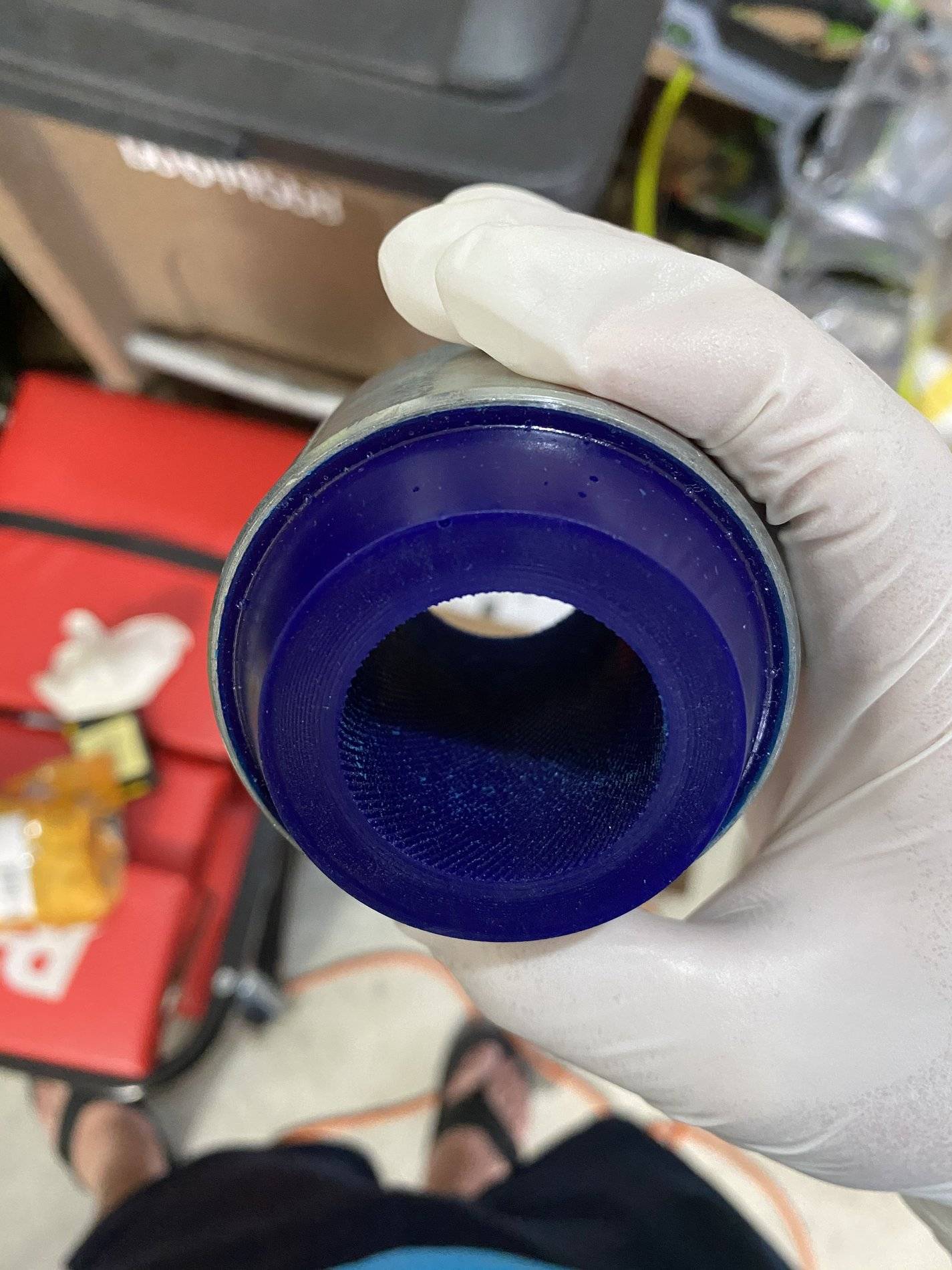
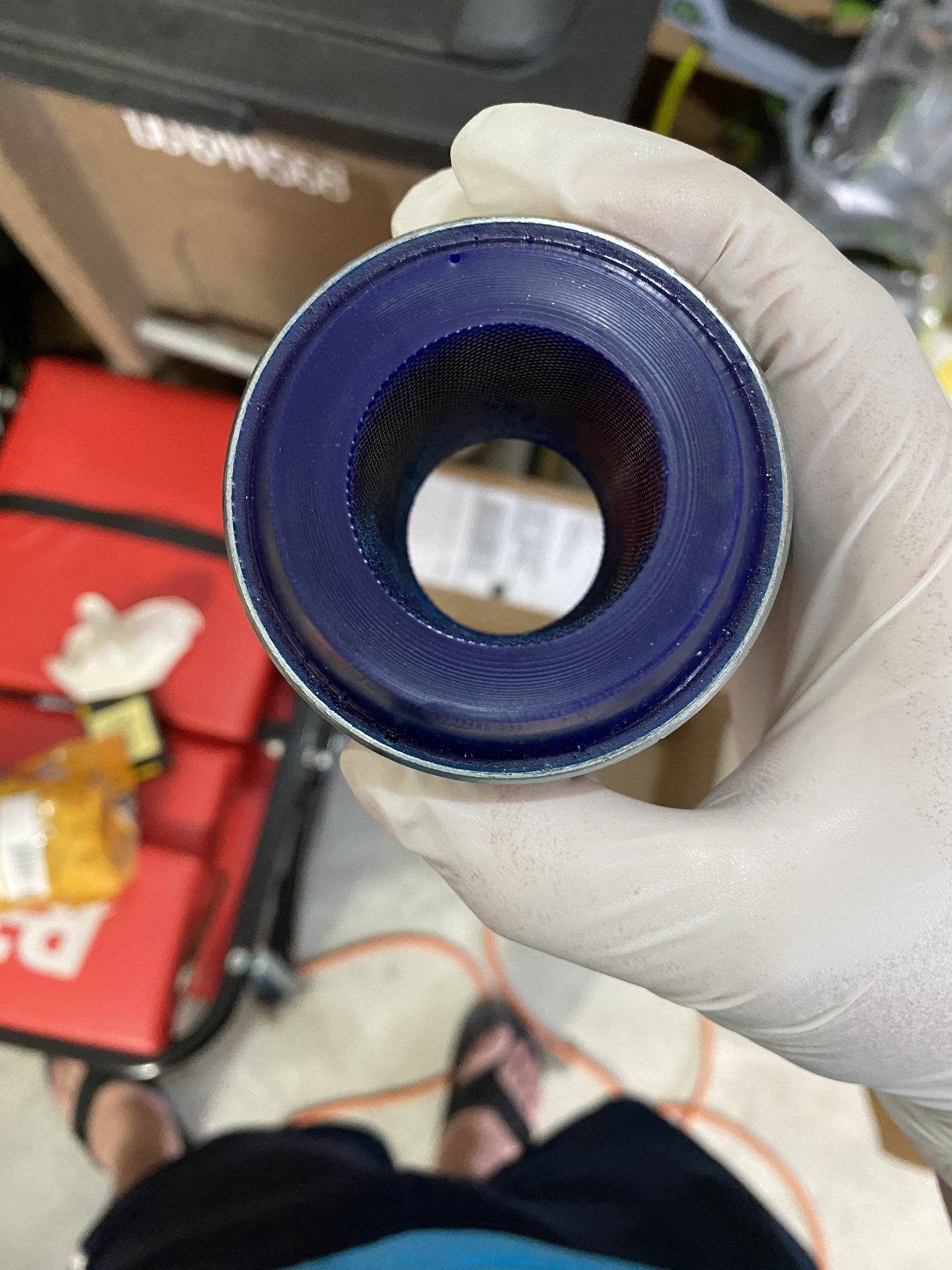
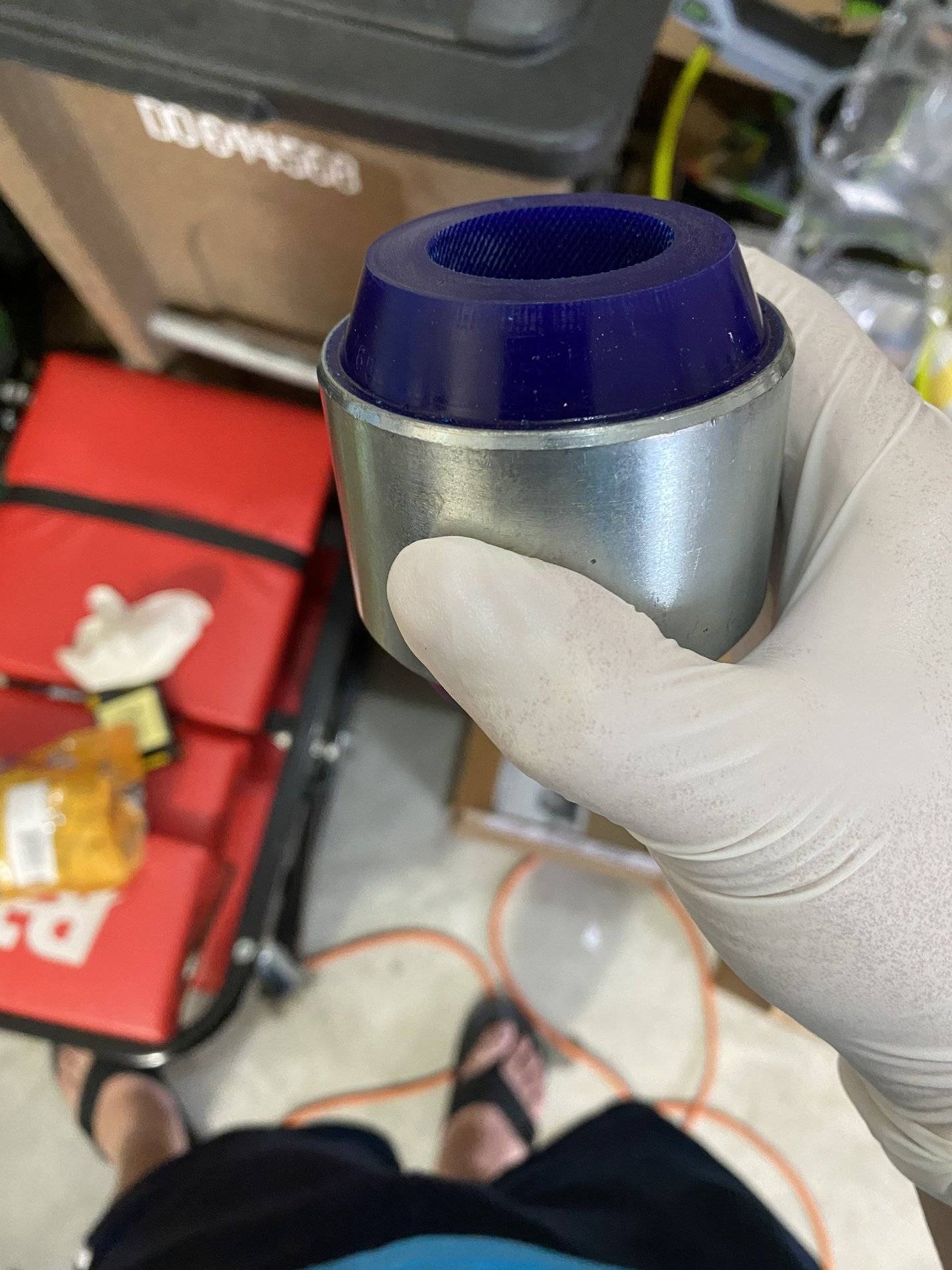
Those SuperPro bushings look really nice. They're about twice as expensive as the E.S. version, but maybe good for reason.
Sponsored



So what you're saying is we need someone to come out with a K-member and tubular control arm that removes the off-axis joints...I tested that stuff years ago.
No thanks.
1: That's not the right location for poly urethane.
2: In that location, polyurethane isn't really a big improvement over a bonded rubber bushing. Makes more sense as a service replacement, if stocker is bad. But I'll pass

That wasn't quite where I was going, but the fact that the poly extends well out past the outer shell does give it more flexibility than if the outer shell went all the way out to a flanged end-of-poly design. I wouldn't be surprised if limiting the length of the outer shell like that drops the off-axis stiffness down to 25% or so of what it would be with a full-length shell.That’s what I got! If you are talking about how far the poly protrudes out, it’s about 1/2inch.
I've never known polyurethane to be bonded to either an inner sleeve, an inner ball, or the outer shell. There's a fairly tight fit at the shell, I guess theoretically some sort of interference fit, that keeps the poly from rotating at that surface.Does the PU bushing allow rotation of the center metal in the outter metal shell? If the whole thing is bonded like rubber then the spherical that freely rotates is way superior to not add any rate into the equation.
It's not bonded and it is instructed to heavily grease the sleeve that inserts into the PU. It is intended to allow rotation between the torqued sleeve and the PU bushing. Obviously with some off-axis motion it'll have some stiction but nothing anywhere near what the stock bonded bushing does.Does the PU bushing allow rotation of the center metal in the outter metal shell? If the whole thing is bonded like rubber then the spherical that freely rotates is way superior to not add any rate into the equation.

Good as far as it goes, I guess, but he's overlooking an important part.I would say this video some what applies. I would say the super pro bushing lets the arm move more freely than the stock bushing but maybe not as much as a bearing.
Time stamps for the lazy :20 rubber 7:20 for poly 7:50 spherical bearing
Yea its possible he is trying to push the bushings. All I can say, is ill be going forward with the install this week and hope to have it done by the weekend. Ill have @Bluemustang evaluate it since he would most likely know what to feel for and his car has the steed rlca I believe. If I'm not happy with it ill just change it further down the line.Good as far as it goes, I guess, but he's overlooking an important part.
Where he's kind of wobbling the bearing-equipped arm side to side and rotationally - that's the sort of off-axis movements that Brian and I are talking about (this is commonly referred to as "bind"). He doesn't try the same wobbling movements on either the rubber or poly bushed cases, and doesn't even mention it in connection with them (there might be a reason with an agenda involved). And those are the movements that polyurethane does not accommodate well without specific detailing of its shape, constraint by the outer sleeve, or the presence of some intentional "voiding" in the poly itself.
Norm
The OEM bushing binds about several axes: the rotational axes and the off-axis motion because of the orientation of the fastener relative to the wheel & centerline of the car. The combination of the two creates a huge amount of wheel rate in the suspension. It's really quite remarkable that the car works at all with this design.Good as far as it goes, I guess, but he's overlooking an important part.
Where he's kind of wobbling the bearing-equipped arm side to side and rotationally - that's the sort of off-axis movements that Brian and I are talking about (this is commonly referred to as "bind"). He doesn't try the same wobbling movements on either the rubber or poly bushed cases, and doesn't even mention it in connection with them (there might be a reason with an agenda involved). And those are the movements that polyurethane does not accommodate well without specific detailing of its shape, constraint by the outer sleeve, or the presence of some intentional "voiding" in the poly itself.
Norm
The OEM bushing binds about several axes: the rotational axes and the off-axis motion because of the orientation of the fastener relative to the wheel & centerline of the car. The combination of the two creates a huge amount of wheel rate in the suspension. It's really quite remarkable that the car works at all with this design.
Not at all sure what you're talking about here.You do increase the static & sliding friction, though, some small amount.