Rapid Red
Well-Known Member
- Joined
- Nov 4, 2019
- Threads
- 45
- Messages
- 5,049
- Reaction score
- 4,096
- Location
- Woodstock GA
- First Name
- Greg
- Vehicle(s)
- GT PP2 RaceRed Roush> Steeda> preformance
- Vehicle Showcase
- 2
I get what you're saying, and for that, the details will matter. Fortunately, exhaust flow is a series of pulses, so the left and right banks aren't going to be at peak flow at the same time. Even if they did, you'd only effectively need about 40% more pipe diameter in the merged section.
FWIW, the catalytic converter in my other post was rated to flow 600 cfm at about 1 psi pressure drop. Or only about a 2.5% or so loss of peak power and smaller sacrifices in torque everywhere below that.
You would still get the benefit from essentially putting the mufflers in parallel for less pressure drop. But . . .
On a 90° V8 with a flat-plane crankshaft and proper header design, maybe not (though the mufflers in parallel matter would still be present). Think 3.0 liter Cosworth DFV here, not the recent GT350 here.
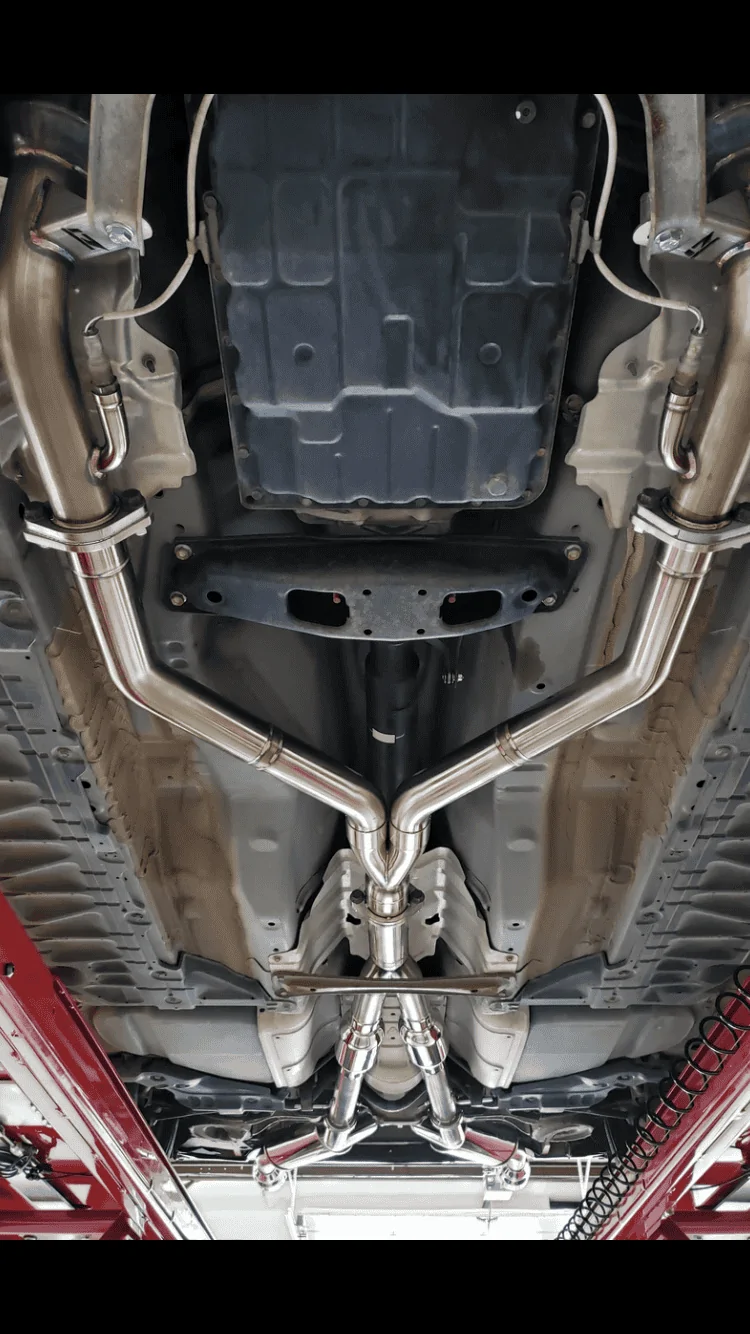
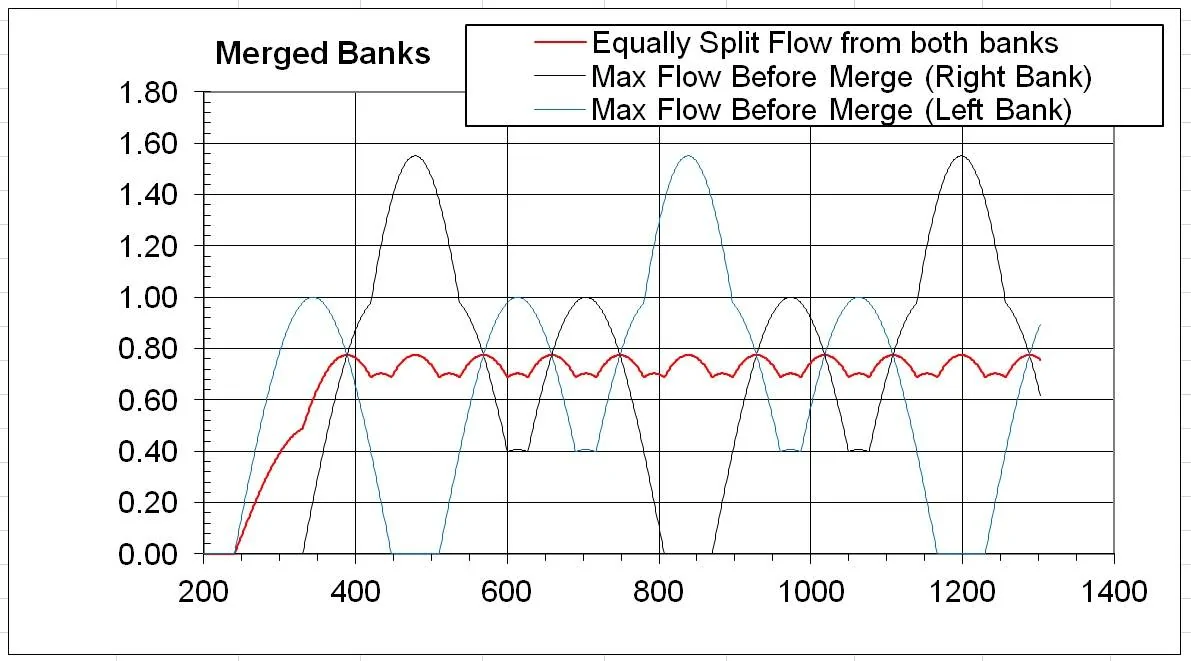
With a crossplane crank, the firing orders for 90° V8 engines put two cylinders in the same bank firing in sequence, first on one side, and later on the other. This dumps a combined flow from two cylinders down each pipe, in side to side alternating fashion. This is where your classic V8 rumble is coming from. But this also means you get periods of somewhat higher backpressure some of the time. An X-pipe merges the flows and splits them more equally going rearward to the mufflers, whose resistance is also dependent on exhaust gas flow.
I got pretty deep into this. Here's a rough approximation of how it plots up. The big widely spaced peaks are your low-frequency V8 rumble, and the red trace is what a fully merging X-pipe (or pair of Y's, your choice) would end up giving you. The smoother, higher frequency appearance of the X-trace is obvious.

I'm not discounting that at all. I was more than pleasantly surprised at how my effort above turned out.
Norm
Good post Norm !!
Sponsored