Angrey
Well-Known Member
- Joined
- Jun 21, 2020
- Threads
- 104
- Messages
- 2,794
- Reaction score
- 2,984
- Location
- Coral Gables
- Vehicle(s)
- 2016 GT350
I wrote about this in other threads. When I started my fuel system journey several years ago, I found one system on the market that was 1000 rwhp capable, drop in the factory tank, brushless and variable control. Simple, rock solid. Unfortunately, it was Fuelab's setup for the S197 cars and they had discontinued it. No one bought it. They were essentially 10 years too early to the market. They put a lot of time and R&D into fitment and fab and virtually no one bought it.
I spoke with virtually ALL the major players in the market at that time. Fuelab, Radium, Deatschwerks, Aeromotive, Fore.
Fuelab wasn't interested because they'd already been burned so to speak. Aeromotive wasn't interested because they do fuel systems across multiple vehicle platforms. The engineer I spoke with at the time even indicated that because the newer mustangs were IRS/Saddle tank (like the corvettes) they weren't interested in a factory fuel cell solution. And anyone wanting that level could go with an after market fuel cell or surge tank.
And there was a ton of gravity and resistance to moving away from the tried and true, triple pumps running full boogie or staged on a return line.
And although the number of cars running around at 1000 rwhp has increased dramatically, you have keep in perspective it's still a very small consumer pool. Meaning if there's now 10,000 or even 50,000 cars running around with those needs, it's still a very small market compared to the consumer market for the established products.
At one point, I even considered starting my own business. But when I started to dive deeper into it, I realized kinda their point. I'd put a whole bunch of money into it with muted potential on the back end. The only way it makes sense is if a performance shop/vendor who's building or fabricating a system for their own cars/needs wants to replicate it and sell it as a kit. Which is what we've seen.
Eventually a bunch of them came around and started offering at least more bits and components of a brushless, variable, in OE tank set up.
I do think however, we're still a little at the "you can have it effective, you can have it economical, you can have it simple, now pick any two" scenarios.
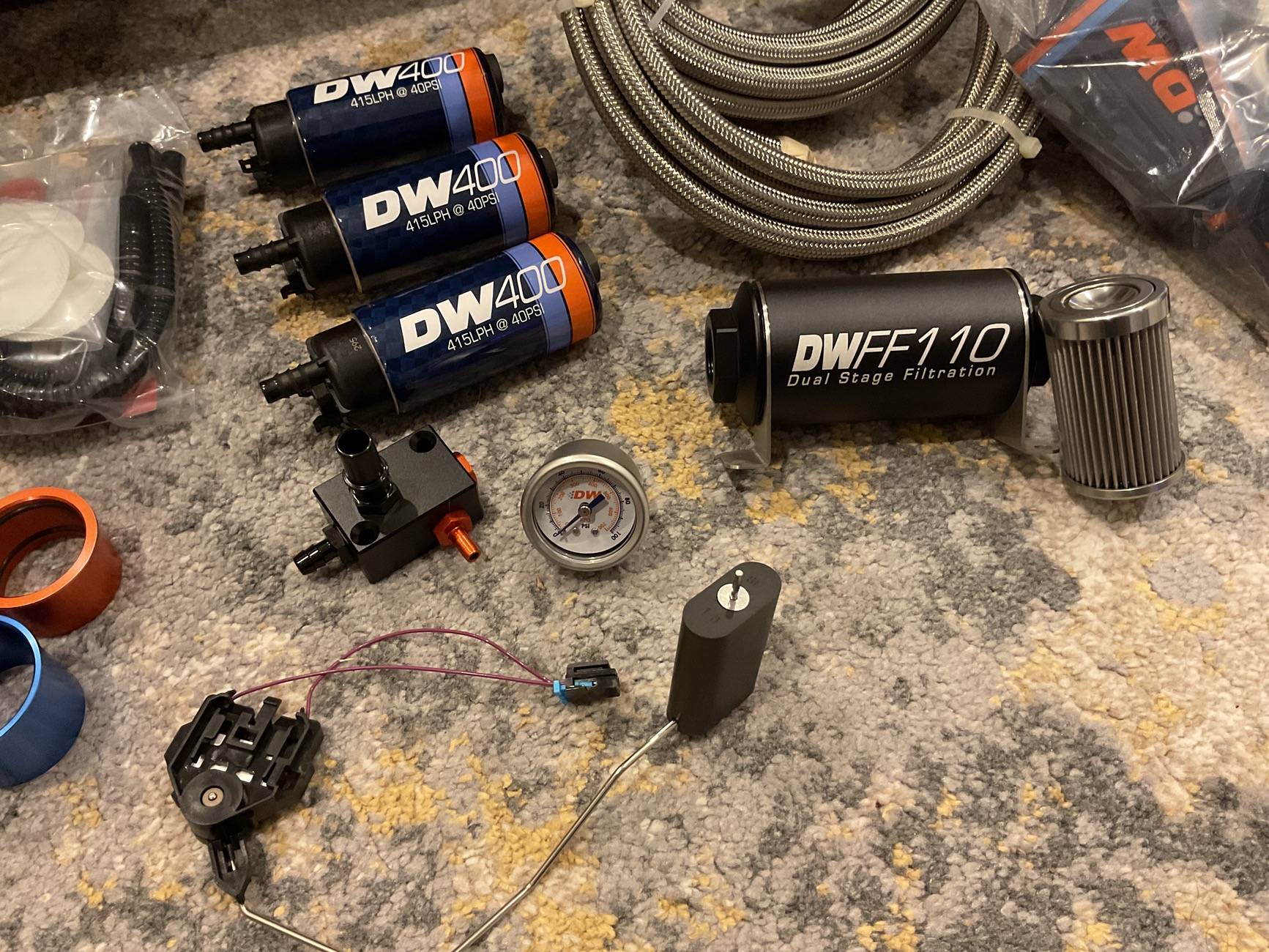
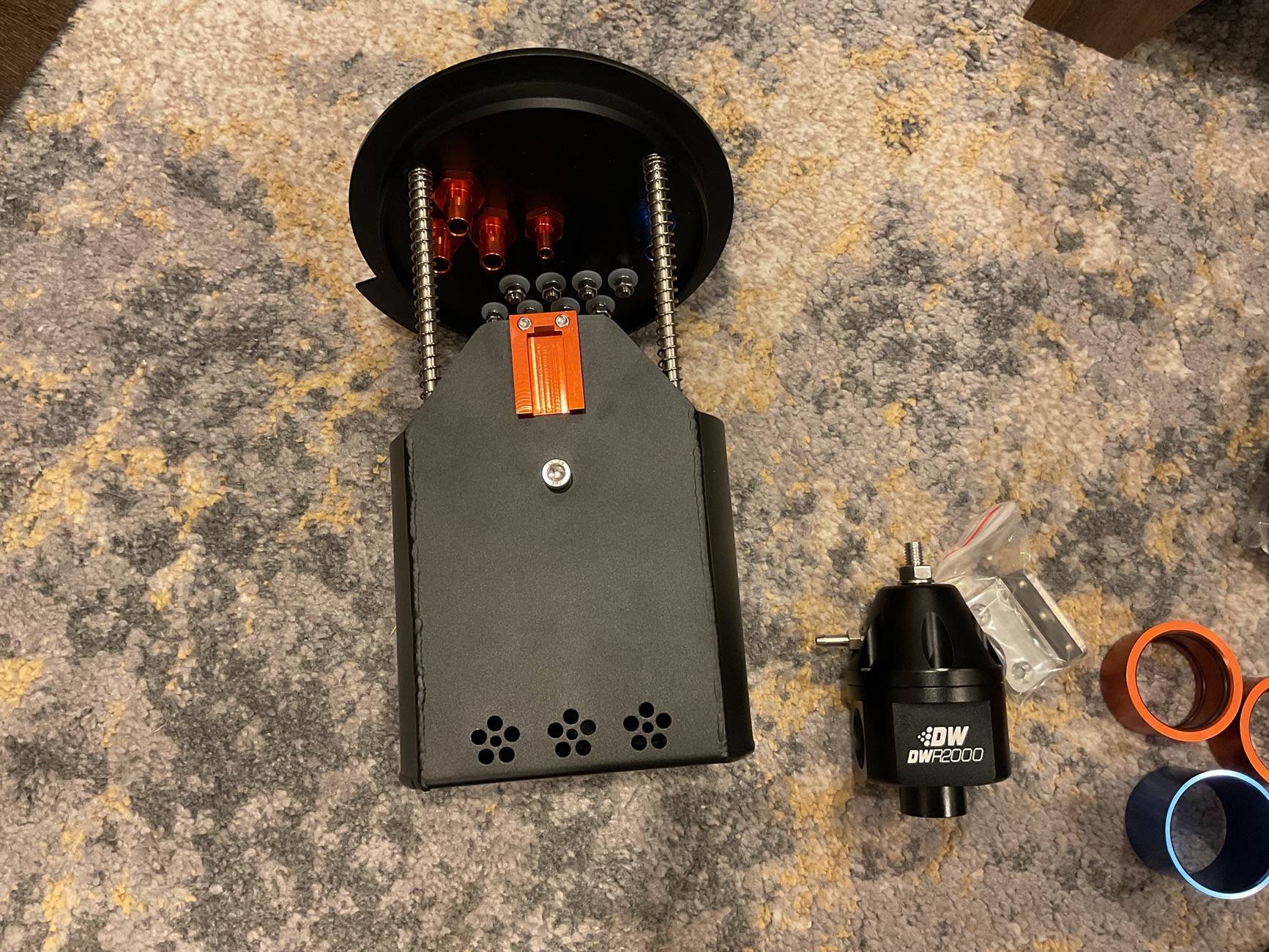
I chose the effective, expensive and complicated route. I think today, the prices on my setup have come down (even against the tide of inflation) because there's just more stuff to select from. But I chose the complexity because I wasn't keen on compromising on just about anything.
And some of the performance aspects are admittedly "obscure." Do I really need to be able to mash when the fuel level is very low? For me, the answer is yes. When I'm cruising on a long drive, I don't want a "window" of when it's safe to smash and then have to either make a risky choice or just forgo romping it when the fuel gets lower. A LOT of the market just chalks it up to "race car" and gives up on that aspect.
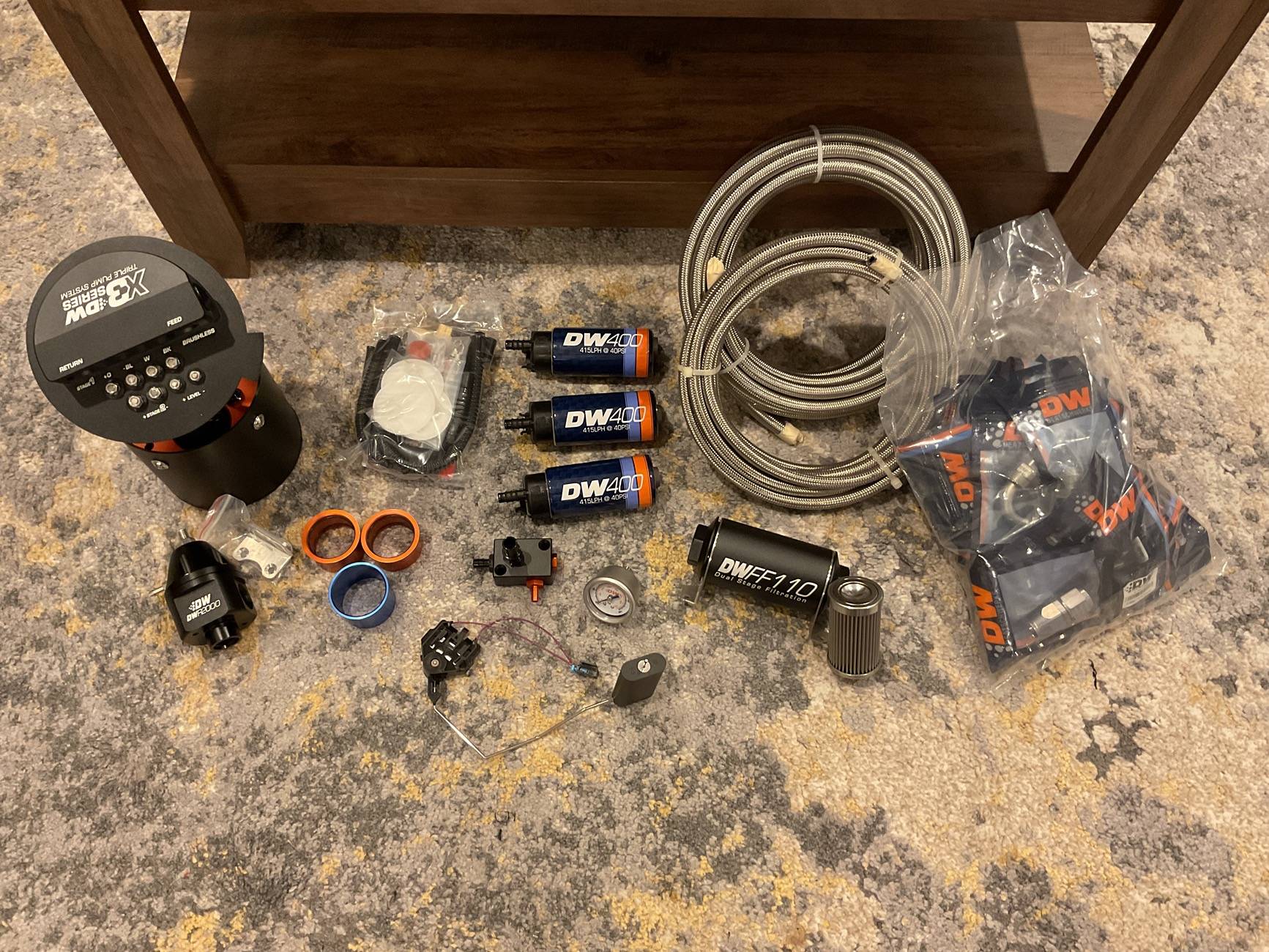
Ideally we could at LEAST buy pre fabricated system components. Like a shop that sells just the feed and return lines, fittings, filter, regulator, all already assembled and basically "plug and play" and then from there you could buy the other system elements like the pumps and housing, controls, boosters and wiring, etc. About 50% of the complexity for me was the lines and fittings.
If I were to do it over again, I'd probably go with a BKS pump in a Radium bucket with a fuelab electronic regulator, repurpose the factory feed as a return line and install a new feed line. That would get to around 800 or 900 rwhp reliably on E85, and with a booster of your choice, well out into the 1200-1300 hp range.
I spoke with virtually ALL the major players in the market at that time. Fuelab, Radium, Deatschwerks, Aeromotive, Fore.
Fuelab wasn't interested because they'd already been burned so to speak. Aeromotive wasn't interested because they do fuel systems across multiple vehicle platforms. The engineer I spoke with at the time even indicated that because the newer mustangs were IRS/Saddle tank (like the corvettes) they weren't interested in a factory fuel cell solution. And anyone wanting that level could go with an after market fuel cell or surge tank.
And there was a ton of gravity and resistance to moving away from the tried and true, triple pumps running full boogie or staged on a return line.
And although the number of cars running around at 1000 rwhp has increased dramatically, you have keep in perspective it's still a very small consumer pool. Meaning if there's now 10,000 or even 50,000 cars running around with those needs, it's still a very small market compared to the consumer market for the established products.
At one point, I even considered starting my own business. But when I started to dive deeper into it, I realized kinda their point. I'd put a whole bunch of money into it with muted potential on the back end. The only way it makes sense is if a performance shop/vendor who's building or fabricating a system for their own cars/needs wants to replicate it and sell it as a kit. Which is what we've seen.
Eventually a bunch of them came around and started offering at least more bits and components of a brushless, variable, in OE tank set up.
I do think however, we're still a little at the "you can have it effective, you can have it economical, you can have it simple, now pick any two" scenarios.
I chose the effective, expensive and complicated route. I think today, the prices on my setup have come down (even against the tide of inflation) because there's just more stuff to select from. But I chose the complexity because I wasn't keen on compromising on just about anything.
And some of the performance aspects are admittedly "obscure." Do I really need to be able to mash when the fuel level is very low? For me, the answer is yes. When I'm cruising on a long drive, I don't want a "window" of when it's safe to smash and then have to either make a risky choice or just forgo romping it when the fuel gets lower. A LOT of the market just chalks it up to "race car" and gives up on that aspect.
Ideally we could at LEAST buy pre fabricated system components. Like a shop that sells just the feed and return lines, fittings, filter, regulator, all already assembled and basically "plug and play" and then from there you could buy the other system elements like the pumps and housing, controls, boosters and wiring, etc. About 50% of the complexity for me was the lines and fittings.
If I were to do it over again, I'd probably go with a BKS pump in a Radium bucket with a fuelab electronic regulator, repurpose the factory feed as a return line and install a new feed line. That would get to around 800 or 900 rwhp reliably on E85, and with a booster of your choice, well out into the 1200-1300 hp range.
Sponsored