WildHorse
N/A or GO HOME
- Joined
- Jun 28, 2017
- Threads
- 270
- Messages
- 10,297
- Reaction score
- 8,350
- Location
- Home World: CLASSIFIED
- First Name
- Puddintane
- Vehicle(s)
- '17 S550
- Vehicle Showcase
- 1
Centrifugal clutch finger movementhydraulic system collapse under high RPM
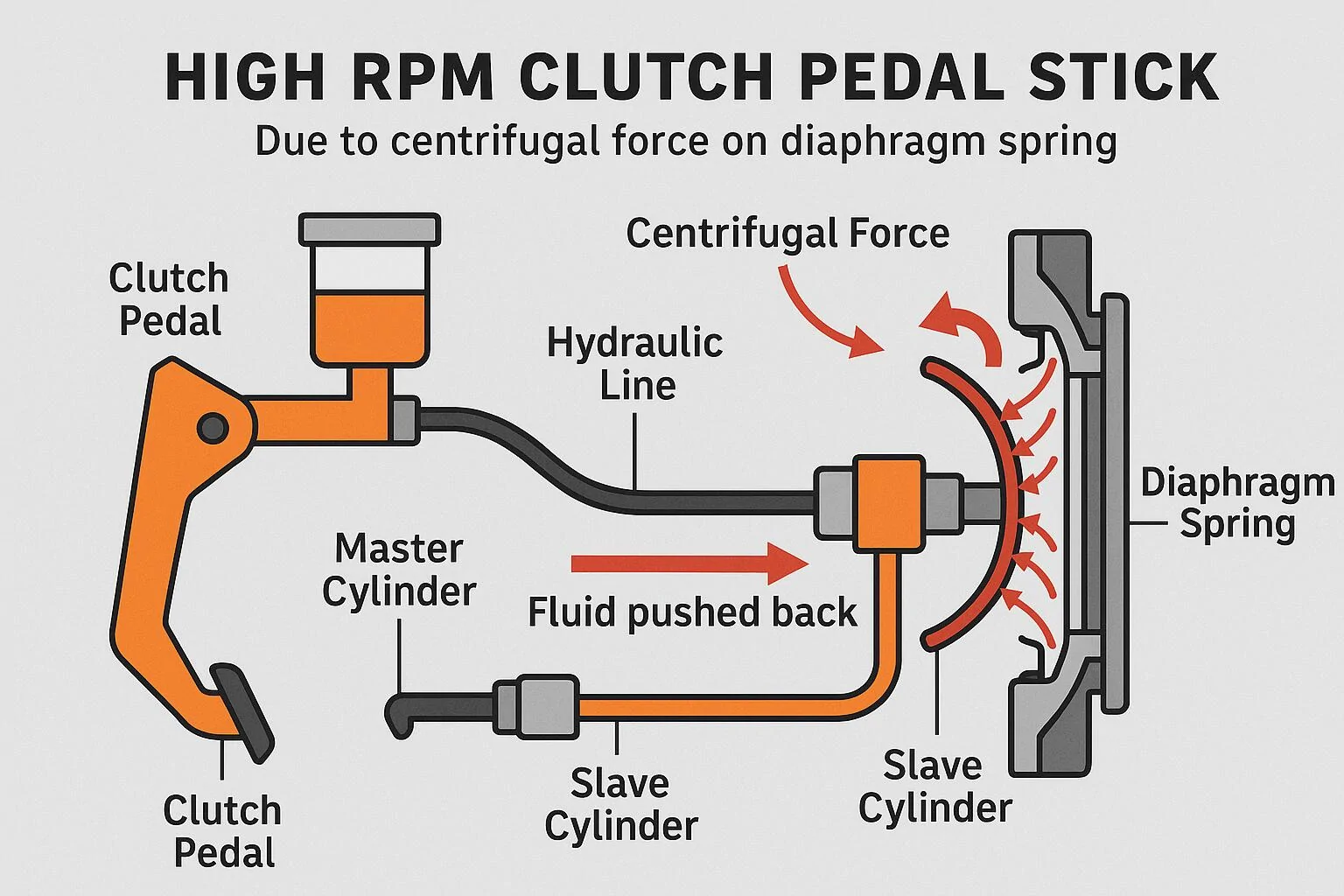
At 7,000+ RPM, the stock diaphragm spring “grows” outward from centrifugal force.
This pushes the throwout bearing (TOB) & slave cylinder piston backward into the fluid column.
The backward motion forces fluid up toward the master cylinder and drops line pressure.
Weak master cylinder return
The stock Ford plastic master has a light return spring.
If fluid is pushed backward, the master piston may not fully return unless you pull it back with your foot.
Heat & aeration in the clutch line
The factory soft rubber clutch line can expand and heat‑soak near the headers, aerating the fluid.
Aerated fluid compresses instead of transmitting pressure, so the pedal goes limp until pumped.
Over-stroking the slave cylinder
The MT‑82 pedal travel is longer than needed to disengage the clutch.
At high RPM, this over-extension worsens push-back and can momentarily “trap” the pedal down.
At high RPM, the clutch’s spinning diaphragm spring physically shoves the hydraulics backward, the pedal loses preload, and you have to re-prime it with your foot and a few pumps. This is mechanical + hydraulic, not just “bad fluid.”
Permanent Fixes for MT‑82 Pedal Sticking at High RPM
1. Upgrade the Clutch Line
Replace the stock rubber line with a stainless braided clutch line (Steeda, JPC, Lethal Performance, McLeod).
Eliminates expansion and reduces aeration.
Keeps fluid cooler.
2. Flush & Bleed With High‑Temp DOT 4
Use a premium fluid like:
Motul RBF 600/660
Castrol SRF
Wilwood EXP 600
High boiling point + low compressibility → more consistent pedal feel.
Make sure to fully bleed — any tiny bubble can cause limp pedal after high RPM.
3. Install a Pedal Travel Limiter
Limits master cylinder stroke so you only move the slave as far as needed for disengagement.
Prevents over-extension and reduces push-back.
Cheap mod — Steeda, Barton, or DIY with a clutch stop bolt.
4. Stronger Pedal Return Spring or Assist Spring Delete
Removing the factory assist spring makes the pedal more “honest” and lets you feel changes in pedal height.
Adding a stronger external return spring can help the pedal come back faster after push-back.
5. Master/Slave Cylinder Upgrade
Aftermarket master cylinder (Tilton, McLeod) with stiffer return and better sealing.
New OEM slave or upgraded TOB/slave combo when you replace the clutch.
6. Clutch Upgrade (If Needed)
Aftermarket performance clutches often have better diaphragm spring designs that resist centrifugal over-center.
Popular MT‑82 high‑RPM clutches:
McLeod RST/RXT
Exedy Mach 600/Hyper Single
Spec Stage 2+ / 3
7. Remote Bleeder
Install a remote bleeder line on the slave cylinder.
Makes bleeding way easier, ensures no trapped bubbles.
Especially helpful after track days or heavy abuse.
Typical “Bulletproof” MT‑82 Setup for High RPM
Stainless braided clutch line
DOT 4 RBF 660 fluid
Pedal stop/travel limiter
Assist spring delete
Fresh slave cylinder + remote bleeder
High-RPM-friendly clutch (RST/RXT or Spec Stage 3+)
Sponsored