Sponsored

Help with burning oil New M1

GregO

Well-Known Member
Joined
Mar 5, 2018
Threads
41
Messages
3,339
Reaction score
2,481
Location
Illinois
Vehicle(s)
S550 GTPP
I contacted UPR and they said I have the correct system for my setup and it’s not an issue.
It’s interesting, UPR offers a kit specifically for the Procharger other than the one you’re currently using.
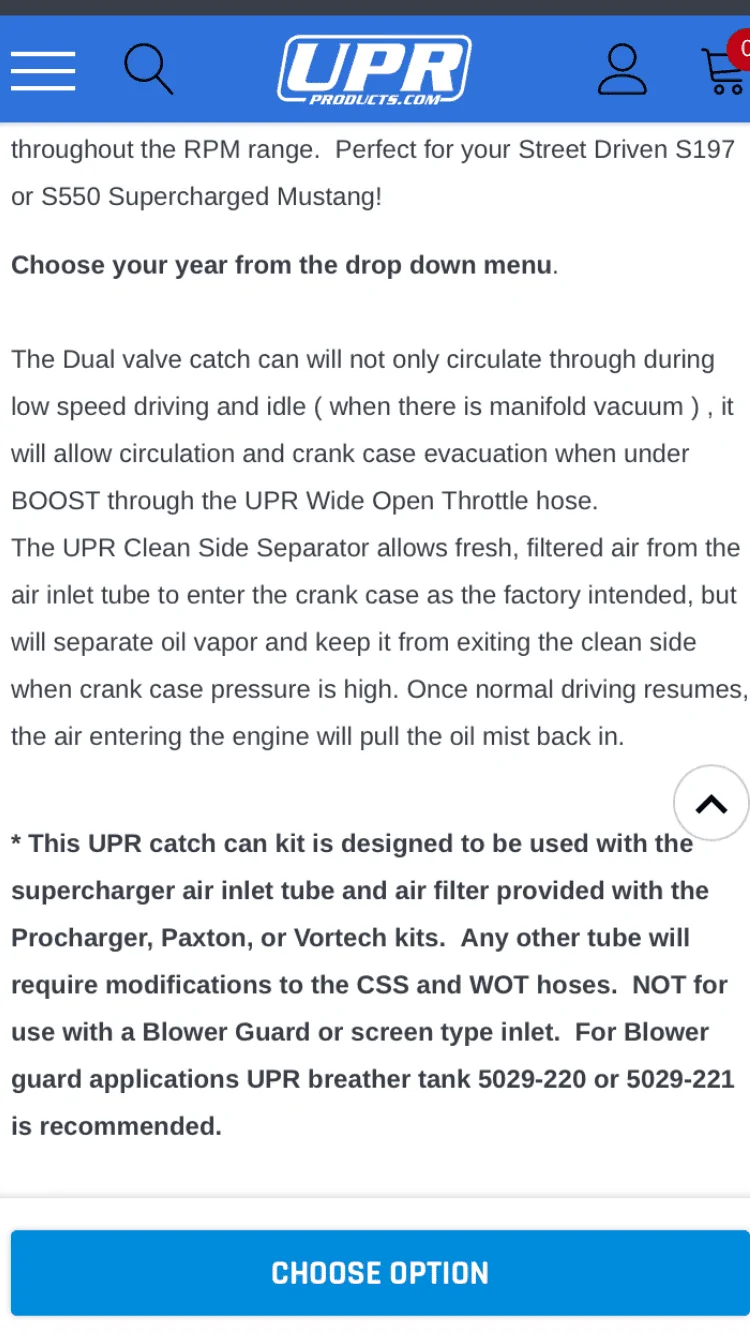
Is there no advantage to the dual valve catch can.
F1D7C111-41E4-4C5D-9A24-F73108583A7B.webp
Sponsored


GregO

Well-Known Member
Joined
Mar 5, 2018
Threads
41
Messages
3,339
Reaction score
2,481
Location
Illinois
Vehicle(s)
S550 GTPP
PCV Systems were designed for emissions and preventing pollution, they have nothing to do with engine health or performance, and in fact reduce engine performance over time
People here referencing PCV like myself understand that another function is keeping condensation and acid formation from contaminating the lubricating oil.
The PCV system increases engine life.
As far as your example of the “draft tube” You missed the part about how it’s designed to draw crankcase vapors out by the vehicles high speed forward movement. The air flowing over the end of the draft tube creates a low pressure area in the tube to assist in extracting the crankcase vapors.

PCV 101
https://en.m.wikipedia.org/wiki/Crankcase_ventilation_system


people here reference vacuum pumps on race cars. These are necessary because there is such extreme cylinder pressures in an engine that has loose tolerances, so without a pump sucking the pressure out of the crankcase, the blowby is so strong that it will blow out the crank and main seals.
I’m the only person that referenced crankcase vacuum pumps.
You might want to brush up a bit by starting here.
https://www.gzmotorsports.com/why-use-vacuum-pump.html
 
Last edited:
OP
OP

Titan101

Member
Joined
Mar 10, 2023
Threads
1
Messages
15
Reaction score
11
Location
Denver
First Name
Kevin
Vehicle(s)
2022 Mach1
It’s interesting, UPR offers a kit specifically for the Procharger other than the one you’re currently using.
Is there no advantage to the dual valve catch can.

F1D7C111-41E4-4C5D-9A24-F73108583A7B.png
Mine is an option for those who have screens and no intake tube. I just know I didn’t want any vapor in the intake with e85. UPR said both have their benefits. The open system will smell like e85 and steam out the can sometimes. Witch mine does.
 

GregO

Well-Known Member
Joined
Mar 5, 2018
Threads
41
Messages
3,339
Reaction score
2,481
Location
Illinois
Vehicle(s)
S550 GTPP
Mine is an option for those who have screens and no intake tube. I just know I didn’t want any vapor in the intake with e85. UPR said both have their benefits. The open system will smell like e85 and steam out the can sometimes. Witch mine does.
Read this for a bit of insight, you won’t regret the knowledge gained.
I’m not suggesting you use a vacuum pump but this covers several things we’re talking about in this thread.
https://www.gzmotorsports.com/why-use-vacuum-pump.html
 

Sponsored

SheepDog

Well-Known Member
Joined
Nov 3, 2018
Threads
26
Messages
4,206
Reaction score
5,282
Location
Colorado
First Name
Dax
Vehicle(s)
Iconic Silver 2022 MACH 1 HP, 2026 RAM 1500 Tungsten
The PCV system increases engine life
Please do, educate me on how dumping oil, fuel, water, etc. back into the top of the engine and into the combustion chamber increases engine life.

PCV systems are fine for your minivan, but a modified forced induction street car running 12-15 PSI is better suited not having any blowby material re-enter the engine. When OP's car is under boost, the pressure making it past the rings is easily vented through the 2- 5/8" holes in the valve covers.

Anyone running ethanol blends (especially with boost) should be changing their oil much more frequently than than a standard interval anyway, so no need to worry about "Acid formation" in the oil.

Fascinating article on the vacuum pumps, especially the part about " A vacuum pump, in general, is an added benefit to any engine that is high performance enough to create a significant amount of blow-by"

This is a street car, not a top fuel dragster. By all means install a vacuum pump system if you think it will help your engine.

PCV Systems primary function is to manage and mitigate pollutants from being dumped outside of the engine, to meet EPA regulations. Recycling non combustible material back into an engine is never good for it, but manufactures know that people will never properly maintain a catch can system on their Camry.
 

GregO

Well-Known Member
Joined
Mar 5, 2018
Threads
41
Messages
3,339
Reaction score
2,481
Location
Illinois
Vehicle(s)
S550 GTPP
Please do, educate me on how dumping oil, fuel, water, etc. back into the top of the engine and into the combustion chamber increases engine life.
“Dumping” that’s a stretch unless the engine has lost its ring and valve stem/guide sealing ability.
As far as;
“Oil” in the combustion chamber, well that sneaks by in trivial amounts on all healthy reciprocating piston driven engines.
“Fuel” in the combustion chamber, will an internal combustion engine run without fuel ?
“Water” in the combustion chamber, last I checked the air entering the engine contains water in the form of humidity.

Yeah man, you clearly need to hit the books on PCV 101.
 
Last edited:

SheepDog

Well-Known Member
Joined
Nov 3, 2018
Threads
26
Messages
4,206
Reaction score
5,282
Location
Colorado
First Name
Dax
Vehicle(s)
Iconic Silver 2022 MACH 1 HP, 2026 RAM 1500 Tungsten
“Dumping” that’s a stretch unless the engine has lost its ring and valve sealing ability.
As far as;
“Oil” in the combustion chamber, well that sneaks by in trivial amounts on all healthy reciprocating piston driven engines.
“Fuel” in the combustion chamber, will an internal combustion engine run without fuel ?
“Water” in the combustion chamber, last I checked the air entering the engine contains water in the form of humidity.

Yeah man, you clearly need to hit the books on PCV 101.
Yeah man, you need to read up on the differences between forced induction and N/A, and how these require different approaches to PCV, catch can setups.

The "Fuel" coming from the crankcase vapors (especially in FI running Ethanol) isn't something you want going back through the motor.

Ethanol is Hygroscopic, so the fuel that is being forced passed the rings into the crankcase has additional water in it, especially in humid climates. Also, condensation occurs in the intake charge, crank case, intake manifold, so not just the humidity is a factor here.

Oil does not "Sneak by in Trivial amounts" on a blower or turbo car. It is measurable and companies wouldn't even bother developing catch cans if this wasn't an issue

The approach to managing crank case pressure and non-combustibles in you Chrysler Pacifica, is not the same thing as a Supercharged V8 on E85.
 
Last edited:

GregO

Well-Known Member
Joined
Mar 5, 2018
Threads
41
Messages
3,339
Reaction score
2,481
Location
Illinois
Vehicle(s)
S550 GTPP
Yeah man, you need to read up on the differences between forced induction and N/A, and how these require different approaches to PCV, catch can setups.
Explain to me everything that’s wrong in the link on post #52.
You have my attention, please back it up with references.

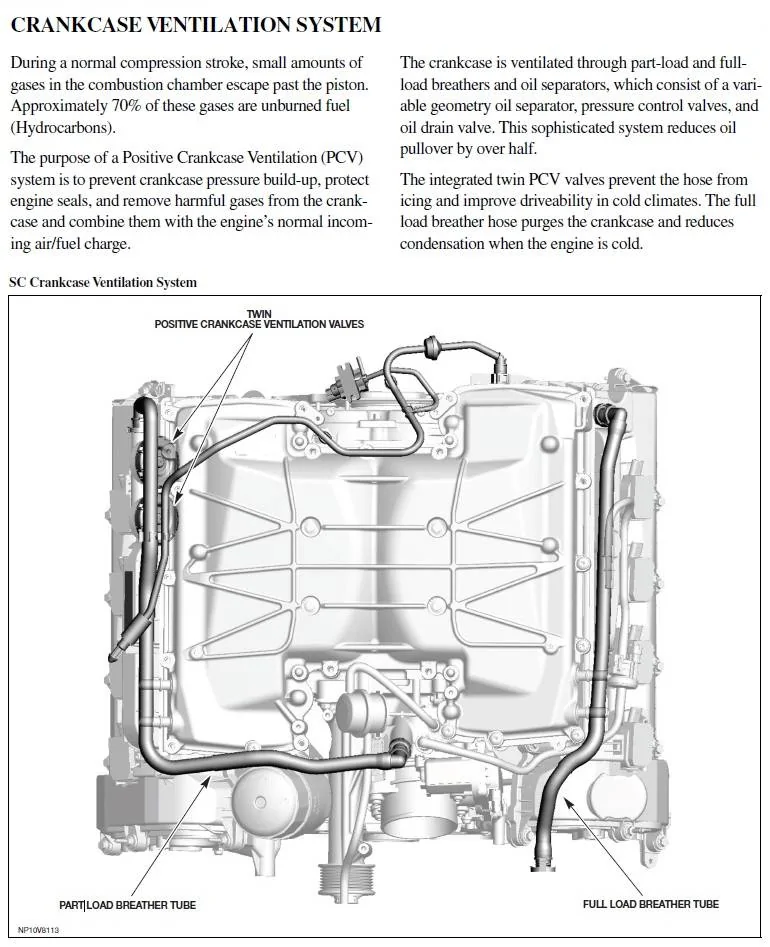
BTW, I own a Supercharger V8 5.0 Range Rover not a “Chrysler Pacifica”. The JLR SC 5.0 comes factory equipped with composite cam covers with built in dual diaphragm PCV valves, oil separator baffles with part load / full load circuits.
Explain to me how JLR Ef’ed up the 5.0 V8 PD Supercharged PCV Close Crankcase system.
For reference my 80k mile SC 5.0 RRS loses less than 1 Pint between 10k OCI.
Your comment about measurable oil loss due to the dynamics of forced induction is flawed.

1CD4FE97-8347-48C3-BF53-F2C44E9E3E01.jpeg
Sponsored

 
Last edited:


Top