
Sponsored

williamwally
Well-Known Member
Well this I would be more interested to hear more about. Seems to me that lightweight materials, or all the engineering hours it takes to make a part lighter, makes costs go up quickly. But I'm just taking my experience from motorcycle track days, or when looking at racing teams.... that weight loss is obtainable at a VERY low cost ...
On a related note, the M3-4 has lost a good amount of weight, pretty impressive actually:
"They say weight-saving measures like a carbon fiber roof and an all-aluminum hood help keep the cars under a respectable 3,300 pounds"
http://jalopnik.com/2014-bmw-m3-and-m4-this-is-them-1481018204
However even there you're seeing "carbon fiber" etc. I'm sure the new M4 will be hard to keep under $65k as well.
scottpe
Well-Known Member
Your case is very well stated. Here's the problem I have: Your assertion is that changing the dimensions ever so slightly and using more aluminum in the body, etc. would result in hundreds of pounds of weight loss and subsequently result in less need for heavier duty supporting parts (i.e. cost savings). If it was as easy and cheap as you seem to think, do you honestly think that Ford would ignore that option?Guess what, I agree with you 100%, everything you said -- especially when talking about a hypothetical situation where the car stays the SAME size it is now. I have along -- and if you reread my posts, you will notice I said I have been disappointed with the bloat and weight for years -- and being more passionate about it now becasue the car is supposedly all new and there was opportunity there.
I have said all along that size reduction must occur for weight loss to occur. Also I never said MOST enthusiasts want a SN95 sized car -- I was saying it would be nice, for me. I said MOST enthusiasts want to see SOME size and weight go away -- and if you look around at most of the threads where size and weight is mentioned, I think you will find YOU are in the MINORITY that thinks the car is a great size and weight. I understand you like the size of the car, and I don't -- that is where we disagree. But on the flip side I think if MOST(not all) had there choice they would see the car lose SOME overhang/size. That results in loss of size overall.
That said, lets not get want confused with need -- a lot of guys WANT a smaller, lighter car, but if they don't get it, it is not a deal breaker. For me it is. I have said this from day one. But the fact it is not a deal breaker for them doesn't make their WANT any less valid.
Because we all seem to be so hung up on safety, engine size(which a Coyote is lighter than a 5.0 HO BTW) , rigidity, etc, and for some reason think these are the only things that causes weight, I want to do a little comparison here:
My 2000 Jeep Wrangler is built into a rock crawler -- and because it plays in the rocks it needs armor. When I designed my skids and bought body protection, I knew I was going to be adding weight -- it was unavoidable. My goal was to minimize that impact as much as possible obviously. Long story short, my front fenders, rocker guards, and rear fenders/crusher corners are all aluminum. With only the fenders and rocker protection I saved 300lbs at a cost of about $175. I plan on taking out another 150 or so for another $100. That will be a total of 450lbs at a cost of $275(the price difference between steel and aluminum for full skids and body armor). Keep in mind, these are aftermarket parts sold at a premium. A premium that doesn't exist or would be passed on to the consumer at a mark up in a world where Ford is building something in volume. It probably costs the aftermarket companies about 1/4 of that $275 -- and that is in extremely low volume, hand built, hand welded, etc. I bet that is a lot cheaper than a lot of people would have guessed...
Granted, the 350 wouldn't carry over directly because we are talking about a heavier gauge metal, but there is far less real estate on my Jeep than a Mustang -- hell, there is far less real estate on my Jeep than my Fox, so that is still SIGNIFICANT savings.
That said, we know S550 has aluminum front fenders -- extend that to the hood, the door skins, and the deck lid. Take 3" off the back of the car, and 2" off the front. Lose an inch in width. You are talking about a significant weight savings, at a cost that is negligible in the grand scheme of things -- and tech that trickles down to your volume cars. That is before you even consider this is a new chassis("supposedly"), with new tech, and the weight that can be engineered out of the bones.
As you lose weight in the body and bones, you subsequently lessen the need for heavier suspension components, load bracing and massive brakes. The reduction may be minimal there, but it counts. You can see where this is going. It adds up, and becomes a self fulfilling prophecy.
Weight wise, the SN95 is a bad comparison to use directly. I agree that safety requirements have increased. But what we know about manufacturing processes, metals, plastics, composites, as well as the size/weight reduction in electronics and such since then is VERY different. Additionally, the SN95 was built on a modified Fox chassis -- you are talking about chassis tech from the 70s.
And again, the C7 was only a comparison to prove the car does not NEED to bulk up significantly over any period of time. Cost of the car today is irrelevant, because the Corvette has always come at a premium over the Mustang, and in fact, with Mustang being a higher volume car, it should have less issues making up the difference in cost. The Corvette needs to be higher cost in part because it is lower volume.
At the end of the day, and in my experiences, weight loss is not the doom and gloom scenario some people have been tricked to believe it is. Is it free? No. Is it only for the rich? Absolutely not. It also CAN be a negligible cost that you or I would never notice.
One last thing to keep in mind, even if Ford made $100 less for each car, the better your Halo car is in looks, performance, and perception -- the more folks you bring into your dealerships. That has to count for something. And then you have tech to improve your volume cars.
So the fact that they haven't done this (we think...since they haven't actually released weight figures yet) tells me IT'S NOT THAT EASY. There has to be reasons that armchair automotive design engineers like most of us here have no clue about. Ford has every reason to want to save weight in their cars if the cost to do so is as negligible as you seem to think. The fact that they haven't pursued the changes you suggested probably means there's a reason.
I'm hoping Ford surprises us and does announce that they've knocked a couple hundred pounds off the car just to shut everyone up. :lol: In the meantime, arguing over hypotheticals will help us pass the time.

m4a1mustang
Well-Known Member
I've stated this before and I'll say it again... given the performance benchmarks Ford used I'm starting to think that they did knock a chunk of weight off of the car but are choosing to keep quiet - for now - to 1) keep people talking and 2) surprise us again in a few months to reignite the S550 discussion.
If you think about it they've launched the car in such a way that they can build a lot of positive buzz up until they hit the streets next fall. They've shown us the exterior and interior and given us some basic information... For months we will be speculating about weight, power output, performance metrics, etc.
If/when this talk dies down, they can begin releasing performance figures. Power, weight, etc. I think they are keeping quiet because the numbers are going to be surprising in a good way. If so, there will be a bunch more S550 talk up until the cars start hitting the streets.
Hopefully the magazine reviews and comparisons will be favorable (I'm sure Ford is confident they will be) and the car will be a success.
I hope so, anyway!
If you think about it they've launched the car in such a way that they can build a lot of positive buzz up until they hit the streets next fall. They've shown us the exterior and interior and given us some basic information... For months we will be speculating about weight, power output, performance metrics, etc.
If/when this talk dies down, they can begin releasing performance figures. Power, weight, etc. I think they are keeping quiet because the numbers are going to be surprising in a good way. If so, there will be a bunch more S550 talk up until the cars start hitting the streets.
Hopefully the magazine reviews and comparisons will be favorable (I'm sure Ford is confident they will be) and the car will be a success.
I hope so, anyway!
Sponsored
tacamo
Well-Known Member
I remember the last reduction in size and weight...it was called Mustang II with the high performance decal of a cobra on the hood. Boy, that was a killer success! Just saying.

Dirk McGurck
Well-Known Member
That was also a dark day in Ford's manufacturing. I personally think Ford mostly phone it in quality-wise until the last 4-5 years or so.I remember the last reduction in size and weight...it was called Mustang II with the high performance decal of a cobra on the hood. Boy, that was a killer success! Just saying.
Whiskey11
Kill ALL the Cones!
You know for all the hate of the Mustang II, it is Ford's third best selling generation after the first and the Foxes... so... yeaaaah.... Considering the Mustang II was on sale for 4 years (1974-1978) that is pretty telling when the Fox went for a decade longer. You can hate it all you want but the principle was sound, reduce weight, add simplicity and profit... that they did.I remember the last reduction in size and weight...it was called Mustang II with the high performance decal of a cobra on the hood. Boy, that was a killer success! Just saying.
tacamo
Well-Known Member
How many performance oriented folks do you know who bought one? It was a Pinto in disguise. Don't hook the word hate on me. It was a perfect example of what you get when you address a different market, and the buyers were a different market. I don't hate it but on the other hand, as a performance oriented buyer I wouldn't have one either.
Sponsored
Whiskey11
Kill ALL the Cones!
Well, tons of people bought Mustang II's... for their front suspension!How many performance oriented folks do you know who bought one? It was a Pinto in disguise. Don't hook the word hate on me. It was a perfect example of what you get when you address a different market, and the buyers were a different market. I don't hate it but on the other hand, as a performance oriented buyer I wouldn't have one either.

All-Or-Nothing
Well-Known Member
- Joined
- Aug 7, 2012
- Threads
- 0
- Messages
- 227
- Reaction score
- 6
- Location
- Columbus, Ga
- Vehicle(s)
- BMW 6 Series Vert
How many performance oriented folks do you know who bought one? It was a Pinto in disguise. Don't hook the word hate on me. It was a perfect example of what you get when you address a different market, and the buyers were a different market. I don't hate it but on the other hand, as a performance oriented buyer I wouldn't have one either.
This is just wrong. The Mustang II was NOT a Pinto in disguise. Looks may make you say this but they were completely different cars.

thePill
Camaro5's Most Wanted
- Joined
- Aug 13, 2012
- Threads
- 37
- Messages
- 6,561
- Reaction score
- 699
- Location
- Pittsburgh
- Vehicle(s)
- S550
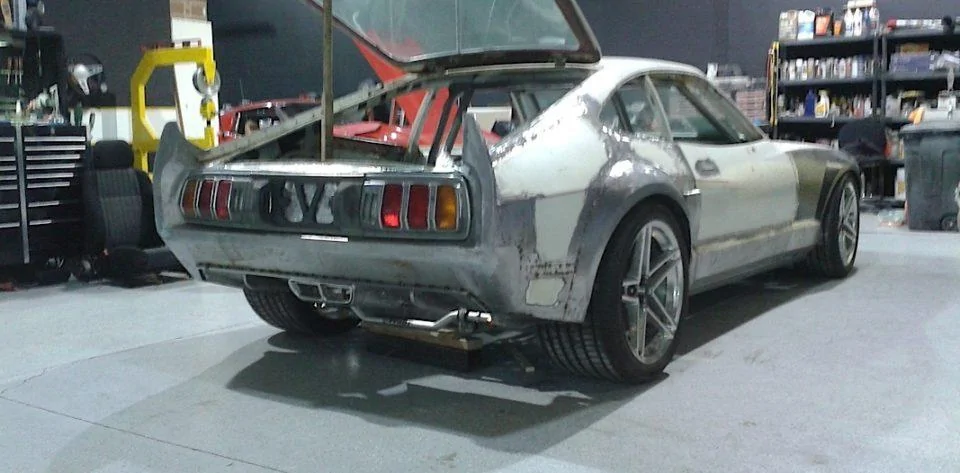
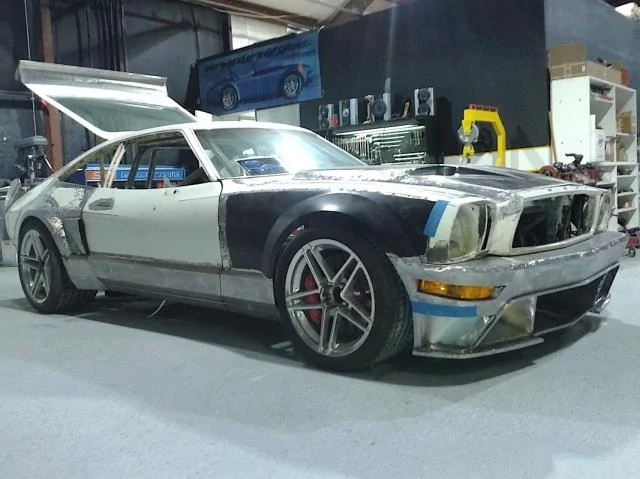
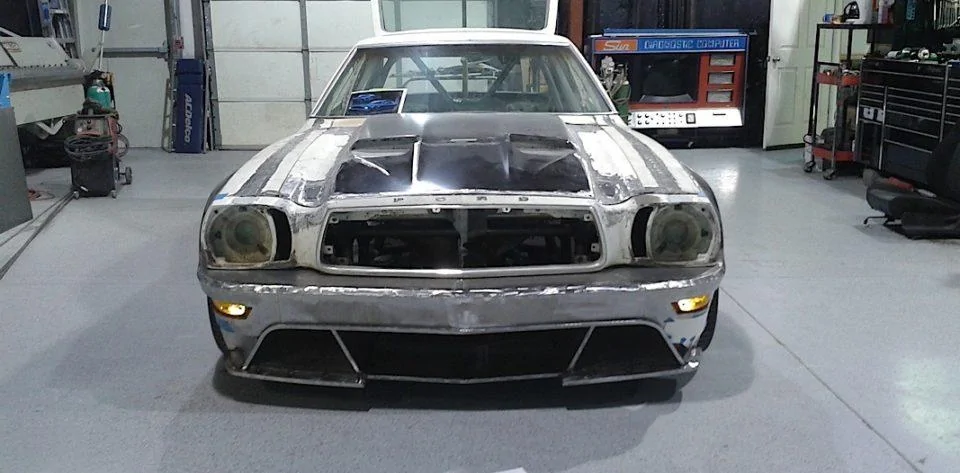
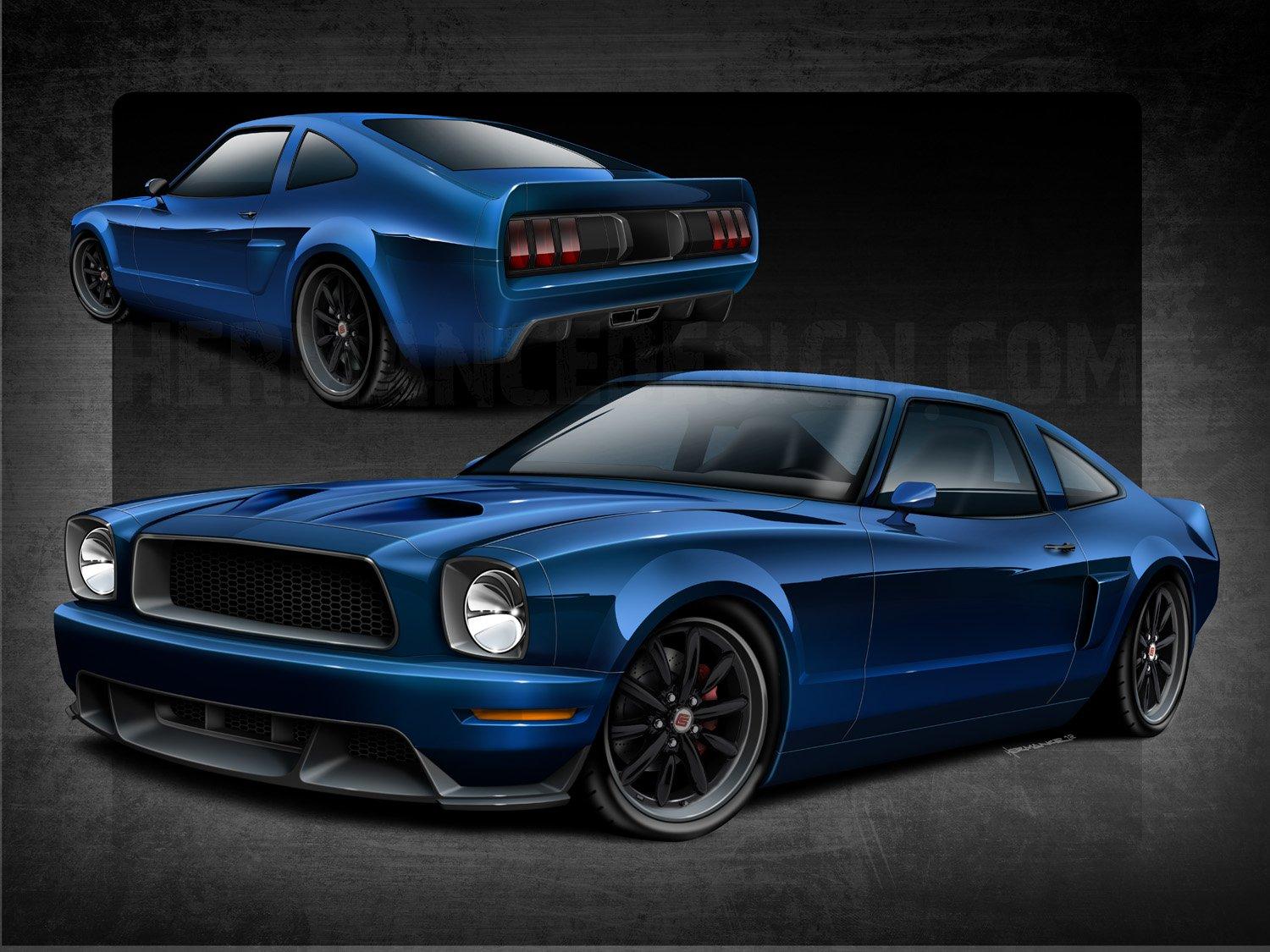
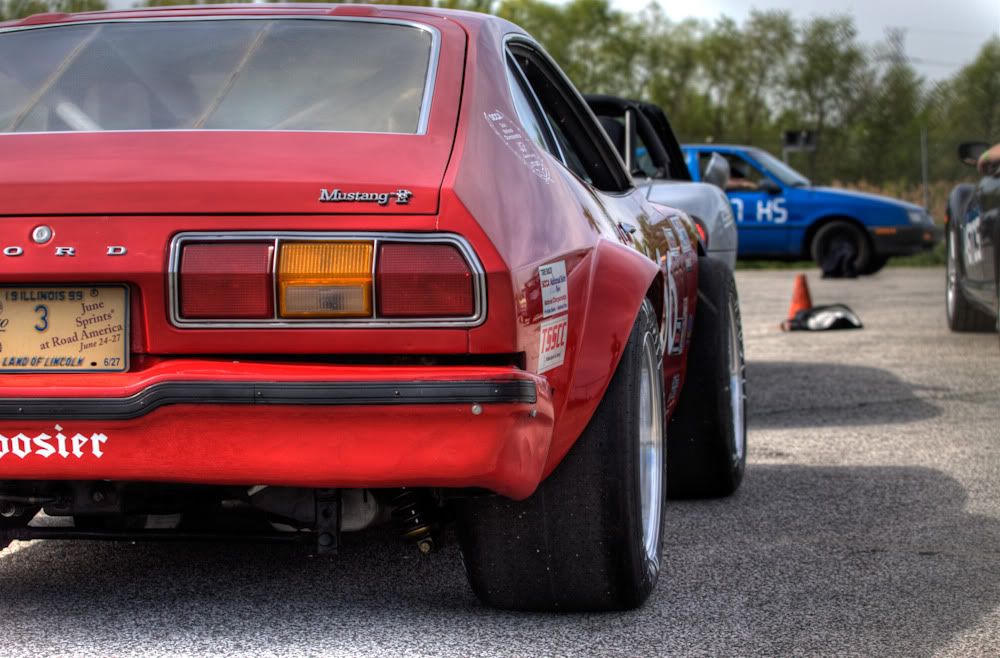
We have started plans for a Mustang II project we saw on Popular Hot Rodding. We call it "CarroII's Revenge"...
It is an SCCA car and is pretty much just a front/rear bumper delete with some custom fab'd replacements. Here is a slightly finished one... We are not using S197 fenders..


It is an SCCA car and is pretty much just a front/rear bumper delete with some custom fab'd replacements. Here is a slightly finished one... We are not using S197 fenders..


tacamo
Well-Known Member
My Unique Cobra basically uses a Mustang II front A arm assembly and it works beautifully on a 2300# car. But the original II had atrocious build quality (like most other American cars and the time), it ploughed something awful in the corners and the brakes were diabolical. I had a 84 GT which I took to Germany when I was stationed in Stuttgart. The little V8 was nice but it only made something just south of 200 hp. I scared the p-water out of myself the first time I was out on the Autobahn rolling along with the fast lane traffic at about 110 mph and applied the brakes...lasted until 70 mph and then they were gone. Semi-metallic shoes on the rear and high performance pads on the front discs helped a little but not much. I was surprised because I had been stationed in Belgium several years earlier and took a little U.S. market 2.8L Capri over which did amazingly well (It was probably made in Cologne anyway). The American car builders have come a long way since the bean counters lost clout and design went back to engineers. I'm sure S550 is much more a world class car
Sponsored
Similar threads

- Locked
- Replies
- 1,356
- Views
- 185,998


