Sponsored

Deatschwerks X3 Fuel system

OP
OP
NGOT8R

NGOT8R

Well-Known Member
Joined
Jul 19, 2020
Threads
153
Messages
9,251
Reaction score
7,748
Location
Florida
First Name
Adrian
Vehicle(s)
2019 Bullitt
I’m with Mike. DW810 and be done with it. Michael's is set up runs 1/2 speed all the time and high speed ( full noise) once it see’s 1 psi of boost as far as I remember. And @ 12v half speed the brushless is barely breaking a sweat Or pulling any AMPS. I emailed him to ask Though his YouTube channel. Very nice and responsive guy To questions. He used to run 3 pumps And had all sorts of drama’s now just 1 dw810 And love it.

i really like the KISS method of doing this set up. I know people complain about Hobb switch problems. But in reality it’s almost non issue with high quality stuff. I feel running 3 pumps more of a worry that one will fail mid race rather than a Hobbs failing.

each to there own But less is more in some cases , I sure like the simplicity of 1 pump set ups.


Thanks for posting that video! I’ll have a look.
Sponsored


Angrey

Well-Known Member
Joined
Jun 21, 2020
Threads
104
Messages
2,794
Reaction score
2,984
Location
Coral Gables
Vehicle(s)
2016 GT350
For starters pwm, by nature, is not for brushed pumps. The stock fpdm is a pwm module, by the way. Brushless pumps have their own type of speed controller that works drastically different from pwm. You'll need to understand the purpose and nature of all components on a custom fuel system, especially one as complicated as what you are planning.


How do you plan to stage and control each pump? You're talking PWM controllers plus brushless controllers on two different kinds of pumps. How will they interact dynamically? Are they both feedback controllers and if so, what are they using as feedback? And where will each type of pump run on its curve when they're both (or all three) are on? Will all 3 have check valves? What about the venturi line?

And what concerns me significantly is what happens when any of the baps, PWM controllers, brushless controllers, or any of the 3 pumps fails? Will you know it before it's too late? This is what's attractive about a single pump to me, because you generally find out it failed during normal driving.

I'm not currently seeing many drawbacks to running a single DW810 or E5LM pump and brushless controller, while deleting the FPDM PWM control. Even better would be running the brushless controller off of the FPC output of the PCM, then you have a minimum number of components, easy diagnostics and fail safe, plus controllability with the stock logic which is highly versatile.
The E5LM pump (which I believe is the same as the BKS1000) is a twin screw design rather than a turbine and it makes for a noisy(er) pump.


engineermike

Well-Known Member
Joined
Jul 15, 2018
Threads
32
Messages
6,223
Reaction score
6,527
Location
La
Vehicle(s)
2018 GTPP A10
Deatschwerks also offers single and dual pump direct wire kits. Maybe I’m way overthinking this, but wouldn’t it be possible to bypass the FPDM and wire all three pumps directly to the battery (the 810 by itself and the 400s via the dual direct wire kit)? If this is possible, perhaps the 810 can run the car during normal driving and the two 400s can be powered up when needed for racing, thus prolonging their lives?
What is going to control pressure? Regulator? What will be used to signal the brushless controller speed? And what will be used to switch the DW400s on and off? Do we know of anyone else who's used 2 different styles of 3 in-tank pumps in parallel?

I’m no expert on fuel systems, I’m just trying to think outside of the box, while asking lots of questions to see what else is even possible.
My advice is to keep it as simple as possible that still achieves the required flow.
 
OP
OP
NGOT8R

NGOT8R

Well-Known Member
Joined
Jul 19, 2020
Threads
153
Messages
9,251
Reaction score
7,748
Location
Florida
First Name
Adrian
Vehicle(s)
2019 Bullitt
What is going to control pressure? Regulator? What will be used to signal the brushless controller speed? And what will be used to switch the DW400s on and off? Do we know of anyone else who's used 2 different styles of 3 in-tank pumps in parallel?

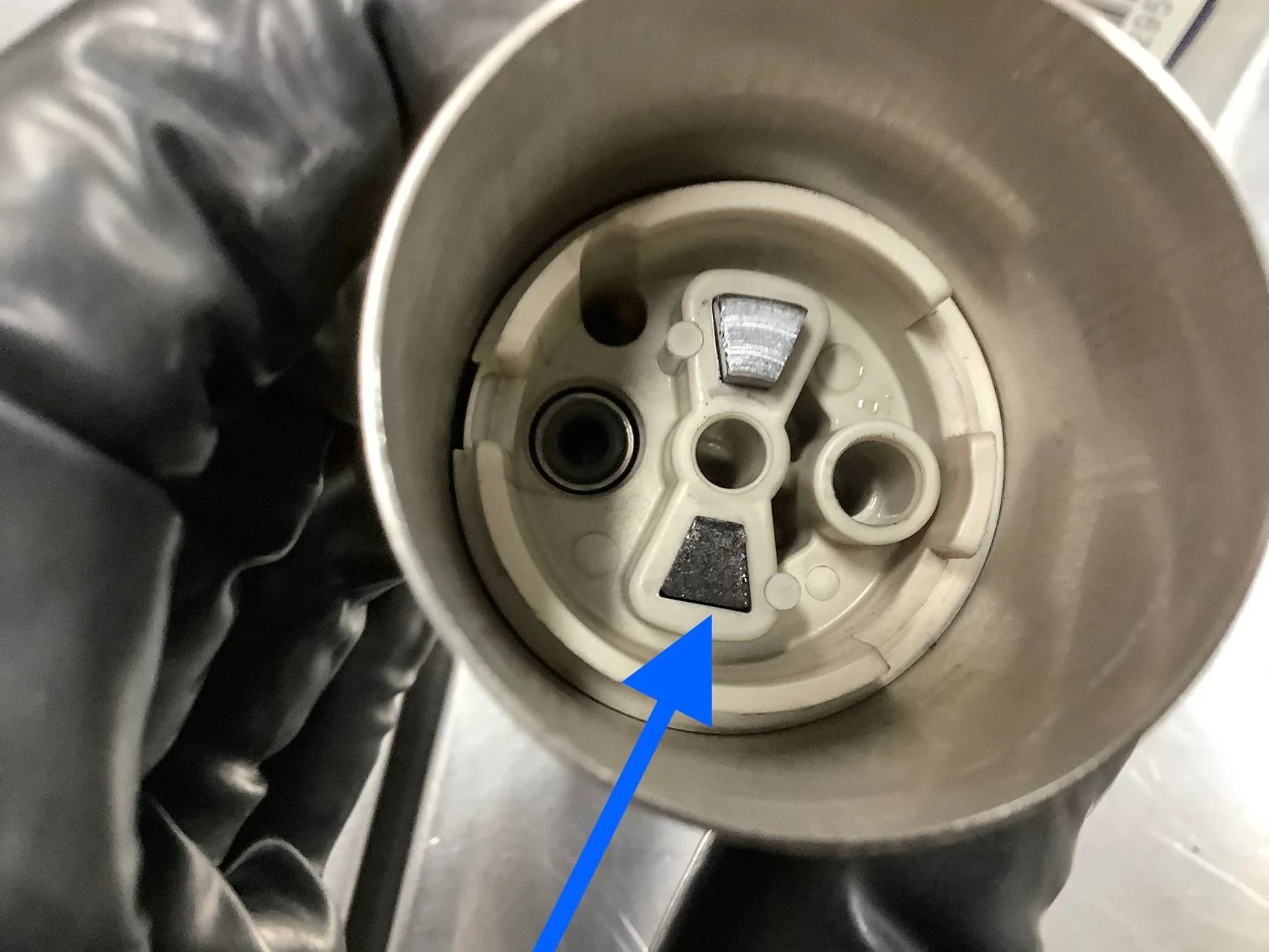
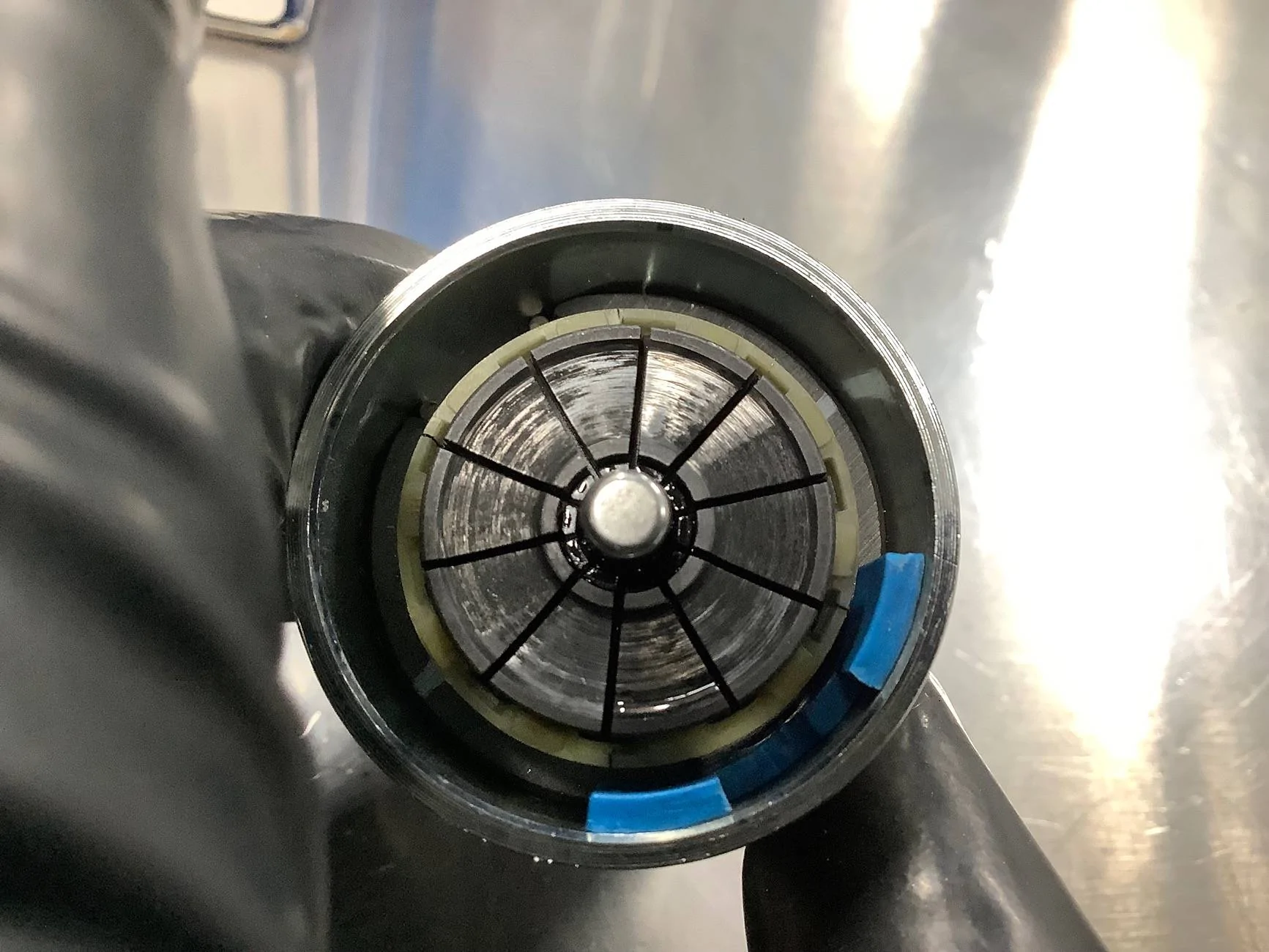
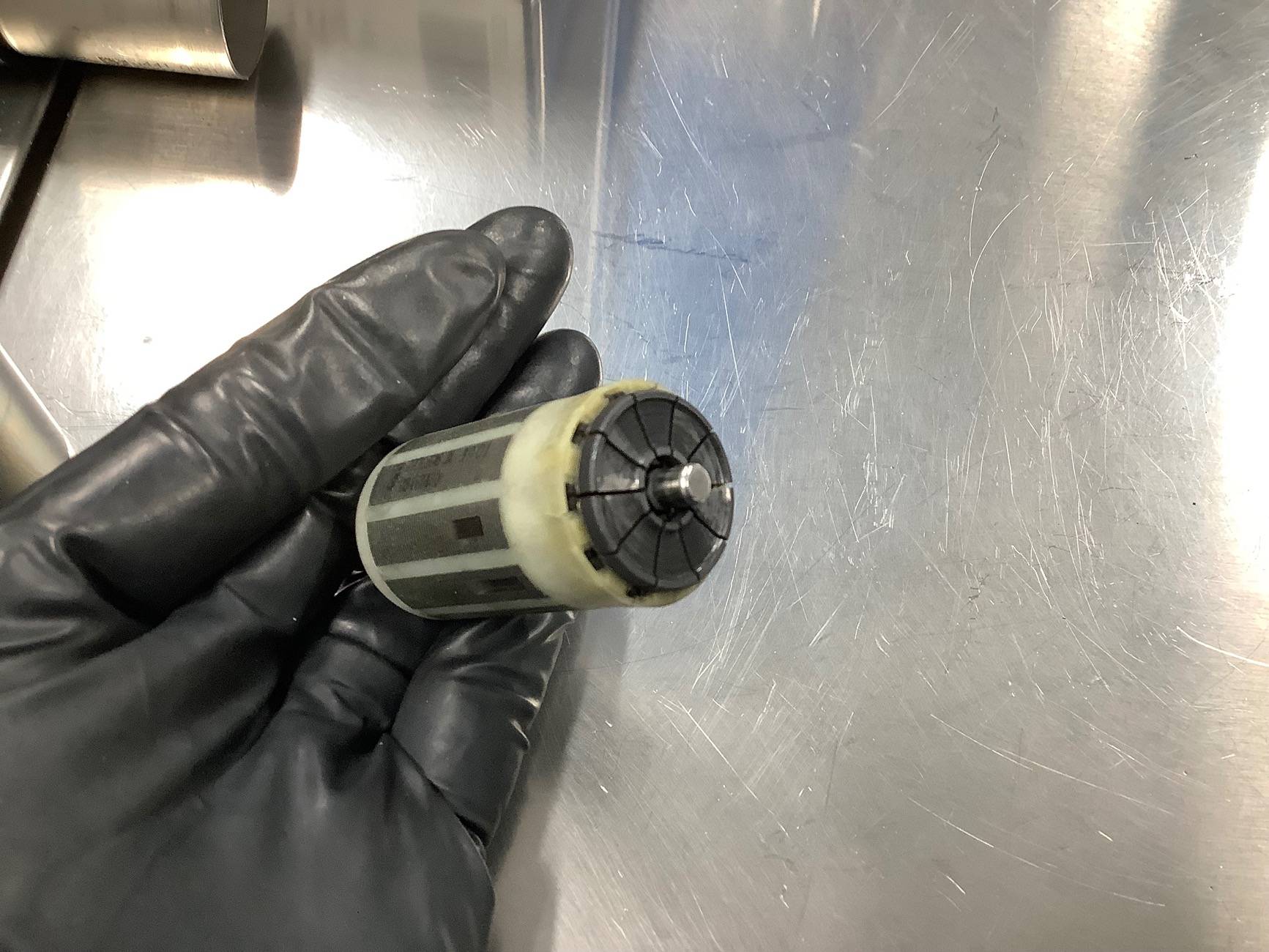
The X3 does come with a regulator. Vaporworx also makes what appears to be a nice PWM controller that is said to control 3 to 4 brushed pumps. I’m really not trying to reinvent the wheel here, but I do know that brushed pumps can fail. You may remember that it happened to me with my factory pump at just 7K miles. Here are photos of the inside of that pump. The brush with the blue arrow pointing to it had seized up, leaving me stranded With a $200 tow bill. It also happened without any advanced warning.

1733140228130-3i.jpg

1733140265118-z9.jpg

1733140538384-pb.jpg


I don’t personally know of anyone running two styles of pumps together, but Deatschwerks advertises that only one DW440 or one DW810 can fit in the X3, but the other two have to be DW400 pumps.

I’m going to reach out to Vaporworx and see what they have to say and hopefully report back With some answers.

https://www.vaporworx.com/shop/product/returnx-return-type-pwm-controller-kit-for-3-4-pump-systems/

My advice is to keep it as simple as possible that still achieves the required flow.

^^This^^
 
Last edited:

Sponsored

engineermike

Well-Known Member
Joined
Jul 15, 2018
Threads
32
Messages
6,223
Reaction score
6,527
Location
La
Vehicle(s)
2018 GTPP A10
Vaporworx also makes what appears to be a nice PWM controller that is said to control 3 to 4 brushless pumps.
PWM controllers only work with brushed pumps, not brushless. Brushless have a completely different type of speed controller.

I do know that brushed pumps can fail. You may remember that it happened to me with my factory pump at just 7K miles. Here are photos of the inside of that pump.
Yes, this is true. Technically, brushless can fail as well and we don't really have stats to know which is better or worse for reliability. In general, a brushless pump should last longer but the mass production numbers are orders of magnitude lower and they aren't OEM-validated so that could hurt a bit. For the record, I am a proponent of brushless if it makes sense.

But my point of only using one pump if possible is that the failure can occur at part throttle. By staging multiple DW400s, or any fuel pump, to come in with boost, you don't know it failed until you're at WOT and it's too late. At least with one pump failing while cruising you're only out a tow bill and the cost of the pump.
 
OP
OP
NGOT8R

NGOT8R

Well-Known Member
Joined
Jul 19, 2020
Threads
153
Messages
9,251
Reaction score
7,748
Location
Florida
First Name
Adrian
Vehicle(s)
2019 Bullitt
PWM controllers only work with brushed pumps, not brushless. Brushless have a completely different type of speed controller.


Yes, this is true. Technically, brushless can fail as well and we don't really have stats to know which is better or worse for reliability. In general, a brushless pump should last longer but the mass production numbers are orders of magnitude lower and they aren't OEM-validated so that could hurt a bit. For the record, I am a proponent of brushless if it makes sense.

But my point of only using one pump if possible is that the failure can occur at part throttle. By staging multiple DW400s, or any fuel pump, to come in with boost, you don't know it failed until you're at WOT and it's too late. At least with one pump failing while cruising you're only out a tow bill and the cost of the pump.
I just reread what I typed and I did indeed make a typo. You’re correct in that it should have read brushless regarding the Vaporworx PWM. I’ll correct that right now. Thanks

I also sent an inquiry to Vaporworx and hope to receive a reply back soon.

The only way I can think of to monitor pump failure might be to add some led lights in a cluster for each pump (light on = functioning pump and light out = malfunctioning pump).
 

Angrey

Well-Known Member
Joined
Jun 21, 2020
Threads
104
Messages
2,794
Reaction score
2,984
Location
Coral Gables
Vehicle(s)
2016 GT350
There's some pretty good/deep discussions about failure aspects of brush style pumps. One of the "theories" is that by design, the brush style motors are particularly vulnerable to temperature shock, where the outside casing gets cooled and shrinks rapidly while the internal components are still hot and working hard. This happens when you operate the pump to heat soaked conditions, stop and insert a large amount of cooler fuel. You start up the car and before the new fluid can internally cool the pump, it fires up and has to operate constricted for a time. This is also true for brushless pumps, but the internal mechanisms are completely different and probably much more robust for handling such temp variable conditions. Of course, the "variable" aspect may also play a part here as so many people run brush style pumps "full boogie" where many/most brushless are ran variable load.

At any rate, the failure rates for the motors are already documented (albeit not in the application for fluid pumps) but it's not controversial to say that brushless motor design is a more robust design. The biggest factor in OEM's continuing to use brush style electric pumps is COST.
 

Angrey

Well-Known Member
Joined
Jun 21, 2020
Threads
104
Messages
2,794
Reaction score
2,984
Location
Coral Gables
Vehicle(s)
2016 GT350
I just reread what I typed and I did indeed make a typo. You’re correct in that it should have read brushless regarding the Vaporworx PWM. I’ll correct that right now. Thanks

I also sent an inquiry to Vaporworx and hope to receive a reply back soon.

The only way I can think of to monitor pump failure might be to add some led lights in a cluster for each pump (light on = functioning pump and light out = malfunctioning pump).
A simple current status light configured either to show green for each pump (constant on) OR to not be lit unless there's a loss of current and light up red and placed on the dash somewhere would be a decent fuel system safety feature. If the pump burns out, current stops and a light should either come on or change color.
 

Sponsored

engineermike

Well-Known Member
Joined
Jul 15, 2018
Threads
32
Messages
6,223
Reaction score
6,527
Location
La
Vehicle(s)
2018 GTPP A10
For diagnostics, adding a simple light will only tell you if voltage is getting to the pump, not if the pump failed. If the pump fails, current will go either high or low but voltage will remain. You're adding even more complication to a system that's already including excess complication.

Consider that Ford only puts dual fuel pumps in the GT350 and GT500. The pumps are identical, and both receive the same speed control command. Both cars have dual FPDMs. Each FPDM has diagnostic logic that includes current measurement, and will send an error code to the PCM, which is then converted to a DTC and the MIL comes on. I can't say for sure, but I suspect it will enter FMEM/limp mode as well. My point is that Ford itself generally avoids dual pumps and when they do use them, they run them the same and have robust parallel diagnostics systems.
 

Angrey

Well-Known Member
Joined
Jun 21, 2020
Threads
104
Messages
2,794
Reaction score
2,984
Location
Coral Gables
Vehicle(s)
2016 GT350
For diagnostics, adding a simple light will only tell you if voltage is getting to the pump, not if the pump failed. If the pump fails, current will go either high or low but voltage will remain. You're adding even more complication to a system that's already including excess complication.

Consider that Ford only puts dual fuel pumps in the GT350 and GT500. The pumps are identical, and both receive the same speed control command. Both cars have dual FPDMs. Each FPDM has diagnostic logic that includes current measurement, and will send an error code to the PCM, which is then converted to a DTC and the MIL comes on. I can't say for sure, but I suspect it will enter FMEM/limp mode as well. My point is that Ford itself generally avoids dual pumps and when they do use them, they run them the same and have robust parallel diagnostics systems.
Not voltage, current. A simple relay configured for either current green or loss of current red would suffice. If the pump burns out, the relay loses current draw and either a light on or a light change would do.

That would capture 99% of the failed pump conditions and is simple and cheap to employ.
 

engineermike

Well-Known Member
Joined
Jul 15, 2018
Threads
32
Messages
6,223
Reaction score
6,527
Location
La
Vehicle(s)
2018 GTPP A10
The DW810 pump is actually a bit smaller in diameter than the DW400s. My guess is they tell you it can only fit one because they only supply enough spacer sleeves [provisions] for one. I don't think the DW810 has a built-in check valve, though, so take that into consideration.

@Angrey current sensing with warning lights would be better than just lights tied to the pump. However, unless there's some sort of easy-button available, you'd need a pair of hall-effect current sensors and a circuit built to activate the warning lights if current is too low or too high, once again adding all sorts of additional complication to an overly-complicated system.
 
OP
OP
NGOT8R

NGOT8R

Well-Known Member
Joined
Jul 19, 2020
Threads
153
Messages
9,251
Reaction score
7,748
Location
Florida
First Name
Adrian
Vehicle(s)
2019 Bullitt
The DW810 pump is actually a bit smaller in diameter than the DW400s. My guess is they tell you it can only fit one because they only supply enough spacer sleeves [provisions] for one. I don't think the DW810 has a built-in check valve, though, so take that into consideration.

That is correct, an external check valve would be needed with the DW810.
 

Angrey

Well-Known Member
Joined
Jun 21, 2020
Threads
104
Messages
2,794
Reaction score
2,984
Location
Coral Gables
Vehicle(s)
2016 GT350
The DW810 pump is actually a bit smaller in diameter than the DW400s. My guess is they tell you it can only fit one because they only supply enough spacer sleeves [provisions] for one. I don't think the DW810 has a built-in check valve, though, so take that into consideration.

@Angrey current sensing with warning lights would be better than just lights tied to the pump. However, unless there's some sort of easy-button available, you'd need a pair of hall-effect current sensors and a circuit built to activate the warning lights if current is too low or too high, once again adding all sorts of additional complication to an overly-complicated system.
I'm going way simpler. Albeit it won't give you 100% of all potential failures (like a partial failure) but 99.9% of the failures are either a burnt/overwhelmed fuse a burnt relay or the pump itself totally craps out. All of those can be captured in a simple relay between the pump relay/trigger and the pump itself. You can configure the indicator light relay such that when there's current, the light is off and if there's a current loss, the relay triggers power to the light. So in this configuration, you look over at a pair of lights and if they're not illuminated, you know that at the very least, there's current flowing to the pumps. The other, slightly more complicated setup would be a green/red where the light is green under positive current and if there's a loss of current the relay switches and then the light changes from green to red.

It's honestly no different than the internal features of a lit switch. The little bulb is on when in the switch on and it's off when the circuit is disconnected. If there's a loss of circuit, the light is off, if there's a circuit, the light is on. Easy peasy.

Granted, there's probably some obscure conditions where the pump is injured or partially operable that this wouldn't help, but again, my PERSONAL experience is the vast majority of "pump failures" are either a blown relay, a blown fuse or the pump just takes a complete shit. All of those would be at least known with a simple status light. So in application, if one of your pumps is out and the other is working, you could glean that simply by recognizing that one of the two lights is out (obviously if both lights are out, you'd know because the car wouldn't run if all pumps are completely out).

The real risk is a situation where one pump is active but the other is out.

In a "staged" condition, it gets a little more complicated because the staged pump doesn't come on until you ask it, and if that's the setup, then there's not a whole lot that can be employed to anticipate an issue (i.e. the base load pump is working, but the staged add on pump is fried and the only way you're going to know that is when you create the demand or conditions for the supplemental pump to come on).

I'm not a big fan of staged pumping systems. I'm more a fan of variable control and if two pumps are required, control them the same at reduced and full output conditions.

The issue we're having here is that the market wasn't really accommodating to single/big pump solutions. Hangers and buckets are generally configured to feature multiple smaller pumps rather than one higher (but larger) output pump. Radium allows for the feature of the BKS1000 pump now, which boosted will give more flow than most amateurs need. I'm pretty sure that a single DW440 or Fuelab pump boosted will as well, but with less total head room.

I'm also a fan of over design under utilize. I think a lot of fuse and relay failures are because of the initial setup and running pumps wide open all the time (drawing way too much) and sending it back as return flow.
Sponsored


Top