Sponsored

HKusp

Well-Known Member
Joined
Jul 22, 2021
Threads
37
Messages
2,228
Reaction score
2,875
Location
Hampton, Md.
First Name
Jason
Vehicle(s)
2018 Mustang GT
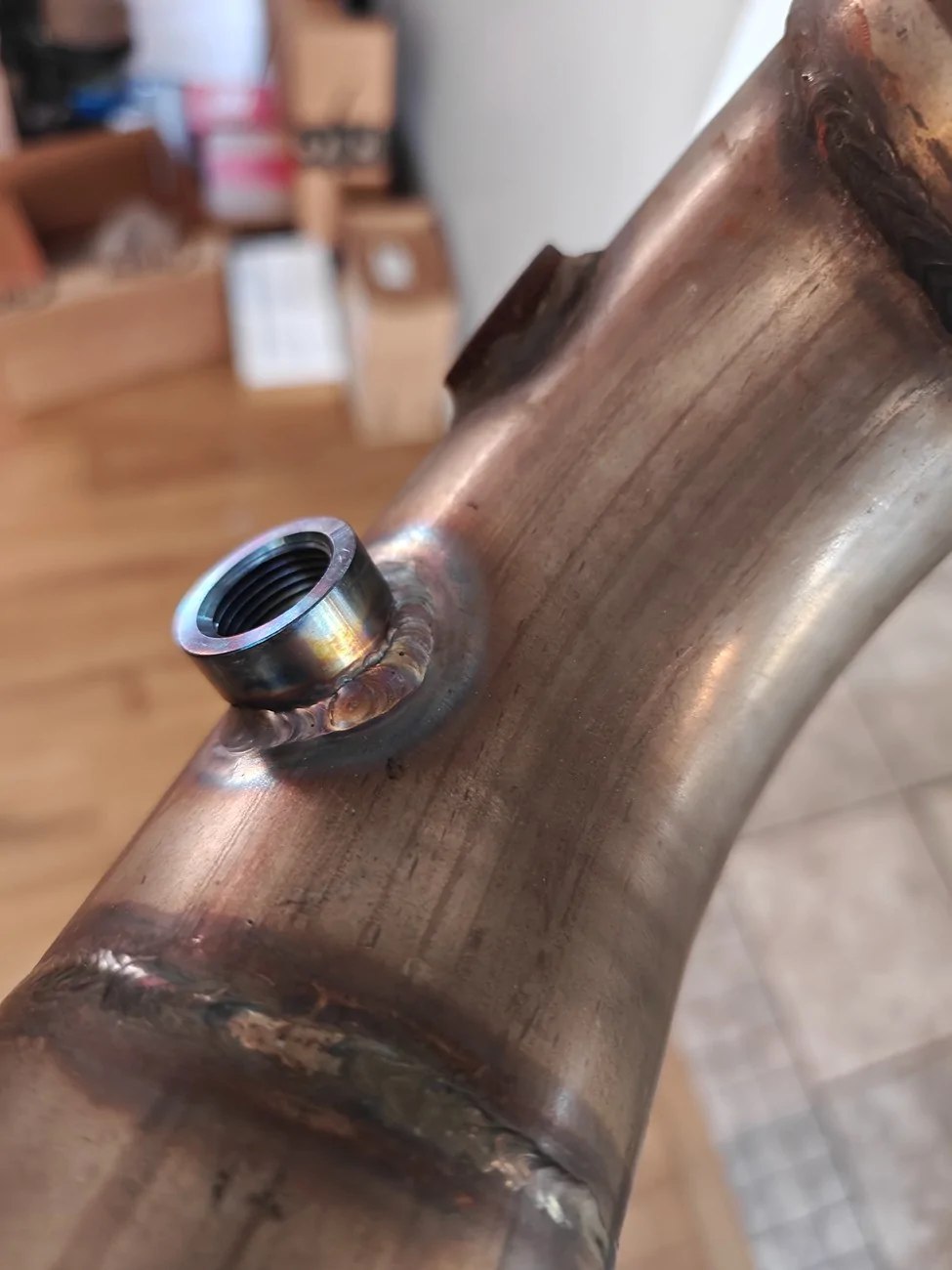
Here is my O2 port welded in. I wish I could take all the credit but my buddy, who is a welder, set the machine up and everything for me and then gave me pointers and let me weld it. I think it came out ok....
1000003669.webp
1000003668.webp
That looks really nice for "a guy who doesn't weld."
Sponsored

 
OP
OP

Vandor

Well-Known Member
Joined
Jun 24, 2025
Threads
4
Messages
58
Reaction score
134
Location
New Jersey
First Name
Thomas
Vehicle(s)
2016 Mustang GT
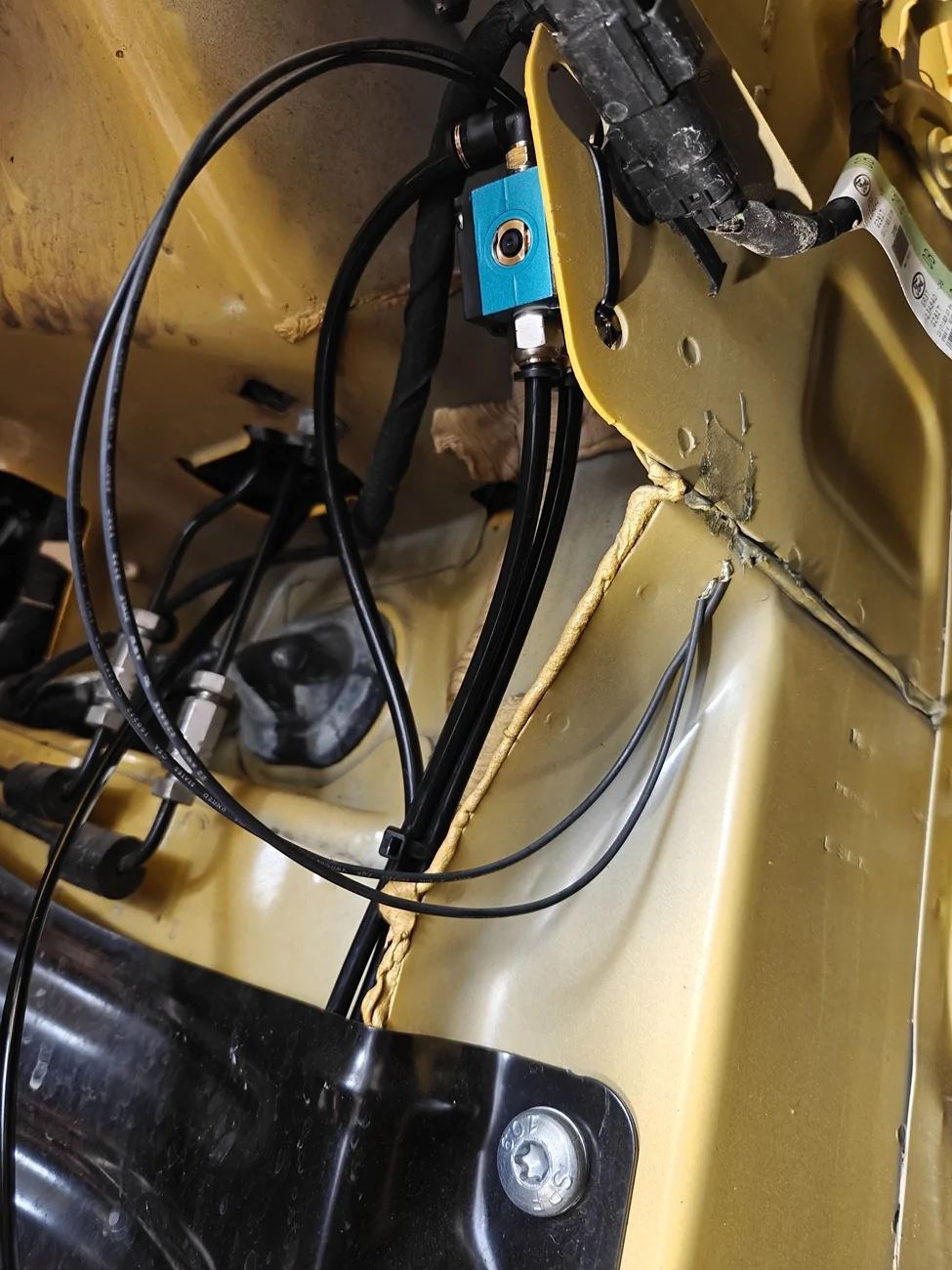
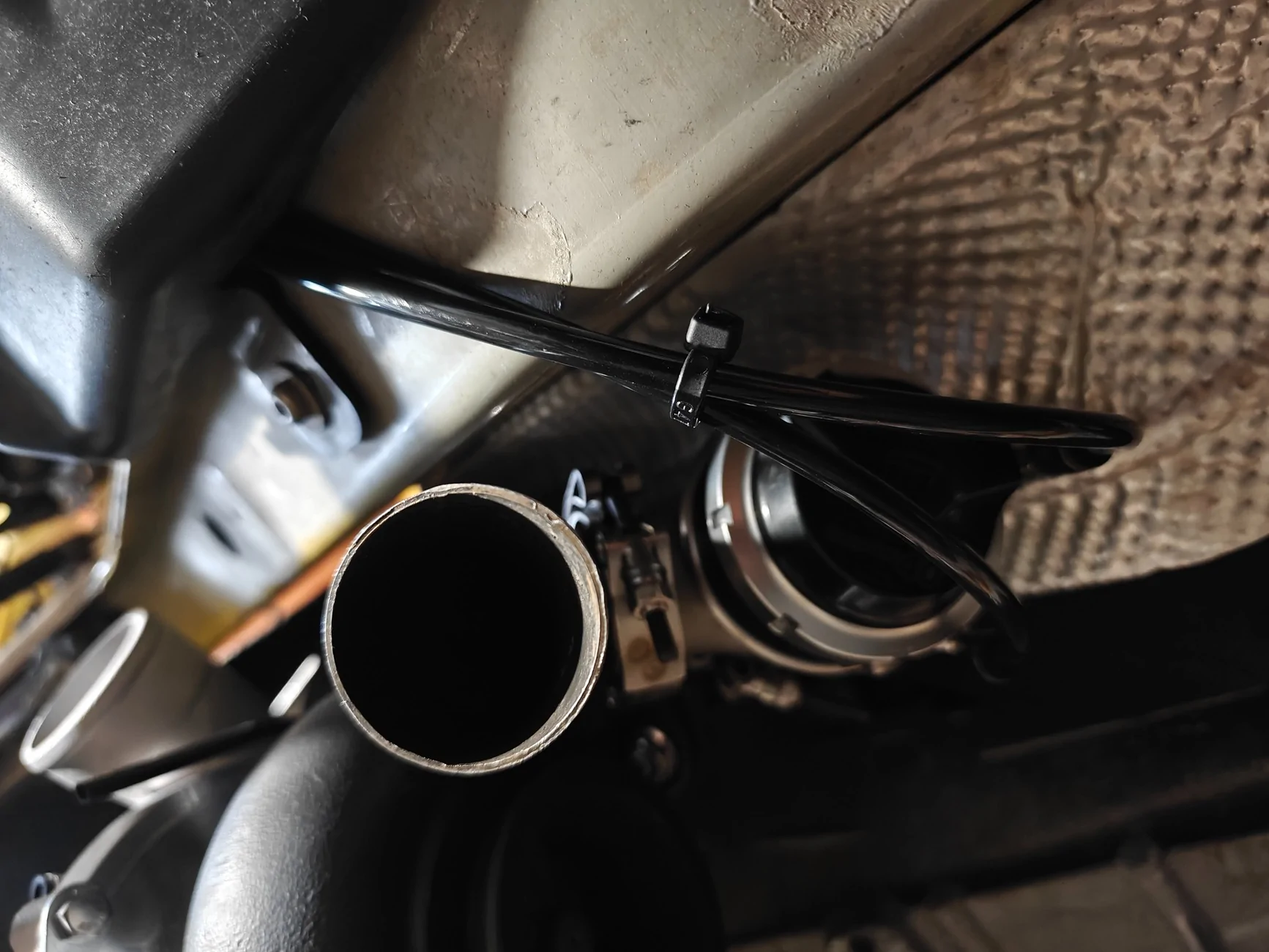
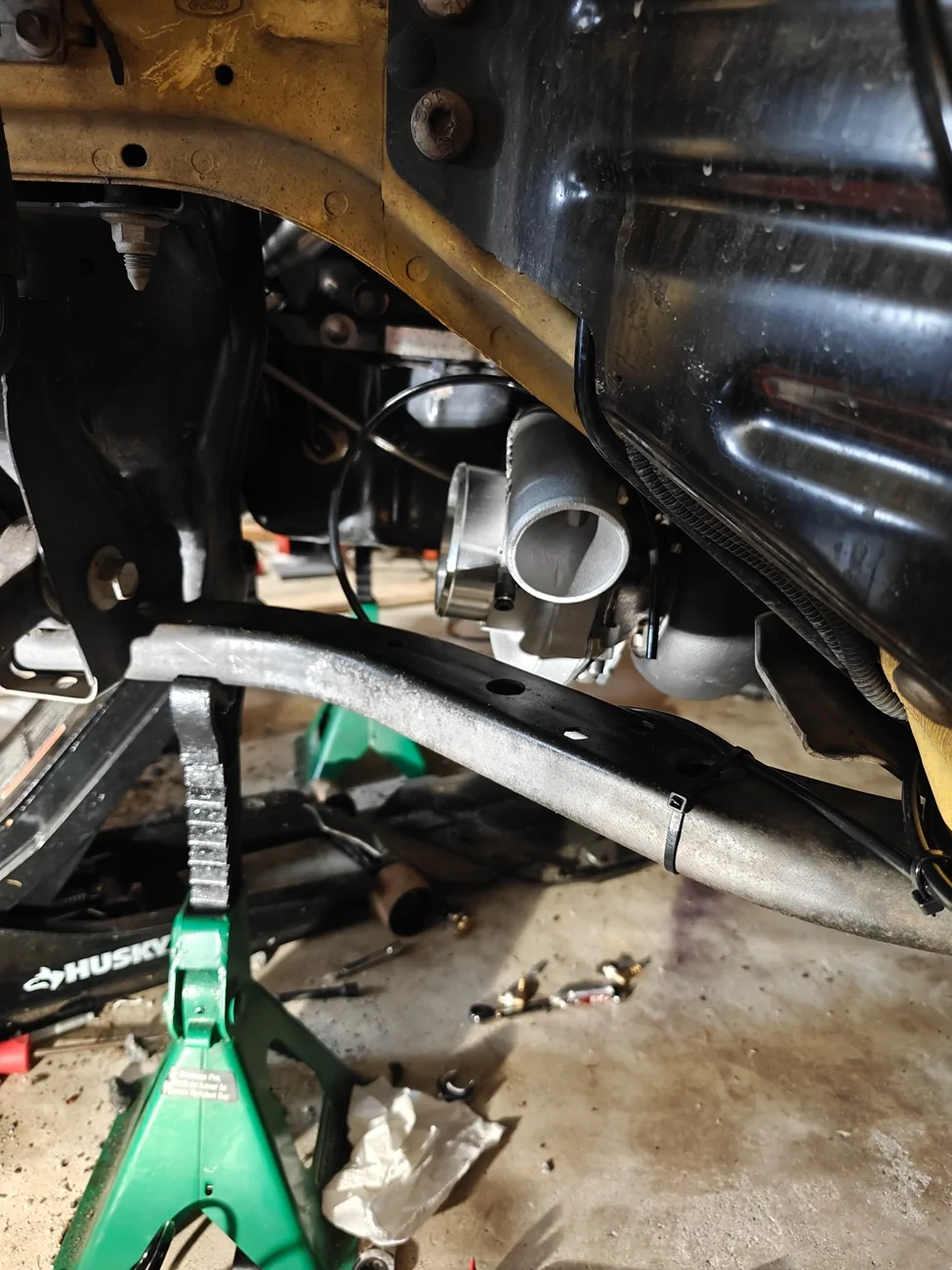
I have installed one of the solenoids and ran the tubing to the waste gate. The waste gate is also installed. I left the turbo line off because the turbo is not clocked yet perfectly and I can't clock the compressor housing until I get the charge pipes to fit them. Once I have that clocked I cut and push in the turbo line. The wiring you see there has also been routed and ran to the right side fender for the electrical solenoid hook up going there. I will then environmental splice the wires together on one side of the splice and feed in the wire to the cabin to the controller on the other splice. The vent mounted atomic eboost gauge mount has shown up also.

1000003689.webp


1000003691.webp


1000003690.webp
 

Timbuck

Well-Known Member
Joined
Mar 26, 2023
Threads
4
Messages
444
Reaction score
469
Location
Australia
First Name
Tim
Vehicle(s)
2017 s550 6r80
water cool gates on a street car is just about totally unnecessary and adds a lot more piont s of failure in my opinion. Sure if it’s a track car and is at sustained WOT for long periods Etc.
There are millions of street cars out there with none water cooled gates with zero problems.
todayā€˜s high quality gates handle a lot of temp with zero problems for thousand's of kms.
 

Sponsored

19BULLITTwhipple

Well-Known Member
Joined
Mar 23, 2021
Threads
29
Messages
272
Reaction score
159
Location
California
First Name
Ramzi
Vehicle(s)
Bullitt 2019
water cool gates on a street car is just about totally unnecessary and adds a lot more piont s of failure in my opinion. Sure if it’s a track car and is at sustained WOT for long periods Etc.
There are millions of street cars out there with none water cooled gates with zero problems.
todayā€˜s high quality gates handle a lot of temp with zero problems for thousand's of kms.
It’s just a coolant line. How is that a point of failure?
AN fitting and a line on each side. It was extremely simple.

Do you have any supporting data?
 

Timbuck

Well-Known Member
Joined
Mar 26, 2023
Threads
4
Messages
444
Reaction score
469
Location
Australia
First Name
Tim
Vehicle(s)
2017 s550 6r80
Anything we add to these cars is a point of failure. Even very simple set up like water cooled wastegates. All it takes I one pipe to split or fail and you have no water in your engine. It’s always the simple $1 stuff that fucks up.
don’t get me wrong…..water cooled gates are great for racing applications.
You will almost never over Heat a wastegate on the street. Where can you hold it at WOT for 10 to 15 mins ??? WC gates work really well in engine bays with no airflow and in applications that get heat soaked. Just doesn’t happen on the street.
S550 bottom mounts get so much airflow it helps a lot with heat management. I didn’t say don’t do it , I just That it’s s really not needed. There is a huge amount of hellion builds out there with none WC gates with zero issues.
 

Grimreaper

Well-Known Member
Joined
Jan 23, 2019
Threads
15
Messages
640
Reaction score
315
Location
Dallas
Vehicle(s)
2017 GT
Cooled gates must be newer, was never an issue in decades past so long as you had a quality brand. Turbos have been tracked for decades. I wouldn't want a stable 600+ degree temp differential being fed into the cooling system for a street car. That just seems dumb. Wonder what the real application needed it for.
 

NGOT8R

Well-Known Member
Joined
Jul 19, 2020
Threads
153
Messages
9,214
Reaction score
7,672
Location
Florida
First Name
Adrian
Vehicle(s)
2019 Bullitt
Cooled gates must be newer, was never an issue in decades past so long as you had a quality brand. Turbos have been tracked for decades. I wouldn't want a stable 600+ degree temp differential being fed into the cooling system for a street car. That just seems dumb. Wonder what the real application needed it for.
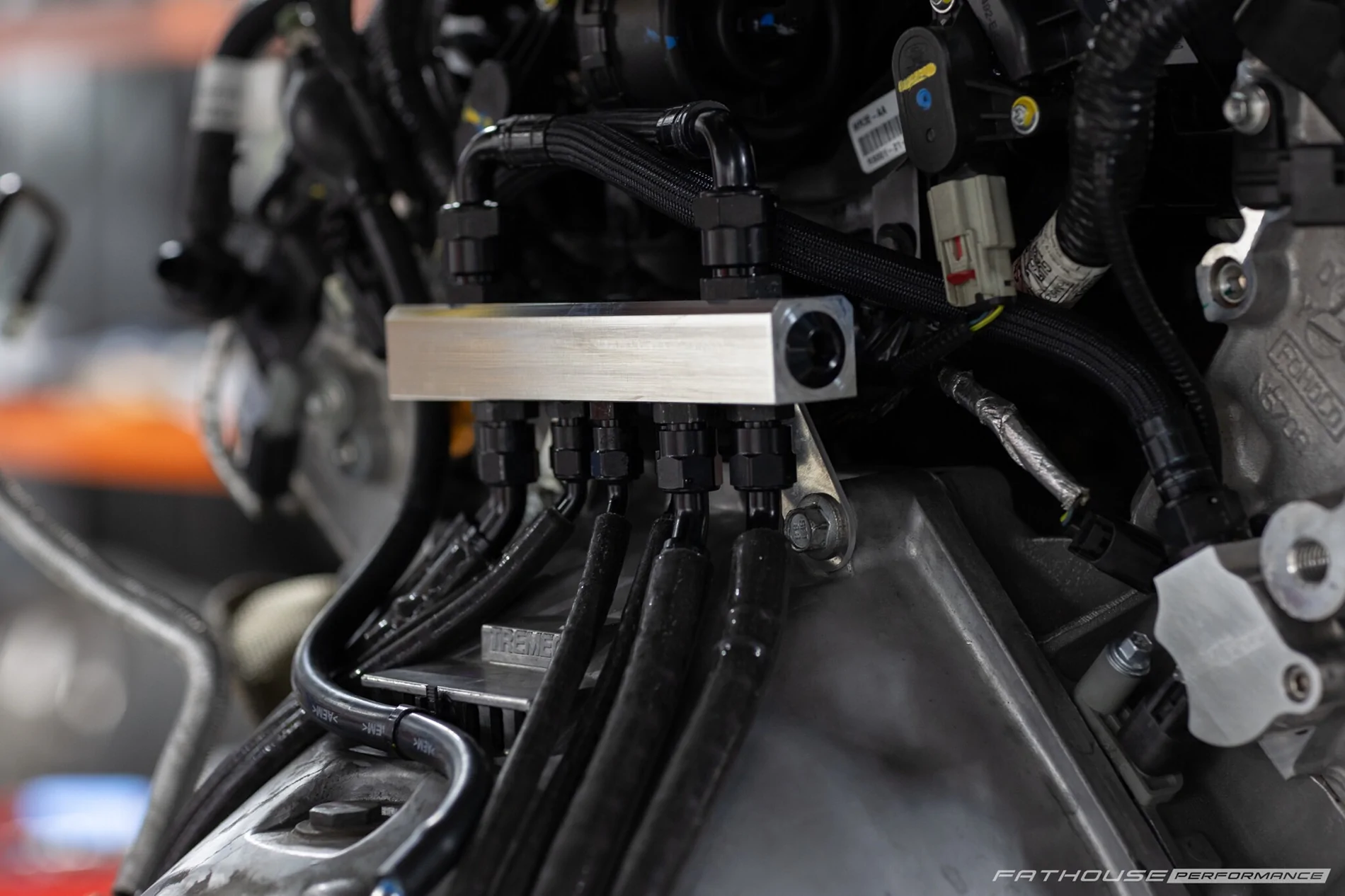
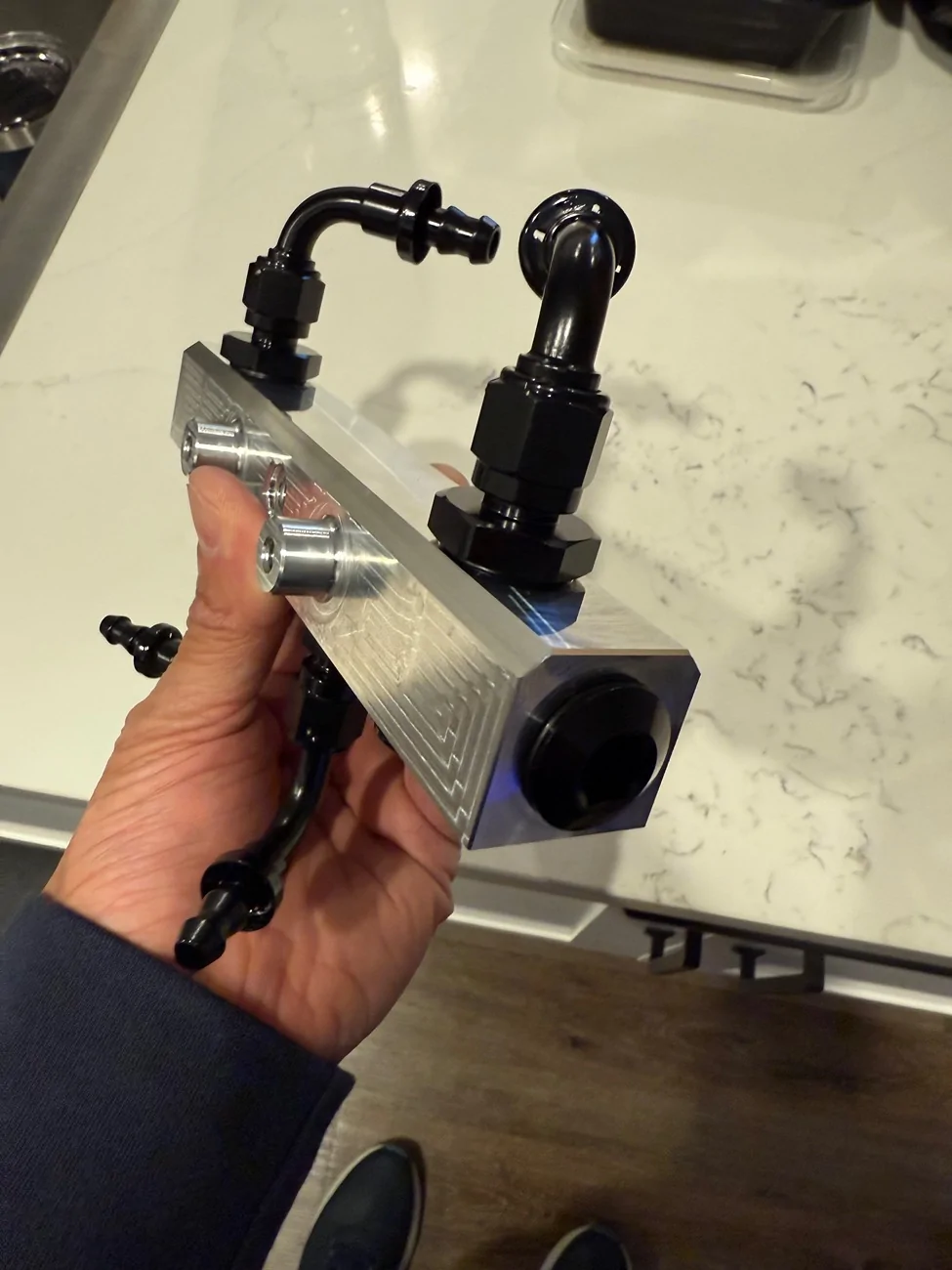
Fathouse Fab uses a coolant distribution block to provide a dedicated, high-flow water-cooling circuit for multiple high-performance components in a custom twin-turbo setup. This method is a significant upgrade over factory or series-plumbed cooling systems for several reasons.

Why a coolant distribution block is needed
1. Consistent and equal cooling
  • In a twin-turbo setup, all water-cooled components receive an equal and consistent supply of fresh, cool coolant from the distribution block.
  • If plumbed in a series (where coolant flows from one component to the next), the second turbo or wastegate would receive pre-heated coolant, making its cooling significantly less efficient.
2. Prevents oil coking
  • After a high-performance run, the turbo and wastegate housings retain immense heat from the exhaust gases.
  • When the engine is turned off, this "heat soak" can cause the residual engine oil in the turbo's bearing cartridge to overheat and form carbon deposits, or "coke".
  • A water-cooled system, especially one properly plumbed with a distribution block, continues to circulate coolant via thermosiphon even after the engine is shut off. This process dissipates the heat and prevents oil coking, extending the life of the turbo's bearings.
3. Supports high-performance builds
  • High-boost, twin-turbo applications like those built by Fathouse Fab push components to extreme temperatures. Many modern, high-performance ball-bearing turbos are specifically designed to be water-cooled for this reason.
  • High-end external wastegates, such as the Garrett GVW series, also include provisions for water cooling to maintain consistent actuator function under extreme thermal load.
4. Simplified and cleaner plumbing
  • A single distribution block streamlines the plumbing, which is important for the complex layouts of custom, high-end builds.
  • Instead of tapping into multiple coolant sources throughout the engine block, a single, central block can provide the supply and manage the returns for multiple components.
5. Optimal thermosiphon function
  • Proper plumbing, with the coolant supply entering at the lowest water port of the turbo and exiting at the highest, allows the hot coolant to rise naturally. This promotes an effective thermosiphon effect, which continues to circulate coolant even after the engine and water pump are off.
  • A coolant distribution block helps facilitate this ideal plumbing layout for each individual component
 
Last edited:

Sponsored

NGOT8R

Well-Known Member
Joined
Jul 19, 2020
Threads
153
Messages
9,214
Reaction score
7,672
Location
Florida
First Name
Adrian
Vehicle(s)
2019 Bullitt
A few turbo kits are plug and play, but many aren’t. I quickly learned this when I started purchasing everything needed for my turbo kit. As much as these systems cost, I feel like anything additional that can be done to aid in cooling should be a plus.

I started with having my hot side piping JetHot coated. I’ll also be switching to an electric water pump.

During all of my research, I stumbled across that coolant block and thought, why not give it a try. If it can add additional cooling, it’s a win for me.

I will say that it’s one of those mods that needs some fabrication for mounting and custom length coolant lines made, but I have to believe FatHouse sees a need for it if they’re putting them on their high hp turnkey vehicles.

When it comes down to asking for a lot more power out of these cars, one needs to at least try and/or consider supporting mods that may help the combination live a happier life.
 

Grimreaper

Well-Known Member
Joined
Jan 23, 2019
Threads
15
Messages
640
Reaction score
315
Location
Dallas
Vehicle(s)
2017 GT
In wouldn't consider any of that needed for a waste gate on a street car and highly debatable for track use. Sounds much more like marketing that everything has to be a benefit. The coking has been an age old selling point for anything that might cool the turbo, remember turbo timers? Nothing against coolant for the cartridge if that was the design, but ran oil feed only for years and never had build up or coking. That was on oil from the 90s- into early 20's. There's better oils today too.

I fall into the same trap, more parts and AM= better.
 

Zrussian13

Well-Known Member
Joined
Nov 16, 2018
Threads
28
Messages
2,660
Reaction score
2,769
Location
Phoenix
First Name
Chris
Vehicle(s)
2019 Mustang GT, 2018 Acura MDX
4 arizona summers and 64k boosted miles with no water cooled turbos or WGs. If outside temps are under 100° I'm driving it hard. If i was building a track car I'd probably consider going that route though.
 

NGOT8R

Well-Known Member
Joined
Jul 19, 2020
Threads
153
Messages
9,214
Reaction score
7,672
Location
Florida
First Name
Adrian
Vehicle(s)
2019 Bullitt
This is gonna be an all new venture for me, so I will be learning as I go. I hope all of my choices benefit me and nothing turns out to be a waste, but only time will tell. One thing is for sure, I will always share the good, bad and ugly in the spirit of helping others, who may be contemplating doing the same mods.
 

NGOT8R

Well-Known Member
Joined
Jul 19, 2020
Threads
153
Messages
9,214
Reaction score
7,672
Location
Florida
First Name
Adrian
Vehicle(s)
2019 Bullitt
4 arizona summers and 64k boosted miles with no water cooled turbos or WGs. If outside temps are under 100° I'm driving it hard. If i was building a track car I'd probably consider going that route though.
That’s a good testament for your setup in an extremely hot environment.

Just curious, have you ever looked at your wastegate diaphragms and compared how they look now vs when they were new? I know heat is eventually a killer of anything, but in your case, even if an inspection revealed signs of brittleness or cracking, I’d say 64K miles is more than a fair run before having to replace them.
Sponsored


Top