
K4fxd
Well-Known Member
It's very accurate.I'm surprised to see the feature dormant in the mustang.
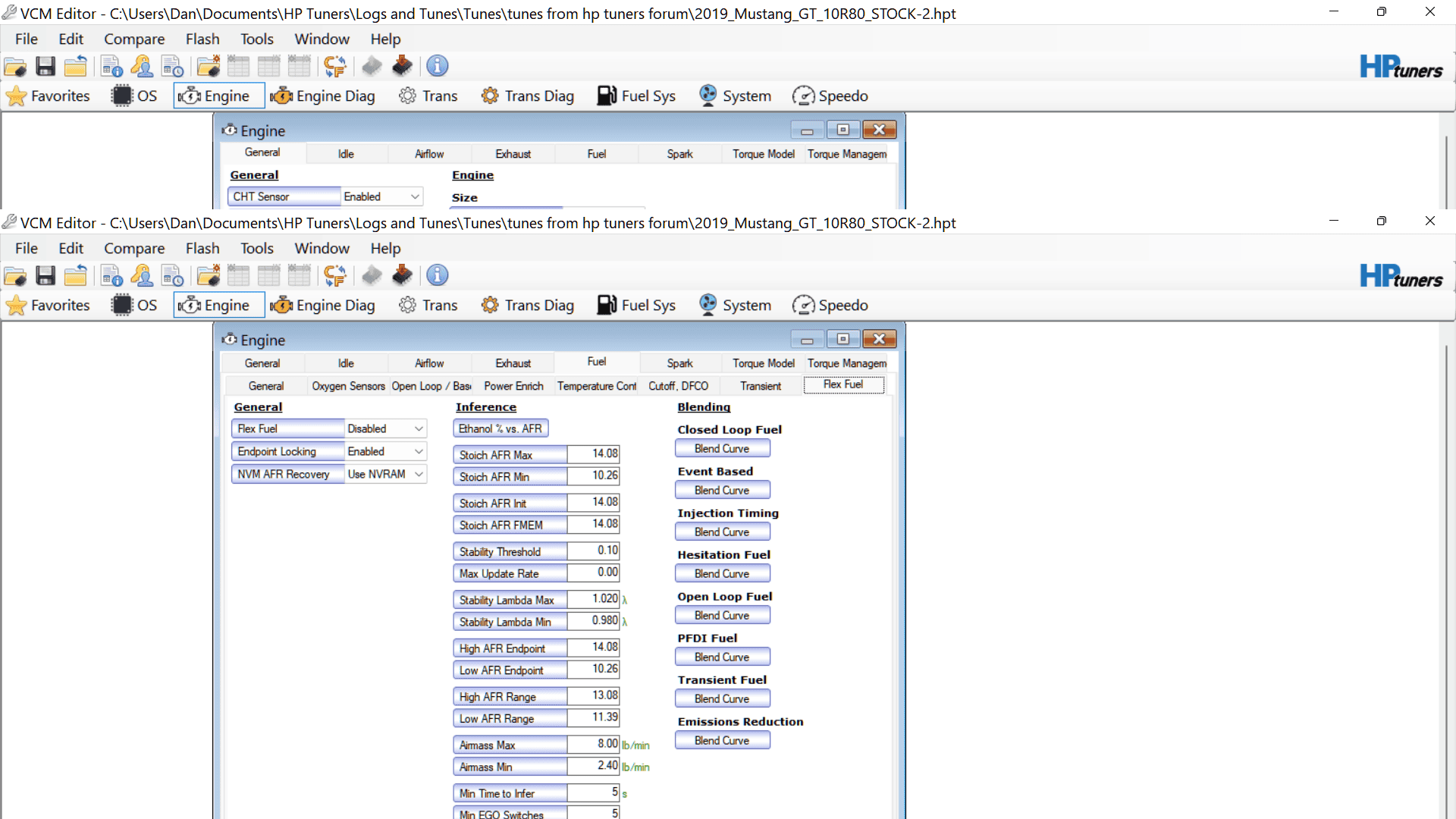
Stock 2019 flex fuel tab
Sponsored

It's very accurate.I'm surprised to see the feature dormant in the mustang.

Where was this rust?????I don't know man, my friend has a 2018 GT and found rust in his heads after just a few months. He also always tests his and it's consistently 85%
I'm only saying b/c OP asked for pros and cons. One of the cons is the potential for rust

I can't find the picture but if I remember correctly, it was around the valves and the intake manifold runners.Where was this rust?????
Valves are SS. Manifold runners are ABS or aluminum.I can't find the picture but if I remember correctly, it was around the valves and the intake manifold runners.

So... Lemme ask this. Would turning on the flex tune help with the fact that there's summer blend and winter blend fuels where one blend is straight up gasoline and the other is 10% ethanol?It will learn anything from 0 to 100%
It's the same logic as the flex fuel F150. In the Mustang ECU it is just turned off and a few tables need to be filled in. I have no idea why Ford didn't turn it on and make the Mustang flex from the factory. Maybe they didn't want the 50HP boost or whatever it is.
Or more likely it is due to the small fuel tank.
It's not necessary as the regular tune compensates up to E30 or so.Would turning on the flex tune help with the fact that there's summer blend and winter blend fuels where one blend is straight up gasoline and the other is 10% ethanol?
I know, metallurgically it doesn't make sense. I'm just reporting what I saw.Valves are SS. Manifold runners are ABS or aluminum.



Summer blend vs. winter blend doesn't have anything to do with e content, It has to do with the volatility of the fuel.So... Lemme ask this. Would turning on the flex tune help with the fact that there's summer blend and winter blend fuels where one blend is straight up gasoline and the other is 10% ethanol?
There’s a very wide difference is how long “sit” or “store” is. Paranoid uneducated persons will see the word “sit” and think in 3 weeks, Ethanol would completely destroy the car. Many “sit” for months with zero harm. A flex fuel vehicle is no difference than ours, and Ford has to assume they could “sit” for long periods of time in many cases while still providing a warranty.I know, metallurgically it doesn't make sense. I'm just reporting what I saw.
I know several other people who also say not to let E85 sit.
Absolutely. 70% will give 95% of the benefits of 85%….I'm seriously thinking about getting the PBD Flex tune for my 21 Mach 1 and this thread has been very informative so thank you all for that! Another guy on FB says it is night and day difference on his Mach 1.
I only have one gas station near me with E85. It show a range of 55%-85%. I've tested 3 times this spring/summer and every time it was 70%.
This should be good right?
Entirely depends on the region/supplier. Up here in the north, we see a drop into the high 50, low 60% range, by May it’s back up to around 79-83%.Summer blend vs. winter blend doesn't have anything to do with e content, It has to do with the volatility of the fuel.
In cold months a more volatile fuel will have the same effective octane as a less volatile fuel in warm months.
Imagine how fast acetone evaporates vs water. Acetone is more volatile, in the cold more volatile compounds will evaporate slowly, in the summer they evaporate more quickly. The compound they use is butane, there is more butane in winter blend fuel.
In high performance applications we find that this isn't the case, and winter blend does not behave the same even in the cold. However they use the same amount of ethanol year round. At least near me. This was verified with an ethanol content sensor.
Yes that's correct, for fuel sold as "e85" but they were asking about regular e10 fuel. Which is always 10% (or sometimes 9%).Entirely depends on the region/supplier. Up here in the north, we see a drop into the high 50, low 60% range, by May it’s back up to around 79-83%.


