Sponsored

Aftermarket MT-82 Gear/Internals options

xl_cheese

Well-Known Member
Joined
Dec 13, 2022
Threads
23
Messages
121
Reaction score
118
Location
Austin
First Name
Wes
Vehicle(s)
2017 GT Premium
I've searched quite a bit. I can only find a company called AMP and another called Allstate Gears. AMP seems to be the only one that shows an upgrade on their parts being stronger than stock. A couple other places sell gears, but they appear to be a reseller for AMP.

Does anyone know of other options? I'm starting a rebuild on a broken 2016 MT82 I picked up. Going with Synchrotech for the synchronizers and shift pads. Figured since I'm in there I might as well upgrade the gears. Considering having them REM polished as well.

Thanks in advance!
Sponsored

 
Last edited:
NGOT8R

Well-Known Member
Joined
Jul 19, 2020
Threads
153
Messages
9,241
Reaction score
7,732
Location
Florida
First Name
Adrian
Vehicle(s)
2019 Bullitt
The only thing I know of for Gen. 1/2 is, you can buy a 26 spline input shaft. In addition, you can weld the shift forks for durability. Once you’ve welded the forks, you can send all of your hard parts (including bearings) in to get cryogenically treated and WPC treated (blasted with a proprietary powder believed to be ceramic powder at a very high velocity to make them as strong as possible). I tried asking Calimer to buy one of his billet gear sets when I built my MT82-D4, but he wouldn’t sell them unless he does the build.

You’re also on the right track for synchros and adding bronze shift forks pads.
 

NGOT8R

Well-Known Member
Joined
Jul 19, 2020
Threads
153
Messages
9,241
Reaction score
7,732
Location
Florida
First Name
Adrian
Vehicle(s)
2019 Bullitt
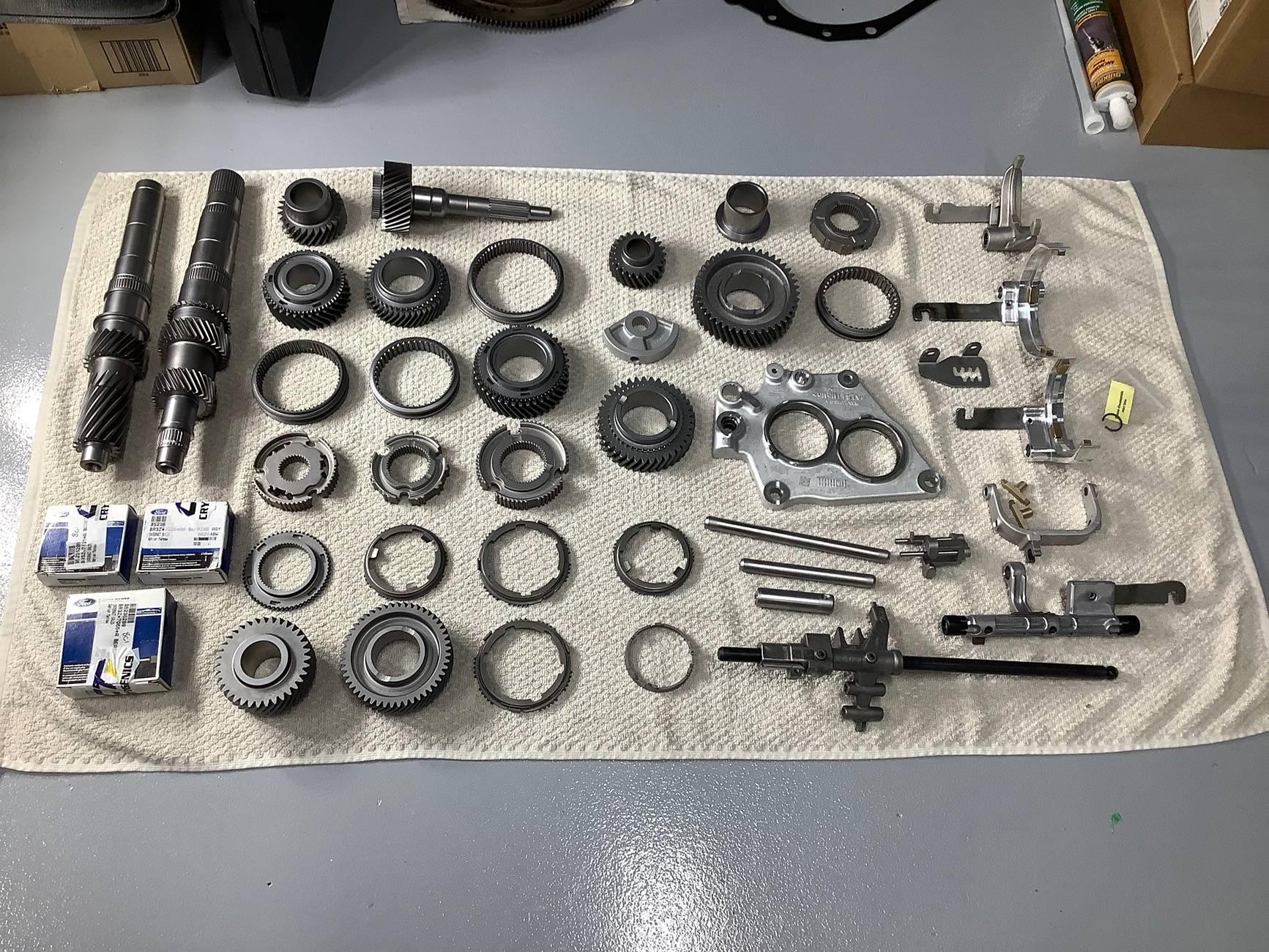
When I sent all of my hard parts in to get treated by CTP, I remember Ben telling me it was the same cost for everything. My build thread has the pricing listed for the Cryo and WPC processes. Here’s a pic of all the parts I sent in.

1751929382421-8o.jpg
 

Sponsored

WildHorse

N/A or GO HOME
Joined
Jun 28, 2017
Threads
270
Messages
10,297
Reaction score
8,350
Location
Home World: CLASSIFIED
First Name
Puddintane
Vehicle(s)
'17 S550
Vehicle Showcase
1
cryogenically treated
There was definitely issues in the first gen MT-82 that FORD addressed for the gen 2:

What Improved (2015–2017 MT-82):

1. Stronger Gear Materials
Ford quietly revised the heat treatment process on some internal parts.

Gears got a tougher surface finish for improved durability and reduced wear. Which, cryogenically treated process won't increase strength/durability in any significant way.

2. Better Shift Rail and Fork Tolerances
Minor internal refinements helped reduce misalignment under load.

Improved shift rail detent feel and slightly cleaner shift gates.

3. Revised Synchro Friction Material
Some reports suggest Ford updated the synchro linings for smoother engagement, especially into 2nd and 3rd gear. Still brass, but better than earlier years.

4. Clutch Feel and Engagement
Ford tweaked the clutch engagement point and pedal feel slightly, though slave cylinder issues can still happen.

5. Both the input and output shafts in the MT-82 are forged from high-grade alloy steel and receive proper heat treatment. These parts were engineered to withstand 450-500 lb-ft of torque reliably.

What remained the same (2015–2017 MT-82):
Rubber mounting bushing for the shifter great for reduced NVH, but not performance shifting.

Enter the GEN3 MT-82:


Why Ford Changed the MT-82 for Gen 3 (2018+):

1. NVH and Daily Drivability Improvements
Ford's focus was clearly on noise, vibration, and harshness (NVH).

The Gen 3 MT-82 added dual-mass flywheels, softer clutch engagement, and different synchro tuning to make the car more pleasant for the average driver.

Translation: Smoother around town, but less crisp under pressure.

âš™ 2. Cost-Cutting and Global Parts Strategy
The Gen 3 MT-82 is officially called the MT-82-D4, and it was built to:

Streamline production

Use more globally-sourced parts (mostly China-built)

Be compatible with both Mustang and Ranger

It’s still a Getrag design, but Ford made it even more budget-conscious — to the detriment of hard-driving reliability.

3. Internal Changes (Some Good, Some Not)

Feature Gen 2 (2015–17)............................................Gen 3 (2018+)
Synchronizers Revised................................................More aggressive carbon-fiber-lined synchros
Gear Ratios Performance-oriented..................Revised ratios
Clutch & Flywheel Single-mass..........................Dual-mass (more NVH control, less feel)
Build Quality Decent (Mexico-built)................Worse QA (China-built)
Shifter Remote-style .................................................Still remote, same issues

Bottom line: Ford tried to refine the driving feel for the average buyer, but performance shifting suffered.
What Went Wrong for Enthusiasts
Sloppier High-RPM Shifting
The new synchros don’t mesh well at high RPM, despite being carbon-lined.

3rd gear issues still persist, especially with power shifting or track use.

Clutch Feel Is Mushier
Dual-mass flywheel + revised clutch means less engagement feel and slower response.

Shift Lockout Problems Persist
Even with changes, the remote shifter geometry wasn’t improved, so hard shifts at redline still feel vague or blocked.

China Build Quality
Many Gen 3 MT-82-D4s suffer from poor internal tolerances, gear lash issues, and early bearing wear.

There are even reports of loose shift forks and gear rattle out of the factory.

So Why Did Ford Do It?
From their perspective:

95% of Mustang buyers don’t track or powershift.

A quieter, smoother, more refined transmission was a win for daily drivers.

Global parts sourcing + reduced warranty costs = better profit margins.

Ford knew hardcore enthusiasts would either:

Upgrade to a Tremec

Or buy a GT350/GT500 with one stock.

Summary:
Ford changed to the Gen 3 MT-82-D4 to make the Mustang more refined and cheaper to build, not faster.
While the average driver might enjoy smoother shifts and less noise, enthusiasts got a downgrade in shift precision, build quality, and high-RPM performance.

SO:
Gen1 MT-82 built for performance, quicky found limitations
Gen2 MT-82 built for performance, addressed most of Gen1 issues
Gen3 MT-82 built for the average driver, many issues returned.
 
OP
OP
xl_cheese

xl_cheese

Well-Known Member
Joined
Dec 13, 2022
Threads
23
Messages
121
Reaction score
118
Location
Austin
First Name
Wes
Vehicle(s)
2017 GT Premium
When I sent all of my hard parts in to get treated by CTP, I remember Ben telling me it was the same cost for everything. My build thread has the pricing listed for the Cryo and WPC processes. Here’s a pic of all the parts I sent in.

1751929382421-8o.jpg
Thanks for this info. I have already read your build thread and took notes! :) With this build, I'm mainly looking for smoother shifts. I'm not planning to boost the car. For me, 400HP is plenty.
 

NGOT8R

Well-Known Member
Joined
Jul 19, 2020
Threads
153
Messages
9,241
Reaction score
7,732
Location
Florida
First Name
Adrian
Vehicle(s)
2019 Bullitt
Thanks for this info. I have already read your build thread and took notes! :) With this build, I'm mainly looking for smoother shifts. I'm not planning to boost the car. For me, 400HP is plenty.
You should be just fine with a synchro upgrade, welded forks, bronze shift fork pads and new bearings to strengthen things up just a bit.
 
OP
OP
xl_cheese

xl_cheese

Well-Known Member
Joined
Dec 13, 2022
Threads
23
Messages
121
Reaction score
118
Location
Austin
First Name
Wes
Vehicle(s)
2017 GT Premium
There was definitely issues in the first gen MT-82 that FORD addressed for the gen 2:

What Improved (2015–2017 MT-82):

1. Stronger Gear Materials
Ford quietly revised the heat treatment process on some internal parts.

Gears got a tougher surface finish for improved durability and reduced wear. Which, cryogenically treated process won't increase strength/durability in any significant way.

2. Better Shift Rail and Fork Tolerances
Minor internal refinements helped reduce misalignment under load.

Improved shift rail detent feel and slightly cleaner shift gates.

3. Revised Synchro Friction Material
Some reports suggest Ford updated the synchro linings for smoother engagement, especially into 2nd and 3rd gear. Still brass, but better than earlier years.

4. Clutch Feel and Engagement
Ford tweaked the clutch engagement point and pedal feel slightly, though slave cylinder issues can still happen.

5. Both the input and output shafts in the MT-82 are forged from high-grade alloy steel and receive proper heat treatment. These parts were engineered to withstand 450-500 lb-ft of torque reliably.

What remained the same (2015–2017 MT-82):
Rubber mounting bushing for the shifter great for reduced NVH, but not performance shifting.

Enter the GEN3 MT-82:


Why Ford Changed the MT-82 for Gen 3 (2018+):

1. NVH and Daily Drivability Improvements
Ford's focus was clearly on noise, vibration, and harshness (NVH).

The Gen 3 MT-82 added dual-mass flywheels, softer clutch engagement, and different synchro tuning to make the car more pleasant for the average driver.

Translation: Smoother around town, but less crisp under pressure.

âš™ 2. Cost-Cutting and Global Parts Strategy
The Gen 3 MT-82 is officially called the MT-82-D4, and it was built to:

Streamline production

Use more globally-sourced parts (mostly China-built)

Be compatible with both Mustang and Ranger

It’s still a Getrag design, but Ford made it even more budget-conscious — to the detriment of hard-driving reliability.

3. Internal Changes (Some Good, Some Not)

Feature Gen 2 (2015–17)............................................Gen 3 (2018+)
Synchronizers Revised................................................More aggressive carbon-fiber-lined synchros
Gear Ratios Performance-oriented..................Revised ratios
Clutch & Flywheel Single-mass..........................Dual-mass (more NVH control, less feel)
Build Quality Decent (Mexico-built)................Worse QA (China-built)
Shifter Remote-style .................................................Still remote, same issues

Bottom line: Ford tried to refine the driving feel for the average buyer, but performance shifting suffered.
What Went Wrong for Enthusiasts
Sloppier High-RPM Shifting
The new synchros don’t mesh well at high RPM, despite being carbon-lined.

3rd gear issues still persist, especially with power shifting or track use.

Clutch Feel Is Mushier
Dual-mass flywheel + revised clutch means less engagement feel and slower response.

Shift Lockout Problems Persist
Even with changes, the remote shifter geometry wasn’t improved, so hard shifts at redline still feel vague or blocked.

China Build Quality
Many Gen 3 MT-82-D4s suffer from poor internal tolerances, gear lash issues, and early bearing wear.

There are even reports of loose shift forks and gear rattle out of the factory.

So Why Did Ford Do It?
From their perspective:

95% of Mustang buyers don’t track or powershift.

A quieter, smoother, more refined transmission was a win for daily drivers.

Global parts sourcing + reduced warranty costs = better profit margins.

Ford knew hardcore enthusiasts would either:

Upgrade to a Tremec

Or buy a GT350/GT500 with one stock.

Summary:
Ford changed to the Gen 3 MT-82-D4 to make the Mustang more refined and cheaper to build, not faster.
While the average driver might enjoy smoother shifts and less noise, enthusiasts got a downgrade in shift precision, build quality, and high-RPM performance.

SO:
Gen1 MT-82 built for performance, quicky found limitations
Gen2 MT-82 built for performance, addressed most of Gen1 issues
Gen3 MT-82 built for the average driver, many issues returned.
This info is gold. Thanks for sharing. Makes me wonder whether the AMP branded gears would be any sort of upgrade over the oem gears? Being that 2015 shows updated gears with tougher surface finishing.
 

WildHorse

N/A or GO HOME
Joined
Jun 28, 2017
Threads
270
Messages
10,297
Reaction score
8,350
Location
Home World: CLASSIFIED
First Name
Puddintane
Vehicle(s)
'17 S550
Vehicle Showcase
1
Is that some chatgpt bullshit?
Yeah, it is. "deep research" mode. Takes about an hour to complete. It checks, rechecks, verifies sources which you can easily check as it provides them. MOst sources are FORD & dedicated car magazines, some engineering reports, etc.

Feel free to verify it yourself.
Sponsored


Top