Sponsored

TDStuart Tuning Adventure

markmurfie

Well-Known Member
Joined
Jun 6, 2015
Threads
15
Messages
1,320
Reaction score
625
Location
Hawaii
First Name
Mark
Vehicle(s)
2015 Ford Mustang GT
I'm confused murf. Don't you usually do SD before torque?
Before HPTs and SCTs calculators NO ONE touched SD outside raising a few MAP and airmass limits for boosted applications. The cook book says "zero it out"... what ever that ment.

HPTs calculator is nearly useless for most people. Either no changes come from it or gross error. It works best changing the coeffecients and seeing how it effects their SD calculator MAP/ load table to move it closer to what you need.
SCTs may work better for people, but its much less visual. You take a log, load it into the calculator, then hope what it spits out works better.

Correcting the SD also takes adding a MAP sensor. No one does that for a NA build.
SCT uses fuel trims to correct it... BLEH!
Sponsored

 
Last edited:
Pistol_91

Well-Known Member
Joined
Oct 25, 2023
Threads
12
Messages
1,382
Reaction score
1,407
Location
Clearwater
Vehicle(s)
2020 mustang GT
I have found replicating an ecoboost SD mapping works pretty well for the coyote.
 

engineermike

Well-Known Member
Joined
Jul 15, 2018
Threads
31
Messages
6,188
Reaction score
6,454
Location
La
Vehicle(s)
2018 GTPP A10
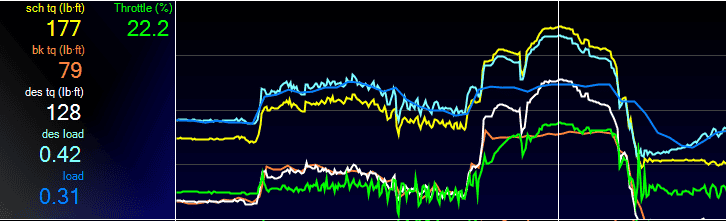
Red arrows:
Im tring to point out throttle at idle is controlled completely by indicated torque, not desired,ETC, or engine brake torque. you see the spike in throttle coorelates with the spike in indicated torque.... I was tring to explain this to Mike, but he kept pushing that torque loss went into this. These values are in the torque calculation tables as direct look up values. The raw torque to load/ load to torque values.
I've posted several times in this thread that scheduled torque is how it determines idle throttle angle. The question I've posed to you is, how do you think it determines the value of scheduled torque?

Blue arrows:
ETC and desired torque agree. Schedule/ indicated TQ follow the demanded torque. The throttle even follows. The engine brake torque flat lines. This is where it gets complicated, because all that stuff as described by Mike comes in to play on top of the spark and fuel torque ratios. This looks like a torque limit, not error.
This is really interesting...and terrible. I bet the car responds to part-throttle pedal input super weird and laggy.

1718978680306-nl.png


If we follow a simplified logic flow at the snapshot in the snip, pedal position demands 128 ftlb -> logic calculates friction + accessory + pumping loss + lambda correction + timing correction = 49 ftlb total -> scheduled torque determined to be 128 + 49 = 177 ftlb -> look up torque-to-load at measured cam timing and interpolate -> desired load calculated to be .42. He didn't log desired airflow but if he did, my math says .42 load at 1411 rpm = 3.96 lb/min. The next step for the logic is to determine the throttle angle needed to achieve 3.96 lb/min airflow, which is dependent on the TB model (assumed to be stock and correct), calculated baro (assuming it's band-aid locked to a semi-accurate value), and calculated MAP. Now, going back to what I said earlier, the SD model calculates MAP as a function of MAF et. al. With a later-than-stock closing intake valve, I would expect the MAP to be erroneous on the low side since the stock model doesn't adequately account for late-IVC-induced reversion. This being the case, the actual MAP is going to be higher than the calculated MAP. Higher MAP means less dP across the TB than it expects, resulting in less flow than it expects, which is exactly what we are seeing since the actual airflow measured is only 2.88 lb/min (.31 load) at that time. If the airflow is in error, there is a PID feedback loop to correct it, but it has limits.

I can say with a fairly high degree of certainty that this problem can also be traced back to the SD model.

@tdstuart if you refuse to do the proper procedure of logging MAP from a sensor, isolating mapped points, and properly calibrating the SD model, you could try simply scaling all of your active SD slopes up by a factor of 1.1. I think the final correction will be more than this, but baby steps. Log your load vs desired load or MAF vs desired MAF and adjust the SD slopes until they meet up. This is a very quick-n-dirty way to get within the control span of the airflow PID loop, but it should get you closer than you are now.
 

markmurfie

Well-Known Member
Joined
Jun 6, 2015
Threads
15
Messages
1,320
Reaction score
625
Location
Hawaii
First Name
Mark
Vehicle(s)
2015 Ford Mustang GT
@engineermike
@tdstuart

Reffer to post #450

Equation 1 describes airflow through the throttle body and modeling it.
theta is fixed at PR (MAP/Baro) less than 0.52828 aka choked flow. this is 15.8 MAP / 29.9 Baro. Thats 14.1 vacuum. The highest value in the TB model.

The post describes what it does when vacuum is greater than the throttle body model can represent. The function of Baro/ MAP for the value K is the ETC angle filtering look up tables.
Only thing in the equation used for des MAF in chocked flow the ECU can change to correct this lookup is Baro.

Your stock TB model should be as accurate as your stock MAF, and they should agree with each other on the incylinder aircharge. That alone means they should agree on MAP as thats where MAP is calculated from. The SD shouldn't have major error you need to correct. transient conditions where the manifold is filling or unfilling may be a little off, but those are usually very brief.
 

markmurfie

Well-Known Member
Joined
Jun 6, 2015
Threads
15
Messages
1,320
Reaction score
625
Location
Hawaii
First Name
Mark
Vehicle(s)
2015 Ford Mustang GT
I've posted several times in this thread that scheduled torque is how it determines idle throttle angle. The question I've posed to you is, how do you think it determines the value of scheduled torque?


This is really interesting...and terrible. I bet the car responds to part-throttle pedal input super weird and laggy.

1718978680306-nl.png


If we follow a simplified logic flow at the snapshot in the snip, pedal position demands 128 ftlb -> logic calculates friction + accessory + pumping loss + lambda correction + timing correction = 49 ftlb total -> scheduled torque determined to be 128 + 49 = 177 ftlb -> look up torque-to-load at measured cam timing and interpolate -> desired load calculated to be .42. He didn't log desired airflow but if he did, my math says .42 load at 1411 rpm = 3.96 lb/min. The next step for the logic is to determine the throttle angle needed to achieve 3.96 lb/min airflow, which is dependent on the TB model (assumed to be stock and correct), calculated baro (assuming it's band-aid locked to a semi-accurate value), and calculated MAP. Now, going back to what I said earlier, the SD model calculates MAP as a function of MAF et. al. With a later-than-stock closing intake valve, I would expect the MAP to be erroneous on the low side since the stock model doesn't adequately account for late-IVC-induced reversion. This being the case, the actual MAP is going to be higher than the calculated MAP. Higher MAP means less dP across the TB than it expects, resulting in less flow than it expects, which is exactly what we are seeing since the actual airflow measured is only 2.88 lb/min (.31 load) at that time. If the airflow is in error, there is a PID feedback loop to correct it, but it has limits.

I can say with a fairly high degree of certainty that this problem can also be traced back to the SD model.

@tdstuart if you refuse to do the proper procedure of logging MAP from a sensor, isolating mapped points, and properly calibrating the SD model, you could try simply scaling all of your active SD slopes up by a factor of 1.1. I think the final correction will be more than this, but baby steps. Log your load vs desired load or MAF vs desired MAF and adjust the SD slopes until they meet up. This is a very quick-n-dirty way to get within the control span of the airflow PID loop, but it should get you closer than you are now.
If logic calculates friction + accessory + pumping loss + lambda correction + timing correction = 49 ftlb total

Then how is engine brake torque at 79, twice that value lower than Scheduled torque? How is the ECU imposing this limit and coming up with the right controling engine parameters to achieve it?

You are doing it backwards.

Desired torque gets "idle torque" added on to it to achieve Scheduled torque.
It just so happens idle torque nearly always equals TR and loss torque. Just durring limits idle torque still remains the same, but loss torque and TR corrections get bigger.
 

Sponsored

OP
OP
tdstuart

tdstuart

Well-Known Member
Joined
Apr 6, 2021
Threads
72
Messages
2,566
Reaction score
1,292
Location
Arizona
First Name
Triston
Vehicle(s)
2015 Mustang Gt Premium
Correcting the SD also takes adding a MAP sensor. No one does that for a NA build.
Are we able to add a map sensor directly to the ecu? Or do I have to log it some other way
 

markmurfie

Well-Known Member
Joined
Jun 6, 2015
Threads
15
Messages
1,320
Reaction score
625
Location
Hawaii
First Name
Mark
Vehicle(s)
2015 Ford Mustang GT
Are we able to add a map sensor directly to the ecu? Or do I have to log it some other way
You can repurpose a sensor to an External MAP sensor and just log that PIDs direct signal. I can't recall which sensor people tend to use, AC pressure or EVAP?
I have the pro features on all my MPVI's and wouldn't buy one with out them. I wire and log many different sensors through them.
Ngauges have two user inputs you can wire sensors into as well.
 

engineermike

Well-Known Member
Joined
Jul 15, 2018
Threads
31
Messages
6,188
Reaction score
6,454
Location
La
Vehicle(s)
2018 GTPP A10
If logic calculates friction + accessory + pumping loss + lambda correction + timing correction = 49 ftlb total

Then how is engine brake torque at 79, twice that value lower than Scheduled torque?
Desired torque is 128 ftlb and the logic determines that it takes .42 [desired] load to get there. But the actual load is only .31, which is then converted to a brake torque of 79 ftlb. In other words, driver is requesting 128 but only getting 79 due to a problem in the calibration. The problem, I believe, is that the throttle isn't opening enough due to an inaccurate SD model.

How is the ECU imposing this limit and coming up with the right controling engine parameters to achieve it?
As I said, it's not a limit, per se, but more of an inaccurate SD model -> inaccurate TB dP -> inaccurate throttle angle, and not enough leeway given to the PID ETC controller to fix it. Short of installing a MAP sensor, I don't see why modifying the SD model until desired airflow = MAF, especially with the PID controller switched off, wouldn't yield satisfactory results (only possible if the TB model and MAF are both accurate).

Desired torque gets "idle torque" added on to it to achieve Scheduled torque.
It just so happens idle torque nearly always equals TR and loss torque. Just durring limits idle torque still remains the same, but loss torque and TR corrections get bigger.
Ok and where are the "desired torque" and "idle torque" derived from?
 

deanm11

Well-Known Member
Joined
Oct 27, 2020
Threads
54
Messages
485
Reaction score
318
Location
Northern NJ
First Name
Dean
Vehicle(s)
2020 Mustang GT A10
You can repurpose a sensor to an External MAP sensor and just log that PIDs direct signal. I can't recall which sensor people tend to use, AC pressure or EVAP?
I have the pro features on all my MPVI's and wouldn't buy one with out them. I wire and log many different sensors through them.
Ngauges have two user inputs you can wire sensors into as well.
I attempted but put off correcting my SD model in my Gen3 Comp cams car. Here's my setup for a map sensor, from my post on hptuners forum. The transformed output looked good despite my inability to persevere with data and calibration. My SD model and torque tables are off but my car runs strong and smooth.

Middle pin of the AC pressure sensor connector works for logging.

- USA made 2 bar sensor... 5v power & ground, middle pin is sensor output
- add a circuit fused power off the underhood block to feed the power pin with this transformer: https://www.amazon.com/gp/product/B0...?ie=UTF8&psc=1
- Ground from an underhood ground
- Middle pin of map sensor to middle pin of AC pressure sensor connector (nothing to/from the 5v and ground pins of the ac connector. maybe that would have worked but I felt most comfortable feeding power separately from that sourced from the ECM
- Log AC pressure voltage
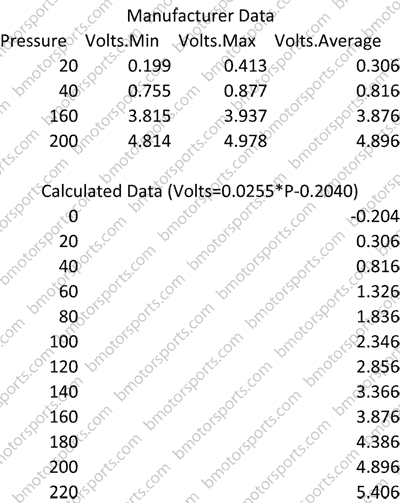
- Translate voltage into absolute pressure after logging


SNSR-03066Delphi / GM 2 Bar Map Sensor - 12247571 - 16040609 (US Made)
$59.99
1 x​
$59.99
CONN-85559GM Delphi / Packard - 2, 3 & 4 bar MAP Sensor Connector Pigtail
$7.99
1 x​
$7.99

https://www.bmotorsports.com/shop/product_info.php/cPath/129_143/products_id/1582

snsr-03066-3.png
 
OP
OP
tdstuart

tdstuart

Well-Known Member
Joined
Apr 6, 2021
Threads
72
Messages
2,566
Reaction score
1,292
Location
Arizona
First Name
Triston
Vehicle(s)
2015 Mustang Gt Premium
I attempted but put off correcting my SD model in my Gen3 Comp cams car. Here's my setup for a map sensor, from my post on hptuners forum. The transformed output looked good despite my inability to persevere with data and calibration. My SD model and torque tables are off but my car runs strong and smooth.
Do I just hookup the map sensor to a vacuum source after the throttle body or is there a specific place I need to put it?
 

Sponsored

GregO

Well-Known Member
Joined
Mar 5, 2018
Threads
41
Messages
3,320
Reaction score
2,470
Location
Illinois
Vehicle(s)
S550 GTPP
Do I just hookup the map sensor to a vacuum source after the throttle body or is there a specific place I need to put it?
I’ll be your Huckleberry,
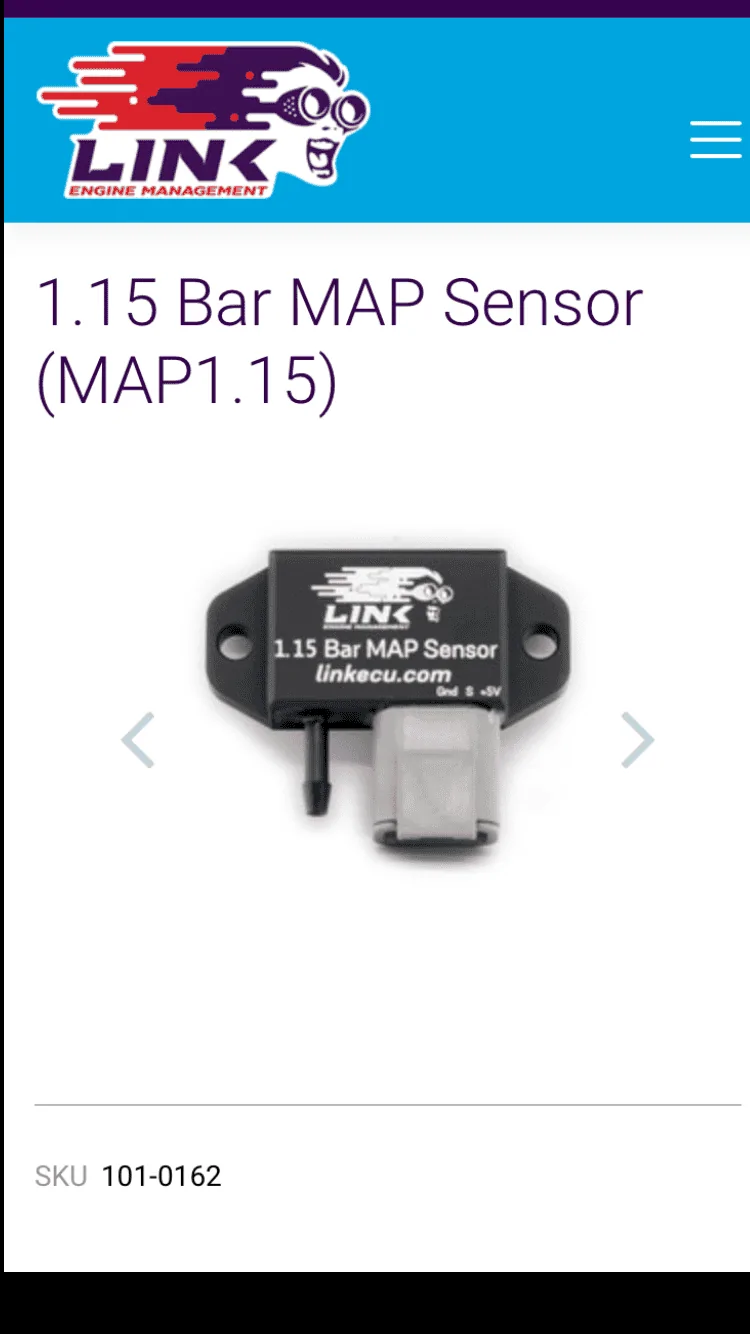
MAP port location away from TB in manifold plenum towards the rear. Yup, that means pulling the manifold due to the reverse scroll design.
Sensor;
Designed for N/A very high resolution.
IMG_4108.webp
 

Pistol_91

Well-Known Member
Joined
Oct 25, 2023
Threads
12
Messages
1,382
Reaction score
1,407
Location
Clearwater
Vehicle(s)
2020 mustang GT
I'm curious to see the process you guys will have him do to tune this SD model. What's the formula here
 
OP
OP
tdstuart

tdstuart

Well-Known Member
Joined
Apr 6, 2021
Threads
72
Messages
2,566
Reaction score
1,292
Location
Arizona
First Name
Triston
Vehicle(s)
2015 Mustang Gt Premium
I'm curious to see the process you guys will have him do to tune this SD model. What's the formula here
haha me too. Also should I do SD model before Torque?
 

Pistol_91

Well-Known Member
Joined
Oct 25, 2023
Threads
12
Messages
1,382
Reaction score
1,407
Location
Clearwater
Vehicle(s)
2020 mustang GT
I would do SD but I think murf said something about doing torque first. Man you car is a nightmare... Lmao
 
OP
OP
tdstuart

tdstuart

Well-Known Member
Joined
Apr 6, 2021
Threads
72
Messages
2,566
Reaction score
1,292
Location
Arizona
First Name
Triston
Vehicle(s)
2015 Mustang Gt Premium
I would do SD but I think murf said something about doing torque first. Man you car is a nightmare... Lmao
Lmao tell me about it. Talk about jumping head first into the deep end…

There won’t be any tuning stuff this weekend as I am going to Mexico :(
Sponsored


Top