
Sponsored

S550_GTCS
Well-Known Member
- Joined
- Dec 23, 2019
- Threads
- 8
- Messages
- 211
- Reaction score
- 211
- Location
- Morris County, NJ
- First Name
- Shawn
- Vehicle(s)
- 2022 Mach 1
WOW! That is impressively clean. Just had my wheels off over the weekend and noticed how rusty the whole area was. Cleaned it up a little bit but no way near as clean as yours looks.
OP
OP

WildHorse
N/A or GO HOME
- Joined
- Jun 28, 2017
- Threads
- 270
- Messages
- 10,297
- Reaction score
- 8,350
- Location
- Home World: CLASSIFIED
- First Name
- Puddintane
- Vehicle(s)
- '17 S550
- Vehicle Showcase
- 1
- Thread starter
- #18
I like to keep things clean-ish. Anti Seize helps haha.WOW! That is impressively clean. Just had my wheels off over the weekend and noticed how rusty the whole area was. Cleaned it up a little bit but no way near as clean as yours looks.
Elp_jc
Well-Known Member
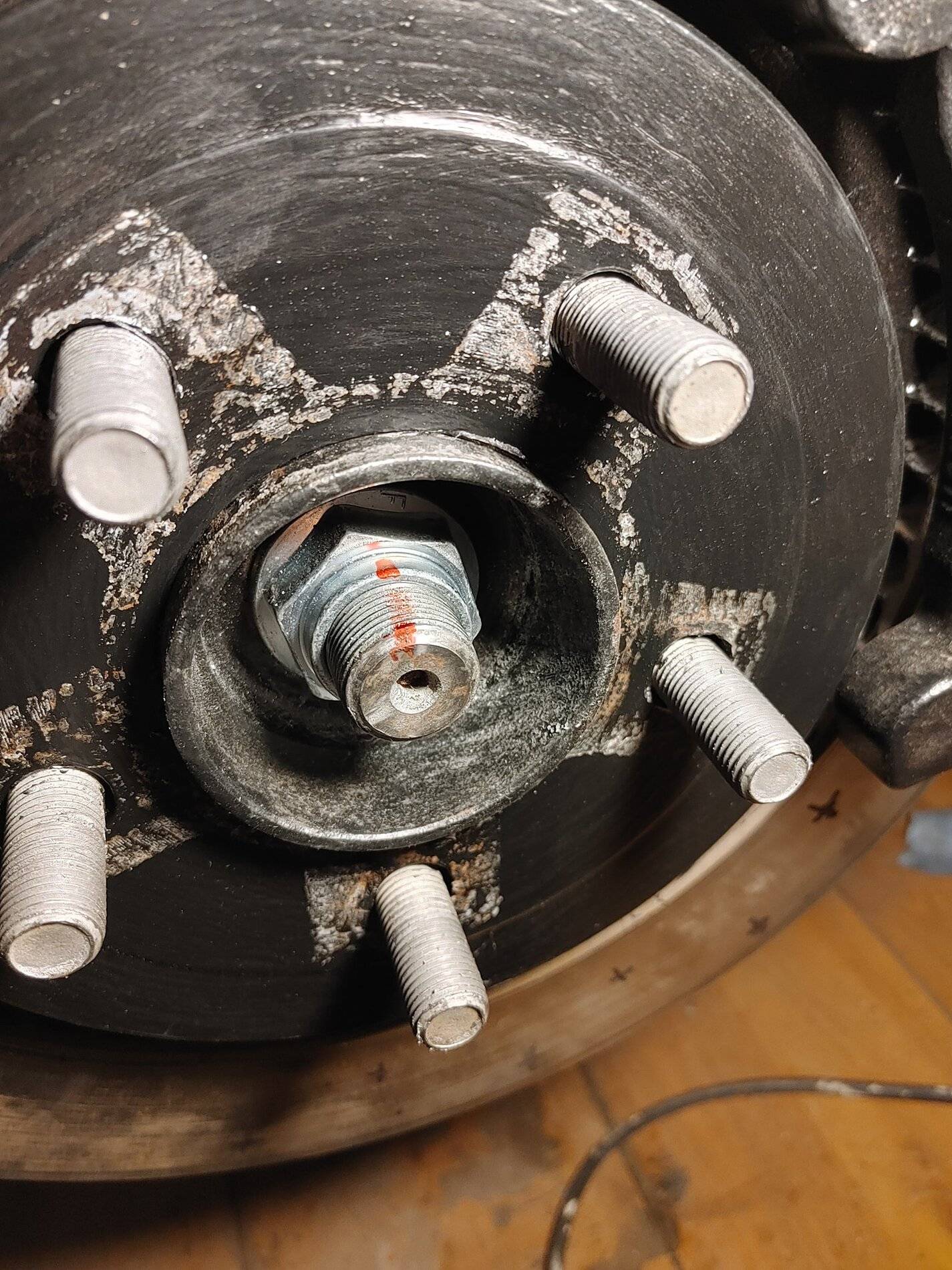
The picture on post #17 shows the factory put some kind of markings on the nut and axle, so if that's present on my car, and they line up, no need to even check things, right? Since I don't think the factory would mark the nut and axle without tightening them, right? Even with Ford's lousy QC standards, I doubt it'd happen. Or am I being too optimistic? Ha ha.
Last edited:
OP
OP
WildHorse
N/A or GO HOME
- Joined
- Jun 28, 2017
- Threads
- 270
- Messages
- 10,297
- Reaction score
- 8,350
- Location
- Home World: CLASSIFIED
- First Name
- Puddintane
- Vehicle(s)
- '17 S550
- Vehicle Showcase
- 1
- Thread starter
- #20
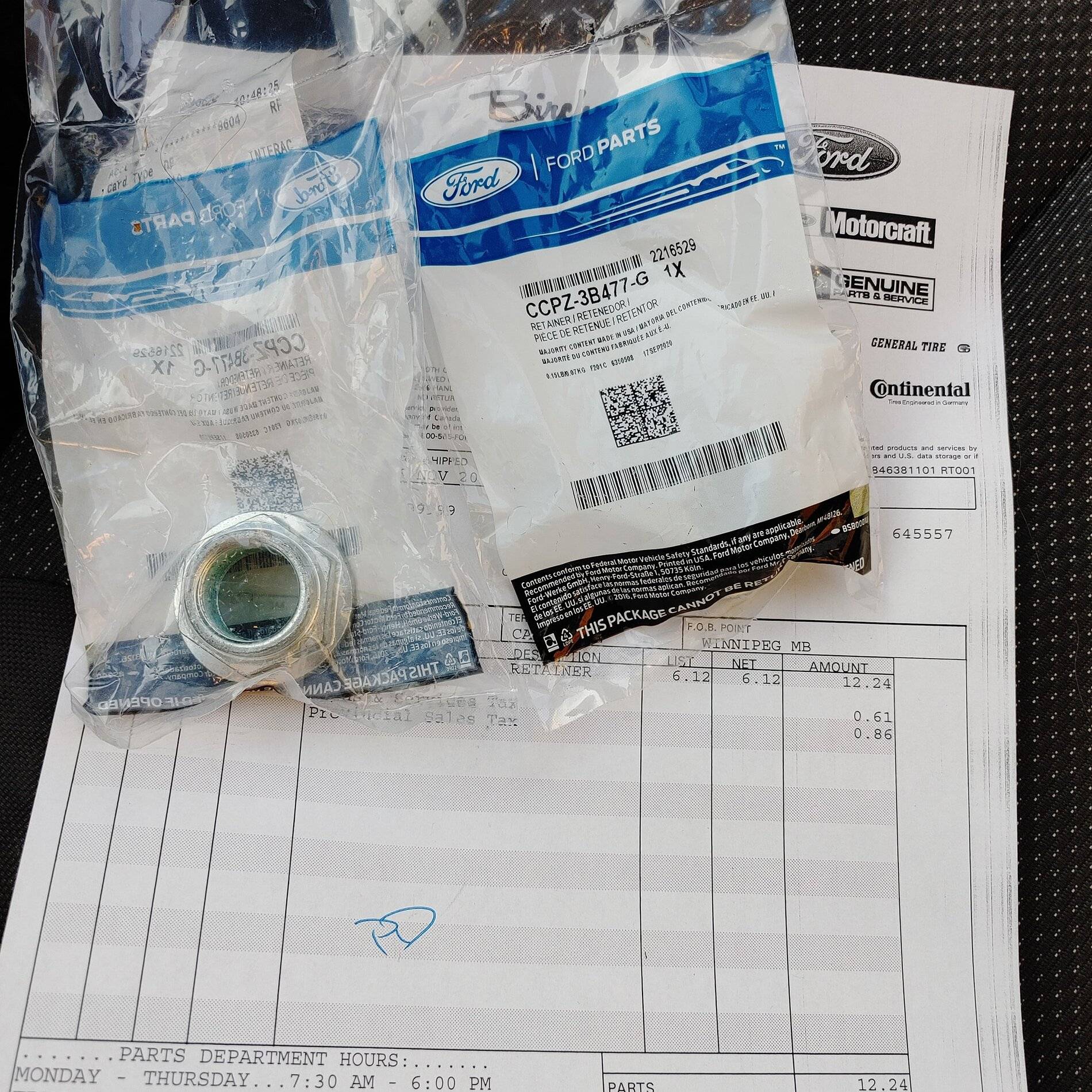
I marked it. Those are the new retainer nuts.The picture on post #17 shows the factory put some kind of markings on the nut and axle, so if that's present on my car, and they line up, no need to even check things, right? Since I don't think the factory would leave the nuts loose, even with Ford's lousy QC standards. Or am I being too nice to Ford?
Sponsored
Elp_jc
Well-Known Member
Oh man. Well, never mind. Factory marks almost everything, so surprised they don't mark more critical fasteners like those. Oh well. I'll put about 150 ft/lbs of torque on them if not marked, and if torque wrench clicks, then mark them myself, for future reference. Thanks.

Unas2k5
Well-Known Member
I’m abt to do this bs too. I guess I’ll torque them to 150 because Wth is adding 45 degrees why not just give us a total in ft lb of torque. My torque wrench goes to 250
Unas2k5
Well-Known Member
200lbs ft? Why didn’t they just say that instead of 90 plus 45It's 90 lbs-ft plus a additional 45 degree which would bring it to over 200 lbs-ft. Marking the nut is always a good idea.
OP
OP
WildHorse
N/A or GO HOME
- Joined
- Jun 28, 2017
- Threads
- 270
- Messages
- 10,297
- Reaction score
- 8,350
- Location
- Home World: CLASSIFIED
- First Name
- Puddintane
- Vehicle(s)
- '17 S550
- Vehicle Showcase
- 1
- Thread starter
- #24
Cause the want it in steps I guess. My lug nuts I do two steps of 75 ft-lbs.200lbs ft? Why didn’t they just say that instead of 90 plus 45

jacknifetoaswan
Well-Known Member
- Joined
- Jan 6, 2016
- Threads
- 63
- Messages
- 1,527
- Reaction score
- 828
- Location
- Charleston, SC
- Vehicle(s)
- 2016 Race Red Mustang GT Premium Performance Pack
According to the interwebs...Cause the want it in steps I guess. My lug nuts I do two steps of 75 ft-lbs.
JR...the torque spec is the ideal value for a bolt's preload force. The problem is that it's difficult to accurately read fastener torques because of differences resulting from lubrication, under-head friction, and tool repeatability. Using an angle, however, you can predict reasonably well the preload the fastener will provide and measure the angular difference very accurately.
Sponsored

Egparson202
Well-Known Member
Do the 98 ft-lb with a torque wrench. Then add another 45 degrees with a breaker bar. That’s the best play.I’m abt to do this bs too. I guess I’ll torque them to 150 because Wth is adding 45 degrees why not just give us a total in ft lb of torque. My torque wrench goes to 250

Bossdog
Well-Known Member
- Joined
- Feb 6, 2016
- Threads
- 29
- Messages
- 324
- Reaction score
- 163
- Location
- SE Michigan
- Vehicle(s)
- 2019 GT PP2
So I a assuming the only way to remove and retorque the axel nuts is to have the Manual transmission in gear?
When loosening, Forward gear (1st) and when tightening reverse? or it doesnt really matter if the gear selection opposes the turning force?Just want to make sure I don't "F" anything up when using that much force.
I think I may go to Harbor freight a purchasing a GBFBB. I initially thought the one I purchased for the 150 ft/lb lug nuts would be enough but I'm now rethinking that.
When loosening, Forward gear (1st) and when tightening reverse? or it doesnt really matter if the gear selection opposes the turning force?Just want to make sure I don't "F" anything up when using that much force.
I think I may go to Harbor freight a purchasing a GBFBB. I initially thought the one I purchased for the 150 ft/lb lug nuts would be enough but I'm now rethinking that.

Dana Pants
Well-Known Member
- Joined
- Oct 11, 2018
- Threads
- 11
- Messages
- 1,180
- Reaction score
- 1,218
- Location
- Burlington MA
- First Name
- Dana
- Vehicle(s)
- 2018 GT PP1
I usually have the parking brake on and the car in gear to torque that thing. I indiscriminately use 1st or reverse. Sometimes I even have the car on the ground. (I don’t use center caps because they melt)

boB
Well-Known Member
Because 90 plus 45 gives a precise amount of bolt stretch which is what keeps the joint tight. The 90 takes out any play then the 45 degrees adds about 0.2 mm (0.1875 to be exact).200lbs ft? Why didn’t they just say that instead of 90 plus 45
Sponsored


