Sponsored

Explain 3" exhaust system advantage.

GregO

Well-Known Member
Joined
Mar 5, 2018
Threads
41
Messages
3,320
Reaction score
2,470
Location
Illinois
Vehicle(s)
S550 GTPP
Way too much 2V exhaust dynamic thinking going on here for a 4V motor with VVT.
IMO the 4V head really dumbs down the header design and the minimal scavenging that actually happens on a catalytic equipped system. The rest of the system is just a way to keep poisonous gasses, exhaust particulates and noise out of the cabin.
Sponsored
 
OP
OP
Racer57

Racer57

Well-Known Member
Joined
Jun 26, 2023
Threads
35
Messages
149
Reaction score
210
Location
East Central Illinois
Vehicle(s)
2022 Mach 1 1970 Cuda 383cu Tremec 5 speed.
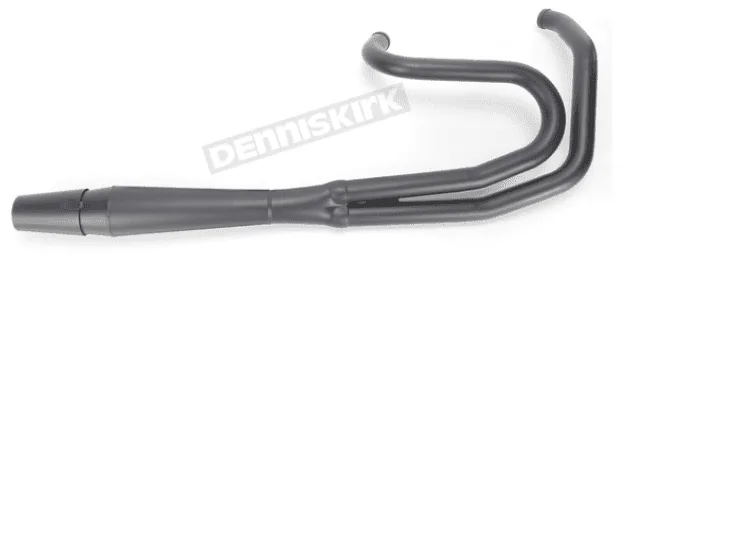
Interesting. I thought that it's generally accepted that two-into-one style exhausts provide superior performance. Something about hot exhaust gases expanding into the larger volume pipe pulling a partial upstream vacuum. Motorcycle exhaust designs leverage this, unless I've been mis-informed.
You are correct. On 2 cyl headers, as one cyl fires and the "ball" of exhaust travels the pipe and gets to the larger collector, it expands creating a vacuum behind it which pulls the next ball of exhaust out. This Thunderheader collector directs spent gases through acoustical dampening chambers, which creates a spiral motion upon exiting the pipes. This also creates an anti-reversion trap to minimize the amount of air rushing back in.
Untitled.webp
 

sk47

Well-Known Member
Joined
Nov 12, 2020
Threads
32
Messages
6,808
Reaction score
3,157
Location
North Eastern TN
First Name
Jeff
Vehicle(s)
Chevy Silverado & Nissan Sentra SE
Hello; Episode 4 of season 6 of Engine Masters. Mandrel-Bent v. Crunch -Bent exhaust. Dyno testing using a Blueprint Engines Crate Motor. Cost $7,400. Basically, block is 6.2-liter LS III type. Advertised to make 540 HP & 495-pound feet of torque.

Using two mufflers. A knock off of a Magna flow type with a straight thru perforated core. A Dyna max super turbo muffler with S shaped tube inside.
Exhaust tubes are mandrel bent which have smoothed bends maintaining uniform diameters in the bends.
Crunch bent tubes are what you might get at a muffler shop. lot of dents and every curve has diameter reduced some.

Baseline dyno run with open tube headers. yield torque 501.7 @ 5200 RPM & HP 543.8 @ 64000 RPM.
First run with crunch bent dual exhaust with H pipe and turbo muffler. Yield torque 491.0 @ 5300 RPM & HP 534.1 @ 6300 RPM. Lost a little HP and torque above 3500 RPM everywhere. Gained small amount of HP & torque below 3500 RPM. Curve of backpressure is 3 PSI.

Next run with straight thru mufflers and the crunch bent tubes. Torque yield 490.0 @ 5300 & HP 535.1 @ 6400 RPM. Only difference of minus 1 of torque and plus one of HP. Overall curves is very similar to turbo muffler run, with turbo making only slightly more torque below 3500 RPM. Backpressure is less overall of about 1/2 to one PSI. Seems to refute old claim that an engine likes backpressure.

Next run they take mufflers off and run with only crunch bent pipes. Yield torque and HP are nearly identical to run with straight thru mufflers attached. Curve is almost identical to curve with straight thru muffler.

Next run with dual exhaust mandrel bent tubes with no mufflers at all. Yield torque 493.6 @ 5300 RPM & HP 538.3 @ 6400 RPM. Picked up only 2.8 ft-pd of torque & 1.7 HP. Not much at all. Curve overlay nearly identical to crunch bent tubes with no mufflers. Negligible difference between crunch or mandrel bent tubes.

Steve D attributes lack of difference to LS engine milder cam overlap saying that engine is not so sensitive.

Freiberger is impressed with Dynomax muffler. That these results are only valid for this engine combination. 2 1/2 inch exhaust is good enough for 500 HP. Mandrel must do something because it reduced backpressure but this engine did not care.

Leaves more questions than answers. I had hoped there was some set of basic engine building formula guidelines. But it seems the setup of one engine will not necessarily translate to all engines. I do not have a dyno to run these sorts of tests.
 

WD Pro

Well-Known Member
Joined
Jan 18, 2018
Threads
132
Messages
6,762
Reaction score
13,550
Location
United Kingdom
Vehicle(s)
Lime GT
Vehicle Showcase
1
There is a (easily removed) 2.0” restriction in the GT (and Mach)

WD :like:
15-17 only
Gen3 18+ received a size increase in that area.
I'm a 2020 ... ?

I know I'm a euro, but we get the active exhaust which is a single piece (so defo a facelift part).

The mufflers are identical to a USDM as I checked the stamped part numbers to other photos I had found on here.

I still have the resonator, so we can cross check that part number with a USDM car (if it's important) :like:

WD :like:
I’m referencing the diameter of the front flex joint. Are you referring to another area reduced to 2.0” ?
Yes, from my post above :

"Diameter at resonator outlet joint = 2.00" (removed with resonator delete)"

WD :like:
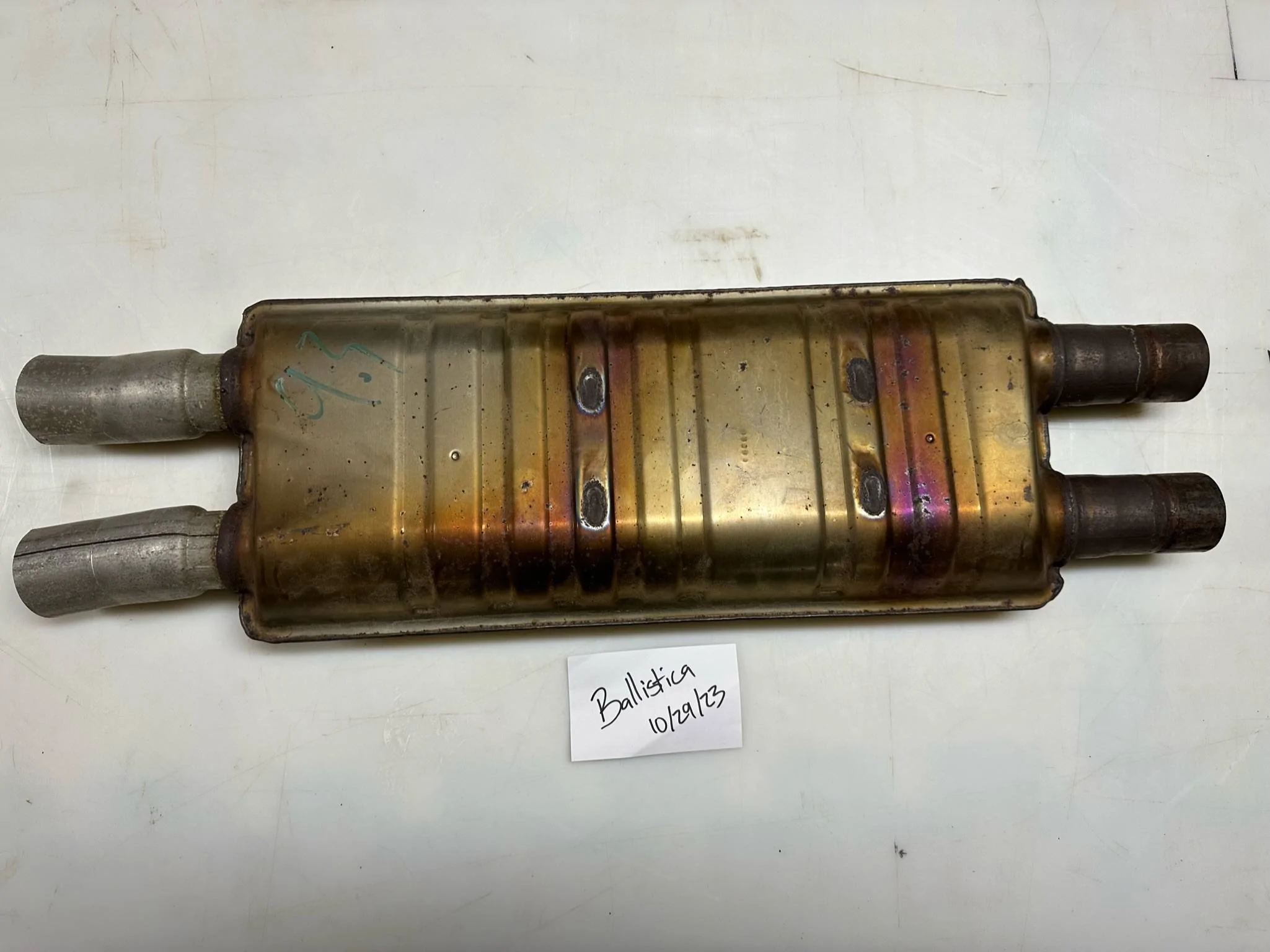
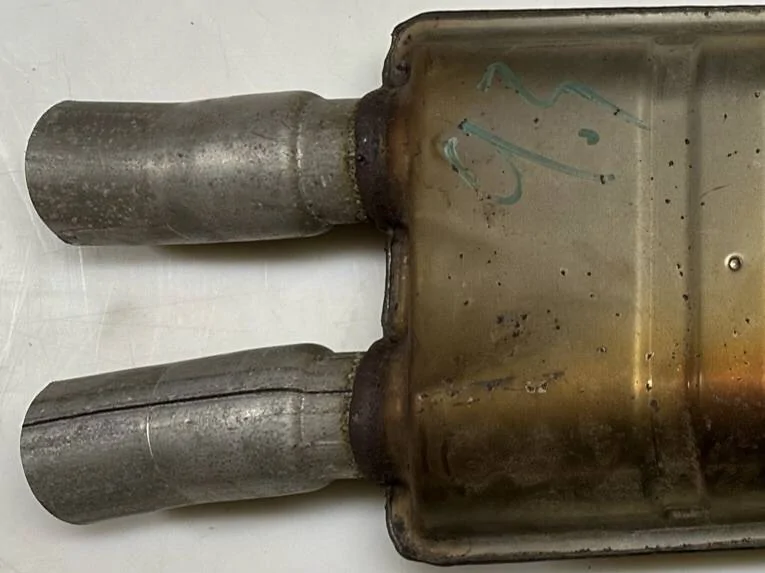
By chance, I came across this in the classifieds from @Ballistica - removed from his USDM 2021 GT PP1 :

1702123504209.webp


This is the 2.0” pipe section (same as my 2020 euro GT) :

1702123446369.webp


WD :like:
 

sk47

Well-Known Member
Joined
Nov 12, 2020
Threads
32
Messages
6,808
Reaction score
3,157
Location
North Eastern TN
First Name
Jeff
Vehicle(s)
Chevy Silverado & Nissan Sentra SE
Hello; Thought I had a handle on exhausts and performance a while back. What i had was tidbits of lore picked up over the decades. About two years ago I upgraded my satellite TV and found Motor Trend TV. Lots of car shows. Found Engine Masters and started saving the episodes on the new DVR. I like that they use an engine dyno to test things. I have back to some season three saved so far. The new TV box will record any new or not yet on the list episodes. I watched the most recently recorded episode today. Results fooled me again.

Season 8 episode 26 Header Science: Step vs. Merge. The stepped header starts from the head with 2 1/8 inch diameter tubes, then steps up in a few inches to 2 1/4 in then to 2 3/8 in. Then into a regular collector.

The episode uses a 598 cu-in engine for the tests. The idea is to have an engine pushing a lot of exhaust gases and making a lot of power. Also so any small percentage difference ought to show up with lots of power. Runs on 91 octane. Expected to make 800 HP.

Test will start with runs on three different headers which have all same sized tubes. First test header has 2 1/8 inch tubes into a common collector.
2 1/8 header yielded torque of 758.3 @ 5200 RPM & 819.0 HP @ 6100 RPM.
2 1/4 header yielded torque of 745.8 @ 5300 rpm & 819.8 HP @ 6200 rpm.
2 3/8 header yielded torque of 747.4 @5200 rpm & 826.5 HP @ 6200 rpm.

First unexpected result happens in these first three runs. The curve for the 2 1/8 header is better overall than the 2 1/4 header. Results shocked the three test crew members. 2 3/8 tube header picked up some mid-range torque over the 2 1/4 but still has a worse curve that the 2 1/8 header. For this engine the 2 1/8 header worked better overall.

Next run with the stepped header yielded torque 745.8 @ 5300 rpm & 828. 8 HP at 6200 rpm. Has slightly better peak HP but as Frieberger says "you will not care". Except for that 2 HP peak the stepped header had a worse overall curve than the other three regular headers. Too many variations for me to list. Only other bright spot for the stepped header was better torque & HP at 3500 RPM than the 2 1/8 header. Maybe 50 ft-pds & 25 HP but lost much more from 4000 up to 5800 rpm.
Last run used a merge collector on a header. Merge collector has tubes pinched down to a slight restriction then opens up into a bigger collector. Some aerodynamic smoothing inside as well. They had to saw off some of the 2 3/8 header tubes by a few inches making the collector shorter. Yield torque of 740.6 @ 5300 rpm & 826. 2 @ 6200 rpm. Overall curve with merge was worse than 2 3/8-inch regular header. Could it be the shorter overall collector?

The crew gets into a discussion of reflected waves (rarefactions) induced at each step of the stepped header tubes. Reflected wave tuning was discussed. My take it an ordinary joe without a dyno and unlimited funds and time to test a multitude of length configurations will only be guessing. Maybe find where some one has built an engine nearly identical to yours and copy their headers and exhaust setup.

A few decades ago I had a series of video tapes made by Professor Julis Sumner Miller. He did demonstrations of physics. Some of the episodes were about waves. Sounds waves as well as standing waves and such. Might be worth another look to refresh.

Another thought might be to study water moving thru pipes. Gases and water are considered to be fluids and share some properties. Will not be the same as water does not compress.

Last thought today is for an engine making under 500 HP a 2 1/2 full exhaust is good enough. Might be some advantage with mandrel bent because it did lower backpressure in one earlier episode.
 

Sponsored

sk47

Well-Known Member
Joined
Nov 12, 2020
Threads
32
Messages
6,808
Reaction score
3,157
Location
North Eastern TN
First Name
Jeff
Vehicle(s)
Chevy Silverado & Nissan Sentra SE
Bing Videos
Hello; Did a search this morning to see if there are other dyno tests about three inch exhaust. Found another Engine Masters episode on the internet. I have not looked at it entirely but seems to be a more straight forward test. Same engine testing full exhaust of 2 1/2 vs. 3 inch.
 

Torque123

Member
Joined
Dec 9, 2023
Threads
2
Messages
24
Reaction score
2
Location
At home
Vehicle(s)
2013 GT
Not much reference to the length of the smaller exhaust or restriction. Doesn’t this matter, just like with water flow or electrical current through a conductor?
 

sk47

Well-Known Member
Joined
Nov 12, 2020
Threads
32
Messages
6,808
Reaction score
3,157
Location
North Eastern TN
First Name
Jeff
Vehicle(s)
Chevy Silverado & Nissan Sentra SE
Not much reference to the length of the smaller exhaust or restriction. Doesn’t this matter, just like with water flow or electrical current through a conductor?
Hello; As for length the Engine Masters show did an episode in which they tested open headers and the header extension pipes. Best i can recall they found an extension of around 18 inches (eighteen) to be the better length.
It is season five (5) Episode 16 Tuning the tubes: why header collector length matters. Using the Covid 350 engine. 355 Cubic inch small block Chevy, big cam, has made as much as 500 HP in the past.

Tested first 1 & 5/8 inch header tubes with no collector. Exhaust straight out of header. Yield torque of 442.6 @5000 rp & 485.9 @ 6600 rpm. They bolt on a 3 inch diameter collector extension of 30 inches length. Yield is torque of 441.6 @ 5100 rpm & 495 HP @ 6400 rpm. Total curve is a better measure. Picked up torque from 3500 to near 4500 rpm. (maybe 30 ft-lb passin thru 4000 RPM. Also picked up HP in the same RPM range. Maybe 15 HP. A
Also picked up some torque & HP in the 600 to 6700 RPM range.
The curve was not smooth. Had slight "lumps" along the RPM range. Attributed to "wave tuning effect"
Next run they cut six inches off the extension. (24 inch extension) Curve pretty much the same most parts of RPM range. Slight and small differences in places. Yield is a wash for both torque and HP throughout the RPM range. Small variations.

Next run extension cut back to 18 inches overall length. Not much difference.

Next run cut off six more inches, down to 12 inch extension. Showed loss of torque and HP below 4500 RPM.

{side test - they spray painted a line on the outside of the extension to test an old hot rodders tale. Where the paint burns off is the length of extension that makes the best HP} Cut off at paint strip. Wound up being at six inches. )

A run 1 5/8 header tubes no collector torque 442.6 @ 5000 RPM & HP 485.9 @ 6600 RPM
B run 30 inch collector ...................................torque 441.6 @ 5100 RPM & HP 495.5 @ 6400 RPM
C run 24 inch collector ....................................torque 440.9 @ 5100 RPM & HP 491.7 @ 6500 RPM
D run 18 inch collector .....................................torque 441.2 @ 5000 RPM & HP 492.1 @ 6500 RPM
E run 12 inch collector ......................................torque 443.0 @ 4800 RPM & HP 489.7 @ 6400 RPM
F run 8 inch collector-burnt paint mark torque 441.7 @ 5000 RPM & HP 488.8 @ 6600 RPM

Going by curves collector length mostly affected torque at lower RPM ranges. Above 4500 RPM length did not matter. Freiberger allows that it is better to go too long than too short with extensions. Compare RPM curves of 24 inch to 8 inch collector and get much fatter torque and HP curve up to around 4300 RPM.

Next test using 1 & 3/4 inch tube headers. First run no collector. Picked up in upper RMP range over 1 5/8 header.
30 inch collector picked up lots of torque & HP below 4500 RPM almost no difference above.
24 inch collector picked up a bit of torque over the 30 inch.
21 inch collector (down 3 inch) Added a bit more torque than 24 inch.
18 inch collector (down 3 inch) Gains get smaller but trend continues. Curve gets nicer.
15 inch collector (down 3 inch) not much difference
12 inch collector down 3 inch) a little worse.

G run 1 3/4 header tubes no collector torque 446.7 @ 5000 RPM & HP 497.2 @ 6700 RPM
H run 30 inch collector ...................................torque 443.7 @ 5000 RPM & HP 495.4 @ 6700 RPM
I run 24 inch collector ....................................torque 442.5 @ 5300 RPM & HP 495.4 @ 6600 RPM
J run 21 inch collector .....................................torque 439.5 @ 4900 RPM & HP 497.6 @ 6600 RPM
K run 18 inch collector ............................ .....torque 442.2 @ 5100 RPM & HP 498.6 @ 6600 RPM
L run 15 inch collector........................................torque 442.7 @ 5000 RPM & HP 499.0 @ 6600 RPM
M run 12 inch collector........................................torque 444.1 @ & HP 496.9 @


Hello; Not sure this answers the question of a full length exhaust at 3 inches compare to 2 1/2 inch. I have some impressions from this thread. Say the question of having a 3 inch exhaust system but with a 2 inch neck down somewhere along the line or perhaps a muffler or resonance chamber with a big volume increase. Without direct and specific testing, we will be making guesses. Seems pressure waves and harmonics can make a big difference.
My take is below 500 HP a 2 1/2 pipe exhaust is enough.

Smooth mandrel bends may not make a lot of difference but if you can afford it there is a chance of benefit. If cost is a factor not to worry too much with crunch bent pipes.

Transitions such as Y connectors are very likely better that abrupt connectors, but still just guess work.

Long tube headers with an 18 inch collector may be best overall if such will fit the car. But real world factors may force short headers or plain manifolds.

Had a fellow selling a nice 2006 GTO a few years ago. He lived close by so I looked at it. He was a welder and had made up an exhaust system including mufflers. Was loud and di sound good from the outside and at some RPM's. However, had a terrible drone at some normal cruising speeds. Among the worst I have been around. Thing i now understand is without testing he may have made the torque or HP worse than stock.

Brings up another aspect of exhaust. The best system for power & torque may be miserable to live with. Will we give up some HP or torque to have a more comfortable to live with ride .

If I had the funds to build and modify countless pipe configurations and also dyno test them for a track car such might be worth the effort. For a car to run on the street I might get the best power possible but wind up with a poor sound.

Years ago I had a 1991 Nissan Sentra SE-R. When the factory muffler failed i ordered a system from Stillen. It sounded good and seemed to make better power. The baffles failed after a bit s and rattled. I ordered a new Muffler from them which was louder. Might have made better power but was hard to live with.
 

Torque123

Member
Joined
Dec 9, 2023
Threads
2
Messages
24
Reaction score
2
Location
At home
Vehicle(s)
2013 GT
interesting post, thanks. I guess what I was getting at, for example in the setup above...insert something more restrictive...2" but just a short section. Vs, a long section of 2".

With electronics, look how thick wires are vs the solder traces on a board. But the solder traces only go a short distance.
 

Sponsored

sk47

Well-Known Member
Joined
Nov 12, 2020
Threads
32
Messages
6,808
Reaction score
3,157
Location
North Eastern TN
First Name
Jeff
Vehicle(s)
Chevy Silverado & Nissan Sentra SE
interesting post, thanks. I guess what I was getting at, for example in the setup above...insert something more restrictive...2" but just a short section. Vs, a long section of 2".

With electronics, look how thick wires are vs the solder traces on a board. But the solder traces only go a short distance.
Hello; I can guess but do not know. My guess is necking down from a bigger pipe to a smaller diameter will at the very least create some extra backpressure. As for the length another guess is the length can make a difference based on harmonics the same or similar to results seen in actual testing.
I take a clue from what can be observed by decades of auto companies building vehicles. They tend to have kept the diameters of the pipes uniform for the most part. I also get cost and space restriction, or even penny-pinching accountants can have a say and override practical performance.

But my overall guess is necking down is not so good and necking down with a longer pipe is likely worse. I just do not know for sure.

As for the comparison to wire and solder having electrons being pushed thru. I can think of one thing. That being the conductivity of what may be silver solder vs. copper wire. may be the small splash of solder can carry a load of electrons without overheating better than the thicker copper wire. Copper is a fine conductor but i think silver is even better. Even aluminum can be used. Thing is silver is not cost effective to make wire from. Gold is a very good conductor and has the advantage that it will not tarnish.
Copper sort of won out as it was fairly abundant and a decent conductor. We are reaching the end of easy-to-get copper ores. It is prime for recycling which is good. One prediction is our decades of throw away culture will eventually find us mining old landfills for the metals and other things in them. My home has copper water pipes. As I need to do work on the plumbing I figure to use one of the PEX pipes. Already have a small section used when i added a new outside frost proof faucet a few years ago. The copper plumbing will be recycled. OH. OH. I forget plastics are to be banished I guess when we stop using fossil fuel byproducts and leave the oil in the ground. Sorry about the sidetrack.
 

K4fxd

Well-Known Member
Joined
Apr 2, 2020
Threads
121
Messages
13,455
Reaction score
12,262
Location
NKY
First Name
Dan
Vehicle(s)
2017 gt, 2002 FXDWG, 2008 C6,
tt
 

K4fxd

Well-Known Member
Joined
Apr 2, 2020
Threads
121
Messages
13,455
Reaction score
12,262
Location
NKY
First Name
Dan
Vehicle(s)
2017 gt, 2002 FXDWG, 2008 C6,
I guess what I was getting at, for example in the setup above...insert something more restrictive...2" but just a short section. Vs, a long section of 2".
Read the pressure testing thread by @engineermike.


Top