torque124
Torque
I don't think he has a GT350 yet, correct Andrei ?Did the dealer remove or modify you exhaust to meet Romania/EU noise limits?

Sponsored

I don't think he has a GT350 yet, correct Andrei ?Did the dealer remove or modify you exhaust to meet Romania/EU noise limits?
Here is the proofHi friends,
I have yet to see the GT350 in action.

At first no man. The car wa so gutted I could swear I got fucked...I don't think he has a GT350 yet, correct Andrei ?


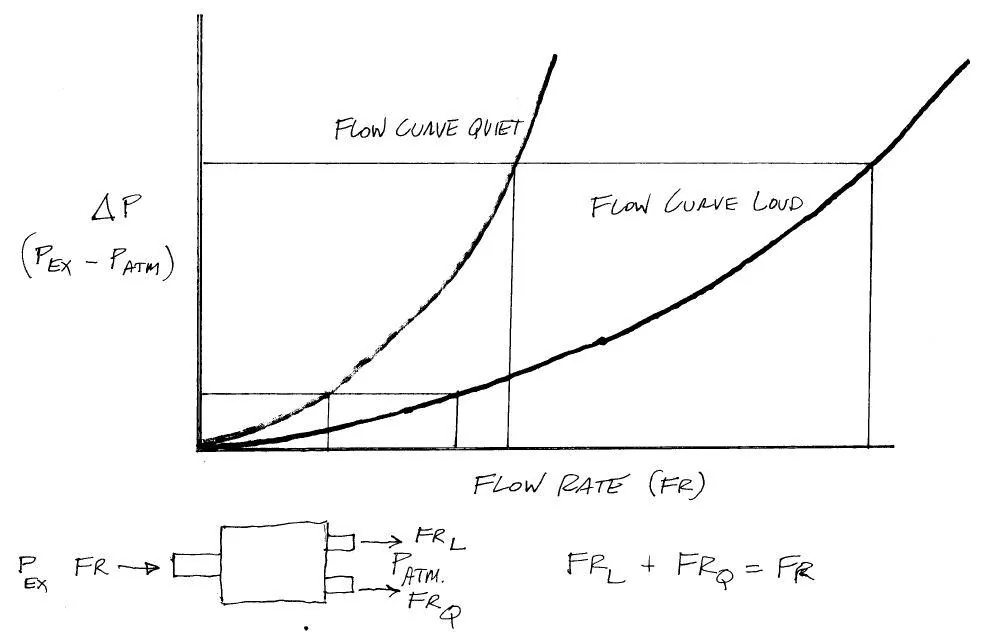
*fires up ansys multiphysics*A current limited diode would be like a pressure relief valve, which I suspect is not present in the GT350 exhaust. No, Fluid Mechanics dictates that each "leg" of the exhaust has it's own flow impedance curve. This curve is characterized by the function: Pressure Drop = Constant x (Flow Rate)^power. The power is usually between 1.7-2.0. For the loud side, the constant and power is lower than on the quiet side (because there is less restriction), so the flow impedance curves have a similar shape, but the loud side is much more gradual, as pressure drop rises with flow rate. Thus, at high flow, the restriction of the quiet side increases much faster, resulting in continuously lower flow. I stand by my initial analysis.
Wha? No Fluent CFD?*fires up ansys multiphysics*
WE SHALL DUEL!

Reminds me of Rocky 3:*fires up ansys multiphysics*
WE SHALL DUEL!
I was actually for the most part was agreeing with you (but disagree with the pressure relief valve analogy). In this case you have two parallel paths dumping to atmosphere from a higher pressure feed line. The quiet side obviously has more restriction while the loud side is more free flowing, but the total drop over the system is going to remain constant with total flow being the sum of flows going to each leg. At lower flows pressure drop across the quiet leg will be more negligible and the ratio of flows very well could be just as you stated. However once the flows increases and the pressure drop on that leg becomes parasitic, then the regime will change such that the pressure drop across the loud side will start to increase. Once this this happens, the flow through the quiet side will start to level off while while the loud side will increase in a more linear fashion.I agree flow through the quiet side will decrease as a percentage of total flow, but I would not expect it to actually flow less than it would at lower total flow rates. That would mean the pressure drop on the loud side is increasing and thus reduce total overall flow. I would say its a little less tricky than an electrical diagram since the flow is compressible.Reminds me of Rocky 3:
"I'm going to bust you up"
"Go for it"
I don't use the "smiles" available, but am looking forward to being corrected, if that comes to fruition...

Why comment false info.. "likely" isn't true at all.The GT350 has a valve that either allows sound to come from two of the four exhaust outlets (muffled, quieter) or all four (no muffling, louder). The PCM or another module has programming to open and close the butterflies, based on what the car is doing, I believe. So, if you put the car in Race, I think it opens the butterflies fully, and lets the exhaust sing. In Sport+, the butterflies likely open based on RPM and throttle input, and in Normal mode, the butterflies are likely full closed.
This is similar to what the Roush Active Exhaust does, though the Roush has no connection to the PCM, so it can't read RPM or throttle input, it's just based on user input from the control module/switch.
JR
I agree with most of your analysis, except for the part quoted. The curve illustrates what is happening. In reality, the quiet curve is most likely steeper than shown and the loud curve is flatter than shown.However once the flows increases and the pressure drop on that leg becomes parasitic, then the regime will change such that the pressure drop across the loud side will start to increase. Once this this happens, the flow through the quiet side will start to level off while while the loud side will increase in a more linear fashion.I agree flow through the quiet side will decrease as a percentage of total flow, but I would not expect it to actually flow less than it would at lower total flow rates.
You definitely have a lot of time on your hands :cheers:I agree with most of your analysis, except for the part quoted. The curve illustrates what is happening. In reality, the quiet curve is most likely steeper than shown and the loud curve is flatter than shown.
The pressure drop thru each leg is always the same. It's the flow rate per leg that changes to support the equal pressure drop.
The flow thru each leg always increases with increased pressure and never levels out or reduces, but the increase in the quiet side becomes much less at the high pressure condition (high flow).
I think we are all on the same page, and maybe someone in the forum learned something?

I came up with a new formula to discribe the GT350 exhaustI agree with most of your analysis, except for the part quoted. The curve illustrates what is happening. In reality, the quiet curve is most likely steeper than shown and the loud curve is flatter than shown.
The pressure drop thru each leg is always the same. It's the flow rate per leg that changes to support the equal pressure drop.
The flow thru each leg always increases with increased pressure and never levels out or reduces, but the increase in the quiet side becomes much less at the high pressure condition (high flow).
I think we are all on the same page, and maybe someone in the forum learned something?
You forgot to add the variable RSD: Rear Seats Down!I came up with a new formula to discribe the GT350 exhaust
SM+DS+T=LAE
Where
SM = Sport Mode
DS = Down Shift
T = Throttle
LA = Loud A$$ Exhaust