Brian@BMVK
Well-Known Member
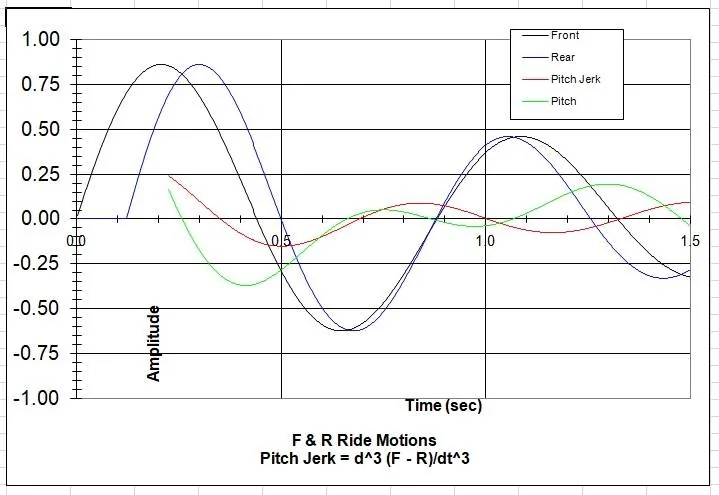
Yes. Setting up the car with a rear RF somewhat higher than the front (typically 10-15%) allows the sprung mass to settle much quicker in response to bumps at typical road or even track speeds. This is because when you hit a bump, the sprung mass is still moving from the front bump before it hits the rear. The rear needs to be stiffer ride frequency to "catch up". It's done by most OEMs as it allows for better overall ride quality with less damping. In fact, it's possible to get it just right so that the car will actually settle with zero damping.What's this "Flat Ride Concept"? Is it about the ratio of the ride frequencies front to rear or something else?
How does it apply to a handling focused car? Well, it's a hot topic of debate. In my experience both with open wheel formula car and something like the S550, setting up with some flat ride makes for a car that is much more of a willing dance partner for transitional handling. It is "eager". The tricky part is doing that while also getting the front roll stiffness percentage in the right range that provides a car that is balanced and easy and confidence inspiring to drive on the throttle. This is where bar tuning comes in.
This works for low/no aero autocross and HPDE cars as well as significant aero track cars like @Flyhalf 's. Some of them end up with rear RF lower than the front due to prioritization of roll stiffness with respect to the changing aero balance.
Sponsored