Joe Gonsalves
Well-Known Member
- Joined
- Aug 15, 2024
- Threads
- 3
- Messages
- 450
- Reaction score
- 582
- Location
- East Coast, US
- First Name
- Joe
- Vehicle(s)
- 2021 Mustang GT/CS, 2011 Mustang, 1983 Mustang 5.0, 1969 Mustang Mach 1 428 CJ
You're welcome, but my point is don't over think it. My objective was not a complete system replacement. I wanted to do as little as possible to achieve reasonably good sound without, 1. destroying what's left of my hearing, 2. not bleeding my wallet dry, and 3. not adding 100lbs of speakers and amplifiers to the car. I think I achieved my goal. What I did is pleasing to me and from what I can tell others seem to like it too. Before I did anything I researched this site and others to see what was done. I found a member on here who did a lot of work on measuring the acoustics of the car.Thanks for your response here and the audio diagrams.
I fully appreciate the objective sound data as so much of my historical experience depended on subjective impressions of system performance. Stereo shops pitched profit margins disguised as ‘best bang for your buck’ and the ultimate system performance was mostly a crap shoot.
I happen to have a MS in Space System Ops and the sound system analytics triggers some classroom PTSD from the electrical systems design lol (EE is not my forte…I must have been dropped on my head as a child and need to see the crayon drawing to best understand). So while my design intent for the Shelby is not to turn it into a competition winner (it’ll never out do the 5.2 FPC), I want to better understand the realities of sound system design and be able to quantify choices based on the correct objective data vice subjective opinions. Which, to date, I have not gotten my head around.
So off I go down the dB polarity magnification of the 3rd order Fourier transform rabbit hole to better understand what data points to actual system performance (regardless of how much tinnitus/HF hearing loss affects how it sounds to me so I am not the one to judge overall performance). Thanks again for the feedback!
https://www.mustang6g.com/forums/threads/how-i-improved-the-b-o-sound-quality-for-free.141052/
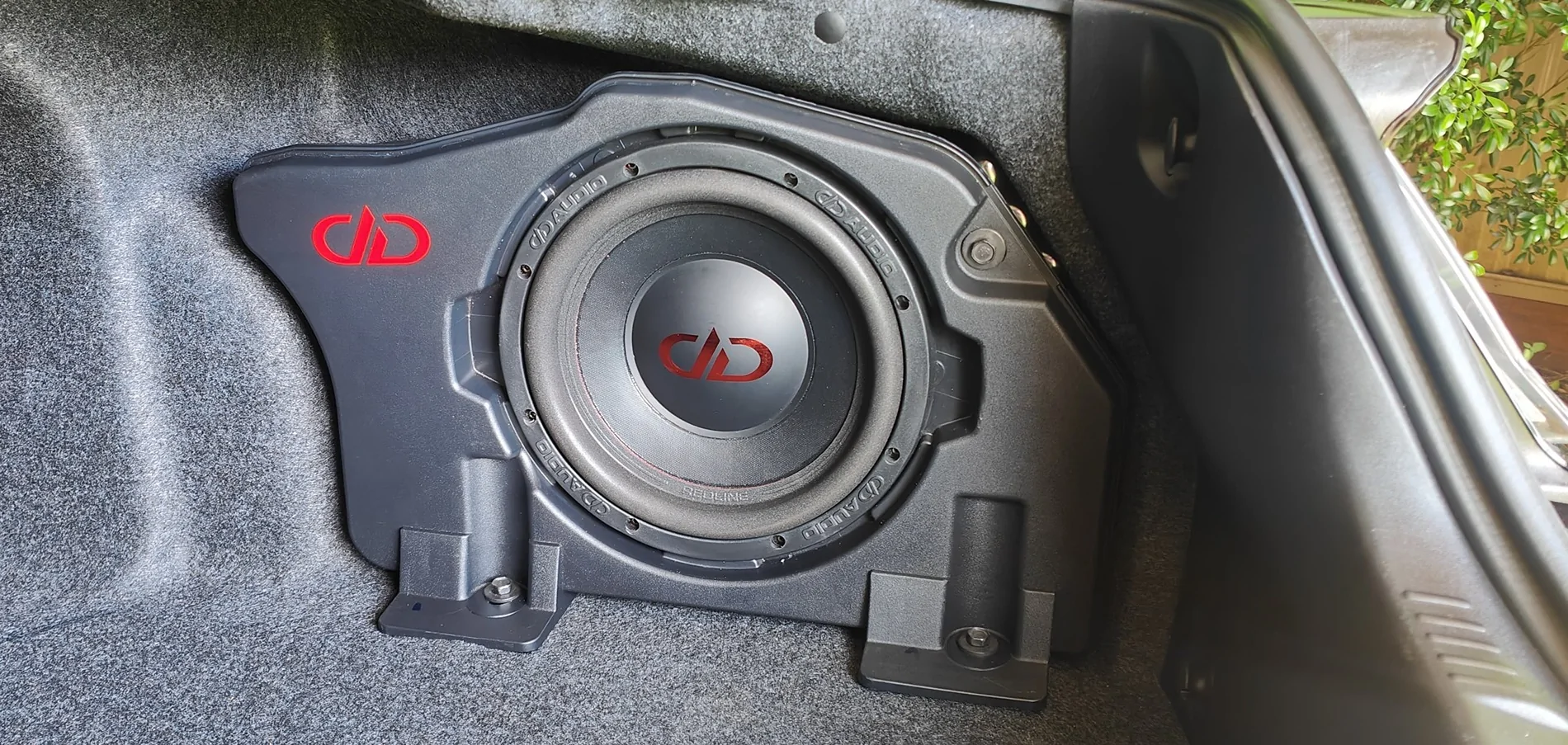
What stood out to me was that the sub woofer excited the cabin's resonant frequency at around 60hZ. Yes that's right, the dreaded boom frequency. So my first goal was to shift the sub woofer's excitation frequency away from 60hZ. That got me looking at all the threads on sub replacement. The one thing they all have in common was, that they moved the excitation frequency downward and away from 60hZ. I think Ford tuned the sub specifically to that frequency to get more bass with less watts.
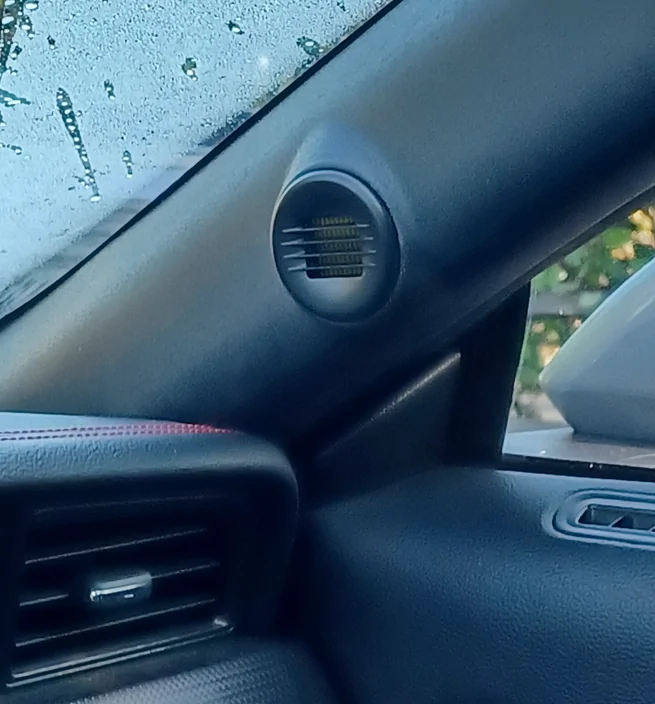
Now this is where I differ with those that choose the Pioneer driver. That unit is only rated at 74dB I think, which would also help in killing the boom, but at the sacrifice of attenuating the speaker's even lower frequencies' output. The DD Audio Redline I chose is rated at 86dB giving the lower frequencies a much needed punch. The magnet assembly I also liked way more than Pioneer's. The magnet is everything. Once I got the sub tackled I moved onto the Tweeters in the A pillars. I studied their placement and their relation to the center dash speaker. For one, the tweeters are soft dome and set back behind the small grill, so their off axis performance is hindered by their placement. Not to mention all the edge refraction you get. I wanted to find a tweeter that would fit in the A pillar and not look out of place and have better off axis performance. On the driver's side position, you are literally sitting at a 45 degree angle to the tweeter. The Dayton AMT-POD-4 worked out nicely. See pic. Once they were in it became obvious the the center dash speaker was messing with the sound. That speaker is useless to be honest. It creates a pseudo center channel, but in doing so it creates cancelation signals that bounce off the windshield and mix with the tweeter's output thereby negating some of their output. Once I disconnected the center speaker, it was boom, clarity. Now I must admit that the door 3.5" mid speakers on the B&O system are not all that bad. But I replaced them SkyHigh SH-35. These are carbon fiber cones with a much bigger magnet assembly. The carbon fiber is a much more rigid cone than the polypropene cone of the OEM B&O. Therefore they don't breakup and distort under high volume and they provide a fast response. The midrange clarity is real good. Also their dB rating was very close to the AMT-POD-4 tweeter. Well that was my thought process and I hope it helps.
Sponsored
Last edited:



 L_CLK|clp:2332490