Sponsored

Calling all benchracers: why is the BMW M4 so much faster?

socalsnake

Well-Known Member
Joined
Apr 26, 2015
Threads
18
Messages
880
Reaction score
213
Location
Earth
Vehicle(s)
'15 5.0 GT PP
So just how does a bone stock m3 take advantage of that 103 octane gas without a tune?
Is the ECU set-up from the factory to do this or what?
May be a stupid question but something doesn't seem above board there.
Not gonna BS you...I don't know the answer to that, but it seems the ECU may adapt to the higher octane.

Only reason I say this is because...

I have a piggyback/ECU tune on mine and had it set on a conservative tune using 91 craptane we have in California. Tuner filled it with 100 octane with an 1/8th tank of 91 left and re-dynoed. Did not switch to the more agressive tunes and the car picked up +15hp / +18 lb-ft.

I'll ask my tuner and/or the bimmer forums for an explaination.
Sponsored

 

Old 5 Oh

Well-Known Member
Joined
Jan 18, 2014
Threads
24
Messages
2,422
Reaction score
329
Location
Wilder, ID
First Name
David
Vehicle(s)
2015 GT Premium AT
the BMW M4 has 425hp/406tq, which is nearly the same as the mustang. It weighs 200 pounds less which is substantial, but here's the kicker. It runs a 12.0-12.2 @ 117+mph. Almost every mustang GT review I've ever seen has managed a 12.8-13.0 from the mustang. Where is that .6-.8 seconds disappearing from? The 200 pounds of weight can't account for all of it.
:shrug:
German horses are on steroids.

BMV seriously underrates its cars. The 300-HP six runs almost GT-quick. The 425-HP M4 is obviously making darn close to 500 HP. I'll be surprised if a GT 350 can run much faster than 12.0 at 118, and M4s do it all the time.
 

socalsnake

Well-Known Member
Joined
Apr 26, 2015
Threads
18
Messages
880
Reaction score
213
Location
Earth
Vehicle(s)
'15 5.0 GT PP
German horses are on steroids.

BMV seriously underrates its cars. The 300-HP six runs almost GT-quick. The 425-HP M4 is obviously making darn close to 500 HP. I'll be surprised if a GT 350 can run much faster than 12.0 at 118, and M4s do it all the time.
Sir, you're well versed in your M4 facts!
 

krt22

Well-Known Member
Joined
May 27, 2015
Threads
8
Messages
4,555
Reaction score
2,014
Location
CA
Vehicle(s)
2016 GT350 Track Pack
Not gonna BS you...I don't know the answer to that, but it seems the ECU may adapt to the higher octane.

Only reason I say this is because...

I have a piggyback/ECU tune on mine and had it set on a conservative tune using 91 craptane we have in California. Tuner filled it with 100 octane with an 1/8th tank of 91 left and re-dynoed. Did not switch to the more agressive tunes and the car picked up +15hp / +18 lb-ft.

I'll ask my tuner and/or the bimmer forums for an explaination.
It could be the opposite, if you have a piggy back, the ECU might still do its own corrections based on signs of predetonation and start adjusting timing accordingly, likely the case if it was designed to make its max power on 93 octane or higher. So when you mix in the race gas and bump the octane, engine no longer sees the knock and thus allows for the more aggressive timing map
 

Kpod

Well-Known Member
Joined
Jun 30, 2015
Threads
2
Messages
171
Reaction score
47
Location
Socal
Vehicle(s)
2015 Mustang GT PP Black
Just read these 5 pages and comparing an $65000 m4 to a $33000 gt is rediculous. I'd laugh at the m4 owners if they couldn't beat me. To me it's not stock vs stock, it's $ vs $. Throw tires, a handling package, and super charger on the gt and you now have a 43k gt that should beat the 65k m4 all day.

The m4 is bmw's top performer in that size. Shouldn't it be compared to ford's top performer, the gt350. Now stock vs stock, the gt350 can win and still costs 8k less.

While we are comparing apples to oranges, base mustang gt vs buggatti, who wins?
 

Sponsored

socalsnake

Well-Known Member
Joined
Apr 26, 2015
Threads
18
Messages
880
Reaction score
213
Location
Earth
Vehicle(s)
'15 5.0 GT PP
Just read these 5 pages and comparing an $65000 m4 to a $33000 gt is rediculous. I'd laugh at the m4 owners if they couldn't beat me. To me it's not stock vs stock, it's $ vs $. Throw tires, a handling package, and super charger on the gt and you now have a 43k gt that should beat the 65k m4 all day.

The m4 is bmw's top performer in that size. Shouldn't it be compared to ford's top performer, the gt350. Now stock vs stock, the gt350 can win and still costs 8k less.

While we are comparing apples to oranges, base mustang gt vs buggatti, who wins?
Comparing apples to oranges is as "rediculous" as comparing a modded car to a stock car. Why get hung up on the costs of the car and not just compare the performance aspects of each. Just because I think a million dollar P1 is expensive and I cannot afford it, doesn't diminish the merits of the car nor does it diminish the merits of any car I own (in my eyes anyway).

To add to your point...there are no M3/M4s available for 65k i.e. zero options. Most M3/M4s that aren't custom ordered are coming in at 75k to 85k.

Its funny when people keep stressing how much less expensive car A is to car B and therefore its a performance bargain because car A can be modded to beat car B. Keep emphasizing that point and it looks like you can't afford car B and because of that, you have to tear it down without truly looking at its merits.
 

mustang_guy

Well-Known Member
Joined
Jun 29, 2015
Threads
12
Messages
5,721
Reaction score
1,329
Location
United States
Vehicle(s)
it has an engine!
I like how everyone has ignored the most obvious answer. Net torque. The peak numbers mean nothing, i see some people hung up on in this thread. . Ill give an example that i gave before on a couple other forums.

Car A has 300 WTQ, revs to only 5K, has a 3.55 final gear and a 1.28 3rd gear
Car B has 150 WTQ, revs to 10K, has a 4.88 final gear and a 1.86 3rd gear

With the gearing, both cars shift into 4th at the same mph and Car B has double the torque multiplication... they'll pull even all the way through that gear.

Another example

Car A

160 ft-lbs of torque from 2K to 8K (it just makes it simple that way

Car B

215 ft-lbs of torque from 2K to 6K (again, keeping it simple)

Car A's first gear ratio: 3.7
Car A's final drive ratio: 4.1
Car B's first gear ratio: 3.3
Car B's final drive ratio: 3.4

They both redline first gear at the same speed (Car A being at 8K, Car B being at 6K)

But due to the gear ratio's...
160 * 3.7 * 4.1 = 2427 net torque
215 * 3.3 * 3.4 = 2412 net torque

All the way through first gear, car A pulled harder than car B despite having less torque.

Also, HP wise, both cars are almost exactly the same. The car with less TQ kept up throughout the entire power band though due to gearing.

Don't get caught up in ENGINE torque so much as you do net torque due to gearing. If you don't make a lot of torque, but you maintain that torque to a high rpm and make a comparable amount of HP to another car and have aggressive gears, you shouldn't have to worry about engine torque.

If you want to determine how relevant torque is or area under the curve, first consider the redline as a car with a higher redline can use a more aggressive gear to switch into the next gear at the same mph as another car thus getting more torque multiplication

Also average acceleration doesn't make a difference.. in straight line racing the only thing that matters is DISTANCE TRAVELED. Two cars can have the same average acceleration for X seconds and one car be 15 car lengths ahead. Two cars having the same average acceleration means they're only going the same MPH after a certain amount of time, but that doesn't mean one car isn't WAY ahead of the other. Acceleration is the derivative of velocity and velocity is the derivative of distance. Average acceleration gives you the final distance, but you need the whole velocity curve mapped over time and not just what the velocity is at the end of the graph.

If you want to know how hard a car is pulling @ N MPH...

Take Torque @ current RPM.... we'll call that T
Current Gear ratio: G
Final Gear Ratio: F
Tire diameter in inches: D
Weight: W

((T x G x F) / D) / W

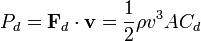
Take that and subtract the power required to overcome the wind resistance at the MPH which is...


If you want to know what all those symbols mean
http://en.wikipedia.org/wiki/Drag_(physics)

Now if you want a general rule for low speeds.. ignore the wind resistance as it doesn't matter much below 80 MPH

Now compare the number you get for both cars and you'll see which one is pulling faster at that speed.

Im a drag racing nut. I hail from yellowbullet forums. Dont mind me.
 

Dave2013M3

Well-Known Member
Joined
Aug 22, 2014
Threads
92
Messages
3,727
Reaction score
3,457
Location
El Segundo,Ca
Vehicle(s)
2024 BMW M2 G87 6MT Toronto Red, 2025 Ford Bronco Badlands 2dr. 7MT
I like how everyone has ignored the most obvious answer. Net torque. The peak numbers mean nothing, i see some people hung up on in this thread. . Ill give an example that i gave before on a couple other forums.

Car A has 300 WTQ, revs to only 5K, has a 3.55 final gear and a 1.28 3rd gear
Car B has 150 WTQ, revs to 10K, has a 4.88 final gear and a 1.86 3rd gear

With the gearing, both cars shift into 4th at the same mph and Car B has double the torque multiplication... they'll pull even all the way through that gear.

Another example

Car A

160 ft-lbs of torque from 2K to 8K (it just makes it simple that way

Car B

215 ft-lbs of torque from 2K to 6K (again, keeping it simple)

Car A's first gear ratio: 3.7
Car A's final drive ratio: 4.1
Car B's first gear ratio: 3.3
Car B's final drive ratio: 3.4

They both redline first gear at the same speed (Car A being at 8K, Car B being at 6K)

But due to the gear ratio's...
160 * 3.7 * 4.1 = 2427 net torque
215 * 3.3 * 3.4 = 2412 net torque

All the way through first gear, car A pulled harder than car B despite having less torque.

Also, HP wise, both cars are almost exactly the same. The car with less TQ kept up throughout the entire power band though due to gearing.

Don't get caught up in ENGINE torque so much as you do net torque due to gearing. If you don't make a lot of torque, but you maintain that torque to a high rpm and make a comparable amount of HP to another car and have aggressive gears, you shouldn't have to worry about engine torque.

If you want to determine how relevant torque is or area under the curve, first consider the redline as a car with a higher redline can use a more aggressive gear to switch into the next gear at the same mph as another car thus getting more torque multiplication

Also average acceleration doesn't make a difference.. in straight line racing the only thing that matters is DISTANCE TRAVELED. Two cars can have the same average acceleration for X seconds and one car be 15 car lengths ahead. Two cars having the same average acceleration means they're only going the same MPH after a certain amount of time, but that doesn't mean one car isn't WAY ahead of the other. Acceleration is the derivative of velocity and velocity is the derivative of distance. Average acceleration gives you the final distance, but you need the whole velocity curve mapped over time and not just what the velocity is at the end of the graph.

If you want to know how hard a car is pulling @ N MPH...

Take Torque @ current RPM.... we'll call that T
Current Gear ratio: G
Final Gear Ratio: F
Tire diameter in inches: D
Weight: W

((T x G x F) / D) / W

Take that and subtract the power required to overcome the wind resistance at the MPH which is...


If you want to know what all those symbols mean
http://en.wikipedia.org/wiki/Drag_(physics)

Now if you want a general rule for low speeds.. ignore the wind resistance as it doesn't matter much below 80 MPH

Now compare the number you get for both cars and you'll see which one is pulling faster at that speed.

Im a drag racing nut. I hail from yellowbullet forums. Dont mind me.

Exactly...when people were comparing the E92 M3 to other cars mentioning the lack of torque in the car, they always are remiss mentioning the high rpm capability and the torque multiplication the car has. Its what are you putting down to the wheels.

Dave
 

Kpod

Well-Known Member
Joined
Jun 30, 2015
Threads
2
Messages
171
Reaction score
47
Location
Socal
Vehicle(s)
2015 Mustang GT PP Black
Comparing apples to oranges is as "rediculous" as comparing a modded car to a stock car. Why get hung up on the costs of the car and not just compare the performance aspects of each. Just because I think a million dollar P1 is expensive and I cannot afford it, doesn't diminish the merits of the car nor does it diminish the merits of any car I own (in my eyes anyway).

To add to your point...there are no M3/M4s available for 65k i.e. zero options. Most M3/M4s that aren't custom ordered are coming in at 75k to 85k.

Its funny when people keep stressing how much less expensive car A is to car B and therefore its a performance bargain because car A can be modded to beat car B. Keep emphasizing that point and it looks like you can't afford car B and because of that, you have to tear it down without truly looking at its merits.
You are right about the m4 price. I was just comparing base to base.

I can afford car b but I choose car a because I can add 10k worth of parts, out perform car b, and keep 20 grand in my pocket.

Also, I consider the m series modded. It's just modded by bmw. I'd compare that to a roush/shelby/salen/lingenfelter.
 

Kpod

Well-Known Member
Joined
Jun 30, 2015
Threads
2
Messages
171
Reaction score
47
Location
Socal
Vehicle(s)
2015 Mustang GT PP Black
I like how everyone has ignored the most obvious answer. Net torque. The peak numbers mean nothing, i see some people hung up on in this thread. . Ill give an example that i gave before on a couple other forums.

Car A has 300 WTQ, revs to only 5K, has a 3.55 final gear and a 1.28 3rd gear
Car B has 150 WTQ, revs to 10K, has a 4.88 final gear and a 1.86 3rd gear

With the gearing, both cars shift into 4th at the same mph and Car B has double the torque multiplication... they'll pull even all the way through that gear.

Another example

Car A

160 ft-lbs of torque from 2K to 8K (it just makes it simple that way

Car B

215 ft-lbs of torque from 2K to 6K (again, keeping it simple)

Car A's first gear ratio: 3.7
Car A's final drive ratio: 4.1
Car B's first gear ratio: 3.3
Car B's final drive ratio: 3.4

They both redline first gear at the same speed (Car A being at 8K, Car B being at 6K)

But due to the gear ratio's...
160 * 3.7 * 4.1 = 2427 net torque
215 * 3.3 * 3.4 = 2412 net torque

All the way through first gear, car A pulled harder than car B despite having less torque.

Also, HP wise, both cars are almost exactly the same. The car with less TQ kept up throughout the entire power band though due to gearing.

Don't get caught up in ENGINE torque so much as you do net torque due to gearing. If you don't make a lot of torque, but you maintain that torque to a high rpm and make a comparable amount of HP to another car and have aggressive gears, you shouldn't have to worry about engine torque.

If you want to determine how relevant torque is or area under the curve, first consider the redline as a car with a higher redline can use a more aggressive gear to switch into the next gear at the same mph as another car thus getting more torque multiplication

Also average acceleration doesn't make a difference.. in straight line racing the only thing that matters is DISTANCE TRAVELED. Two cars can have the same average acceleration for X seconds and one car be 15 car lengths ahead. Two cars having the same average acceleration means they're only going the same MPH after a certain amount of time, but that doesn't mean one car isn't WAY ahead of the other. Acceleration is the derivative of velocity and velocity is the derivative of distance. Average acceleration gives you the final distance, but you need the whole velocity curve mapped over time and not just what the velocity is at the end of the graph.

If you want to know how hard a car is pulling @ N MPH...

Take Torque @ current RPM.... we'll call that T
Current Gear ratio: G
Final Gear Ratio: F
Tire diameter in inches: D
Weight: W

((T x G x F) / D) / W

Take that and subtract the power required to overcome the wind resistance at the MPH which is...


If you want to know what all those symbols mean
http://en.wikipedia.org/wiki/Drag_(physics)

Now if you want a general rule for low speeds.. ignore the wind resistance as it doesn't matter much below 80 MPH

Now compare the number you get for both cars and you'll see which one is pulling faster at that speed.

Im a drag racing nut. I hail from yellowbullet forums. Dont mind me.
Can't wait to see what the gt350 does against other street cars with its 8k redline.
 

Sponsored

mustang_guy

Well-Known Member
Joined
Jun 29, 2015
Threads
12
Messages
5,721
Reaction score
1,329
Location
United States
Vehicle(s)
it has an engine!
Eventually, at some point between modding the m4 and mustang gt, the gt will be far cheaper for more hp. The little advantage the m4 has being factory boosted, once its turbos are maxxed out it will cost a ton to get more power. build either into a 700-800hp car the mustang will be much cheaper. Bmw mods are not cheap. after a tune on the m4 parts will get expensive very quickly. Go price em out. A buddy of mine tunes euro cars for a living and sells there parts. I hear all the stories and prices. I also work at a bmw dealer, our cars are not reliable at all. Our m cars require more money and service then a purpose built 1000hp car. I can say that being ive had multiple 1000hp+ cars. M4 is nice but itll be a money pit just like all other M cars built in the past 20years because of the junk parts bmw puts on the cars.
 

w3rkn

Well-Known Member
Joined
Dec 18, 2013
Threads
21
Messages
3,064
Reaction score
750
Location
Detroit
Vehicle(s)
bmw 135is(sold)
I like how everyone has ignored the most obvious answer. Net torque. The peak numbers mean nothing, i see some people hung up on in this thread. . Ill give an example that i gave before on a couple other forums.

Car A has 300 WTQ, revs to only 5K, has a 3.55 final gear and a 1.28 3rd gear
Car B has 150 WTQ, revs to 10K, has a 4.88 final gear and a 1.86 3rd gear

With the gearing, both cars shift into 4th at the same mph and Car B has double the torque multiplication... they'll pull even all the way through that gear.

Another example

Car A

160 ft-lbs of torque from 2K to 8K (it just makes it simple that way

Car B

215 ft-lbs of torque from 2K to 6K (again, keeping it simple)

Car A's first gear ratio: 3.7
Car A's final drive ratio: 4.1
Car B's first gear ratio: 3.3
Car B's final drive ratio: 3.4

They both redline first gear at the same speed (Car A being at 8K, Car B being at 6K)

But due to the gear ratio's...
160 * 3.7 * 4.1 = 2427 net torque
215 * 3.3 * 3.4 = 2412 net torque

All the way through first gear, car A pulled harder than car B despite having less torque.

Also, HP wise, both cars are almost exactly the same. The car with less TQ kept up throughout the entire power band though due to gearing.

Don't get caught up in ENGINE torque so much as you do net torque due to gearing. If you don't make a lot of torque, but you maintain that torque to a high rpm and make a comparable amount of HP to another car and have aggressive gears, you shouldn't have to worry about engine torque.

If you want to determine how relevant torque is or area under the curve, first consider the redline as a car with a higher redline can use a more aggressive gear to switch into the next gear at the same mph as another car thus getting more torque multiplication

Also average acceleration doesn't make a difference.. in straight line racing the only thing that matters is DISTANCE TRAVELED. Two cars can have the same average acceleration for X seconds and one car be 15 car lengths ahead. Two cars having the same average acceleration means they're only going the same MPH after a certain amount of time, but that doesn't mean one car isn't WAY ahead of the other. Acceleration is the derivative of velocity and velocity is the derivative of distance. Average acceleration gives you the final distance, but you need the whole velocity curve mapped over time and not just what the velocity is at the end of the graph.

If you want to know how hard a car is pulling @ N MPH...

Take Torque @ current RPM.... we'll call that T
Current Gear ratio: G
Final Gear Ratio: F
Tire diameter in inches: D
Weight: W

((T x G x F) / D) / W

Take that and subtract the power required to overcome the wind resistance at the MPH which is...


If you want to know what all those symbols mean
http://en.wikipedia.org/wiki/Drag_(physics)

Now if you want a general rule for low speeds.. ignore the wind resistance as it doesn't matter much below 80 MPH

Now compare the number you get for both cars and you'll see which one is pulling faster at that speed.

Im a drag racing nut. I hail from yellowbullet forums. Dont mind me.

See^

There are people who know things.
 

mustang_guy

Well-Known Member
Joined
Jun 29, 2015
Threads
12
Messages
5,721
Reaction score
1,329
Location
United States
Vehicle(s)
it has an engine!
Too much free time, no offense ;D
Not really. Im rather busy for the most part. I work 50hr weeks, plus have a wife and dog to spend time with. Cars come third to them. im not offended. When its something you want to learn about you make the time. For example your mustang, any woman could say the same about your interest for cars.
Sponsored


Top