
Sponsored
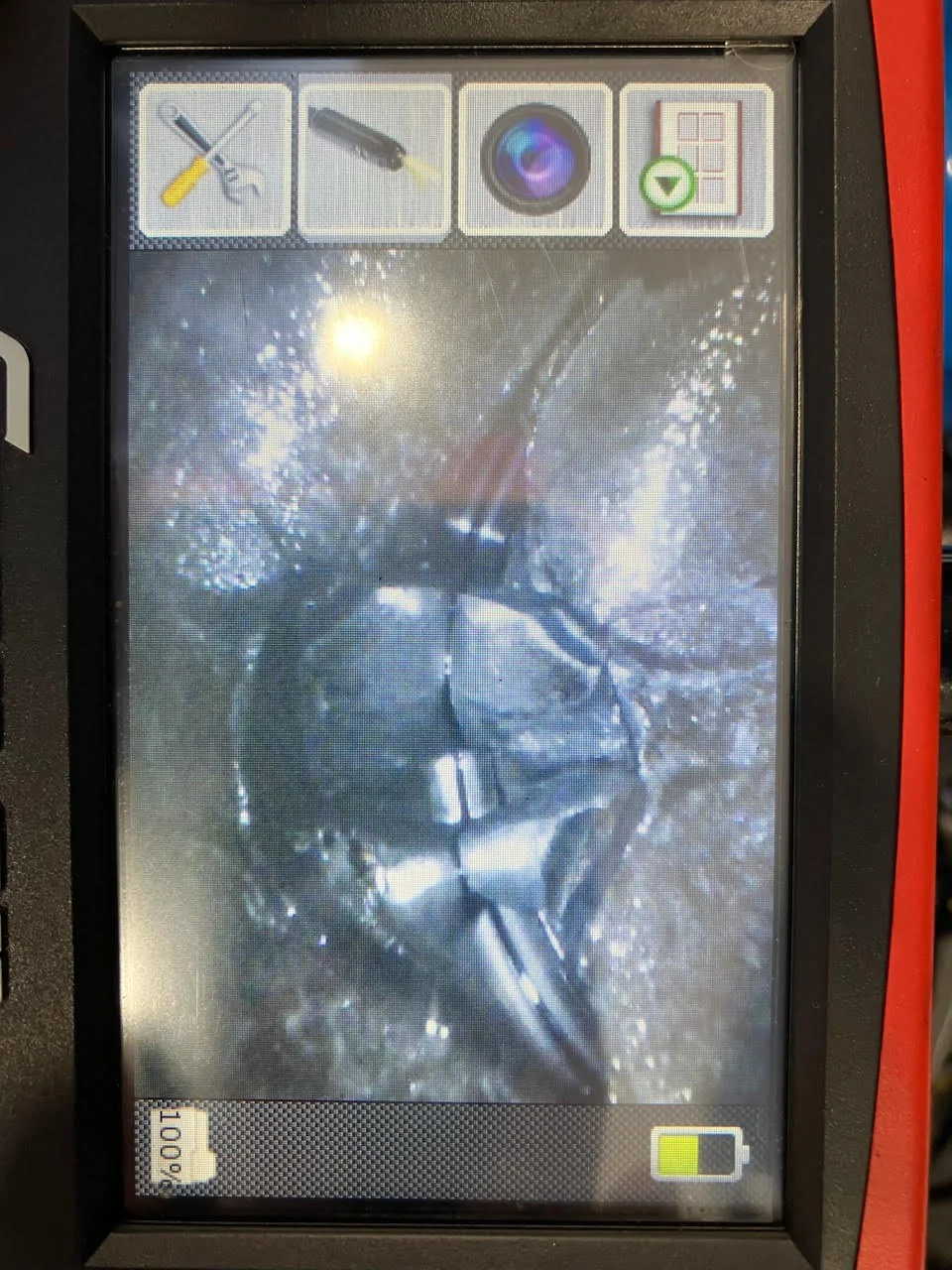
Anyone seen a gen3 piston failure like this?
- Thread starter engineermike
- Start date
- Watchers 22
engineermike
Well-Known Member
- Thread starter
- #167
Another data point popped up. The attached pic is courtesy Jeff Evans Evans Performance Academy — Evans Tuning and it shows a cracked piston, with the crack oriented similar to the two examples already shown in this thread. The car was almost completely stock and NA with very low miles. In my view, this strengthens the case that these pistons fail randomly and there really isn't much we can do to prevent it....It appears from the data log that the failure actually occurred after he let off the throttle. Couple that with the pic in post 87 that shows a similarly failed piston in a nearly-stock NA Coyote along with reports of other stock engines failing in the same way, and it starts painting the picture that this could have been more a random failure than being caused by high loads and boost (thank you Waloddi Weibull).
Gen 6 Mach1
Well-Known Member
If I remember correctly, in your previous posts you mentioned production flaw or flaw's and could be issues under certain Boosted conditions , just off a Full Throttle run (when this one occurred ) , when the failure occurred .Another data point popped up. The attached pic is courtesy Jeff Evans Evans Performance Academy — Evans Tuning and it shows a cracked piston, with the crack oriented similar to the two examples already shown in this thread. The car was almost completely stock and NA with very low miles. In my view, this strengthens the case that these pistons fail randomly and there really isn't much we can do to prevent it.

But with this evidence of failure in low mile NA engine . I have a question to you , does it matter how the engine was used prior and up to the failure?
Thank you robvas and Mike (for your previous answer ), with all the information I've gathered , I'm leaning towards the warm to Hot months running the 5-50W , and cooler months 5-30W . I'm 2 oil changes a year , and around 1,500 miles between avg. so far.Oil temp light doesn't come on until what, ~290?
Should be no difference driving to a cars on coffee on 5W30 or 5W50 in 100 degree weather.
engineermike
Well-Known Member
- Thread starter
- #169
It would be hard to argue that stress applied isn't a factor, as I'm sure it is. But with a number of piston failures on stock NA engines while others live a long life over 1000 hp tells me there's a broad distribution of piston strength from the factory...., does it matter how the engine was used prior and up to the failure?
OldbutNew
Well-Known Member
- Joined
- Jul 22, 2024
- Threads
- 6
- Messages
- 269
- Reaction score
- 298
- Location
- S.E.Michigan
- First Name
- Greg
- Vehicle(s)
- 2019 Kona Blue GT 10R (Wife's car) 2018 Mustang GT Royal Crimson PP1 Manual
Gee. This sounds familiar...It would be hard to argue that stress applied isn't a factor, as I'm sure it is. But with a number of piston failures on stock NA engines while others live a long life over 1000 hp tells me there's a broad distribution of piston strength from the factory.
Sponsored
engineermike
Well-Known Member
- Thread starter
- #171
Just an update in case anyone is interested in the 10.4/1 pump gas effort, my buddy started over on the knock sensor and borderline tuning and is working his way up in boost and timing, fixing issues like cylinder trims along the way. As of now, he's at 1.5 load (10-11 psi) and hitting 24.5 deg timing at 7500 rpm. This is right at what we figure MBT is, with no indication of knock. I think that's pretty good timing at that boost level on pump gas.
Gen 6 Mach1
Well-Known Member
Is this because the Compression is lowered from 12.0/1 to 10.4/1 and no reason to pull timing so there for no knock. ? I've been following along and a novest , wanting to understanding this technology. Hope you don't mind me asking . Thanks
Last edited:
engineermike
Well-Known Member
- Thread starter
- #173
Absolutely the expectation when lowering the compression ratio was to be able to run more timing before knock. At 1.5 load on pump gas and stock 12/1 compression, you'd be limited to around 19 deg timing. I've been able to run as high as 20.5 deg with a larger GDI pump and a lot of other tune tweaks to get more. So, 24.5 is quite a bit higher.Is this because the Compression is lowered from 12.0/1 to 10.4/1 and no reason to pull timing so there for no knock. ? I've been following along and a novest , wanting to understanding this technology. Hope you don't mind me asking . Thanks
Gen 6 Mach1
Well-Known Member
Thanks Mike , back in my Drag Racing days 1976 til 2005 , it was all about reading the plugs , jetting the Holly carb , adjusting the distributor, 350 Chevrolet. I feel old .Absolutely the expectation when lowering the compression ratio was to be able to run more timing before knock. At 1.5 load on pump gas and stock 12/1 compression, you'd be limited to around 19 deg timing. I've been able to run as high as 20.5 deg with a larger GDI pump and a lot of other tune tweaks to get more. So, 24.5 is quite a bit higher.
Sponsored
engineermike
Well-Known Member
- Thread starter
- #176
Without extensive dyno time available, we were forced to estimate MBT curves. Basically, we compared MBT vs load at specific rpm and cam timing, comparing about half a dozen different engines ranging from Roush 5.0 to stock to GT500 to Whipple Gen4, raptor R, and others. We figured a few things would push MBT up (compression, bore size) and a few would push it down (runner geometry) so we chose values somewhere in the middle. At the 24.5 deg at 1.5 load, it's bumping up against MBT which sounds about right to me.Does lowering the cr raise the rpm mbt occurs if all cam params and ig timing remains the same?
engineermike
Well-Known Member
- Thread starter
- #177
He pushed the boost/load up to 18 psi/2.04 today and hit 19 deg timing, no knock detected, true pump 93. I don't know what power he's making, but I'm very optimistic at these timing and boost levels. It's actually running timing up against a cylinder pressure limit we set.

wingnutt
Well-Known Member
ok, thread creep here…but may I ask why you are changing the oil every 1500 miles? Especially in Arizona? No judgy, just insanely curious…I'm 2 oil changes a year , and around 1,500 miles between avg. so far.
xr4x4ti
Well-Known Member
How did you address the knock sensors picking up "false" knock from the forged pistons?He pushed the boost/load up to 18 psi/2.04 today and hit 19 deg timing, no knock detected, true pump 93. I don't know what power he's making, but I'm very optimistic at these timing and boost levels. It's actually running timing up against a cylinder pressure limit we set.
engineermike
Well-Known Member
- Thread starter
- #180
Good question. We noticed that S650 appears to be able to run about 3 deg more timing than S550 even though nothing appears to have fundamentally changed with the engine design that would allow this. Same compression, combustion chamber shape, even all the GDI timing and pressures are the same. But we did notice the knock thresholds and retard amounts are different from S550, even though the knock sensor part numbers are the same. Basically, he copied a lot of the knock calibration from S650. But, as you stated, this didn't really take into account the noisier 2618 pistons. He increased the max reference level (highest noise level the logic is allowed to use as baseline "floor") to a value between Coyote and Predator. This should still be conservative because a) Predator uses quieter 4032 pistons and b) the stronger 2618 should be able to tolerate higher knock intensities before failing. I'm pretty sure in this situation, Ford would just let it ride the knock sensors but we're tuning it to stay off of knock and just testing the limits currently.How did you address the knock sensors picking up "false" knock from the forged pistons?
Sponsored
Similar threads


- Replies
- 77
- Views
- 34,796


