Sponsored

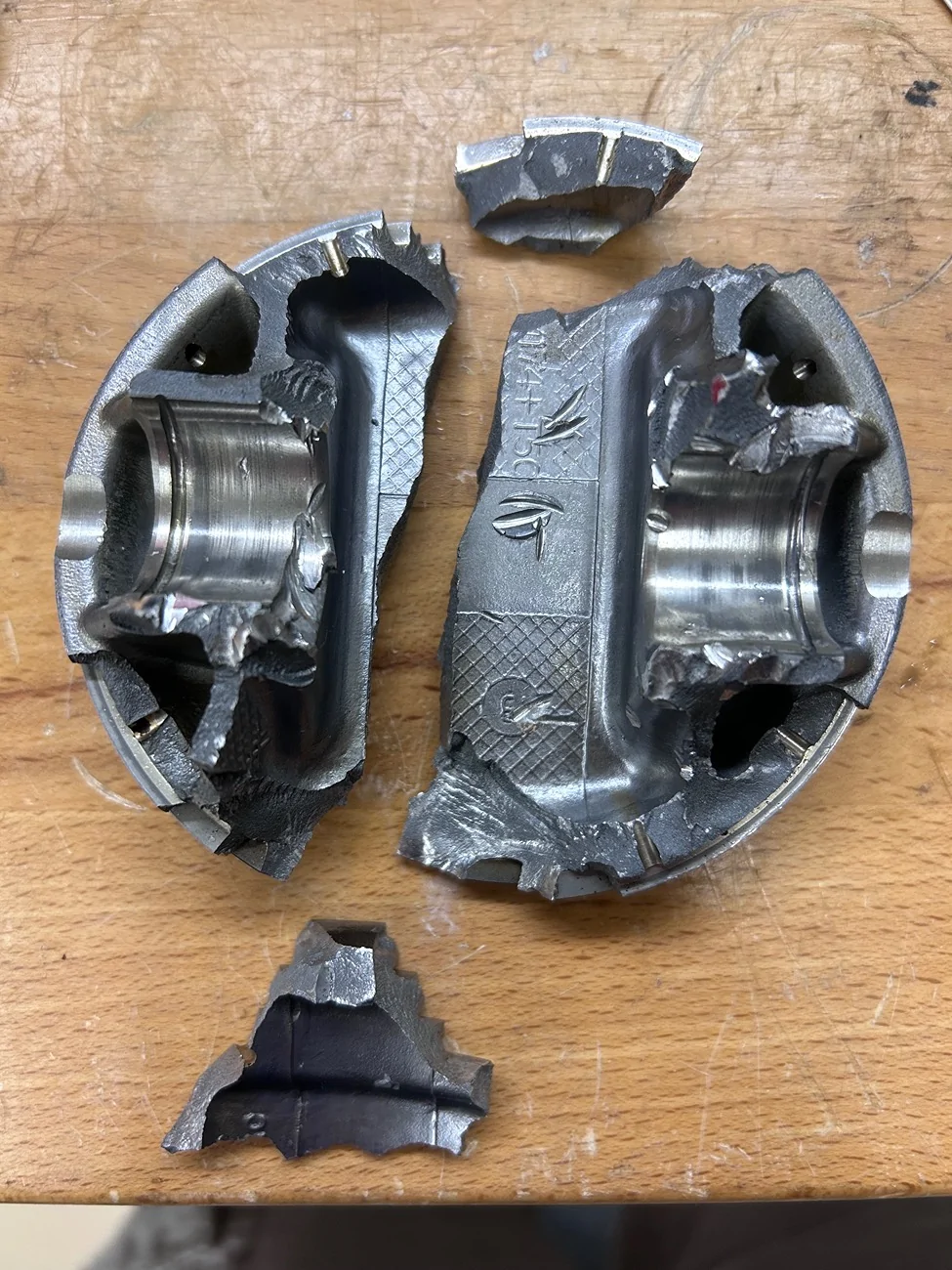
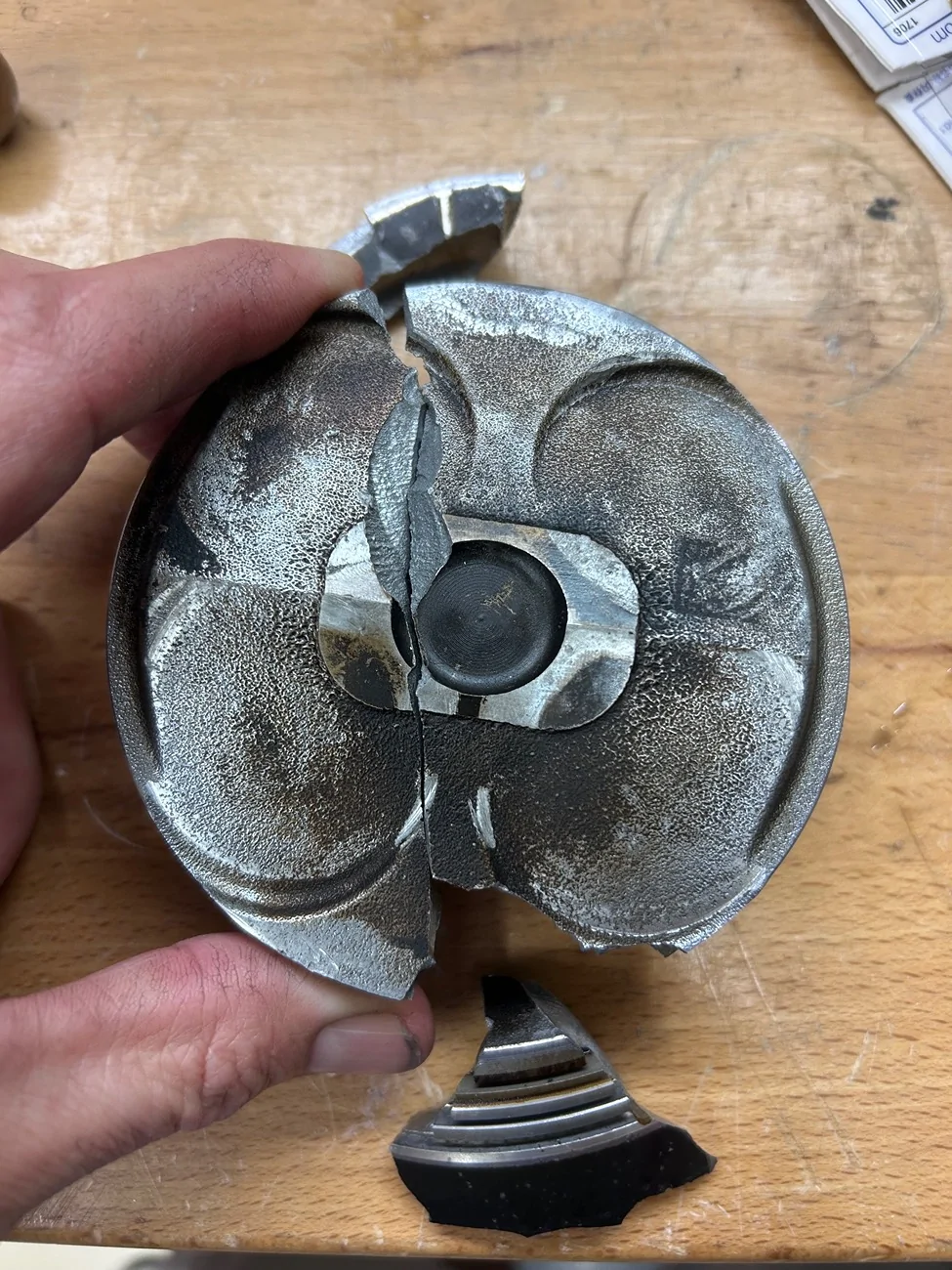
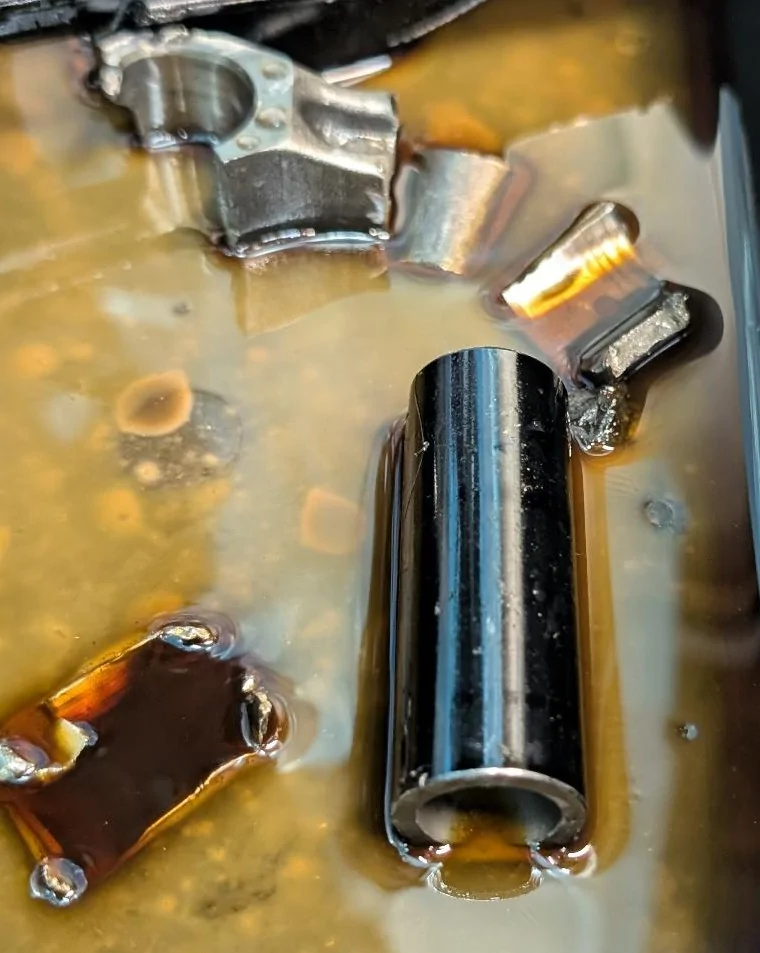
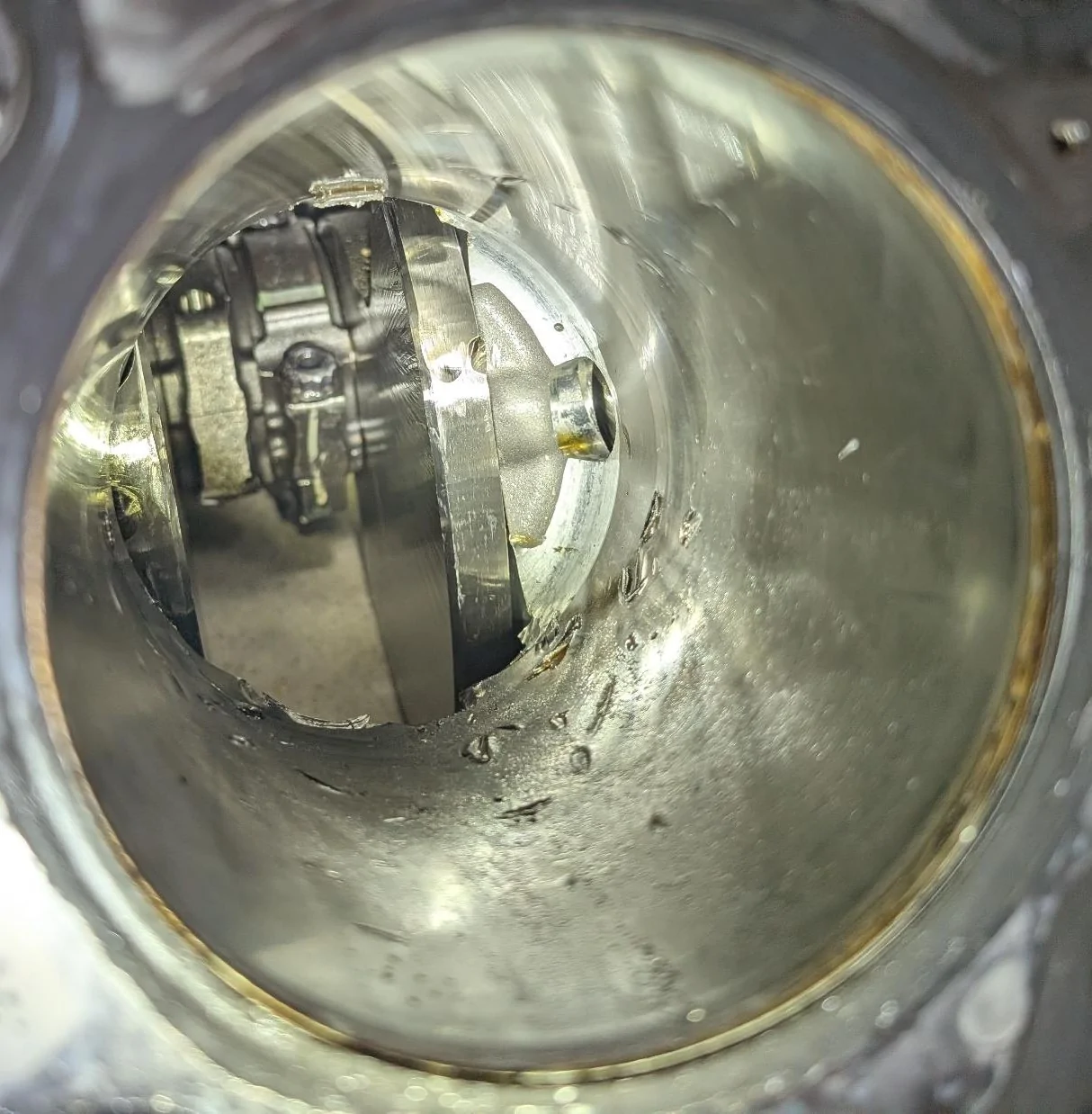
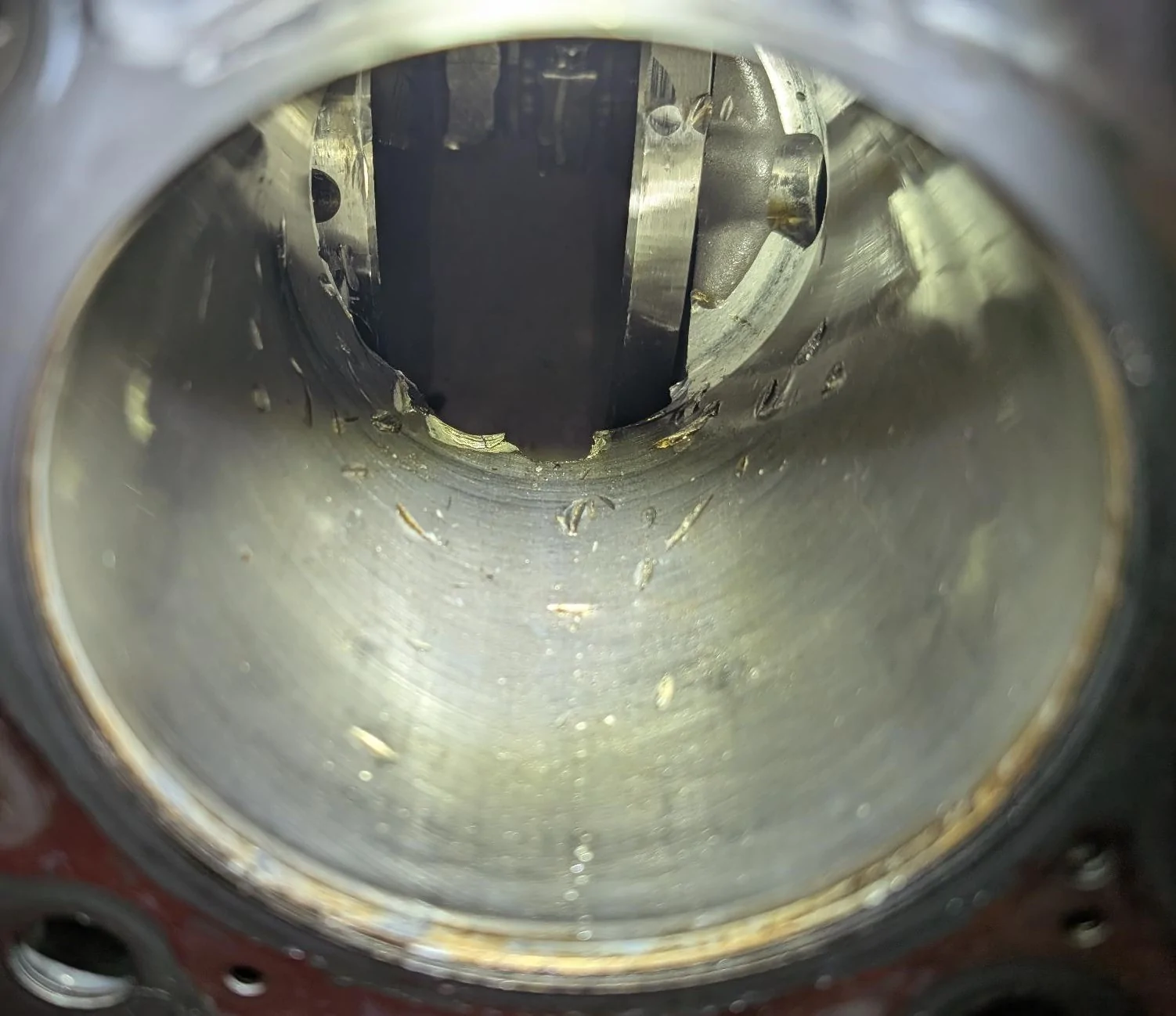
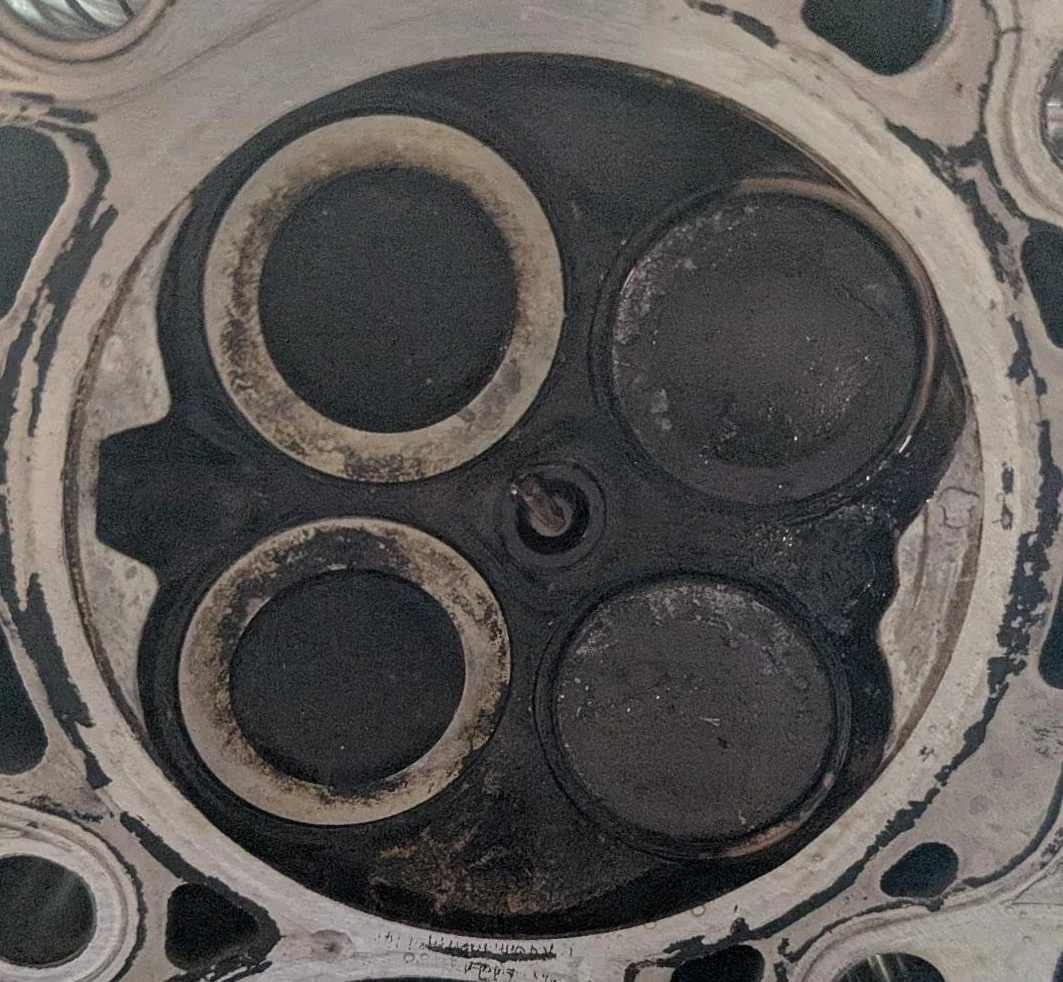
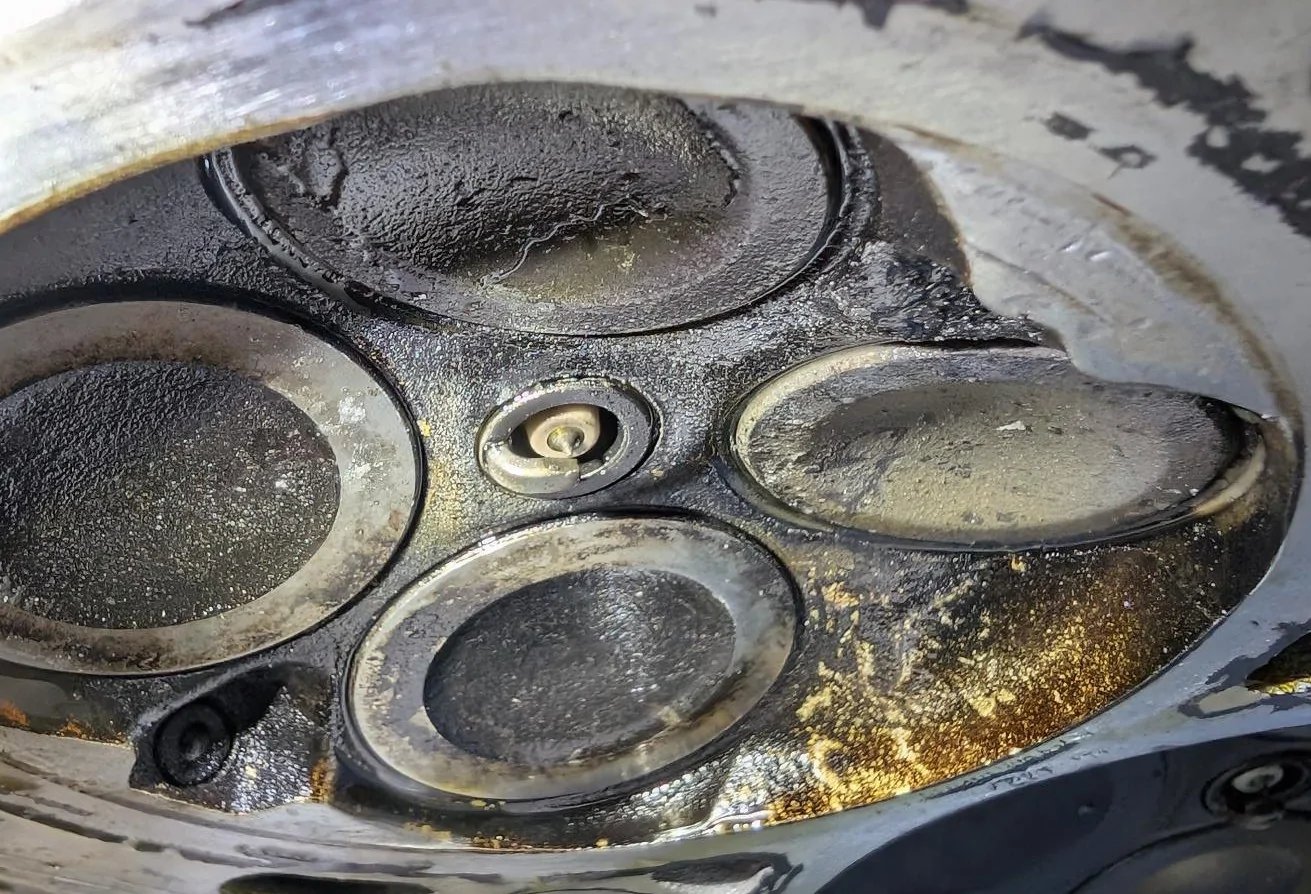
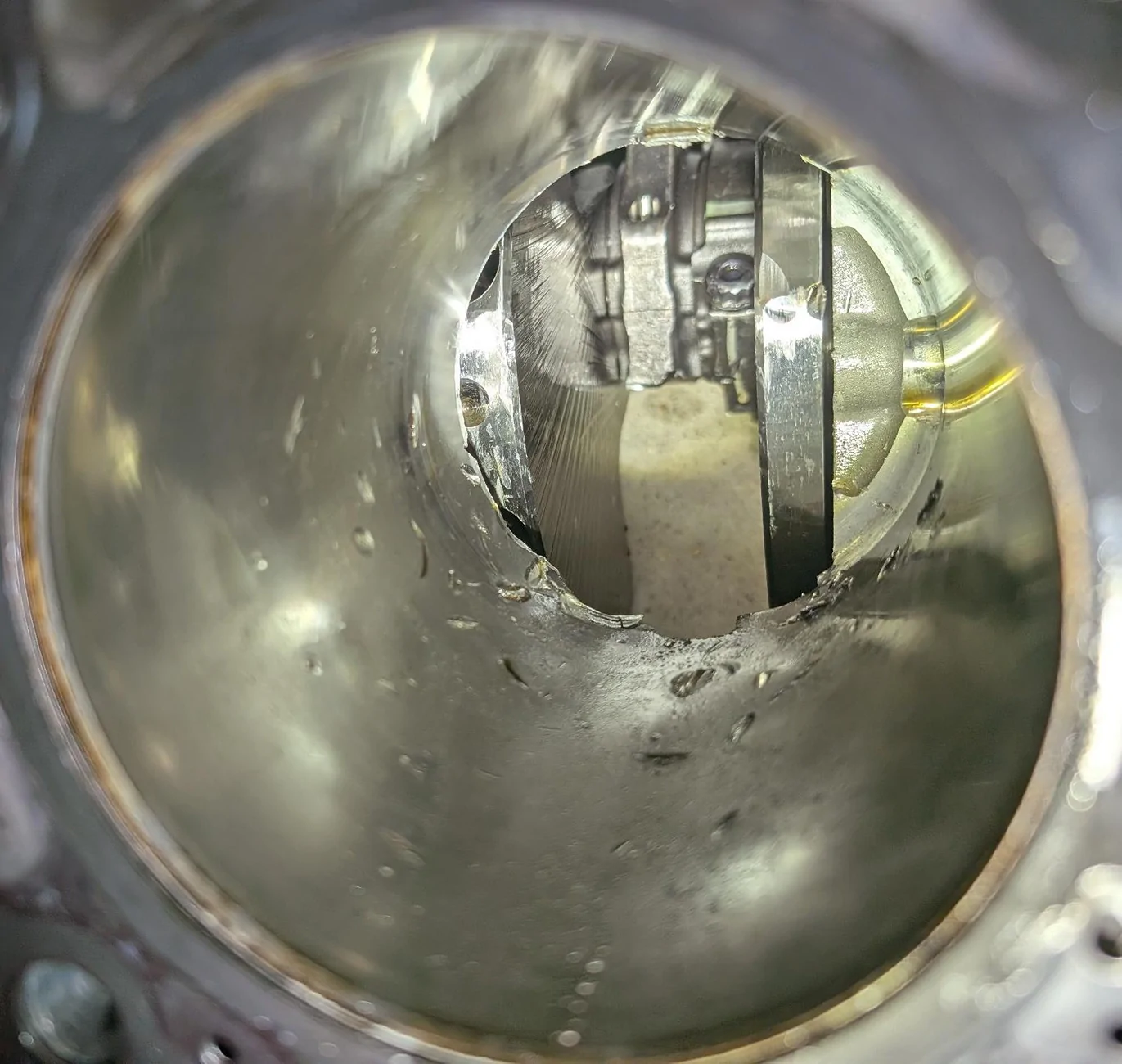
Anyone seen a gen3 piston failure like this?

OP
OP

engineermike

Well-Known Member
Joined
Jul 15, 2018
Threads
31
Messages
6,180
Reaction score
6,431
Location
La
Vehicle(s)
2018 GTPP A10
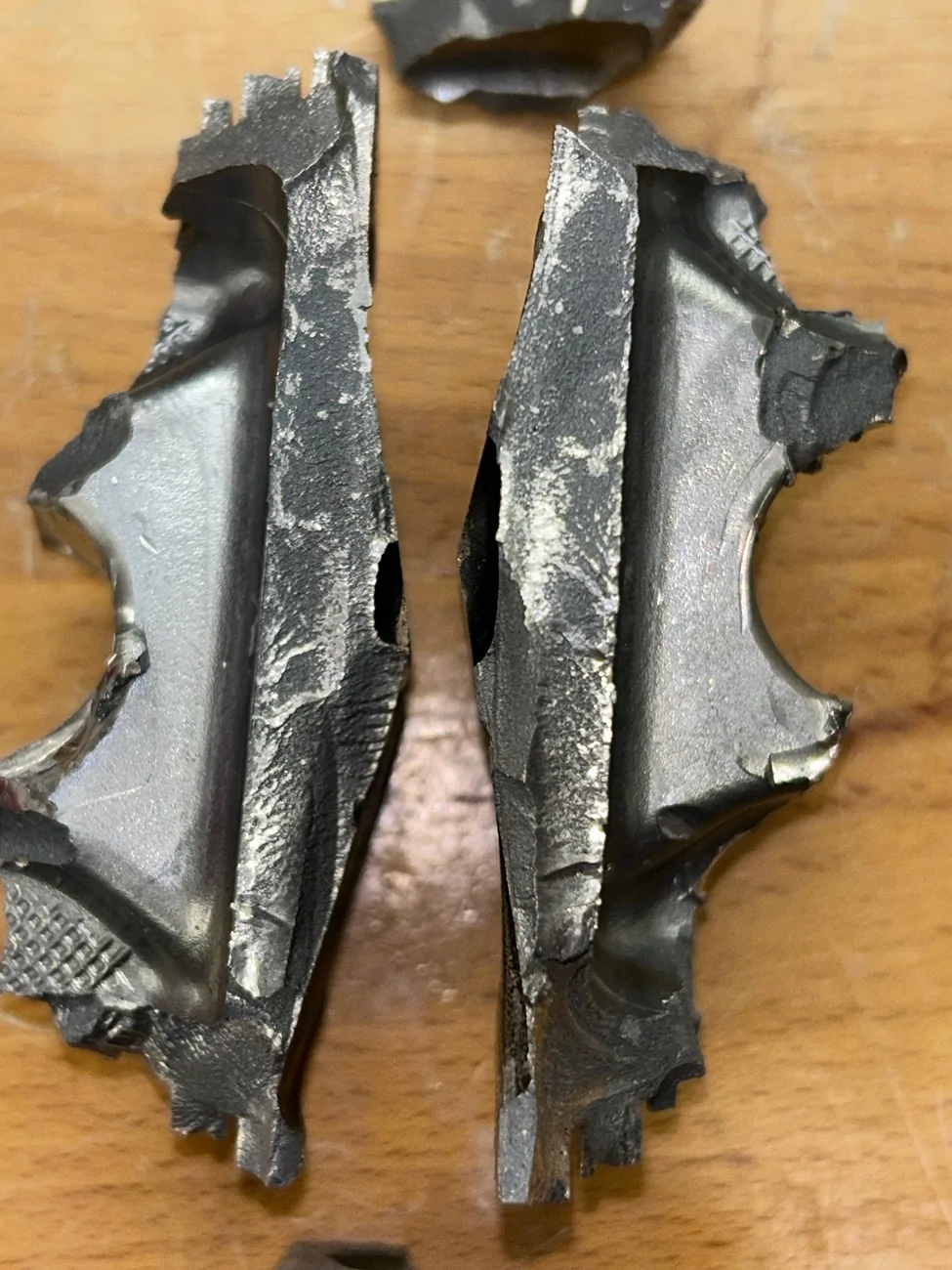
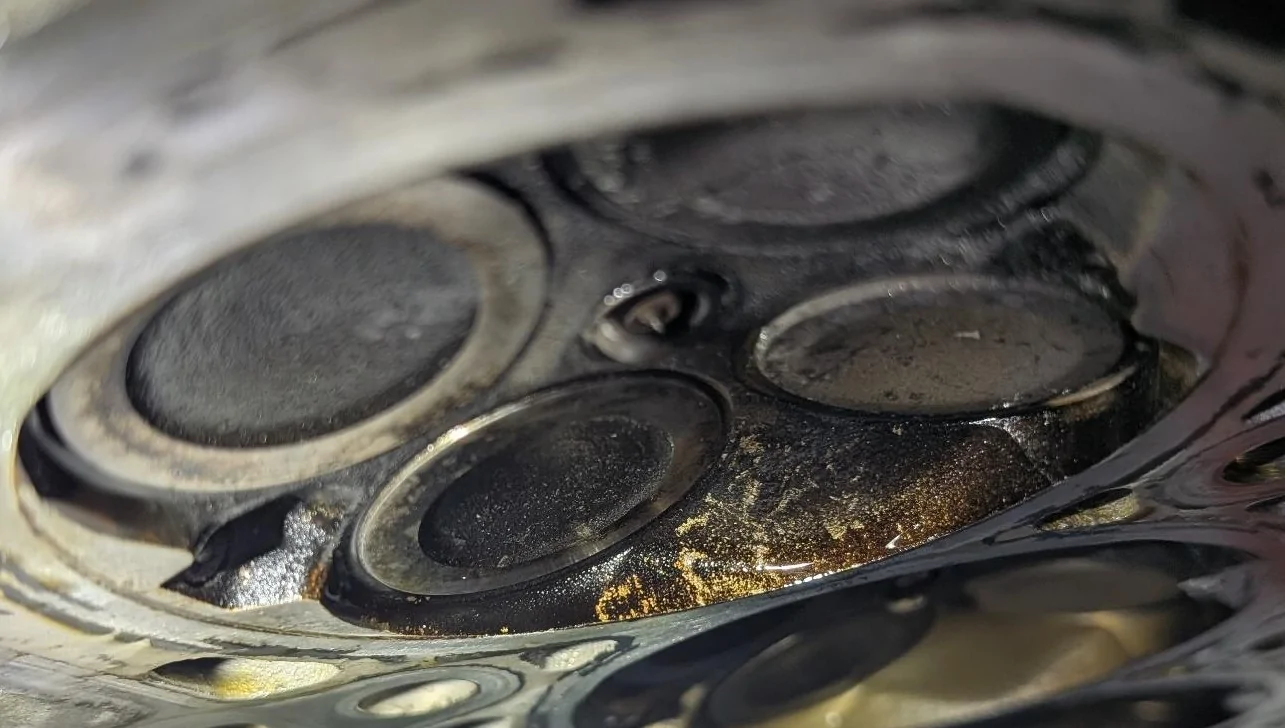
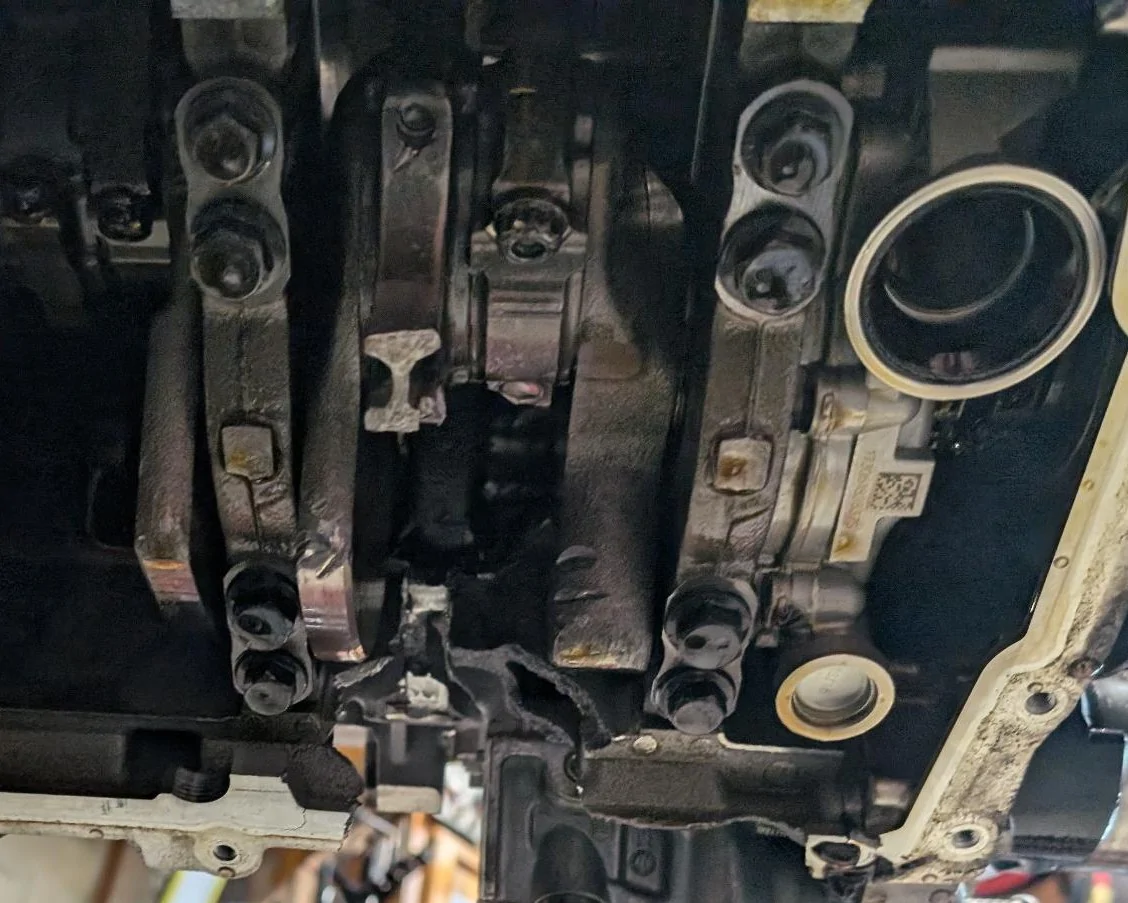
Here are some more, including the fracture surface.

IMG_0046.webp


IMG_0047.webp


IMG_0050.webp
 

Sponsored

Optimum Performance

Well-Known Member
Gold Sponsor
Joined
Mar 13, 2016
Threads
62
Messages
1,836
Reaction score
1,395
Location
Titusville, Florida
Website
www.facebook.com
First Name
Tommy
Vehicle(s)
'15 GT PP
It was an original sealed long block with about 60k miles.
my guess, fuel wash, connecting rod decided to maintain rpm, while piston did not. Valves may have been involved or got involved after the fact.
 

markmurfie

Well-Known Member
Joined
Jun 6, 2015
Threads
15
Messages
1,320
Reaction score
625
Location
Hawaii
First Name
Mark
Vehicle(s)
2015 Ford Mustang GT
The shiny mark in the carbon patch seems like piston to valve contact. Maybe from valve float on a restricted exhaust manifold turbo application. This is a Whipple SC tho.

Fragile hypereutectic pistons cant handle a light tap. JK

Stretched a rod bolt first and this is aftermath. IDK.
 
Last edited:
OP
OP

engineermike

Well-Known Member
Joined
Jul 15, 2018
Threads
31
Messages
6,180
Reaction score
6,431
Location
La
Vehicle(s)
2018 GTPP A10
The piston was found near the top of the stroke, still held “together” by the rings and bore. I assumed the valve contact was the valves opening against the stationary piston, which pushed it down the bore a little. Cylinder head was practically undamaged.
 

Sponsored

illtal

Well-Known Member
Joined
Nov 16, 2018
Threads
17
Messages
2,121
Reaction score
1,040
Location
USA
Vehicle(s)
2018 Mustang GT
The piston was found near the top of the stroke, still held “together” by the rings and bore. I assumed the valve contact was the valves opening against the stationary piston, which pushed it down the bore a little. Cylinder head was practically undamaged.
What kind of noise did it make or was the air just breathing out of the crankcase vent?
 
OP
OP

engineermike

Well-Known Member
Joined
Jul 15, 2018
Threads
31
Messages
6,180
Reaction score
6,431
Location
La
Vehicle(s)
2018 GTPP A10
What kind of noise did it make or was the air just breathing out of the crankcase vent?
Nothing noteworthy or useful. He said it sounded like he ran over gravel, which was actually engine parts bouncing around under the car.
 

illtal

Well-Known Member
Joined
Nov 16, 2018
Threads
17
Messages
2,121
Reaction score
1,040
Location
USA
Vehicle(s)
2018 Mustang GT
hmmm how more robust are the gen 4 coyote blocks vs a gen 3? I suppose they (ford) won't be selling gen 3 blocks for much longer
 

OldbutNew

Well-Known Member
Joined
Jul 22, 2024
Threads
6
Messages
228
Reaction score
257
Location
S.E.Michigan
First Name
Greg
Vehicle(s)
2019 Kona Blue GT 10R (Wife's car) 2018 Mustang GT Royal Crimson PP1 Manual
So you have a 60,000 mile engine that you decide to boost. Whether it was last week or 60,000 miles ago isn't really relevant here. We used to do this crap on 5.0 Windsors because they were cheap!! We would have 2 or 3 junk yard long blocks sitting around waiting for the inevitable swap into somebody's Fox body with the Vortech or Procharger that caused it and the stuff that went with it. I saw as many cracked blocks as piston failures.

"Cylinder wall looks ok, combustion chamber looks fine." Now there are "engine parts bouncing around under the car". So I assume that at least one rod broke? JUST the one rod? Was the wrist pin one of the parts that left the chat? Notice the pin bores are both sheared above the centerline of the pin diameter? While what's left of the pin bores looks "fine". Note the inside edge of the pin bores. See how they have a sort of radiused look? Particularly the one on the right. (Bottom picture in post #3) Same picture you can see some indication that those two halves of the piston crown were rubbing together. Which means that crack was first. Held in place, as stated above, by the rings and bore wall. But, they were moving independently. That in turn puts a bending moment on the wrist pin bores. Sometimes this will allow a pin lock to pop and the pin contact the cylinder wall, sometimes not. Did you find either of the pin locks?

Yes, these engines are boosted way, WAY beyond their design intent. And live. But these parts are designed to a cost point. Otherwise everything would get forged pistons and rods.

Based on the pictures and other information supplied, this was a piston failure due to cylinder pressure combined with RPM. I would say your root cause is a Whipple 3.0.
 
Last edited:


Top