Sponsored

Tires wear issues help?

OP
OP
Fp_Mach1

Fp_Mach1

Well-Known Member
Joined
Sep 2, 2024
Threads
2
Messages
46
Reaction score
35
Location
Central Ca
First Name
Jr
Vehicle(s)
2022 Mach 1
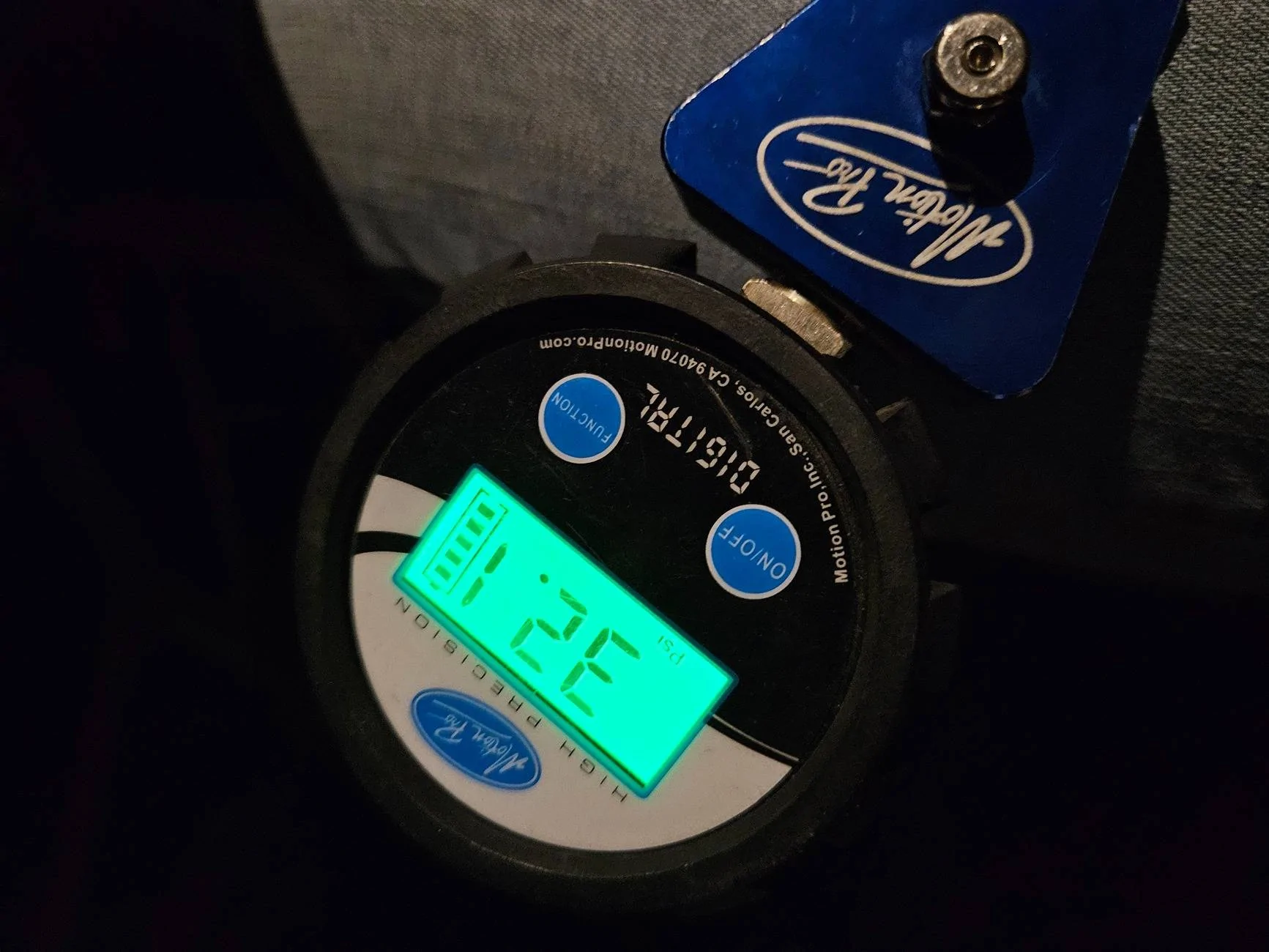
I know it's not popular on this site with other members, but I never run my tires that soft and I'm only on the street. I never go by what's listed on the door of the car as far as pressure. Since the max tire pressure marked on the tire is around 51psi on these lower profile radial tires(i have conti dws06s), i always run mine about 43psi cold in the front and 36psi cold in the rear. I find that the tires wear evenly except a little bit of added wear in the inside of the front tires(due to oem alignment set up). The rear tires wore perfectly even. Also, what I've noticed is that the steering response is quick, grip great once warm(no greasy feeling), and the tires never overheat. You can see if you are overheating a tire by the way the rubber looks(i know this through years of experience from motorcycle racing). I've also did this on all my other vehicles for the past 25 years or so. Back in the day, max air pressures on the radials were only like 36psi, so it was common for people to run there pressures at 32psi front and 29 rear and that was recommended on the door sticker. However, tire tech has changed over the years and have improved. It never made sense to me for a max air pressure to be at 51psi for these modern radial tires and yet run them almost 20psi below that. It causes too much belt flexion which generates too much heat and the tire cant dissipate that heat fast enough. My experience has taught me directly that you will wear out the edges of your front tires prematurely, the rubber tends to chunk front and rear(due to over heating), and the handling feels slow and greasy.
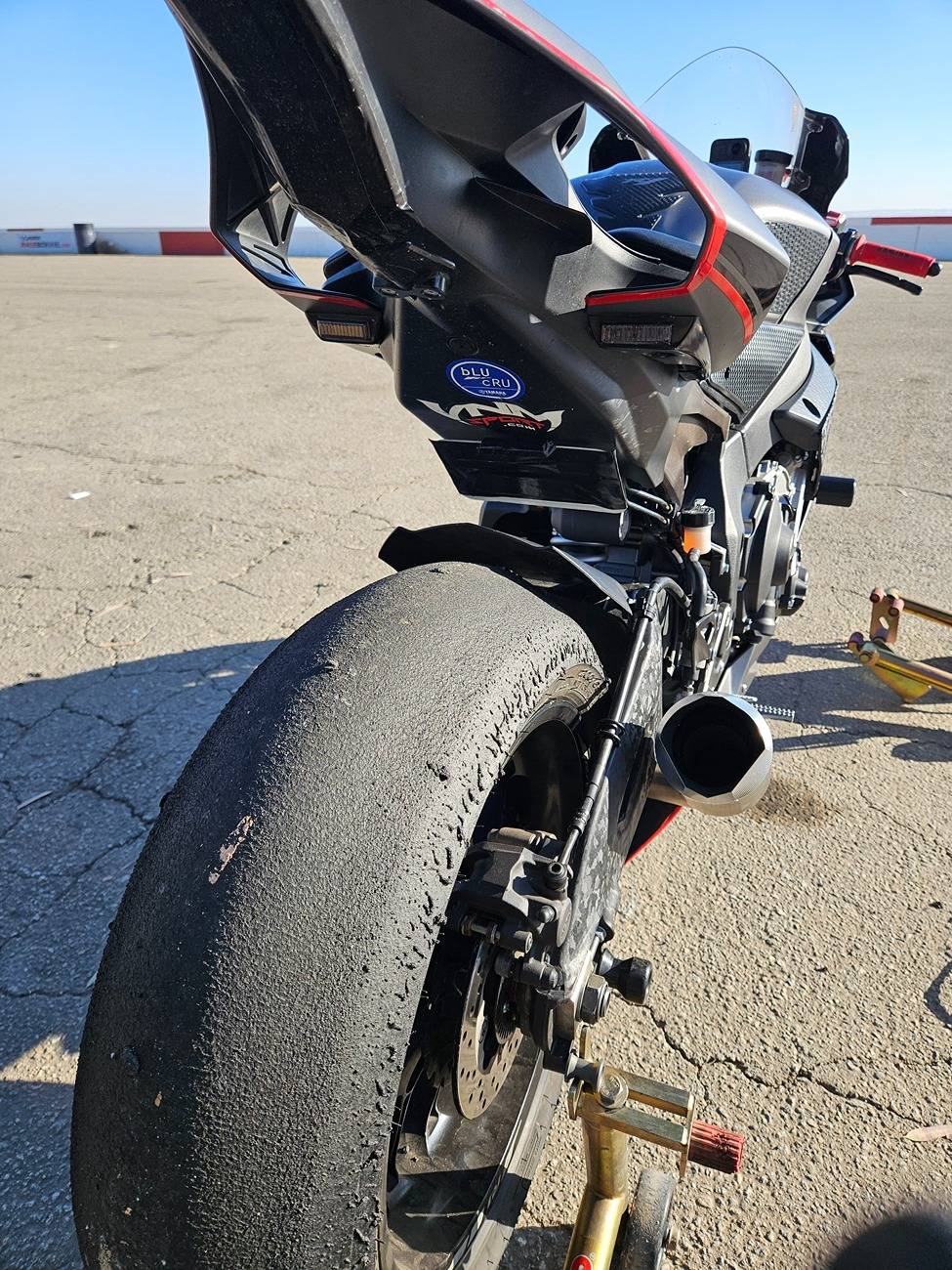
You are correct.. they were overheating a bit (from the wear the track day) basing it off of experience with track tires on my bike too .

I just don't have thread pattern so I never see any feathering happening.
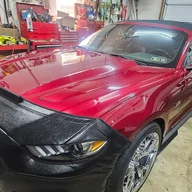
1000013470.jpg
Sponsored


TonyT930

Well-Known Member
Joined
Dec 16, 2023
Threads
47
Messages
1,152
Reaction score
732
Location
Philadelphia, Pa.
First Name
Tony
Vehicle(s)
2017 Mustang GT Convertible in Ruby Red
You are correct.. they were overheating a bit (from the wear the track day) basing it off of experience with track tires on my bike too .

I just don't have thread pattern so I never see any feathering happening.
1000013470.jpg
I'm glad you see what I was talking about. I had a clunking problem more than once using Pilot Sport softs with the tire pressure being too low.
 
OP
OP
Fp_Mach1

Fp_Mach1

Well-Known Member
Joined
Sep 2, 2024
Threads
2
Messages
46
Reaction score
35
Location
Central Ca
First Name
Jr
Vehicle(s)
2022 Mach 1
Going to try 32.

Just street driving but maybe it will even out a bit the feathering
1000017658.webp
 

AZ_Ryan

Well-Known Member
Joined
May 31, 2016
Threads
57
Messages
1,663
Reaction score
1,762
Location
Arizona
Vehicle(s)
2015 GT Premium
At track I did run lower about 32... but definitely not 26-28lbs ..

I will lower them today overall for street use and keep an eye on it .

Thank you for the help... it kinda makes sense though...

I track my R1 (bike) and have more experience with tire wear and use to running Dunlops for the last couple years . New to tracking a car and especially michellin PS4's
So thanks for the help.
You have it backwards. You should run slightly higher psi on the track. Cold pressure for street is should be 32.
 

Sponsored

Charlemagne

Well-Known Member
Joined
Jan 14, 2021
Threads
1
Messages
1,967
Reaction score
3,468
Location
Czech Republic (Europe)
First Name
Nick
Vehicle(s)
Tempest 2021 Mustang Mach 1 Velocity Blue M3440
Vehicle Showcase
1
Definitely drop your cold pressure to 32psi, as the placard states. Your tyres, suspension, traction, the ride, in fact everything will benefit from it.
Tyre pressure changes with outside temperature, so 32 psi at 50°F can be 30 psi at 32 °F etc. I always use bit more in the winter and it helps with potholes too. 34-35 psi is ideal for me and never had any issues with tyre wear either. Btw, did you know that Tesla Model 3 of similar weight runs 42 psi cold? It helps with rolling resistance for them iirc. I know many people run 34-35 psi here too and don't have issues, it's lot easier than to check all the time when outside temperature changes.
 

TonyT930

Well-Known Member
Joined
Dec 16, 2023
Threads
47
Messages
1,152
Reaction score
732
Location
Philadelphia, Pa.
First Name
Tony
Vehicle(s)
2017 Mustang GT Convertible in Ruby Red
Tyre pressure changes with outside temperature, so 32 psi at 50°F can be 30 psi at 32 °F etc. I always use bit more in the winter and it helps with potholes too. 34-35 psi is ideal for me and never had any issues with tyre wear either. Btw, did you know that Tesla Model 3 of similar weight runs 42 psi cold? It helps with rolling resistance for them iirc. I know many people run 34-35 psi here too and don't have issues, it's lot easier than to check all the time when outside temperature changes.
Would you happen to know what rating comes with the Tesla oem tires? I can bet it has a similar to the conti DWS06 I have on my Mustang. And I'm with you, you running your tires harder is yet another reason why I do it. I've ran 32 on the street a long time ago and ended up pinching/damaging a side wall on a relatively small pot hole and bending the wheel as a result. And with low profile tires, no thx.
 
Last edited:

Hack

Well-Known Member
Joined
Nov 26, 2014
Threads
86
Messages
12,803
Reaction score
8,213
Location
Minneapolis
Vehicle(s)
Mustang, Challenger
I would also encourage you to change to Ford's recommended tire pressure settings. Your photos don't show the whole tire tread, but I would expect you are giving up handling performance and tire life by overinflating.
 

HoosierDaddy

Well-Known Member
Joined
Jan 2, 2016
Threads
263
Messages
4,567
Reaction score
8,967
Location
Winchestertonfieldville (ok, Scottsdale), AZ
First Name
Randy
Vehicle(s)
2016 GT Premium PP, 2023 Tesla Model 3 Performance, 1978 Trans Am WS6, etc.
Would you happen to know what rating comes with the Tesla oem tires? I can bet it has a similar to the conti DWS06 I have on my Mustang. And I'm with you, you running your tires harder is yet another reason why I do it. I've ran 32 on the street a long time ago and ended up pinching/damaging a side wall on a relatively small pot hole and bending the wheel as a result. And with low profile tires, no thx.
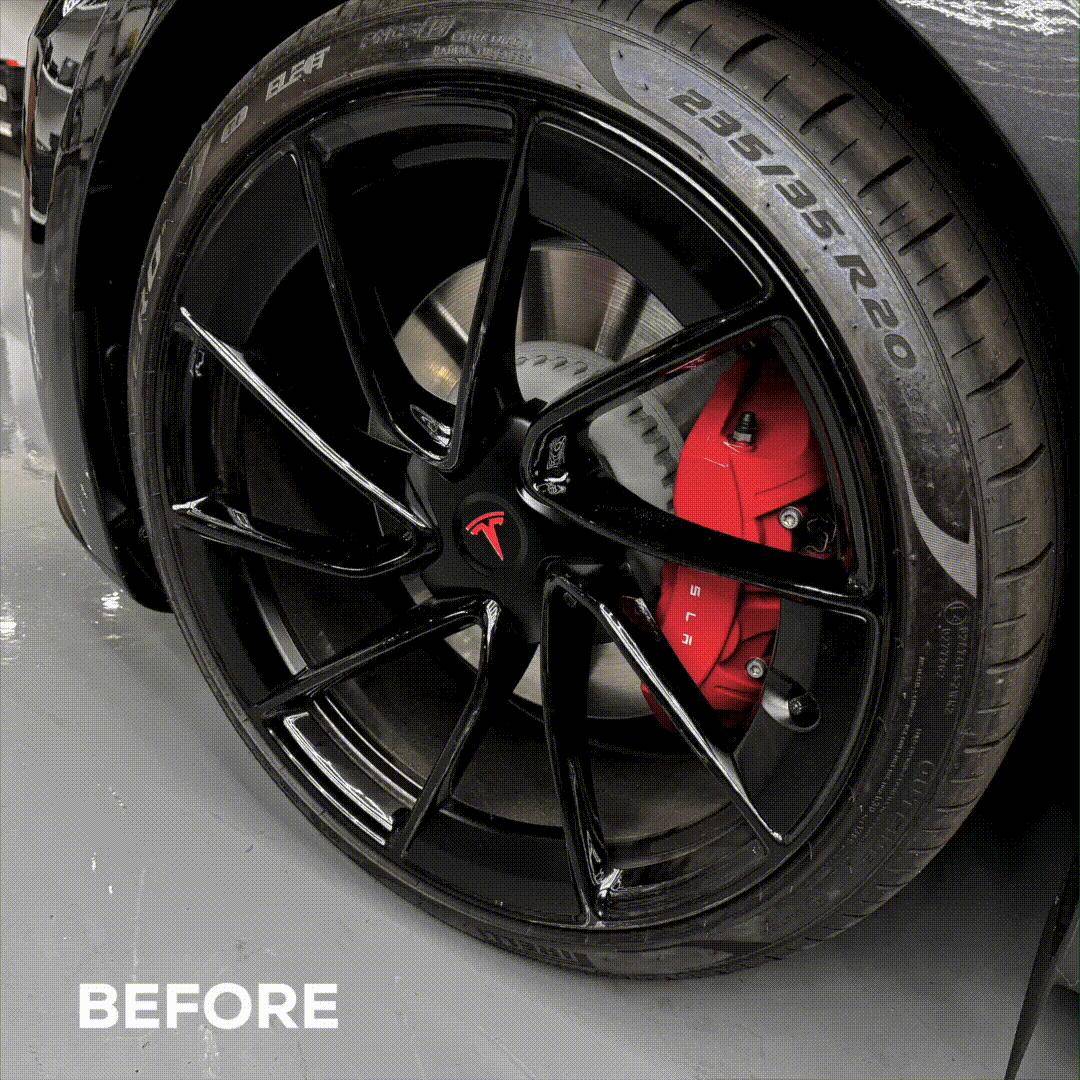
XL weight rating for my Model 3 Performance. Other unusual things about the tires other than 42 PSI is how wide the wheels are compared to the tires also for aero. Which leads to a lot of curb damage. Even the slightest brush that would only graze a tire of another car will damage the wheels.

Factory wheel and tire:

1734965116612-mu.jpg
 

murick

Well-Known Member
Joined
Jul 5, 2021
Threads
15
Messages
1,047
Reaction score
1,330
Location
Prague, Czech Rep.
First Name
Richard
Vehicle(s)
2021 Euro Mach 1, FJG, manual
My major gripe about the specified tire pressure is that it is specified at cold, because I would expect that the actual pressure which matters is when the tire is hot, or to be more precise, at its operational temperature. And this is the problem, because what is the "right" operational temperature and pressure and how is it impacted when the ambient temperature is 4°C (40°F) and when it is 30°C (86°F)?

I have no idea. So in the end I am just eyeballing it in a way @Charlemagne mentioned already.
Giving it a bit more in winter, because the tires won't get much warmer and trying to keep the hot pressure in some reasonable range when tracking.
 

Sponsored

Hack

Well-Known Member
Joined
Nov 26, 2014
Threads
86
Messages
12,803
Reaction score
8,213
Location
Minneapolis
Vehicle(s)
Mustang, Challenger
My major gripe about the specified tire pressure is that it is specified at cold, because I would expect that the actual pressure which matters is when the tire is hot, or to be more precise, at its operational temperature. And this is the problem, because what is the "right" operational temperature and pressure and how is it impacted when the ambient temperature is 4°C (40°F) and when it is 30°C (86°F)?

I have no idea. So in the end I am just eyeballing it in a way @Charlemagne mentioned already.
Giving it a bit more in winter, because the tires won't get much warmer and trying to keep the hot pressure in some reasonable range when tracking.
If you talk to people who are into tracking their cars, they will say that the right pressure for track use is found by using a pyrometer to check the temperature across the width of the tire after a few laps. The goal is to have the same temperature across the entire tread. If you are trying to optimize lap time, it might be worth buying one.

I do agree that tire temperature (and thus pressure) won't increase much in winter, but it doesn't increase much in summer just driving around either.

My assumption is this is the same as everything else. The professionals study something and work really hard to specify the best number, and then the amateur armchair quarterbacks come in and decide that they know better.
 

TonyT930

Well-Known Member
Joined
Dec 16, 2023
Threads
47
Messages
1,152
Reaction score
732
Location
Philadelphia, Pa.
First Name
Tony
Vehicle(s)
2017 Mustang GT Convertible in Ruby Red
XL weight rating for my Model 3 Performance. Other unusual things about the tires other than 42 PSI is how wide the wheels are compared to the tires also for aero. Which leads to a lot of curb damage. Even the slightest brush that would only graze a tire of another car will damage the wheels.

Factory wheel and tire:

1734965116612-mu.jpg
I understand. In my case, I didn't scrap along a curb or anything like that.
My major gripe about the specified tire pressure is that it is specified at cold, because I would expect that the actual pressure which matters is when the tire is hot, or to be more precise, at its operational temperature. And this is the problem, because what is the "right" operational temperature and pressure and how is it impacted when the ambient temperature is 4°C (40°F) and when it is 30°C (86°F)?

I have no idea. So in the end I am just eyeballing it in a way @Charlemagne mentioned already.
Giving it a bit more in winter, because the tires won't get much warmer and trying to keep the hot pressure in some reasonable range when tracking.
Yup. Use your experience. I commend that.
 

RustyBit

Active Member
Joined
Jan 28, 2024
Threads
2
Messages
27
Reaction score
14
Location
Carnegie Melbourne VIC
First Name
Russell
Vehicle(s)
2018 FN GT Manual
You have it backwards. You should run slightly higher psi on the track. Cold pressure for street is should be 32.
No I don't, you obviously didn't read what I said, possibly too much for you. You start with a lower pressure on track days as you are going to put the tyres under more stress than street use. They will increase in pressure within a few laps up to the correct range for track work 34 -36. If you start at a high cold pressure you will be running at a higher than optimal pressure in a short time. The result being less grip as the contact patch is not what it should be, this equals more moving around on the tyre causing overheating. If you did read what I posted, I even quoted Ponoma Raceway on lowering your pressures. It is the same at any track day.
 

S550HPP

Well-Known Member
Joined
Jun 6, 2024
Threads
32
Messages
1,954
Reaction score
1,025
Location
PDC
Vehicle(s)
2022 HPP Vert
I'm 34 @ 65 F indoor climate control and it drops to 30/31 @ 6-7 F within minutes.

In 2020s it makes no sense why tire pressures are not automatically controlled on cars costing this much. It's $120 in parts and a $4 chip.
 

AZ_Ryan

Well-Known Member
Joined
May 31, 2016
Threads
57
Messages
1,663
Reaction score
1,762
Location
Arizona
Vehicle(s)
2015 GT Premium
No I don't, you obviously didn't read what I said, possibly too much for you. You start with a lower pressure on track days as you are going to put the tyres under more stress than street use. They will increase in pressure within a few laps up to the correct range for track work 34 -36. If you start at a high cold pressure you will be running at a higher than optimal pressure in a short time. The result being less grip as the contact patch is not what it should be, this equals more moving around on the tyre causing overheating. If you did read what I posted, I even quoted Ponoma Raceway on lowering your pressures. It is the same at any track day.
You want to try that post again without starting like a jackass?

Also, the post you quoted me on wasn't even directed at you. 🤷‍♂️
Sponsored


Top