Sponsored

Question about items in the performance package

katarn22

Well-Known Member
Joined
Jul 25, 2014
Threads
6
Messages
113
Reaction score
1
Location
New Jersey
Vehicle(s)
2015 Oxford White EcoBoost Premium Mustang
I was just wondering exactly what function some of the items in the performance package do (I'm looking at the EB premium, not sure if the GT's is the same). Things like the "K-Brace", "Upsized Rear Sway Bar", "Large Brake Rotors" (I assume improves braking?), "Unique EPAS, ABS, and stability control", and the "3.55 Limited Slip Rear Axle". I've seen what the black wheels look like obviously, along with the dash and the gauges. But everything else I have no clue on. Any explanation would be greatly appreciated :)
Sponsored


tbonez3858

Well-Known Member
Joined
Feb 5, 2014
Threads
11
Messages
860
Reaction score
5
Location
South side
Vehicle(s)
Bat mobile
I was just wondering exactly what function some of the items in the performance package do (I'm looking at the EB premium, not sure if the GT's is the same). Things like the "K-Brace", "Upsized Rear Sway Bar", "Large Brake Rotors" (I assume improves braking?), "Unique EPAS, ABS, and stability control", and the "3.55 Limited Slip Rear Axle". I've seen what the black wheels look like obviously, along with the dash and the gauges. But everything else I have no clue on. Any explanation would be greatly appreciated :)
In a nutshell they make the car perform better on the track...The real question, in my opinion, is will you get the value on the street or in daily driving. Some people like to DD a car that is setup for the track and others dont. The reality is that the Mustang is an amazing performance machine without the PP added. Do you really need the additions? You will have to test drive to figure it out for yourself. I personally like the gearing and the "tighter" drive experience of a car that is track inspired. I do understand those that consider it "unlivable" in a daily driver.

There is simply too much to type on each subject so if you really want to learn I've attached some information on the main topics you posted.

Larger brake rotors assist in shedding heat better

http://www.wcengineering.com/articles/brakes.html


Different gearing ratios

http://www.mustangsplus.com/tech/axles/


Bracing/sway bars assist in improving handling/body roll

[ame]
 

DivineStrike

Doomsday
Joined
Jan 30, 2014
Threads
82
Messages
2,967
Reaction score
201
Location
Charleston
Vehicle(s)
15 GTPP, 11 F150 FX4, 07 CBR600RR
Just WOW?????? I guess a question like this can be expected from a toyota owner since they (Toyota) have nothing in their stable which has any kind of performance. At least in recent years. I hope you get the Mustang so you can start enjoying driving a little more :thumbsup: Then again you could just be young and not know a whole lot about cars.

KBrace increases stiffness and rigidity. Sway bars reduce how much body roll the car has. Larger Brake rotors, yes they improve braking as well reduce brake fade in repeated applications. EPAS, ABS, Stability control are simply changes in the computer allowing a more sporty feel. EPAS is steering, abs will improve braking, and stability control tuning will allow you to play around a little more while still having the safety net of a computer helping you not lose control. 3.55 gears will allow the car to accelerate faster. A limited slip differential applies more power to the wheel with less grip. For example in your corolla if it's wet out you probably experience one wheel spinning way easier than the other. In a case such as that, power automatically transitions to the other wheel with more grip. Mainly beneficial in spirited driving.

Edit: I see you've already ordered...awesome and congrats. This thing will blow your pants off :D
 

SVTFreak

#275
Joined
Jan 6, 2014
Threads
60
Messages
3,478
Reaction score
733
Location
Prairieville, LA
Vehicle(s)
2015 Wimbledon white LE #275 A6
Im not normally an advocate of needing a track oriented car on the street, but I'm glad mine has the pack for the larger brakes alone. On my 11 gt, the brakes is my one complaint! Especially with the blower on it. I know the gt has better brakes than before now, but after a couple 140+ mph drag downs in my 11, and fading brakes from that, I want all I can get on my next car.

The other stuff, if it rides too bad, are easy to change out to base gt specs should I think it rides too harshly.
 
OP
OP

katarn22

Well-Known Member
Joined
Jul 25, 2014
Threads
6
Messages
113
Reaction score
1
Location
New Jersey
Vehicle(s)
2015 Oxford White EcoBoost Premium Mustang
Thank you DivineStrike and tbonez for your replies, that made things a little clearer for me :)

Just WOW?????? I guess a question like this can be expected from a toyota owner since they (Toyota) have nothing in their stable which has any kind of performance. At least in recent years. I hope you get the Mustang so you can start enjoying driving a little more :thumbsup: Then again you could just be young and not know a whole lot about cars.
More the latter than the former. I'm 22, just out of college and (fortunately) employed. I know the basics of cars. My grandfather used to own a junk yard and my father worked there for a while, so everything I know, I know from him. The two main cars I've been driving are my Corolla as you pointed out, and a 2003 GMC Envoy XL. I imagine the Mustang won't be quite like either of them so I'm trying to educate myself as best I can about it :D
 

Sponsored

Mustang8

Well-Known Member
Joined
May 14, 2014
Threads
2
Messages
277
Reaction score
20
Location
Tampa
Vehicle(s)
2015 Mustang GT Premium
Thank you DivineStrike and tbonez for your replies, that made things a little clearer for me :)


More the latter than the former. I'm 22, just out of college and (fortunately) employed. I know the basics of cars. My grandfather used to own a junk yard and my father worked there for a while, so everything I know, I know from him. The two main cars I've been driving are my Corolla as you pointed out, and a 2003 GMC Envoy XL. I imagine the Mustang won't be quite like either of them so I'm trying to educate myself as best I can about it :D
Glad to see another 22 year old fresh out of college, employed, and then about to enjoy an awesome Mustang! :)
 

JimmyTwoTimes

Well-Known Member
Joined
Jun 23, 2014
Threads
50
Messages
3,287
Reaction score
385
Location
New York
Vehicle(s)
2015 GT Premium
Huh.

When you turn, a car's weight gets shifted to the outside of the turn due to conservation of momentum, Newton's first law of motion. This takes weight off of the inside wheels, reducing their grip and thus their ability to accelerate and turn, and slows the vehicle by transferring forward momentum into weight transfer. A stiffer suspension -- which both the K-brace and rear sway bar are for -- helps prevent lateral body roll and transfer forward momentum through to lateral momentum. This is done at the cost of a stiffer, less "cushy" ride over pavement imperfections.

Larger diameter brake rotors increase the contact area between brake rotor and pad by increasing the surface area of both. Increased surface area of brake contact = higher friction between the two = more stopping power.

It's all high school physics stuff; pretty simple.
 

ShoNuff

Well-Known Member
Joined
May 16, 2014
Threads
2
Messages
321
Reaction score
42
Location
Tucson, AZ
Vehicle(s)
'08 Dodge Recall... I mean Avenger
It's all high school physics stuff; pretty simple.
Too bad (at least in Arizona) Physics isn't a required course in highschool... Or calculus... 'Merica.
 

Whiskey11

Kill ALL the Cones!
Joined
Oct 19, 2013
Threads
2
Messages
523
Reaction score
102
Location
US of A
Vehicle(s)
2016 Ruby Red Base GT/PP
I was just wondering exactly what function some of the items in the performance package do (I'm looking at the EB premium, not sure if the GT's is the same). Things like the "K-Brace", "Upsized Rear Sway Bar", "Large Brake Rotors" (I assume improves braking?), "Unique EPAS, ABS, and stability control", and the "3.55 Limited Slip Rear Axle". I've seen what the black wheels look like obviously, along with the dash and the gauges. But everything else I have no clue on. Any explanation would be greatly appreciated :)
tbonez got the basics, I'll go into it further:

K-Brace: My understanding is this is the brace that goes between the strut towers and the firewall which is how a strut tower brace NEEDS to be designed to actually work. The only way it could be improved is if they tied the strut towers to each other to complete the bracing but it isn't nearly as critical when you design the chassis properly (like the S197 chassis is).

Upsized Rear Swaybar: Swaybars are torsion springs. They only work when there is a difference in height from one side to the other. They are great for tuning out body roll while keeping a more supple ride quality with softer springs. Problem is, too much rear swaybar and you can lift a tire off the ground. BMW's tuned for autocross will do this with any of the four wheels. Mustangs with live axles benefited from that high unsprung weight (the one time it is beneficial) and you could run some mondo bars. Mustangs will lift the inside front when accelerating out of a turn if the rear springs are too soft.

From tuning theory, a swaybar should only be used to tune the chassis's overall balance between understeer (car chases straight lines) to oversteer (car attempts to spin). It is entirely possible that the added roll resistance from a swaybar actually causes the opposite but usually this requires some crappy suspension geometry (see: MacPhearson Struts). On the REAR of the car it will generally promote oversteer or in the case of OEM's I imagine the car will be more neutrally balanced.

Large Brake Rotors: How these improve braking is counter-intuitive. The sole premise of brakes is to take kinetic energy and transmit it into heat energy and then dissipate it (ironically this is how your shocks/struts work too). Larger brake rotors increase brake torque which makes for a grabbier brake pedal (IE: more brake torque sooner) and it allows for more heat to enter the system before it overheats. More brake torque does NOT translate into shorter stopping distances because there is enough brake torque with smaller systems to cause ABS engagement. If you aren't familiar with what ABS does, the sensors detect when a wheel locks up and then it pulses the brakes to cause them to engage and disengage rapidly to bring the car to a controlled stop. In order for your wheels to lock up the amount of brake torque has to be high enough that the friction caused by the rolling tire on the roadway is overcome by the friction between the brake pads and the rotor. A 05-09 Mustang with 315 wide Hoosier A6 autocross slicks (arguably one of the stickiest tires in the world) will still hit ABS with stock pads, stock rotors and stock fluid without issues. What this tells us is that tiny 12.4" rotors on the 05-10 cars is MORE than plenty to handle locking up super wide and super sticky tires. IE: Adding brake torque will not stop the car quicker.

So that leaves us with slightly better initial bite with the brake pedal and a larger heat sink. A larger heat sink allows for more braking events before you either boil the brake fluid or fry the brake pads or warp the rotors. That's all that you gain from larger rotors.

The calipers, the 4 piston Brembo's for the EBPP and the 6 piston Brembo's for the GTPP offer better rigidity and a larger heat sink too. That rigidity translates to better pad wear and more consistent braking performance. Very important for track day guys looking to get the most out of the braking system in the car.

Unique EPAS, ABS and Stability Control Tuning: EPAS is the electronic power assisted steering system. The unique tuning is going to be for heavier feeling steering with more communication to the driver from the road. Hopefully it also reduces the nannies that caused the steering shake on the 2011 Mustangs when they replaced the front lower control arm bushings with something stiffer than the marshmallows Ford put in there.

The ABS tuning is going to be tuned around stickier street tires. Basically it is going to allow for a little more lockup of the tire to take advantage of the stickier tires.

Stability Control tuning will help those who chose to use it keep control of the car. Frankly, these systems are just hard on brakes and make counter-intuitive inputs without your permission and might confuse the driver. You are better off learning to drive the piss out of the car without it in a safe environment and then turn it on then you are leaving it on and turning it off later. Autocross is a great way to test your car at the limits with minimal risk of injury to yourself or your car.

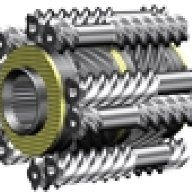
3.55 Limited Slip Differential: This is pretty straightforward, 3.55 is the final drive gear ratio. The bigger that number is the shorter the final drive gear is and the quicker the car will accelerate from a standstill and the quicker it will rev through the gears while moving.

The limited slip differential part is key though. The base EB is going to be using the pesky E-Diff bull shit that utilizes an open differential and brake application to mimic a real limited slip differential. This not only destroys your rear brake pads but it slows you down while not providing the true benefits of a limited slip diff. With a REAL limited slip differential you will be able to power out of corners faster and sooner and put that power to the ground rather than frying the inside wheel which is what most open differentials do. I'm assuming that the EBPP Limited Slip will be the Traction-Lok as they did not specify that it was going to be the Torsen. While I'm not a fan of the T-Lok and think it's a shame that Ford didn't put the Torsen into the EBPP the T-Lok is light years a head of any E-Diff and that is saying something because the T-Lok is a pretty weak rear diff that will require constant maintenance if the car is pushed hard. In 4 years of autocrossing, mine has been rebuilt twice and is due for a third rebuild. The clutch packs in them just wear out so quickly.

Monotube Dampers: Their are two types of shocks/struts, twin tube and monotube. Twin Tube dampers contain your piston in a cylinder which is inside a cylinder. These are somehow cheaper to make than monotubes and generally provide less control over the spring and contact patch than a monotube does due to the smaller piston. They also don't dissipate heat nearly as quickly as a monotube does but they are inexpensive and when done right do perform very well (see Koni Yellows).

Monotube dampers provide better control over the spring and contact patch because the piston is larger diameter. Because the piston interacts directly with the outside wall of the damper it also dissipates heat significantly better than a twin tube does. Basically, these cars should perform better than the twin tube variants.

Cross Axis Joints: A cross axis joint is a type of spherical bearing that is usually sealed from the elements. Basically it is a metal ball with a hole through it that runs on either a teflon race or a metal race. These joints allow for complex motions that a solid cylindrical bushing wouldn't while retaining a low/no compliance bushing. When used in the right spots it wont increase Noise Vibration and Harshness any (NVH) and that is what Team Mustang has done. The lateral link in the front suspension has these joints and since it has such a low impact on impact harshness it wont negatively increase NVH but it will prevent a lot of the wheel movement and alignment changes associated with soft control arm bushings. It also improves steering feel and precision since there is less movement of the front wheels that isn't wanted.

I hope that helps!
 

Sponsored

Barrel

Hoonigan
Joined
May 29, 2014
Threads
5
Messages
2,431
Reaction score
714
Location
Maryland
Vehicle(s)
Cars and Trucks
That....was awesome. Good info Whiskey.
 

Grimace427

Well-Known Member
Joined
Dec 6, 2013
Threads
14
Messages
6,467
Reaction score
1,702
Location
NoVA
Vehicle(s)
2011 Mustang 5.0
The limited slip differential part is key though. The base EB is going to be using the pesky E-Diff bull shit that utilizes an open differential and brake application to mimic a real limited slip differential.

IIRC all models get the t-lock limited slip diff just like the '11+ S197 models. I haven't seen anything that says e-diff in the 2015 Mustang.


Basically says limited slip diff for all models without going into further detail.


EXP Jawa

Well-Known Member
Joined
Jun 9, 2014
Threads
3
Messages
1,011
Reaction score
206
Location
Rochester, NY
Website
www.torsen.com
First Name
Rick
Vehicle(s)
1999 Cobra Convertible, Electric Green
The limited slip differential part is key though. The base EB is going to be using the pesky E-Diff bull shit that utilizes an open differential and brake application to mimic a real limited slip differential. This not only destroys your rear brake pads but it slows you down while not providing the true benefits of a limited slip diff. With a REAL limited slip differential you will be able to power out of corners faster and sooner and put that power to the ground rather than frying the inside wheel which is what most open differentials do. I'm assuming that the EBPP Limited Slip will be the Traction-Lok as they did not specify that it was going to be the Torsen. While I'm not a fan of the T-Lok and think it's a shame that Ford didn't put the Torsen into the EBPP the T-Lok is light years a head of any E-Diff and that is saying something because the T-Lok is a pretty weak rear diff that will require constant maintenance if the car is pushed hard. In 4 years of autocrossing, mine has been rebuilt twice and is due for a third rebuild. The clutch packs in them just wear out so quickly.
Just one comment - all cars will receive an actual, mechanical LSD. The V6 and EB cars will have the traditional clutch-type Traction Lok unit, as will GT models without the PP. Obviously, there is traction control overlaid on top of this, but the "eLSD" marketing spin that the ST cars have to put up with are not in play here. But at this time, as far as I can discern, there is no open diff for the new "Super" 8.8" axle. Regarding using the Torsen in only the GT PP and not the EB PP, who knows? Maybe they'll change that if enough people complain about it.
 

JimmyTwoTimes

Well-Known Member
Joined
Jun 23, 2014
Threads
50
Messages
3,287
Reaction score
385
Location
New York
Vehicle(s)
2015 GT Premium
Oh, that reminds me: for me, a clutch-type limited slip is vastly preferable to a helical (Torsen). That's because my main use for an LSD is on ice / snow, and helical LSD's aren't particularly useful where one wheel is in a zero traction position.
 

EXP Jawa

Well-Known Member
Joined
Jun 9, 2014
Threads
3
Messages
1,011
Reaction score
206
Location
Rochester, NY
Website
www.torsen.com
First Name
Rick
Vehicle(s)
1999 Cobra Convertible, Electric Green
The counterpoint to that, Jimmy, is that the non-preloaded helical gear differential is much easier to maneuver and steer on snowy and icy surfaces, since the clutch pack's preload tends to resist differentiation (and thus changing direction), and this is amplified on snow. I've had many clutch-type differential cars become unsteerable in winter. Combine that with the fact that helical gear diffs transfer torque much more progressively, whereas clutch-types become an all-or-none affair on low-mu surfaces, and you realize that the Torsen option is pretty good in the winter. The actual number of times that you have zero traction in the winter are pretty few, and frankly, with just a little help from the traction control the issue becomes entirely moot. I've spent a lot of time and have a lot of data on this topic. I also have Torsen diffs in both axles of my Mountaineer and flog it pretty harshly during winter rally season, so I've got some experience here...
Sponsored


Top