
Sponsored

SheepDog
Well-Known Member
Just add an AN Check valve in between the valve cover port and the catch canBut venting to atmosphere certainly has none.
https://www.redhorseperformance.com/an-male-inlet-outlet-0-psi-crankcase-check-valve/
JAJ
Well-Known Member
- Joined
- Apr 9, 2016
- Threads
- 4
- Messages
- 2,232
- Reaction score
- 1,987
- Location
- Vancouver BC
- Vehicle(s)
- 2016 GT350 Track Pack
Yes, that's how it works with atmospheric venting. Crankcase pressure is a function of how much blowby there is and how much restriction to air flow is there in the plumbing to the atmosphere.@JAJ Yup, that's exactly what I was envisioning. I summize then if you convert both sides to a vent to atmosphere system (assume with no PCV) then that's all you have for total system?!
The PCV system can't realistically create any vacuum in the crankcase. First, the crankcase (on a Ford) is vented on the driver's side with an open pipe to the intake, as mentioned above. Air will enter the crankcase just as fast as the PCV removes it.You wouldn't want this on a N/A setup right? Always thought I was taught some vacuum in the crankcase could be a good thing. But I get why boosted guys would not want that intake positive pressure going backwards into the crankcase.
Second, the PCV valve has a flow limiter. That's to ensure that the throttle plate con control the idle. If too much crankcase air enters the intake behind the throttle plate through the passenger's side PCV valve, idle speed will go up and the throttle can't control it. So, the air flow is restricted.
Taken together then, if there's a jump in blowby from high throttle settings, crankcase gas flow through the PCV VALVE will stop because there's no intake vacuum to pull it through. BUT, that pressure will flow out (basically backwards) through the driver's side vent into the intake, so either way, crankcase gases end up burned in the cylinders.
Also, it's interesting and maybe important to know that with the OEM PCV system, all the air that goes into the engine is measured by the MAF sensor. Air goes past the sensor to the throttle and to the driver's side PCV plumbing into the crankcase. Gas from the crankcase is mixed with air after the throttle and ends up in the cylinders. The ECU always knows how much air is in the engine and it can match the fuel needed exactly as called for in the calibration.
By the way, this also works with a boosted engine, so long as the PCV connection from the PCV Valve is tied in behind the throttle plate and in front of the blower inlet. Then the system works as normal.
When you set up a path for air to leave the engine outside the ECU's control (atmospheric venting), the ECU can't get fueling right all the time because some of the air it thinks is still in the engine has left via the crankcase vent. It'll provide fuel for air that's not there to burn it.
galaxy
Well-Known Member
- Thread starter
- #19
Yeah, there’s a bunch of options out there like that. Looking into it, slightly.Just add an AN Check valve in between the valve cover port and the catch can
https://www.redhorseperformance.com/an-male-inlet-outlet-0-psi-crankcase-check-valve/
There’s also options to just keep the stock style QD connector on that end and still have AN fittings on the can end.

sms2022
Well-Known Member
I would caution you against messing with the pcv. You’d be surprised how much a change in the pcv can affect tuning. I know these cars will probably adapt to it within a few miles of driving but why mess with it on a stock car?
Sponsored

K4fxd
Well-Known Member
You are over thinking this. As long as you vent both sides to atmosphere and plug the intake manifold vacuum bung the engine will be happy as a clam. Your GF or wife might not like the oil smell however.I would caution you against messing with the pcv.
sms2022
Well-Known Member
Why on a stock car though? What is the point?You are over thinking this. As long as you vent both sides to atmosphere and plug the intake manifold vacuum bung the engine will be happy as a clam. Your GF or wife might not like the oil smell however.
K4fxd
Well-Known Member
Keeps all that nasty blow by and oil vapor out of the engine. Even a catch can lets the blow by gasses and some oil vapor.Why on a stock car though? What is the point?
Smokey said when PCV first came about, "I knew when they started burning that crap the game was over" He was talking about high performance engines. We have come a long way.
sms2022
Well-Known Member
It’s irrelevant imo. We have coyotes running 500k miles in trucks with no catch can. why would you want oil vapor stickying up your engine bay on a stock engine that routinely goes 200k with no modsKeeps all that nasty blow by and oil vapor out of the engine. Even a catch can lets the blow by gasses and some oil vapor.
Smokey said when PCV first came about, "I knew when they started burning that crap the game was over" He was talking about high performance engines. We have come a long way.
just get a catch can and be done with it
K4fxd
Well-Known Member
Let people do what they want with their car.
Some catch cans are vented to atmosphere and do not use a PCV vacuum source. Just a hose from each valve cover to a can with a vent.
The benefit to not running PCV is slightly better detonation control. In these high comp engines it helps.
Some catch cans are vented to atmosphere and do not use a PCV vacuum source. Just a hose from each valve cover to a can with a vent.
The benefit to not running PCV is slightly better detonation control. In these high comp engines it helps.
Sponsored
SheepDog
Well-Known Member
delete PCV valve, Dual port vented catch can, capped intake manifold and intake tube ports is the way. If the GEN 3 had the removable port on the drivers side like gen 2 and the GT350's I'd be running all AN fittings too. You want the lines and fittings to be as large as possible to allow the most amount of flow/pressure relief. PCV systems were designed for one purpose - managing polution. Just because a motor will go 200k while ingesting the schmeg from the crankcase, doesn't mean it is ideal for performance applications.

Terlingua17
Active Member
- Joined
- Feb 14, 2023
- Threads
- 0
- Messages
- 28
- Reaction score
- 42
- Location
- East Texas
- First Name
- Mustang Mike
- Vehicle(s)
- 1967 Terlingua Racing Team Mustang 2008 Bullitt
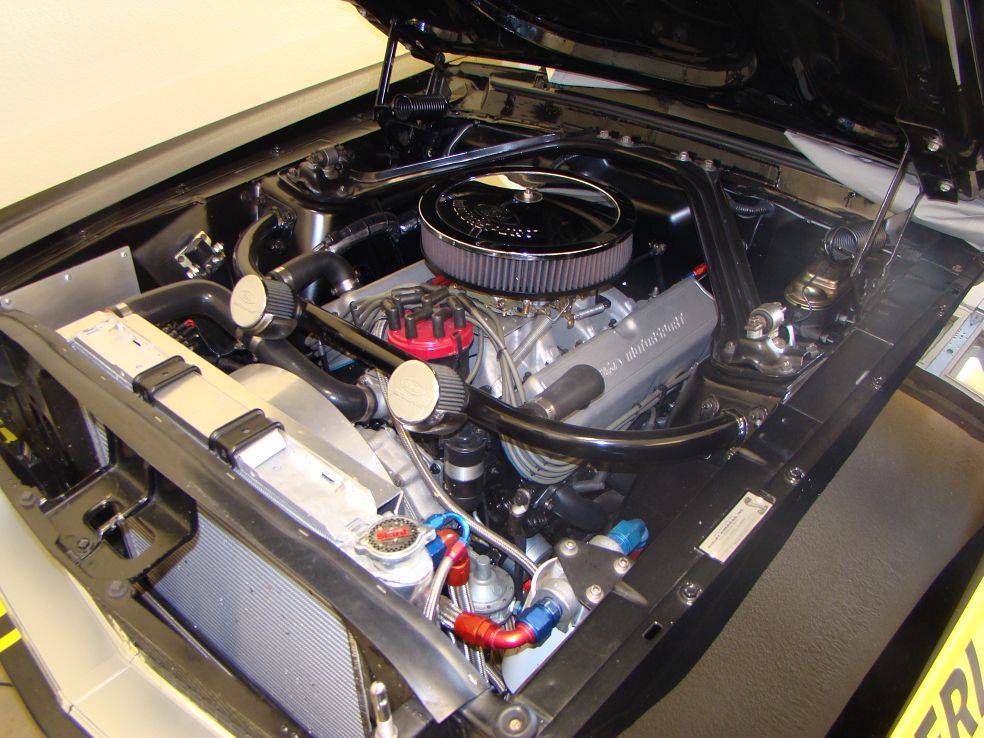
I made my own breather set up. I
 know it is a Vintage Race engine. it's old & so em I.

WildHorse
N/A or GO HOME
- Joined
- Jun 28, 2017
- Threads
- 270
- Messages
- 10,297
- Reaction score
- 8,350
- Location
- Home World: CLASSIFIED
- First Name
- Puddintane
- Vehicle(s)
- '17 S550
- Vehicle Showcase
- 1
Then they did / or something (is) wrong on the pass-side. D-side draws air into the engine.The driver's side FP catch can for the GT350 is a vent-to-air device and there are reports of it getting oil in it, so it does happen.
WildHorse
N/A or GO HOME
- Joined
- Jun 28, 2017
- Threads
- 270
- Messages
- 10,297
- Reaction score
- 8,350
- Location
- Home World: CLASSIFIED
- First Name
- Puddintane
- Vehicle(s)
- '17 S550
- Vehicle Showcase
- 1
Every BRAND NEW from 100 to 1000+hp vehicle today has a working closed PCV system. Venting to atmosphere is pre-70's tech. If it's sucking in a ton of oil, blame the engine.
Blow-by gases in an ICE vehicle are combustible.
The gases are a mixture of unburned fuel, oil, and exhaust gases that escape past the piston rings and into the engine's crankcase. This is a normal part of the combustion process, but if left unchecked, it can lead to problems like oil dilution.
Like the good old days when you drained the oil and had 2 streams : one oil, the other gas/contaminants mix.
Blow-by gases in an ICE vehicle are combustible.
The gases are a mixture of unburned fuel, oil, and exhaust gases that escape past the piston rings and into the engine's crankcase. This is a normal part of the combustion process, but if left unchecked, it can lead to problems like oil dilution.
Like the good old days when you drained the oil and had 2 streams : one oil, the other gas/contaminants mix.
Sponsored


