Nick610s
Well-Known Member
As much as someone is willing to pay for it. Kbb should let you know though.So what is a base '15 gt pp recaro esp w/5000 mi worth?
Sponsored

As much as someone is willing to pay for it. Kbb should let you know though.So what is a base '15 gt pp recaro esp w/5000 mi worth?

Positive equity on anything other than a very collectible car is a pipe dream. Any "equity" you might have is a total illusion. The car is going to be worth significantly less than what you paid for it. There's no sugar coating that. You're financing the loss you'll be taking. The longer you keep the car, the more you lose until things level off when the car gets 10+ years old. If you want to minimize this hit, buy cars that are 2-3 years old. Those have already taken a significant hit in value. It doesn't change the nature of the game, but saves you some of that "equity" that you would have otherwise pissed away.For those of you who have had GT Mustang's in the past...
Case car: 2015 Mustang GT Premium/PP/Navigation/Recaros/Enhanced security/ 13K Miles
At what point do these cars break even in terms of equity, bought it brand new and average about 12K miles a year?
Is there a chance to gain positive equity on these cars at all minus the low mileage factor?

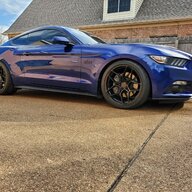

Positive equity on anything other than a very collectible car is a pipe dream. Any "equity" you might have is a total illusion. The car is going to be worth significantly less than what you paid for it. There's no sugar coating that. You're financing the loss you'll be taking. The longer you keep the car, the more you lose until things level off when the car gets 10+ years old. If you want to minimize this hit, buy cars that are 2-3 years old. Those have already taken a significant hit in value. It doesn't change the nature of the game, but saves you some of that "equity" that you would have otherwise pissed away.
I'm assuming what you really mean is "Have I paid the bank at a faster rate than I'm losing money so that there is enough "equity" in the car to cough up a down payment on another car?"
That, my friend, depends on the particulars of your financing and whether or not you can find someone to purchase the car at a high enough price. If a couple of grand one way or the other is going to change your life, it might be time to reassess your priorities. Everyone loves having a new car to drive around. Spending your retirement struggling to make ends meet and living on canned tuna....not so much.
Best,
A post a few above stated positive equity on anything other than a collector is a dream. I would assume that is an argument. I agree with you though that no one is going to make any money( more than they paid) unless they just totally screw up the next gen or completely axe the model all together.It doesn't seem like anyone is arguing that positive equity doesn't exist. Of course it does. Nit everyone is going to end up upside down on these cars. No one is making any money off of them though. They are not appreciating in value. They are just spiraling downward. Even if you paid cash for the car, that always puts you in a positive equity position, you are taking a hit when you sell it.
My point was/is that a car is a depreciating asset. With vanishingly few exceptions, it is always worth significantly less when you sell it than when you bought it. In short...an extremely poor investment. The pipe dream of "positive equity" is simply the borrower putting up enough cash up front or paying the bank principal+interest at a faster rate than the car loses value so that when it is sold there is some cash left over. While that might give the appearance of treading water, you're still sinking.A post a few above stated positive equity on anything other than a collector is a dream. I would assume that is an argument. I agree with you though that no one is going to make any money( more than they paid) unless they just totally screw up the next gen or completely axe the model all together.
I did however in my last trade in as stated make $300 more than what I paid for it.
Ha. Sadly, it's the people who are the most vulnerable and the least able to afford the hit that succumb to the paycheck to paycheck car loan thing. Those same folks could suck it up and get a Fiesta for a couple of years and then come at the problem from a position of strength.Now you are starting to sound like Dave Ramsey Ritz. I hear ya.


Well said! :clap2:Positive equity on anything other than a very collectible car is a pipe dream. Any "equity" you might have is a total illusion. The car is going to be worth significantly less than what you paid for it. There's no sugar coating that. You're financing the loss you'll be taking. The longer you keep the car, the more you lose until things level off when the car gets 10+ years old. If you want to minimize this hit, buy cars that are 2-3 years old. Those have already taken a significant hit in value. It doesn't change the nature of the game, but saves you some of that "equity" that you would have otherwise pissed away.
I'm assuming what you really mean is "Have I paid the bank at a faster rate than I'm losing money so that there is enough "equity" in the car to cough up a down payment on another car?"
That, my friend, depends on the particulars of your financing and whether or not you can find someone to purchase the car at a high enough price. If a couple of grand one way or the other is going to change your life, it might be time to reassess your priorities. Everyone loves having a new car to drive around. Spending your retirement struggling to make ends meet and living on canned tuna....not so much.
Best,
If that happens, and I doubt it will, we would be talking about a car that bottomed out at 6-8k, stabilized, and maybe gained a few hundred bucks. Much like a c5z. Any original buyer or even a buyer that got one used 3-4 years old is losing money.The value may go up once Ford discontinues naturally-aspirated V8s in the 20s. (2020s, that is) and the numbers of them on the road decline. A lot of people would want to get hold of one of these old-school rear drivers (at least that what they'll be in about 10 years).


