Sponsored

In my career as an auto technician, I always told the guys that if something happened AFTER you "repaired" or did work on a vehicle that wasn't there before, recheck everything you did because something you did caused the problem. Don't look for things that weren't touched (ie. don't blame the MAF sensor, A/F sensor, fuel pump, etc. as it's too much coincidence that they would suddenly fail after you did a particular job.Way too coincidental that it's lean after you changed clutch. Something got pinched.
The grille (depending on what grille) being changed paired with that intake can cause MAF turbulence but usually only at highway speeds and very minimal. Not something that would cause a lean condition at idle. Sheepdog is probably correct here.

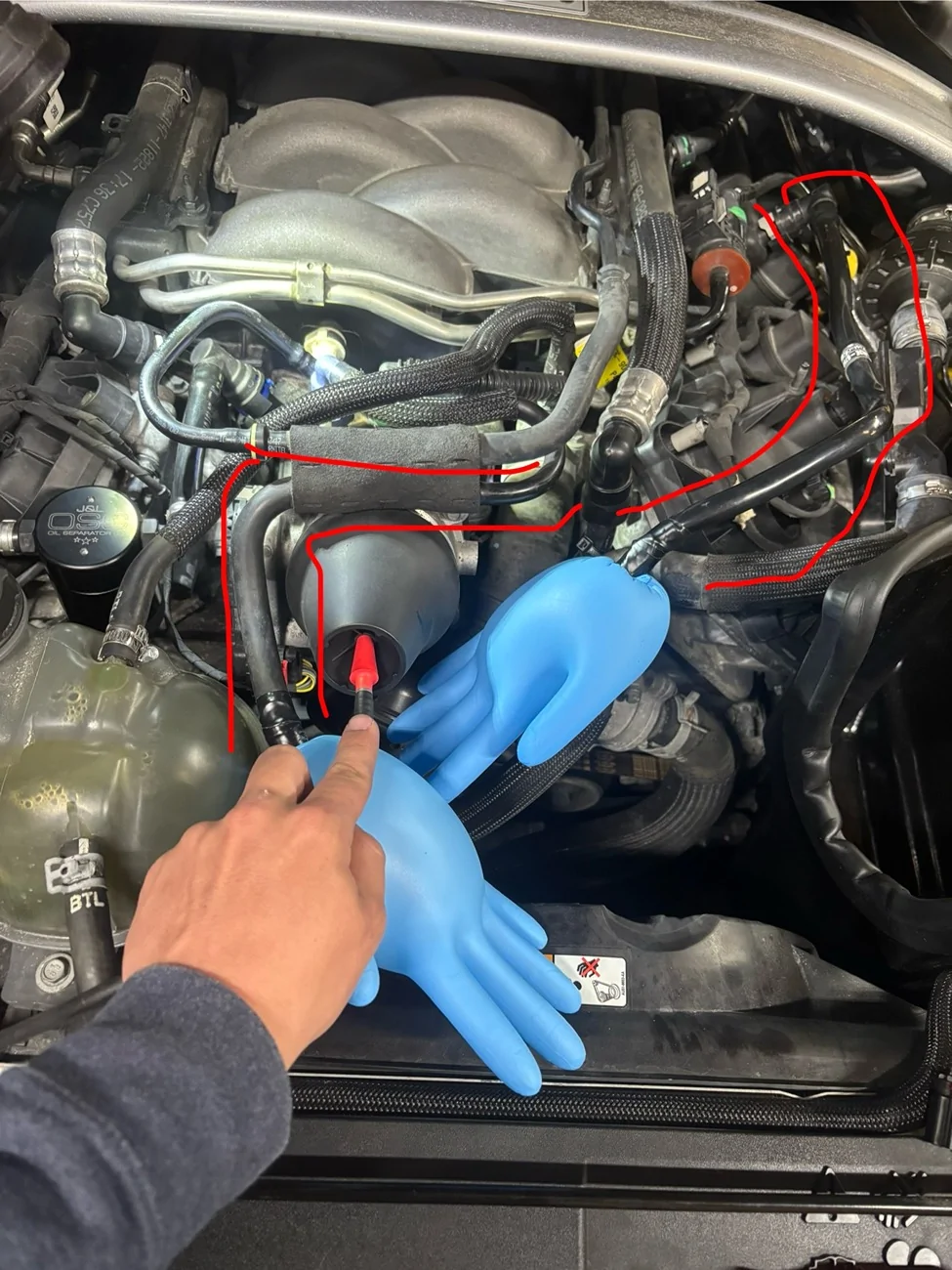
I would agree with this as well. The only issue is I do not believe there was any vacuum lines or that sort of thing that I messed with while doing the trans. I’m thinking when I took the trans out, the engine tilted back slightly. This could have possibly caused a vacuum line to come disconnected or crack right? I never removed the headers, and the mid pipe is tight on the headers.In my career as an auto technician, I always told the guys that if something happened AFTER you "repaired" or did work on a vehicle that wasn't there before, recheck everything you did because something you did caused the problem. Don't look for things that weren't touched (ie. don't blame the MAF sensor, A/F sensor, fuel pump, etc. as it's too much coincidence that they would suddenly fail after you did a particular job.
He means boost. If you have a vacuum leak, the boost will certainly be less than it was with the same throttle input because boost will be pushing through the leaking area. Vacuum could be affected as well if it's a straight up leak, but sometimes at low vacuum or low boost, a leak can seal itself if its where there are rubber connections not tightened or a rubber/silicone hose with a cut it may take a certain amount of positive or negative pressure (boost/vacuum) in order for it to open up the cut.I do have the vacuum gauge on the car. Do you know what the vacuum gauge should be at or what I should be watching for in terms of the vacuum gauge?
Sorry as i’m not super familiar with the usage of the word “boost”. I’d always assumed it had to do with forced induction; turbos and superchargers. What does it mean in this aspect?He means boost. If you have a vacuum leak, the boost will certainly be less than it was with the same throttle input because boost will be pushing through the leaking area. Vacuum could be affected as well if it's a straight up leak, but sometimes at low vacuum or low boost, a leak can seal itself if its where there are rubber connections not tightened or a rubber/silicone hose with a cut it may take a certain amount of positive or negative pressure (boost/vacuum) in order for it to open up the cut.
So, boost is positive pressure, like blowing up a balloon, and vacuum is negative pressure or suction, like a vacuum cleaner. Forced induction creates boost in the intake system, measured in pounds of pressure (in the US). It's forcing air and fuel into the cylinders. More air (containing oxygen) and more fuel creates more power. It's how all forced induction works. If there is a leak on the intake side, you are losing boost.Sorry as i’m not super familiar with the usage of the word “boost”. I’d always assumed it had to do with forced induction; turbos and superchargers. What does it mean in this aspect?