Sponsored

Koni is here!

Todd15Fastback

Well-Known Member
Joined
Dec 10, 2013
Threads
80
Messages
10,523
Reaction score
3,883
Location
Atlanta, GA
First Name
Todd
Vehicle(s)
2015 Mustang GT PP Fastback
When describing shock settings I think NightmareMoon has the right approach. 4/10ths vs 1 turn seems more logical. We have 2.5 turns but 10 "clicks". The turns thing gets weird if 5.5/10ths is the perfect setting. 1.375 turns seems pretty unwieldy. My $.02
How are you equating a turn to a click? The old Koni had the # settings if I recall correctly, these of course do not.

I am certain this is why people are speaking in turns rather than clicks as we are adjusting things by a quarter, half or full turn. Unless you want to make the statement/assumption that a quarter turn is a "click" which would equate to your 10 clicks.
Sponsored
 

MtnBiker

Well-Known Member
Joined
Jun 24, 2015
Threads
3
Messages
414
Reaction score
142
Location
San Antonio, TX
Vehicle(s)
2015 Mustang GT PP
How are you equating a turn to a click? The old Koni had the # settings if I recall correctly, these of course do not.

I am certain this is why people are speaking in turns rather than clicks as we are adjusting things by a quarter, half or full turn. Unless you want to make the statement/assumption that a quarter turn is a "click" which would equate to your 10 clicks.
I know the Koni's don't actually have clicks. But they do have the 1/4 hashmarks on the adjustment knobl. I'm seeing descriptions of xx turns and having folks ask whether this is turn from soft or stiff. NightmareMoon's method just seems more intuitively obvious. Count the hashmarks (10 of them from soft to stiff). 4/10ths stiff seems idiot proof.
 

BMR Tech

Well-Known Member
Joined
Sep 4, 2014
Threads
168
Messages
5,141
Reaction score
3,711
Location
Tampa, FL
Website
www.bmrsuspension.com
First Name
Dion
Vehicle(s)
2018 GT, 2010 GT500, 2019 F-150 5.0
When describing shock settings I think NightmareMoon has the right approach. 4/10ths vs 1 turn seems more logical. We have 2.5 turns but 10 "clicks". The turns thing gets weird if 5.5/10ths is the perfect setting. 1.375 turns seems pretty unwieldy. My $.02
But there are no clicks.

4/10ths is equivalent to 2.5/10 * 4 = 1 turn.

Not sure about anyone else but, I like "1 turn" better than 4/10ths.

:D
 

MtnBiker

Well-Known Member
Joined
Jun 24, 2015
Threads
3
Messages
414
Reaction score
142
Location
San Antonio, TX
Vehicle(s)
2015 Mustang GT PP
But there are no clicks.

4/10ths is equivalent to 2.5/10 * 4 = 1 turn.

Not sure about anyone else but, I like "1 turn" better than 4/10ths.

:D
And I like 5.5/10ths better than 1.375 turns.
 

scott_0

Well-Known Member
Joined
Apr 15, 2016
Threads
19
Messages
1,115
Reaction score
278
Location
Oxford, Pennsylvania
Vehicle(s)
2016 Mustang GT
But there are no clicks.

4/10ths is equivalent to 2.5/10 * 4 = 1 turn.

Not sure about anyone else but, I like "1 turn" better than 4/10ths.

:D
lol exactly, being there are no clicks, its much easier to do 1/8, 1/4, or 1/2 turns imo :shrug:
 

Sponsored

BMR Tech

Well-Known Member
Joined
Sep 4, 2014
Threads
168
Messages
5,141
Reaction score
3,711
Location
Tampa, FL
Website
www.bmrsuspension.com
First Name
Dion
Vehicle(s)
2018 GT, 2010 GT500, 2019 F-150 5.0
I know the Koni's don't actually have clicks. But they do have the 1/4 hashmarks on the adjustment knobl. I'm seeing descriptions of xx turns and having folks ask whether this is turn from soft or stiff. NightmareMoon's method just seems more intuitively obvious. Count the hashmarks (10 of them from soft to stiff). 4/10ths stiff seems idiot proof.
I am not following you. Maybe that is why everyone else prefers the amount of turn method.

Konis adjustments have been, in the Mustang world, described in the amount of turns for years and years and years.

If you take a look at the front knob (white/top) and the rear tool (steel) - you will see an arrow and +/-


In this case....I think we can both argue that, adjustment isn't going to be as precise as say, using a damper that actually has a numbered set of positions / "clicks"

If I sent you these struts with these tools above and said, set them to 6.25/10....I think you would call me back. lol

All of this said....I use "turns" and "%" for most of my customers.

1 turn, 1/2 turn, 2 turns etc.... Or I will say, start 50% up front and 25% out back.
 

BMR Tech

Well-Known Member
Joined
Sep 4, 2014
Threads
168
Messages
5,141
Reaction score
3,711
Location
Tampa, FL
Website
www.bmrsuspension.com
First Name
Dion
Vehicle(s)
2018 GT, 2010 GT500, 2019 F-150 5.0

Digital_Synapse

Mass Effect Field Expert
Joined
Jul 7, 2015
Threads
13
Messages
1,207
Reaction score
630
Location
San Antonio, TX
First Name
Chris
Vehicle(s)
2015 Triple Yellow Mustang GT PP
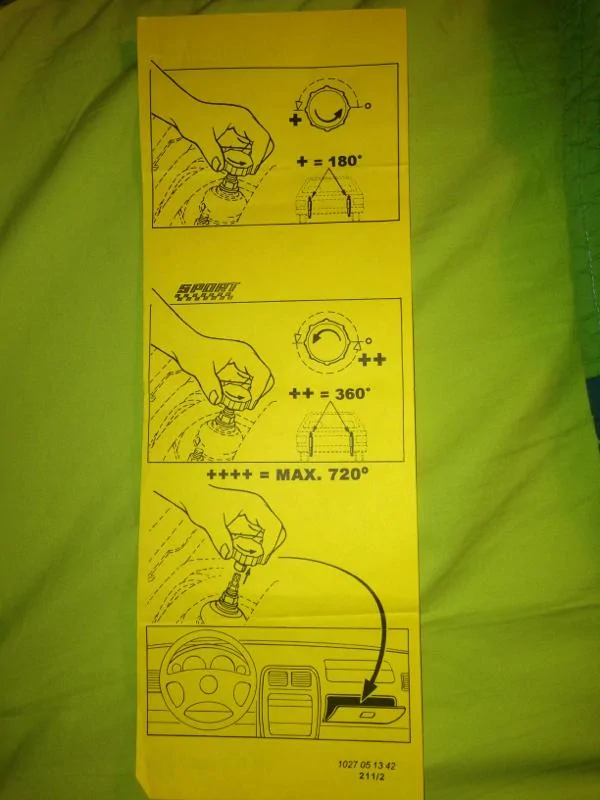
I don't think that's right. I recall the instructions included reading 720 degrees of turn adjustment. I feel like any additional adjustments are moot as they will only take into account the first two turns. Has anyone contacted Koni NA to verify 2 turns as opposed to 2.5 turns of adjustment? I feel like if they were designed to be turned that much it would be noted in the instructions.
image.webp
 

Todd15Fastback

Well-Known Member
Joined
Dec 10, 2013
Threads
80
Messages
10,523
Reaction score
3,883
Location
Atlanta, GA
First Name
Todd
Vehicle(s)
2015 Mustang GT PP Fastback
What Kelly said. There are no marks for quarter turns, clicks, etc. It is a turn here or a turn there. Or a subset of a turn.

I will continue to provide my feedback with turn or increments of a turn.
 

Joshg120

Well-Known Member
Joined
Nov 19, 2015
Threads
1
Messages
149
Reaction score
35
Location
Atlanta
Vehicle(s)
2016 Mustang GT PP
I don't think that's right. I recall the instructions included reading 720 degrees of turn adjustment. I feel like any additional adjustments are moot as they will only take into account the first two turns. Has anyone contacted Koni NA to verify 2 turns as opposed to 2.5 turns of adjustment? I feel like if they were designed to be turned that much it would be noted in the instructions.
that's a good point the documents do only show 720 degrees of adjustment, while I believe bill from CJ said they had 2.5 turns which would be 900 degrees. I believe you could verify by just turning them until you hit resistance from full soft to stiff
 

Sponsored

BMR Tech

Well-Known Member
Joined
Sep 4, 2014
Threads
168
Messages
5,141
Reaction score
3,711
Location
Tampa, FL
Website
www.bmrsuspension.com
First Name
Dion
Vehicle(s)
2018 GT, 2010 GT500, 2019 F-150 5.0
They have 2.5 turns of adjustment. 180 degrees is half a turn.

So when you get to 180 degrees...you have hit half a turn.
 

BMR Tech

Well-Known Member
Joined
Sep 4, 2014
Threads
168
Messages
5,141
Reaction score
3,711
Location
Tampa, FL
Website
www.bmrsuspension.com
First Name
Dion
Vehicle(s)
2018 GT, 2010 GT500, 2019 F-150 5.0
OOoopsy. Forgot to post this earlier.

Just to show those who are questioning it.

[ame]
 

MtnBiker

Well-Known Member
Joined
Jun 24, 2015
Threads
3
Messages
414
Reaction score
142
Location
San Antonio, TX
Vehicle(s)
2015 Mustang GT PP
Mea culpa. Turns it is.
 

BMR Tech

Well-Known Member
Joined
Sep 4, 2014
Threads
168
Messages
5,141
Reaction score
3,711
Location
Tampa, FL
Website
www.bmrsuspension.com
First Name
Dion
Vehicle(s)
2018 GT, 2010 GT500, 2019 F-150 5.0
Well heck, while we are at it! Here is some good info. ;)

What major factors were taken into consideration when there were designed?-
The key aspect of the 2015+ Mustang is the brand new independent rear suspension. Having IRS brings a number of suspension benefits (better dynamic geometry changes, better road holding and grip potential on imperfect surfaces, less unsprung weight, etc.) but also brings a number of challenges (tighter packaging, higher spring rates, changes in suspension motion ratios, etc.) over a solid or “live” axle. Because the geometry changes through its range of motion (better camber change, etc.), IRS can be and often is touchy about alignments (often rear toe changes too) and have less optimal geometry in some parts of the suspension range. The front suspension of the 2015+ Mustang is a pretty solid, proven strut system that is very workable and has pretty good manners. Generally from a pure performance aspect struts are not ideal for a number of reasons (geometry change through range of motion, added bind/friction, etc.) but from a practicality of manufacturing and primarily street use aspect they are acceptable and the Mustang’s struts don’t really present much issue from a damping standpoint.

Almost all OE car dampers are going to have compromises and limitations in internal technology and overall function just simply from a basic cost and volume requirements vs. car sales price and profit potential. Having a proper high performance, high technology shock is going to bring improved function and greatly increased overall capability to improve the car’s handling as well as ride quality in addition to allowing the driver to make his own adjustments for personal preferences, to better suit the car’s usage (street, autocross, drag, open track), etc..

Does the construction differ from other Koni shocks/struts? If so, how?
The KONI Sports for this car are our externally rebound adjustable, twin-tube low pressure gas charged shocks and struts. The 2015+ Mustang dampers front and rear are totally different from the and older units so it requires that new strut spring perches, mounting brackets, sway bar brackets, etc. had to be designed and did not carry over from older Mustangs. The 2015+ rear shocks are mounted totally differently from any Mustang before top and bottom putting the mounts and adjusters in the fender well (not inside the car body) and using a much larger, more expensive lower mount bushings with a cross bar.

What specific applications are these designed for and how does the design differ from other Koni products?
These Sports were designed and tested on the V8, V6 and Ecoboost 4 cyl. engine 2015+ Mustangs on both the streets and on track. These will fit all of the 2015+ Mustangs that use the normal struts and shocks but not the GT350 Track Pack and GT350R cars factory equipped with the electronic, magnetic ride control system.

From a mechanical aspect, how does the valving and adjustability work?
When you turn the external adjuster knob on a KONI Sport, you are simultaneously doing several things inside. Turning the external knob turns an internal adjuster nut which opens or closes bleed holes that meter oil flow at low piston speeds before the piston valving opens while simultaneously increasing or decreasing coil spring preload against piston valving and orifices for then the shock moves fast enough for oil to flow through the piston. In this way of the adjuster making changes to oil flow both through and bypassing the piston, the KONI adjustment has effect from the moment the shock begins the slightest movement to the point where the piston is moving extremely fast. Additionally the KONI rebound adjustment typically has a 100% range of adjustment meaning that the shock makes approximately twice as much damping force at the maximum setting as it does at the minimum setting. Most other adjustable shocks have less effect over the full range of piston speeds and have a smaller range of adjustment from minimum to maximum settings.

Does the valving change or need to be adjusted when someone lowers their Mustang?
If you were to lower the car without making much if any change to the spring rate at the same time, then likely no change in valving would be required. In most cases through, lowering the car will be done using a higher spring rate than before so more spring rate generally requires some degree more of rebound damping.

Is the valving designed around a specific spring rate?
This is a common question but it can be misleading as well. We develop the shocks to work well with the factory springs at or near the full soft setting and also often will test with a streetable lowering spring as well if available. The increase in spring rate and the needed increase in rebound damping are a non-linear relationship so doubling or more from the factory spring rate may only require a 20-40% increase in general rebound damping depending upon the car. This means that the KONI’s 100% range of adjustment will often work well with a very, very large range of spring rates. On the other hand, if you change the usage of the car (from street use to dedicated racing for example) then you may want to change the valving to meet your new set of needs (extreme control only, ride quality no longer matters, etc.). Too often people only think about matching shocks valving to spring rate alone but in reality the bigger picture variables like car usage and driver expectations need to be considered above and beyond just spring rate.

Is there a spring rate range that these work best in?
A spring rate range from OE stock springs up to just about any streetable spring rate that you might ever use within reason will likely be fine with the off-the-shelf adjustable KONI Sport valving. As noted above , spring rate is only one of many variables and considerations to optimize the suspension.
Sponsored


Top