Sponsored

FUEL SYSTEM tech

ENDEVR

Well-Known Member
Joined
Sep 20, 2020
Threads
9
Messages
54
Reaction score
14
Location
IN
First Name
Tyler
Vehicle(s)
2018 Mustang GT
Can’t seem to find any solid info on how the high pressure fuel system works in a Gen 3 GT. Once fuel gets to the actual DI pump, it then pressurizes fuel further and sends it on to the DI injectors, does it hold that pressure for a certain length on time? What is normal pressure at idle? Where is the check valve located to bleed off that pressure? Is there only the one pressure regulator on top? Or an additional one hidden somewhere?
Sponsored
 

engineermike

Well-Known Member
Joined
Jul 15, 2018
Threads
31
Messages
6,180
Reaction score
6,431
Location
La
Vehicle(s)
2018 GTPP A10
I'm far from an expert but I think I can shed some light on this.

You are correct that the DI pump takes fuel off of the fuel rail then pressurizes it further. It's a positive displacement plunger pump. The flexible hose that supplies fuel to it has a check valve in it, but the pump itself, by nature of it being a plunger pump, has a check valve in the discharge. The pressure is controlled, not regulated by a valve. The suction valve in the plunger pump is connected to fast-acting solenoid that holds it open for part of the discharge stroke to reduce capacity. It's mind-boggling how fast this valve has to actuate in order to control pressure real-time, stroke by stroke. The pressure is set in the tune and usually under 1000 psi at idle and 2900 psi at WOT. There is a phenomenon where the pressure creeps up when the DI injectors are off due to imperfect suction valve control and thermal expansion. There is something called pressure maintenance where the DI injectors will activate just to relieve this pressure. It reduces PFI flow at the time so lambda stays constant. Some get concerned when they see 3500 psi at idle but it is normal. There is way more to this subject than I described here.

Also, you might want to get this thread moved to the 5.0 engine tech section.
 
OP
OP

ENDEVR

Well-Known Member
Joined
Sep 20, 2020
Threads
9
Messages
54
Reaction score
14
Location
IN
First Name
Tyler
Vehicle(s)
2018 Mustang GT
I'm far from an expert but I think I can shed some light on this.

You are correct that the DI pump takes fuel off of the fuel rail then pressurizes it further. It's a positive displacement plunger pump. The flexible hose that supplies fuel to it has a check valve in it, but the pump itself, by nature of it being a plunger pump, has a check valve in the discharge. The pressure is controlled, not regulated by a valve. The suction valve in the plunger pump is connected to fast-acting solenoid that holds it open for part of the discharge stroke to reduce capacity. It's mind-boggling how fast this valve has to actuate in order to control pressure real-time, stroke by stroke. The pressure is set in the tune and usually under 1000 psi at idle and 2900 psi at WOT. There is a phenomenon where the pressure creeps up when the DI injectors are off due to imperfect suction valve control and thermal expansion. There is something called pressure maintenance where the DI injectors will activate just to relieve this pressure. It reduces PFI flow at the time so lambda stays constant. Some get concerned when they see 3500 psi at idle but it is normal. There is way more to this subject than I described here.

Also, you might want to get this thread moved to the 5.0 engine tech section.
Amazing answers, thank you!
part of the reason I ask is because I’m having a problem with misfires and noticed in my data logs that my fuel pressure is around 400 at idle and builds pressure,(not much over 1000) but then that pressure drops back to 400 once the revs come down. (I also didn’t rev it very high as it was still misfiring) I was hoping it might answer my questions of where to start.
 

engineermike

Well-Known Member
Joined
Jul 15, 2018
Threads
31
Messages
6,180
Reaction score
6,431
Location
La
Vehicle(s)
2018 GTPP A10
Amazing answers, thank you!
part of the reason I ask is because I’m having a problem with misfires and noticed in my data logs that my fuel pressure is around 400 at idle and builds pressure,(not much over 1000) but then that pressure drops back to 400 once the revs come down. (I also didn’t rev it very high as it was still misfiring) I was hoping it might answer my questions of where to start.
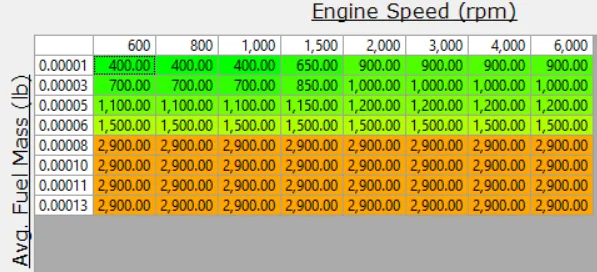
Below is a stock GDI pressure table. You can see it's a function of injected fuel mass. Once it gets under heavy load it will go up to 2900. Unless the GDI injectors turn off, the pressure will fall as soon as the fuel mass falls. It's unlikely that GDI pressure is causing your misfires.

1770503305507-fo.webp
 

Sponsored

Guusgeluk

Active Member
Joined
Aug 19, 2025
Threads
8
Messages
39
Reaction score
5
Location
Amsterdam
First Name
Wout
Vehicle(s)
Mustang GT 2021
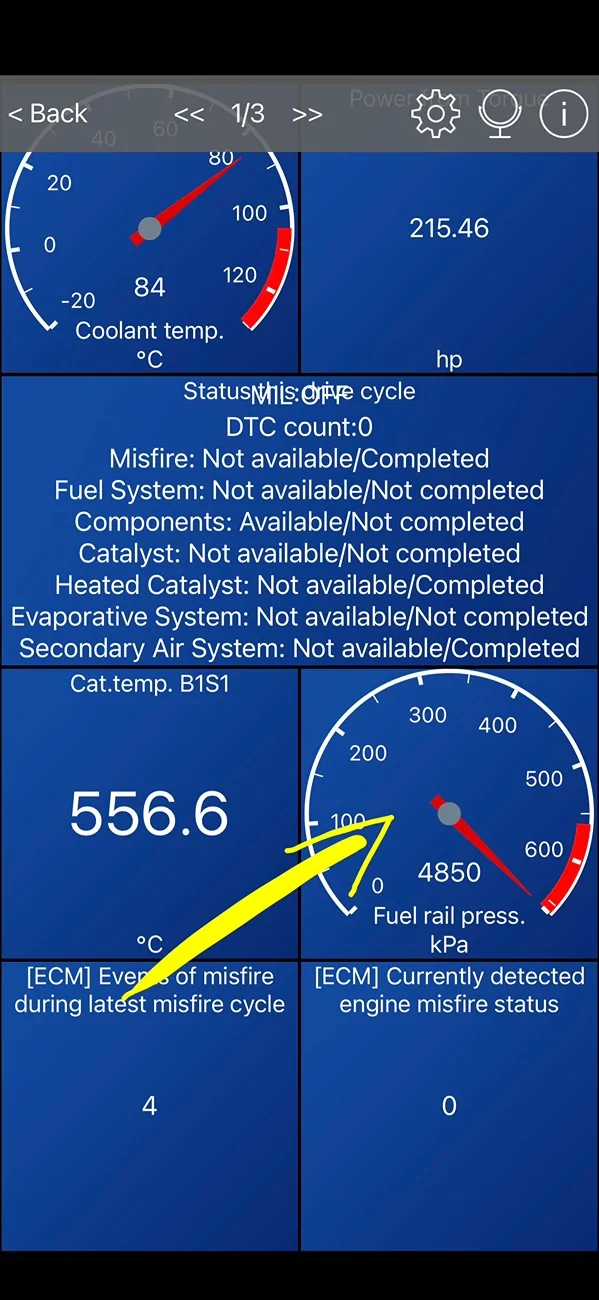
Does this mean my fuel rail pressure is way to high, its always high, even around 5000…

IMG_5160.webp
 
OP
OP

ENDEVR

Well-Known Member
Joined
Sep 20, 2020
Threads
9
Messages
54
Reaction score
14
Location
IN
First Name
Tyler
Vehicle(s)
2018 Mustang GT
Below is a stock GDI pressure table. You can see it's a function of injected fuel mass. Once it gets under heavy load it will go up to 2900. Unless the GDI injectors turn off, the pressure will fall as soon as the fuel mass falls. It's unlikely that GDI pressure is causing your misfires.

1770503305507-fo.webp
I understand it’s unlikely but I’ve gone through every other likely option it feels like. Plus I just checked it today and my high end fuel pressure drops to 0 within a few seconds after I shut the car off.
 

engineermike

Well-Known Member
Joined
Jul 15, 2018
Threads
31
Messages
6,180
Reaction score
6,431
Location
La
Vehicle(s)
2018 GTPP A10
I understand it’s unlikely but I’ve gone through every other likely option it feels like. Plus I just checked it today and my high end fuel pressure drops to 0 within a few seconds after I shut the car off.
How are you testing this?
 
OP
OP

ENDEVR

Well-Known Member
Joined
Sep 20, 2020
Threads
9
Messages
54
Reaction score
14
Location
IN
First Name
Tyler
Vehicle(s)
2018 Mustang GT

Sponsored

SheepDog

Well-Known Member
Joined
Nov 3, 2018
Threads
26
Messages
4,188
Reaction score
5,248
Location
Colorado
First Name
Dax
Vehicle(s)
Iconic Silver 2022 MACH 1 HP, 2023 F150 Powerboost
An OBD scanner, monitoring live data
So you are trying to chase down a misfire, (or multiple misfires) ?

What codes are being triggered?

What other potential points of failure have you tested, and ensured are not the culprit? or did you just go straight to Fuel related possibilities?
 
OP
OP

ENDEVR

Well-Known Member
Joined
Sep 20, 2020
Threads
9
Messages
54
Reaction score
14
Location
IN
First Name
Tyler
Vehicle(s)
2018 Mustang GT
So you are trying to chase down a misfire, (or multiple misfires) ?

What codes are being triggered?

What other potential points of failure have you tested, and ensured are not the culprit? or did you just go straight to Fuel related possibilities?
Multiple misfires, I’ve swapped plugs and coils, top injectors, bottom injectors, I’ve checked for exhaust and intake leaks, I’ve returned all parts and tune back to factory, new upside O2s, MAF sensor, still the same 3 cylinders misfiring 5,7,8 no other codes besides the misfires.
 

SheepDog

Well-Known Member
Joined
Nov 3, 2018
Threads
26
Messages
4,188
Reaction score
5,248
Location
Colorado
First Name
Dax
Vehicle(s)
Iconic Silver 2022 MACH 1 HP, 2023 F150 Powerboost
Multiple misfires, I’ve swapped plugs and coils, top injectors, bottom injectors, I’ve checked for exhaust and intake leaks, I’ve returned all parts and tune back to factory, new upside O2s, MAF sensor, still the same 3 cylinders misfiring 5,7,8 no other codes besides the misfires.
Compression and leak down test?

How about the IMRC runner control? This was mainly a problem on the Gen2 cars.

Any evidence of rodents being in the engine bay?

If you were having a fuel delivery issue, I would expect that you would be getting random misfires on all cylinders and a P0300. If it were a bad/leaking injector, the misfire would have moved to whatever cylinder you moved the injectors to. 5,7,8 are all on the same bank, and hopefully you moved the injectors and coils from the drivers side to the passenger side.

Another thing that can cause strange misfires is the Cam phasers/solenoids not working properly.
 
Last edited:
OP
OP

ENDEVR

Well-Known Member
Joined
Sep 20, 2020
Threads
9
Messages
54
Reaction score
14
Location
IN
First Name
Tyler
Vehicle(s)
2018 Mustang GT
Compression and leak down test?

How about the IMRC runner control? This was mainly a problem on the Gen2 cars.

Any evidence of rodents being in the engine bay?

If you were having a fuel delivery issue, I would expect that you would be getting random misfires on all cylinders and a P0300. If it were a bad/leaking injector, the misfire would have moved to whatever cylinder you moved the injectors to. 5,7,8 are all on the same bank, and hopefully you moved the injectors and coils from the drivers side to the passenger side.

Another thing that can cause strange misfires is the Cam phasers/solenoids not working properly.
I did do a compression test, but not leak down, also checked the IMRC, no broken flaps or controlling rod, no evidence of wiring being damaged anywhere, there were a handful of times where I did get a P0300 but it doesn’t come back everytime and my tuner said my VVT for both intake and exhaust overlapped how they should. The only odd thing I’ve noticed was fuel pressure on my data logs going down and not holding pressure even at running temps and idle. It keeps pressure around 400 and rises with revs but immediately drops back down and at idle bounces constantly down and up in psi.

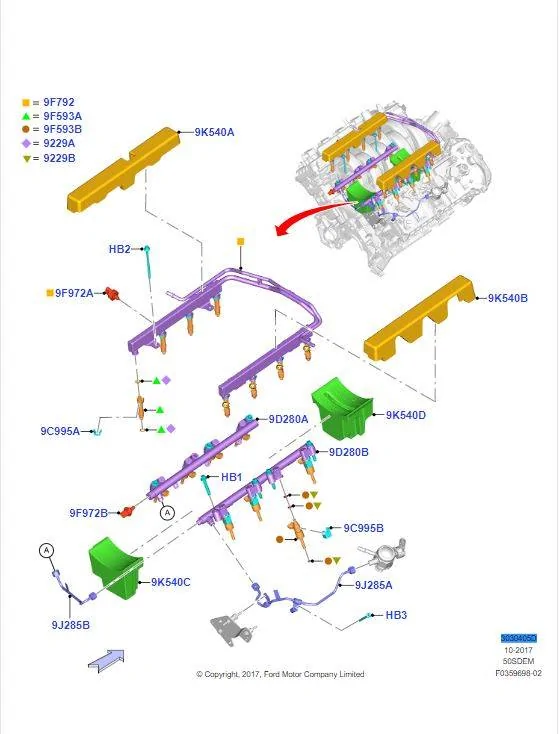
Also side note, the hard line that runs between GDI injector rails-does anyone have torque specs for that line, I had to loosen it to pull out the injectors. 9J285B in pic

F903AB8F-E5C5-4663-ABC6-35EA5BE57960.webp
Sponsored


Top