Sponsored

Exhaust Pressure Testing

Buldawg76

Well-Known Member
Joined
Jan 11, 2022
Threads
3
Messages
1,312
Reaction score
1,174
Location
Alabama,USA
First Name
Mike
Vehicle(s)
2020 Ecoboost Premium, 76 FXE shovel, 77 KZ1000
@Buldawg76 fundamentally, relieving back pressure from the turbine will increase the turbine Pressure Ratio, which will create more shaft power to the compressor. Way before the ecoboost days, I blew both head gaskets learning this the hard way. A lot has changed since then.

Reducing turbine outlet pressure will most certainly change the characteristics of turbocharger control. All of these pressures are modelled, such that feed-forward control can take place, which is followed by feedback. I'm no ecoboost tuner but I have been impressed by the speed at which the airflow is measured and throttle angle adjusted to correct. There's a good chance that the feedback control works fast enough to correct errors in the model.

That said, all tuners are not created equal. I'm 100% certain that some very popular professional tuners don't have a clue how all these models work. So just know that whatever tuner you use may just be guessing at this stuff or just play with it until the driver can't tell the difference.

One other comment; you mentioned increased flow. Most ecoboost tunes control to a flow specified by the calculations to achieve a target torque. They don't just open the throttle all the way. If yours is like most ecoboost tunes, you aren't actually enjoying any additional flow from your mods.
I am not as concerned in amount of flow or performance gains from my mods since I realize they may be minimal at best. My concern is if by installing the 3" downpipe thereby removing the necked down 2.25" connection from the downpipe to the cat back system I run the risk of causing the A/F ratio to go lean and cause detonation resulting in engine damage or ecoboom as it is known due to decreased back pressure. Since you stated it will free up the turbine to spool faster.

The tune I was planning to install is from Ford performance dept so is a factory supported calibration for the eco motors.

When I stated that aftermarket tuners have told me installing the 3" downpipe requires a tune I was meaning that is is a custom tune created by an individual.

I was just wanting your opinion if the increased turbine speed from going to the 3" downpipe could create a lean condition to occur more easily and if you thought the Ford performance tune may be able to compensate for for this decrease in backpressure.

I realize the the throttle my right foot asks for is not actually what the computer performs also. It is all controlled by the calibration and signals received by the PCM.

Hope this helps clarify my questions.

BD
Sponsored

 

markmurfie

Well-Known Member
Joined
Jun 6, 2015
Threads
15
Messages
1,320
Reaction score
625
Location
Hawaii
First Name
Mark
Vehicle(s)
2015 Ford Mustang GT
...fundamentally, relieving back pressure from the turbine will increase the turbine Pressure Ratio, which will create more shaft power to the compressor. Way before the ecoboost days, I blew both head gaskets learning this the hard way. A lot has changed since then...
The waste gate opening, relieves back pressure from the turbine. That limits compressor speed/ power. Did you mean to use relieving?

Are you saying you learned the hard way that you needed a waste gate, or that you needed to control when it opened?

Reducing pressure at turbine outlet, will certainly help things, but it's going to have little/no effect on the waste gate control. It will also have little/no effect on the O2 sensors and the commanded AFR. Down pipes are part of the turbo back exhaust, and potentially are eliminating emissions control devices. I would say you could do anything you want turbo back and not NEED a tune for it, but their are legal restrictions you should follow. Catalyst effeciency codes and check engine lights, are the only thing you NEED a tune for, but that's not legal.
 

Buldawg76

Well-Known Member
Joined
Jan 11, 2022
Threads
3
Messages
1,312
Reaction score
1,174
Location
Alabama,USA
First Name
Mike
Vehicle(s)
2020 Ecoboost Premium, 76 FXE shovel, 77 KZ1000
The waste gate opening, relieves back pressure from the turbine. That limits compressor speed/ power. Did you mean to use relieving?

Are you saying you learned the hard way that you needed a waste gate, or that you needed to control when it opened?

Reducing pressure at turbine outlet, will certainly help things, but it's going to have little/no effect on the waste gate control. It will also have little/no effect on the O2 sensors and the commanded AFR. Down pipes are part of the turbo back exhaust, and potentially are eliminating emissions control devices. I would say you could do anything you want turbo back and not NEED a tune for it, but their are legal restrictions you should follow. Catalyst effeciency codes and check engine lights, are the only thing you NEED a tune for, but that's not legal.
Mark

The factory down pipe is 2.75" diameter from the exhaust outlet of the turbo to the 400 cell catalytic converter and then drops to 2.5" after the cat with a 2.25" drop at the connection to the resonator and then back to 2.5" from the resonator thru a Y pipe back to the mufflers.

I have a down pipe that is a full 3" from turbo exhaust outlet thru a 200 cell catalytic converter and continues at 3" all the way to the 3" cat back exhaust system, so there is no reduction in pipe diameter from turbo outlet to exhaust exit at rear of vehicle. It will still have all O2s in system and functional. The waste gate system and controls will not be altered in any way except from what the FP calibration may change its operation. I know with factory calibration it makes 20LB boost at WOT and the FP calibration is shown to increase that to 24 LB boost at WOT.

The cat is half the size and supposedly half restriction of the factory cat from what is stated by aftermarket makers.

So are you saying legal issues aside that the computer should be able to manage and compensate for the increased diameter of the down pipe /exhaust system and keep AFRs within safe operating limits without requiring any modification to the PCM calibrations such as spark timing and waste gate control, ETC by means of a recalibration flashed to the PCM.

I will be upgrading the stock calibration with a Ford performance calibration that is stated to add 35HP and 76 LB/FT at the crankshaft. It is rated at 310HP and 350 LB/FT on stock calibration. My last part which is a intake tube will be here Tuesday so after I install it I will be installing the FP calibration.

I just don't want to install the 3" down pipe if it may create any issue that could potentially cause the engine to fail or go ecoboom.

Appreciate any insight you would be willing to provide on this subject.

BD
 
Last edited:
OP
OP

engineermike

Well-Known Member
Joined
Jul 15, 2018
Threads
31
Messages
6,188
Reaction score
6,449
Location
La
Vehicle(s)
2018 GTPP A10
The waste gate opening, relieves back pressure from the turbine. That limits compressor speed/ power. Did you mean to use relieving?
The wastegate opening relieves turbine drive pressure, not turbine backpressure. Removing losses from the exhaust downstream of the turbine relieves turbine backpressure and increases turbine Pressure Ratio, which increases the power driving the compressor.

Are you saying you learned the hard way that you needed a waste gate, or that you needed to control when it opened?
I had a wastegate and “feed forward” manual boost controller at the time. I dumped the exhaust before going to the track and since the manual boost controller was not a feedback control loop, it overboosted. Basically, changing the pressure characteristics of the system rendered the control system inaccurate. The ecoboost turbocharger control is about 100x more advanced than a 1990’s manual boost controller, but it still relies on its internal mathematical model to be accurate in order for fast and accurate control to be possible.

Reducing pressure at turbine outlet, will certainly help things, but it's going to have little/no effect on the waste gate control. It will also have little/no effect on the O2 sensors and the commanded AFR. … I would say you could do anything you want turbo back and not NEED a tune for it...
Most likely the feedback load control will prevent overboosting and the calculated injector limit will prevent it from going lean and the timing will be pulled even if it does. However, the turbine backpressure change will definitely affect the math model of the system. This will, in turn, make the feed-forward airflow control model less accurate. Between the time of the less-accurate feed-forward command to take place and feedback control to fix whatever inaccuracy exists, is an opportunity for things to go wrong. I believe most likely the controls are fast enough and the protections are redundant enough that it’s probably ok, but I won’t say for sure because I don’t have direct experience with it.

This is a pretty good write-up regarding ecoboost turbocharger control, which shows how turbine backpressure (ExBP) is used in the control calculations:

https://forum.hptuners.com/showthread.php?61822-2012-F150-Turbo-Model&p=462601&viewfull=1#post462601

The other interesting tidbit in the above link is that apparently the exhaust pressure imposed by the static system downstream of the turbine is plotted as a function of exhaust mass flow and the curve looks rather similar to mine in both shape and magnitude. This goes to show that Ford does model it as I suspected; we just don’t have access to modify it in our strategies.
 

Buldawg76

Well-Known Member
Joined
Jan 11, 2022
Threads
3
Messages
1,312
Reaction score
1,174
Location
Alabama,USA
First Name
Mike
Vehicle(s)
2020 Ecoboost Premium, 76 FXE shovel, 77 KZ1000
So, all is still way over my level of experience and understanding. Like I said I am a retired master repair tech not an engineer. So, I just fix the thing you guys engineer and sometimes have to correct poorly engineered systems to get them working as intended.

That was part of my role at Harley in helping develop the then new 2001 V-rod fuel injected motorcycle. It used all GM delphi sensors and components and control systems from the mid 80s OBD1 systems when I was working with late 90s port injection OBD 11 systems for Cadillac.

Just concerned with creating a fueling/timing/over boost condition by relieving backpressure in turbo with larger diameter exhaust system off back of turbo.

BD
 

Sponsored

markmurfie

Well-Known Member
Joined
Jun 6, 2015
Threads
15
Messages
1,320
Reaction score
625
Location
Hawaii
First Name
Mark
Vehicle(s)
2015 Ford Mustang GT
The other interesting tidbit in the above link is that apparently the exhaust pressure imposed by the static system downstream of the turbine is plotted as a function of exhaust mass flow and the curve looks rather similar to mine in both shape and magnitude. This goes to show that Ford does model it as I suspected; we just don’t have access to modify it in our strategies.
@Buldawg76 Theres your answer. Tuners can say you NEED a tune all they want, and we can talk about models and correcting them all we want, but this is the bottom line, catalytic convertor codes and the law aside, for anything turbo back.

Despite this entire model "missing" Theres are still factory ECU ecoboost on the streets and tracks running great with extensive modifications. So don't think control access is limited. Doing anything turbo back (definitely keeping the stock turbo, wastegate, and boost controler) will not effect the MAP/IAT/O2/Crank sensors enough, such that, actual control of fuel, spark, or air will gain enough error from desired fuel , spark, and air to cause problems.


I had a wastegate and “feed forward” manual boost controller at the time. I dumped the exhaust before going to the track and since the manual boost controller was not a feedback control loop, it overboosted. Basically, changing the pressure characteristics of the system rendered the control system inaccurate. The ecoboost turbocharger control is about 100x more advanced than a 1990’s manual boost controller, but it still relies on its internal mathematical model to be accurate in order for fast and accurate control to be possible.
You are telling me that you set this boost controller to x PSI of absolute intake manifold pressure, and by removing your exhaust that x PSI of absolute intake manifold pressure, changed? I think you were targeting a "boost" pressure and thinking of pressure wrong back then.

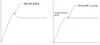
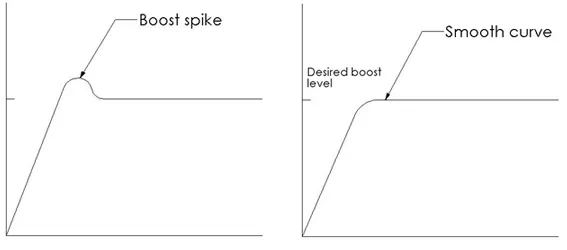
Ive had to deal with "catching the turbo spool" to avoid a boost spike, but I have never had what I set the target pressure to, change from modifing other parts of the system, not even change in altitude changed what I set the target to. I set everything in absolute pressure, not "boost". I always have, and never understood why people use gauge pressure that atmospheric is 0. They must just not know better or that there is a difference. People have trouble with fuel pressure and injector control for this same reason. Those gauges that are 0 for atmospheric, then inHg for vaccum and PSI for "boost" are the absolute worst. Why anyone thought that is the best way to monitor and make sense of manifold pressure I will never understand.
646315-122145e92298cb368059ee60ce9f662e.webp


6197.webp
 

Buldawg76

Well-Known Member
Joined
Jan 11, 2022
Threads
3
Messages
1,312
Reaction score
1,174
Location
Alabama,USA
First Name
Mike
Vehicle(s)
2020 Ecoboost Premium, 76 FXE shovel, 77 KZ1000
@Buldawg76 Theres your answer. Tuners can say you NEED a tune all they want, and we can talk about models and correcting them all we want, but this is the bottom line, catalytic convertor codes and the law aside, for anything turbo back.

Despite this entire model "missing" Theres are still factory ECU ecoboost on the streets and tracks running great with extensive modifications. So don't think control access is limited. Doing anything turbo back (definitely keeping the stock turbo, wastegate, and boost controler) will not effect the MAP/IAT/O2/Crank sensors enough, such that, actual control of fuel, spark, or air will gain enough error from desired fuel , spark, and air to cause problems.
Mark

Thank You, that's what I was thinking as well, that the sensors and wastegate, bypass valve and stock turbo would not be overly affected by just simple bolt on parts enough to cause the ECU to allow the system to go far enough out of a safe operating range.

I do understand that I may be leaving HP and torque on the table by not getting a custom tune from aftermarket tuners but am also aware that said tuners are not all created equal. There are some "GOOD" ones out there but there are "bad" ones as well. Plus even good ones make mistakes at times.

I feel more comfortable in going with the FP tune since it keeps the factory powertrain warranty intact and is written by ford engineers that have access to all the data and model info needed to get it right.

I am not after the very last drop of performance that can be squeezed from the ecoboost but rather just a better performing vehicle than stock.

Thanks again for your time and inputs.

BD
 
OP
OP

engineermike

Well-Known Member
Joined
Jul 15, 2018
Threads
31
Messages
6,188
Reaction score
6,449
Location
La
Vehicle(s)
2018 GTPP A10
engineermike said:
we just don’t have access to modify it in our strategies.
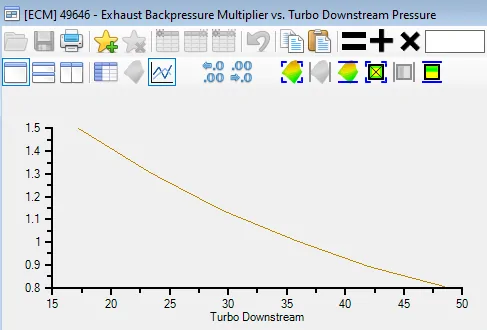
Turns out I was at least partly wrong. I found this in a couple of ecoboost strategies:

1650151961148.png


If I understand correctly, the turbo downstream pressure is turned into a multiplier to determine turbine inlet pressure (aka "drive pressure"). This makes sense because turbine modelling often is done using Pressure Ratio.

...Theres are still factory ECU ecoboost on the streets and tracks running great with extensive modifications. So don't think control access is limited. Doing anything turbo back (definitely keeping the stock turbo, wastegate, and boost controler) will not effect the MAP/IAT/O2/Crank sensors enough, such that, actual control of fuel, spark, or air will gain enough error from desired fuel , spark, and air to cause problems.
I believe this is probably true.

You are telling me that you set this boost controller to x PSI of absolute intake manifold pressure, and by removing your exhaust that x PSI of absolute intake manifold pressure, changed? I think you were targeting a "boost" pressure and thinking of pressure wrong back then.
I had the system set up to run about 21 psi boost and it did so consistently and worked well. When I dropped the exhaust system, it overboosted the first time I went WOT and lifted both heads with no sign of knock. The manual boost controller, as I said, is feed-forward only. The fact remains that I changed a physical characteristic of the system without changing the control system to match, and bad things happened. I'm not so worried about the feedback portion of control in the ecoboost, though.

Ive had to deal with "catching the turbo spool" to avoid a boost spike, but I have never had what I set the target pressure to, change from modifing other parts of the system...
Sounds like you always used electronic boost controllers with some sort of feedback control. I was not using feedback control.
 

Buldawg76

Well-Known Member
Joined
Jan 11, 2022
Threads
3
Messages
1,312
Reaction score
1,174
Location
Alabama,USA
First Name
Mike
Vehicle(s)
2020 Ecoboost Premium, 76 FXE shovel, 77 KZ1000
Thanks guys, for helping me feel more comfortable with modding my eco without risking the dreaded ecoboom.

BD
 

markmurfie

Well-Known Member
Joined
Jun 6, 2015
Threads
15
Messages
1,320
Reaction score
625
Location
Hawaii
First Name
Mark
Vehicle(s)
2015 Ford Mustang GT
Manual boost controllers are openloop control, not closedloop feedforward or feedback.
There is no correction made for measured disturbance(modeling) or error(desired vs actual).
Feedforward only systems would be sensitive to changes. I don't know of any feedforward only turbo boost controllers. Seems like a very dumb idea to me.

Manual boost controllers target the pressure you set them to. You can manipulate the rate it controls the gate with the MAP reference going to them, via nitrous pills or snubbers, some newer ones you can put different springs in, kinda similar to gate springs just directly in the controller and a little easier than changing a gate spring.

The only way I can see what you are saying happened, is if the actual exhaust back pressure was opening the gate, and your manual boost controller wasnt in control. Then relieveing the exhaust pressure allowed the spring to hold the gate shut, causing an over boost condition. Thats not proper control of a turbo/ wastegate. Thats out of control, and probably should have had a heavier waste gate spring rather than leaning on the boost controller. rule of thumb use to be don't go more than double waste gate spring with boost controller, may be better with todays turbos and exhaust manifolds and gate positions. Automotive rules of thumb, that to me have no real value.
 
Last edited:

Sponsored

Proshop

Well-Known Member
Joined
Jun 7, 2021
Threads
18
Messages
2,337
Reaction score
2,532
Location
Florida
First Name
Billy
Vehicle(s)
2021 Ford Mustang GT
Next time I take it to the track I'll have video
Have you had a chance to get a video yet? Also do you have any pictures of what it looks like underneath? Leaning towards going this route after following this thread for awhile. I need the flow and less back pressure just don’t want the rasp.
 

andrewtac

Well-Known Member
Joined
Feb 24, 2021
Threads
62
Messages
1,194
Reaction score
625
Location
TX
First Name
mark
Vehicle(s)
F250. 2020 GT 400A
Have you had a chance to get a video yet? Also do you have any pictures of what it looks like underneath? Leaning towards going this route after following this thread for awhile. I need the flow and less back pressure just don’t want the rasp.
Unfortunately very busy. I can get a video done and maybe some pict6if you don't make fun of my welds.
 
OP
OP

engineermike

Well-Known Member
Joined
Jul 15, 2018
Threads
31
Messages
6,188
Reaction score
6,449
Location
La
Vehicle(s)
2018 GTPP A10
I’ve removed all the pressure testing stuff from my exhaust, did map testing, now moved on to egt before and after the cat. At the same time, I leaned more about gdi tuning (I have another long thread on the xdi pump testing). I decided to drop back from the 3.375 pulley to the 4” (9-10 psi) and retune my borderline spark tables. At the moment, I’m able to run 22.5 spark timing with no trace of knock on true 93. I believe this to be possible due to the xdi pump/gdi tuning and low backpressure. I believe the backpressure to be right at 4 psi on this pulley.

I believe most Whipple cars running the Whipple tune and stock exhaust run as high as 17 deg but in some cases as low as 12-14 on pump gas due to knock.
 

Proshop

Well-Known Member
Joined
Jun 7, 2021
Threads
18
Messages
2,337
Reaction score
2,532
Location
Florida
First Name
Billy
Vehicle(s)
2021 Ford Mustang GT
Unfortunately very busy. I can get a video done and maybe some pict6if you don't make fun of my welds.
Lol I would definitely not make fun of your welds since I don’t weld myself! I’m more interested in the layout and fit underneath so I can show an exhaust shop on what I would like to do. I have to have them fab up 3” bends also after my LTH’s because they neck down from 3 to 2.5.
 

andrewtac

Well-Known Member
Joined
Feb 24, 2021
Threads
62
Messages
1,194
Reaction score
625
Location
TX
First Name
mark
Vehicle(s)
F250. 2020 GT 400A
Lol I would definitely not make fun of your welds since I don’t weld myself! I’m more interested in the layout and fit underneath so I can show an exhaust shop on what I would like to do. I have to have them fab up 3” bends also after my LTH’s because they neck down from 3 to 2.5.
Yeah I bought a kit with bunch of bends then the chop saw and some flux core stainless. It essentially is in the same location as the stock exhaust.
Sponsored


Top