Cobra Jet
Well-Known Member
- Thread starter
- #1
I figured this is the best placement for this post. Most know the Coyote, but do most really know about the Coyote from a tech or rebuilder standpoint is the bigger question.
This link provides a lengthy, but very well organized article about not only the Coyote Generations, but the different Variants as well as good info for folks looking to rebuild a Coyote too.
Courtesy goes out to Tomorrow’s Technician and author of the article, Greg Jones:
https://www.tomorrowstechnician.com/rebuilding-fords-5-0l-coyote/
Enjoy!
Rebuilding Ford’s 5.0L Coyote
One obstacle that Ford faced when producing the engine was to make more power and efficiency than the 4.6L did.
Greg Jones Jul 1, 2020
Like many new projects, when Ford Motor Company was developing its newest V8 engine to compete with the likes of the LS and Hemi, the company asked for naming suggestions. One of the V8 engineers found a part of Ford history he thought was special enough that Ford should name the engine after it. The first four-valve V8 that Ford made was manufactured in the 1960s for a race car driven by AJ Foyt. The car, named the Coyote, was driven to victory in both the 1967 and 1977 Indy 500s. In total, Foyt won 25 times out of the 141 races he participated in. The response to the Coyote name was immediately positive and it stuck.
Based off of the architecture of the 4.6L and 5.4L Modular V8s, the “Coyote” V8 platform was the latest evolution of performance engine from the Ford Motor Company in 2010. At the time the first-generation engine was being designed, Ford engineers needed a V8 engine, specifically for the Mustang GT, that would compete with the GM 6.2L LS3 used in the new Chevrolet Camaro and the new Chrysler 6.4L Hemi in the Charger, Challenger and Grand Cherokee.

Since this engine replaced the already popular 4.6L and 5.4L Modular engines, the Coyote engine had to remain close to the same physical size of the outgoing 4.6L, and share other specifications with it such as bore spacing, deck height, bell housing bolt pattern, etc. in order for the engine to utilize existing Modular production line tooling. The term ¬Modular had always been thought to be a name for the engine design or the ability to share certain parts. However, the real name was given from the manufacturing process where the tooling could be changed out in a matter of hours to manufacture different versions of the engine family.
Debuting in the 2011 model year, the Coyote is a 5.0L, naturally aspirated V8 engine featuring a dual overhead cam (DOHC) design. The Coyote’s architecture was also Ford’s first implementation of its Twin Independent Variable Cam Timing (TI-VCT) technology on a V8 engine, a feature which considerably improves fuel economy and power delivery all while reducing emissions. The Coyote today has gone through three different generations of engines, which can be found in the Ford Mustang, the GT350, the GT500 and Ford F-150 trucks.
Despite its relatively small displacement, the 5.0L Coyote is able to create good horsepower, and to Mustang enthusiasts, the Coyote engine is much more than that. From its history, to its name, to the engineering components that allow the Coyote engine to produce impressive power with a relatively small displacement, people have a lot of questions about it. We caught up with a few engine builders to get their take on decade-old, powerhouse of an engine.
Coyote History
Ford’s first Coyote engine was built in 2010. With an increased push for engines that had more power and more economy, it was clear that technology needed to improve dramatically, and that wasn’t going to be possible if Ford chose to stay with a traditional, small block engine.
Ford had been making Modular engines since the early ‘90s and that engine design allowed a flexibility not possible with small blocks. Very easily, Ford could change the tooling to create variants of engines to serve different purposes, and as such, the Modular engine improved dramatically since the first iteration in 1990.
But, Ford had some exciting new technology it couldn’t wait to add to the Modular designs. That technology was Twin Independent Variable Cam Timing, and 2010 was the first year that Ford added it to some of its engines, including the Coyote.
Though eventually Coyote engines would be added to F-150s as well, initially they were developed with the Mustang GT in mind, and the 2011 GT was the first car with a Coyote. Since 2011, a Coyote engine has been in all Mustang GTs and has been available as an option in upgraded F-150s.
Gen I Coyote (2011-2014)
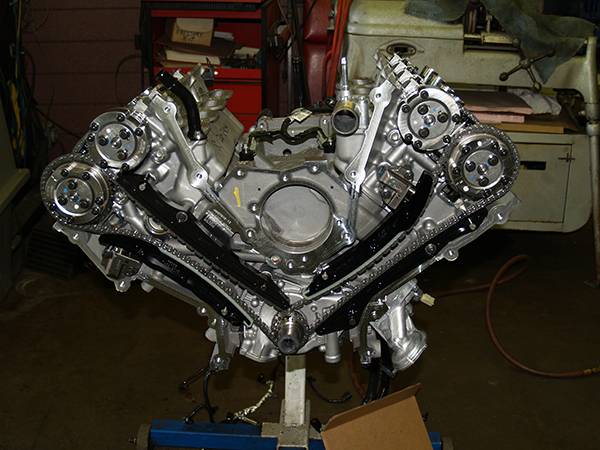
The Gen I Coyote engine features an aluminum block with cross-bolted main bearing caps and thick bearing bulkheads for strength. The block also incorporates piston cooling jets and unique oil drain back and windage control for high rpm performance.
“The bore centers were still the same as the Modular, so the factory could still make these things cheap,” says Michael Rauscher of L&M Engines. “It’s still a 3.937˝ bore center. The block was cast different with a different configuration from previous Modulars.”
The Coyote shares a similar platform to the 4.6L, except the bore diameter increased from 3.54˝ to 3.63˝ and the stroke increased from 3.54˝ to 3.65˝, giving the Coyote a 302.1 cid. The crankshaft is not interchangeable with the 4.6L either, because the main webbing designs of the Coyote block are wider. The crankshaft is forged steel and made from the same forging material as the 4.6L.
The biggest change to the crankshaft is the longer snout to accommodate the billet gear for the oil pump, and with the crank pin moved to increase stroke, the crankshaft also has straight-thru oiling, which is less complex than the cross-drilled passages of the 4.6L and 5.4L.
The crank sensor wheel is rear mounted compared to the front mounted designs of the other Modulars and the relocation of the crank sensor produces a more stable signal. The firing order for the Coyote changed from 1-3-7-2-6-5-4-8 to 1-5-4-8-6-3-7-2. With all the changes to this new platform, there is no interchangeability of ¬engine parts with its previous ¬predecessors. However, Gen I and Gen II Coyote engines are compatible. The Gen III versions are not.
The Gen I Coyote also features aluminum cylinder heads and the engine has an 11:1 compression ratio, which was quite a bit more than the typical 8:1 or 9:1 compression ratios most engines had at the time.
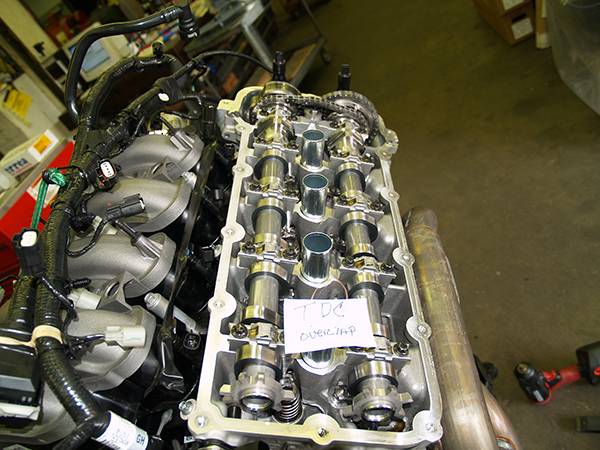
One obstacle that Ford faced when producing the engine was to make more power and efficiency than the 4.6L did, which would be accomplished by acquiring more airflow through the cylinder heads. In order for airflow to be gained, the ports of the cylinder head would have to be redesigned. Ford came up with the idea of moving the camshafts outward in the cylinder heads, which would place the camshafts over the head bolts. This would allow room for the port design changes to produce the needed airflow to gain volumetric efficiency.
“The cylinder heads were a totally new deal and much improved as far as efficiency,” Rauscher says. “It also came out with four variable camshafts, which was new to the Modular platform. Intake cams were parked in full retard, so they would only advance. Exhaust cams were full advanced parked and both of them would move at a 50-degree authority.”
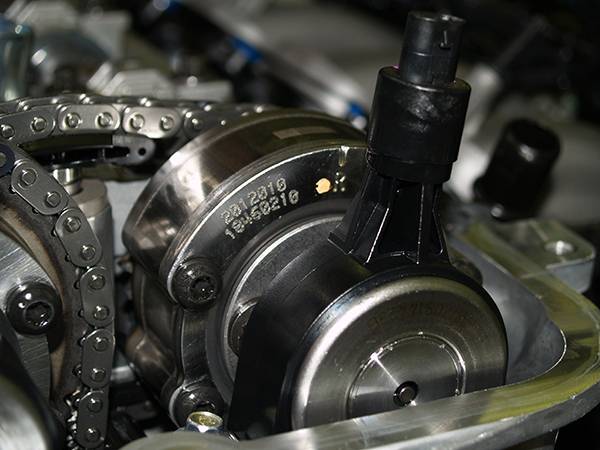
The valvetrain would now consist of a lightweight, roller-type, finger follower with a hydraulic lash adjuster with a 2:1 ratio. Both the intake and exhaust cams would now be controlled separately through the TI-VCT. The camshafts are controlled by the Powertrain Control Module (PCM) using cam torque actuated phasers. The separate phasing of the intake and exhaust cams allows for smoother idle and fuel economy along with quick response at high idle.
“Valvetrain geometry was the big difference from prior,” he says. “It had a smaller roller, a little smaller rocker arm with more ratio to it, which means a smaller base circle on the cam. It had considerably more valve timing than prior Modular engines, so it was more performance oriented.”
VCT is a technology developed by Ford that allows for greater fuel efficiency and lower emissions. Variable, or changing, camshaft timing is achieved through electronically changing the camshaft’s timing by speeding it up or decreasing the speed as needed based on engine load and rpm.
VCT typically was used on either the exhaust camshaft, which allowed for better emissions or the intake camshaft, which allowed for greater power. Naturally though, most people want power and better emissions, so the question became how to allow for variable timing on both the intake and the exhaust valves and allow them to function independently of one another.
The TI-VCT improved on VCT’s technology by allowing camshafts to act independently. The result was improved power and torque. The Gen I Coyote engine was capable of sustaining 412 horsepower and 390 ft.-lbs. of torque. It was so powerful they had to figure out how to improve the engine’s walls. Instead of increasing the thickness of the engine’s walls, webbing was built into the walls in order to allow the block to handle the increased power output of the stronger engine.
The Coyote differs from other TI-VCT engines put out in the same period in that it also utilizes Borg-Warner’s Cam Torque Actuation (CTA) to use torsional energy to rotate the camshaft instead of oil pressure driven cam phasing, like Hondas have.
What the technical details boil down to is that the first Coyote engine was incredibly powerful for its size based on some really creative engineering ideas. The Gen I 5.0L Coyote engine was able to create as much power as a 6.4L Hemi with a significantly smaller displacement.
The throttle body and intake also underwent some changes from the previous Modular engines. The alternator was moved from the valley of the engine to the side of the block. This allowed for improvements to airflow by optimizing the locations of the throttle body and redesigned intake ports. The new Mustangs would also incorporate electric power steering so the engine would not turn a belt-driven power steering pump.
Ford’s F-150 also incorporates the Coyote engine. The differences were seen in milder profiles for the intake camshafts along with different profiles of the exhaust cams compared to the Mustang. The truck version also has lower compression (10.5:1) offering 360 horsepower and 380 ft.-lbs. of torque.
“The basic engine, known as Gen I, was out from 2011 to 2014,” Rauscher says. “In 2012, it was the same engine, but they shortened up the head bolt considerably. Originally, the head bolt went into the main web and was 12mm on the 2011 models. Somewhere in 2012, they changed it to 11mm and made it shorter in the water jacket. They carried those same specs from ‘12 to ‘14.
“They also came out with a vastly improved windage system. They had a molded windage tray that segregated the drain oil from the crankshaft. They improved the oil pump by making it larger from prior engines.”
One thing Ford didn’t get right with the Gen I Coyote was the engine’s deck. Ford cast it into more of an open deck, removing some aluminum in the coolant jacket.
“They created a big, long, open coolant hole, particularly on the intake side,” he says. “They got rid of that, but it was a structure that segregated that longer hole into two smaller holes. The pressure wave goes to the intake side and it was pushing the cylinder at the very top and they were suffering burnt pistons because the rings leak. Some guys, when they boost them up, were blowing that section of the cylinder out. People would find piston problems on the left-side cylinders 5 through 8. If there’s going to be temperature failure, like a head gasket or a piston, it’s generally going to be the left side.”
The Coyote engine had to remain close to the same physical size of the outgoing 4.6L, and shares other specifications with it such as bore spacing, deck height, and bell housing bolt pattern.
Gen II Coyote (2015-2017)
In 2015, Ford came out with its second-generation Coyote design that ran through 2017.
“In ‘15-‘17, they had what they called the Gen II, which had minor, minor differences to the block via the oil filter pad,” says Tim Eichorn of MPR Racing Engines. “It also had a revision on the cylinder heads where the cylinder heads were a little bit more efficient.”
The Gen II Coyote was the same basic engine, featuring the same block and head bolt configuration. However, the short head bolts were an issue.
“There was some structural changes that you won’t see,” Rauscher says. “With the short head bolt, it started cracking in the valley around the knock sensor, which is where the head bolt terminates. That was a problem.”
The more noticeable improvements were in the cylinder heads. Featuring a slightly bigger valve, which upped the power numbers, and a slightly different configuration, the Gen II cylinder heads accommodated a different variable valve timing phaser for the intake only.
“Prior engines on intake would only advance,” Rauscher says. “This engine would be parked in a more advanced position. The Gen I intake was parked depending on a phaser, anywhere from 133 center line to 135. The Gen II parked the intake in at about 109. The design of the phaser now has oil on either side of it to advance it and retard it, and it would go 20-degrees advance and 50-degrees retard.
“They needed more oil to accomplish that, so they changed the head gasket and the oiling in the head. They put a restrictor in the main galley to feed the lifters and gave full oil to the phasers.”
The Gen II Coyote also got put into Ford’s GT350, which came out in ‘15-‘16, and is a flat-plane crank with a better cylinder head that’s CNC ported. It was made for N/A horsepower.
“The GT350 platform is a totally different head and a bigger bore with the plasma coating,” he says. “It’s basically a Gen II with a bigger bore (3.700˝ bore) plasma coating and a 180-degree crankshaft. It makes stellar power – more than a Mustang – because of the broad torque with the firing order on that crank. The GT350 is a Gen II with a Gen III cylinder head on it.”

The Coyote was also put into the GT500. This is a 5.8L version seen here
Gen III Coyote (2018-2020)
The most recent update to the Coyote engine was made in 2018. The third generation of the Coyote is still a compact 5.0L engine, but now it reports 460 horsepower and 420 ft.-lbs. of torque and is frequently tuned beyond that.
Though any generation of Coyote is powerful, the third generation also added some smart features that allow the engine to be efficient even when it’s moving at lower rpm. Additionally, with the extra power the third generation Coyote has, it can maintain an rpm of 7,500, a full 500 rpm higher than its predecessor.
Despite all of its performance modifications and the addition of port fuel injection, the Coyote engine doesn’t require high octane fuel and can be run on regular 87 octane fuel and boasts a 12:1 compression ratio.
“Again, it was the same basic engine, but it has a different block deck configuration,” Rauscher says. “The coolant jackets are different. It has a slightly bigger bore at 3.66˝. They also put direct injection on it.
“Gen I and Gen II had a variable reluctor cam sensor. For 2018, Ford went to a different cam reluctor. The exhaust phaser is totally different and the camshaft configuration is totally different because of the direct injection pump. There’s also more oil requirement for the exhaust phaser because of the load from the direct injection pump.”
Ford also changed the valvetrain geometry in the Gen III Coyote by putting more rocker arm ratio in it, more lift in the cam, a taller install height, and a taller valve. The Gen III also has a different head bolt set up.
“They went back to the 12mm head bolt into the main web because they saw that was a problem,” Eichorn says. “They went back to the 2011 head bolt configuration.”
The Gen III Coyote also went to a plasma coating in the cylinders. However, they’re paying the price because they’re having left-side failures where the plasma is coming off, which then requires sleeves. “The engine can eat rings up and eat pistons up,” Rauscher says.
The latest version of the Gen III Coyote is featured in the 2020 GT500. “The 2020 GT500 uses the same cylinder head as the GT350, but they have a cross-plane crank back in it and it’s supercharged,” Eichorn says.
Coyote Applications & Variants
(Applications)
Gen I
Ford Mustang GT (2011 to 2012) with 6-speed auto/manual – 412 hp at 6,500 rpm and 390 lb.-ft. of torque at 4,250 rpm
Ford Mustang Boss 302 (2012 to 2013) with 6-speed manual – 444 hp at 7,500 rpm and 390 lb.-ft. of torque at 4,500 rpm
Ford F-150 (2011 to 2014) with 6-speed automatic transmission – 360 hp at 5,500 rpm and 380 lb.-ft. of torque at 4,250 rpm
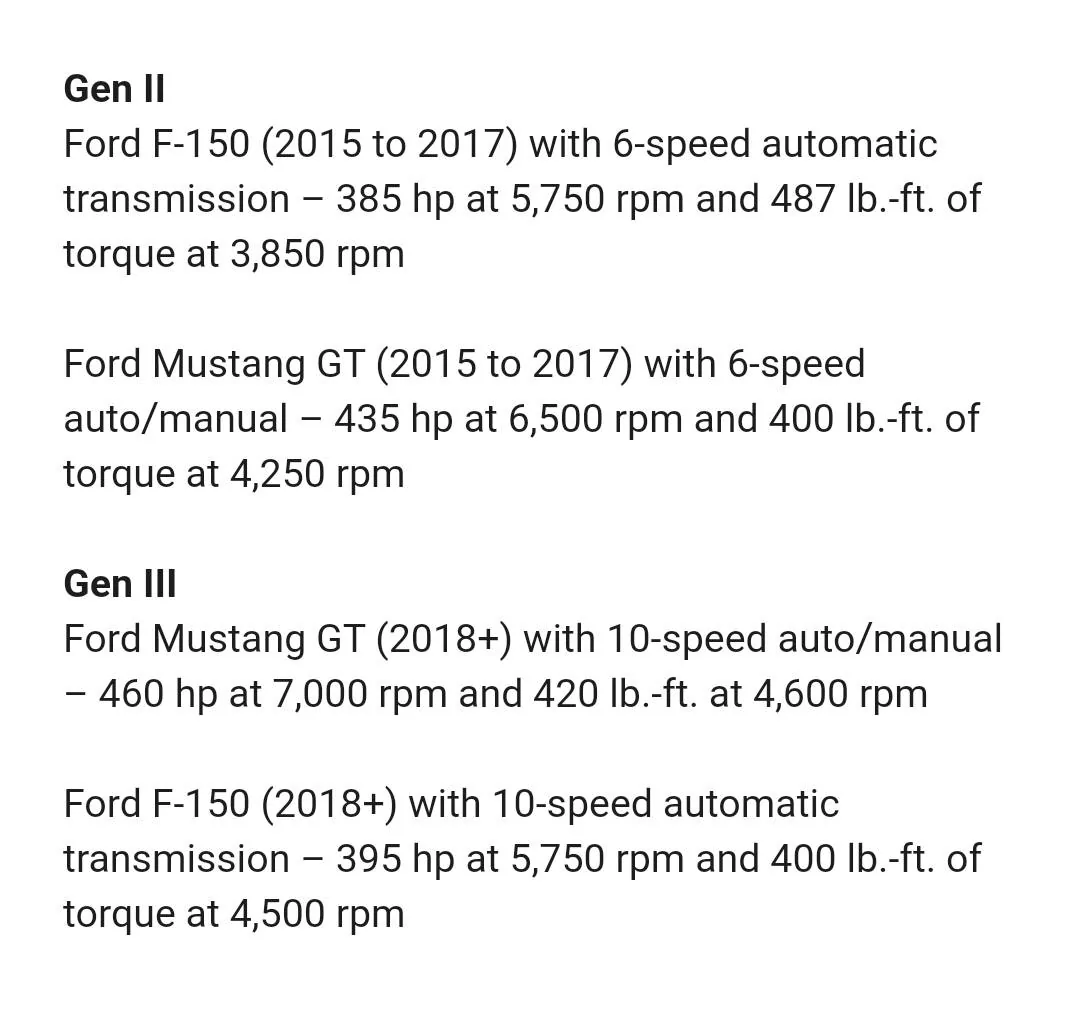
Gen II
Ford F-150 (2015 to 2017) with 6-speed automatic transmission – 385 hp at 5,750 rpm and 487 lb.-ft. of torque at 3,850 rpm
Ford Mustang GT (2015 to 2017) with 6-speed auto/manual – 435 hp at 6,500 rpm and 400 lb.-ft. of torque at 4,250 rpm
Gen III
Ford Mustang GT (2018+) with 10-speed auto/manual – 460 hp at 7,000 rpm and 420 lb.-ft. at 4,600 rpm
Ford F-150 (2018+) with 10-speed automatic transmission – 395 hp at 5,750 rpm and 400 lb.-ft. of torque at 4,500 rpm
(Variants)
The Roadrunner – The new 2012 and 2013 Boss 302 models demanded something special due to the associations people have with the Boss nameplate. The Daytona race cars used an intake method that eliminated lag when the throttle was opened. This allows the engine to breathe more efficiently at higher rpm, allowing the Boss to exceed the GT’s 7,000 rpm redline and actually gain power at higher rpm. The engine is sometimes referred to as Road Runner.
The Voodoo – Out of all the Coyote variants, the Voodoo may be the most unique. It has a 5.2L displacement, but unlike other Modular V8 engines, the Voodoo uses a flat-plane crank. This does cause the engine to vibrate more and be louder than other V8 engines, but that’s kind of the point. Flat-plane cranks also allow engines to rev more quickly, making it a popular choice in racing engines. Ford used the Voodoo engine in the Shelby GT350 and GT350R.
The Aluminator – Ford wanted to ensure that the Voodoo engine was reserved specifically for the Shelby GT350R, but they also wanted a more powerful variant of the Coyote engine that they could add to the Ford Performance lineup. Hence, the Aluminator.
The Aluminator has a cross-plane crankshaft instead of a flat-plane crankshaft. Capable of reaching 580 horsepower and 445 ft.-lbs. of torque, it’s certainly a worthy addition. The Aluminator series engines do have different features and incorporate different components, such as forged pistons and tri-metal bearings for higher performance capabilities.
The Predator – The most recent addition to the Coyote variant line-up, the Predator is a Voodoo with a cross-plane crankshaft and some other goodies that pump it up to be worthy of the most powerful production Mustang ever, the 2020 GT500. The Predator has 760 horsepower and 625 ft.-lbs. of torque.
The cylinder head is a strong point. It has good valve action because it has super light, tiny valves. They make a ton of power for the size. The valvetrain is superior and it’s stiff.
Rebuilding
In addition to being a powerful and unique engine, the Coyote is also a modifiable one. Coyote modifications are a popular way to improve on an already very good engine. With even a few basic bolt-on components it’s easy to drive the Coyote engine beyond factory capabilities. Something as simple as adding a cold air intake can increase your horsepower.
“All the Coyote engines are efficient,” Eichorn says. “If you put a blower or a turbo on these things, they just want to make stupid power.”
Like most performance engines these days, customers are looking for maximum horsepower and are asking engine builders to achieve 1,000 to 2,000 horsepower with the Coyote. To make those numbers realistic, there are strengths and weaknesses of the Coyote that builders must take into account.
“There’s a bunch of rules that you have to use on these engines to maintain oil delivery, so they last well,” Rauscher says. “These engines have a little oil pump and they use a ton of oil. They’ve got 32 valves, four cams and leaks up top. It has variable valve timing and all of it needs oil, so you’ve got to watch oil clearances. I don’t exceed 0.0020˝ – 0.0018˝ to 0.0020˝ is perfect.
“A big weakness is the open coolant jacket, particularly on the intake side. In 2010, we were having failures immediately and we ended up using a laser weld process and welded it all up and reconfigured it. Then we put ductile iron sleeves in them later on as the power went up.”
Weak spots in the later generations are the Gen II head bolts amongst the open coolant jacket and the Gen III plasma coating. The coating is hard as nails, if it holds up and doesn’t come off!
While every engine has some weaknesses, the Coyote only has a few. It does, however, have plenty of strengths such as the bottom end and the cylinder heads.
“They all have steel crankshafts and from a rebuilding perspective, the cylinder head is a strong point,” Rauscher says. “It’s far superior to the LS. It has good valve action because they have super light, little, tiny valves. They make a ton of power for the size. The valvetrain is superior and it’s stiff.”
If customers are looking to put high horsepower into the Coyote, connecting rods, pistons and sleeves are some of the key components engine builders will want to add.
“The connecting rods are a weak point,” he says. “The rods are a powder metal, which is no good. It needs an upgraded steel rod.”
According to Eichorn, his shop usually caps off the Gen I Coyote around 600 or 700 horsepower at the wheel with factory blocks.
“We do rods and pistons,” Eichorn says. “We generally rate them to 900 horsepower and then when we do the Darton sleeve conversions, they could go up to as much as 1,500 horsepower to the wheel with better rods, pistons and the Darton sleeves.
“The Gen II can hold a little bit more horsepower because they have a better rod in them with a bigger rod bolt. Some of those guys make 700-800 horsepower to the wheel with the factory engine. When it comes to rebuilding, it really doesn’t matter what generation we start with as far as the Gen I or Gen II because we’re doing basically the same thing to either one.
The crankshaft has a longer snout to accommodate the billet gear for the oil pump, and with the crank pin moved to increase stroke, the crankshaft also has straight-thru oiling.
“The only thing that’s different is that if the customer is not going to do cylinder heads, the Gen II is a bit better out of the box. If the customer is going to port the heads, either Gen I or Gen II, we use the same casting to run our port program through, so it doesn’t matter what generation cast you have if you’re going with ported heads.”
Eichorn does warn that when you try to make big power with the Gen I and Gen II Coyote, you’re playing Russian roulette to a degree, because these engines were not meant to make huge power from the factory.
“Ford never designed either one of these generations of engines to make anything over 500 horsepower,” he says. “You’re playing a game trying to make big power by putting a blower or turbo on it. The rods and pistons fail on these things pretty quickly when you get up there in horsepower if the tune isn’t right of if the tune is a little aggressive. You’re going to crack a piston and it’s going to go right away.
“If you put new rods and pistons on a factory block, you’re going to be good to run 900 hp, but the next thing to fail will be the block. It will fail over time. It’s going to end up cracking the block into the water jacket. That’s why we go ahead with the Darton sleeves. We put the Darton sleeves in there and alleviate that problem of the block failures and the sky’s the limit from there.”
First developed to go head-to-head with the LS and the Hemi, the Coyote might not stack up in a naturally aspirated form, but built up with a blower or a turbo, it exceeds those other engines.
“In a naturally aspirated form, the Coyote isn’t that great of an engine,” Eichorn says. “It’s real efficient. It makes really good power and you’re going to turn some rpm compared to the LS or Hemi. But as far as putting a blower or a turbo on it, it kills those engines because the efficiency numbers just go right up. I’ll put any Coyote up against a blower LS compared to ours with comparable components.”
Obviously, the Gen III Coyote has horsepower advantages over the previous two generations, but those engines are still so new that guys have yet to find the limitations of the engine.
“The Gen III stuff is still pretty new and we’re still working out the bugs,” he says. “The tuners are getting used to the camshafts. We’re getting used to all the components that drive these things. Once we get them in the shop to rebuild them, we put in better rods, better pistons and everything else. The good thing about the Coyotes is the crankshafts are forged. We’ve got those stock crankshafts in cars making over 1,500 horsepower.
With the extra power the third generation Coyote has, it can maintain an rpm of 7,500, a full 500 rpm higher than its predecessor.
“All three generations remain popular motors. The Gen III stuff can hold a little bit more power via the 10R80 transmission because it doesn’t put as much of a load on the motor. Those guys aren’t breaking them on certain power levels like they did the Gen I and Gen II stuff. They seem to be able to hold out a little bit longer with the big power levels. I’ve got guys with stock engines making 1,000 horsepower.”
As noted, the 5.0L Coyote can make 1,000 whp pretty easily. Add 20% and that’s what you’ve got for bhp. Add a couple of little turbos, which is all the rage right now, and you can get 1,200-1,300 hp at tire easy. But remember, there’s rules you have to abide by to get the engine to survive, because it will come apart if you fail to build up the Coyote’s weak points.
With this kind of performance potential, the 5.0L Coyote gets utilized for a number of applications, namely street/strip, swaps and drag and road racing. The question remains, how much farther can the Gen III Coyote in the 2020 GT500 go beyond its previous iterations?
“The GT500 is still so new that guys haven’t found the factory limits of them yet,” Eichorn says. “We already have cylinder head programs. We already have camshaft programs. We already have rod and piston combos and Darton sleeves.
We already have that stuff ready to go, so it’s just one of those things that once these guys find the limitations of the factory motor, we’ll be able to make sure that they can go exceed those expectations quite a bit with all the aftermarket components.”
Eichorn guesses the rods, pistons and maybe the head gaskets are going to be areas to improve. As the boost increases, it puts a lot of stress on those factory parts.
“Ford rates the engine at 600-700 horsepower,” he says. “Guys are making 1,000 horsepower right now with these factory motors with tunes, porting the blowers, some pulley changes, and some long tube headers, etc. I think another limitation might be the blower.
“A factory engine making 1,000 whp with just minor upgrades is just astonishing. But again, it’s the transmission and everything else that’s really allowing these engines to be able to make that kind of power because they’re not really loading the motor down. When you start loading that motor down, you start coming into problems of these things breaking. The newer generation with that 10R80 transmission really keeps these things in a happy zone as far as efficiency goes. If you put a stick shift behind it, it’s not going to be as happy as it would with the automatic.”
 Fox Body Mustang
Coyote Swapping
The Coyote engine has become a fan favorite, and Coyote swaps are a popular modification for restoration fans. Coyote swaps simply involve slipping the high-powered engine into older Mustang body styles, like the ever-popular Fox Body Mustang. In the lighter bodies, the engine can really fly.
Today, restoration projects seem to be at an all-time high. One thing that is becoming increasingly popular is known as a “RestoMod.” This is the art of combining the old with the new. Even though newer body styles are not sought after to restore, the technology is what’s important. When restoring a nostalgic car, things like fuel injection, bigger brakes, independent front suspension, air conditioning, and air ride tends to be a hot topic.
Engines of today outperform their predecessors along with five and six-speed automatic and manual transmissions. Why not mix the two and have the style of yesterday with the technology of today?
This where the Ford ¬Coyote engine can really shine. “The way they go in for swaps is awesome,” Eichorn says. “Having the technology of the newer stuff with the variable cam timing and everything, it’s crazy how smooth the motors make these cars feel.”
The Coyote’s Future
The Coyote engine has managed to warm the car community to the at first controversial overhead cam design, mostly by being incredibly powerful and efficient. The Coyote has won best engine awards and Mustang owners lucky enough to have a Coyote under the hood brag about their engine’s power and reliability.
Even better, as Ford has updated the engine, they haven’t chosen to sacrifice power for fuel-efficiency or vice versa. Instead, both attributes keep trending upwards as the outer limits of this technology’s possibilities are explored.
“As far as the Coyote stuff goes, it’s strong,” Eichorn says. “The aftermarket is with it. The Ford factory seems to be wanting to stick with it with no big changes. With them making this GT500 with a blower, I really think they’re going to want to hang on to it for at least another couple years before they do anything else in the Mustang.”
Article courtesy of Engine Builder.
This link provides a lengthy, but very well organized article about not only the Coyote Generations, but the different Variants as well as good info for folks looking to rebuild a Coyote too.
Courtesy goes out to Tomorrow’s Technician and author of the article, Greg Jones:
https://www.tomorrowstechnician.com/rebuilding-fords-5-0l-coyote/
Enjoy!
Rebuilding Ford’s 5.0L Coyote
One obstacle that Ford faced when producing the engine was to make more power and efficiency than the 4.6L did.
Greg Jones Jul 1, 2020
Like many new projects, when Ford Motor Company was developing its newest V8 engine to compete with the likes of the LS and Hemi, the company asked for naming suggestions. One of the V8 engineers found a part of Ford history he thought was special enough that Ford should name the engine after it. The first four-valve V8 that Ford made was manufactured in the 1960s for a race car driven by AJ Foyt. The car, named the Coyote, was driven to victory in both the 1967 and 1977 Indy 500s. In total, Foyt won 25 times out of the 141 races he participated in. The response to the Coyote name was immediately positive and it stuck.
Based off of the architecture of the 4.6L and 5.4L Modular V8s, the “Coyote” V8 platform was the latest evolution of performance engine from the Ford Motor Company in 2010. At the time the first-generation engine was being designed, Ford engineers needed a V8 engine, specifically for the Mustang GT, that would compete with the GM 6.2L LS3 used in the new Chevrolet Camaro and the new Chrysler 6.4L Hemi in the Charger, Challenger and Grand Cherokee.
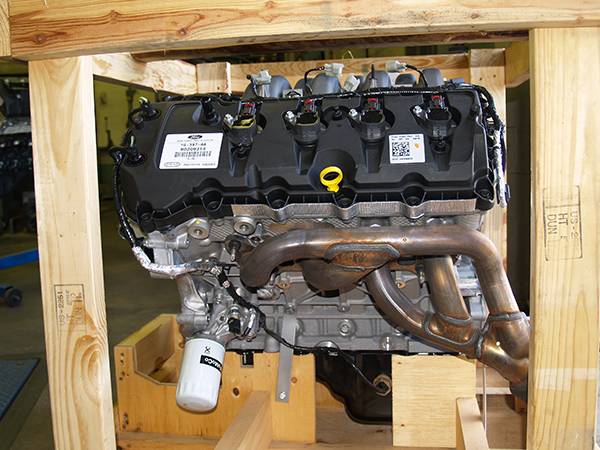
Since this engine replaced the already popular 4.6L and 5.4L Modular engines, the Coyote engine had to remain close to the same physical size of the outgoing 4.6L, and share other specifications with it such as bore spacing, deck height, bell housing bolt pattern, etc. in order for the engine to utilize existing Modular production line tooling. The term ¬Modular had always been thought to be a name for the engine design or the ability to share certain parts. However, the real name was given from the manufacturing process where the tooling could be changed out in a matter of hours to manufacture different versions of the engine family.
Debuting in the 2011 model year, the Coyote is a 5.0L, naturally aspirated V8 engine featuring a dual overhead cam (DOHC) design. The Coyote’s architecture was also Ford’s first implementation of its Twin Independent Variable Cam Timing (TI-VCT) technology on a V8 engine, a feature which considerably improves fuel economy and power delivery all while reducing emissions. The Coyote today has gone through three different generations of engines, which can be found in the Ford Mustang, the GT350, the GT500 and Ford F-150 trucks.
Despite its relatively small displacement, the 5.0L Coyote is able to create good horsepower, and to Mustang enthusiasts, the Coyote engine is much more than that. From its history, to its name, to the engineering components that allow the Coyote engine to produce impressive power with a relatively small displacement, people have a lot of questions about it. We caught up with a few engine builders to get their take on decade-old, powerhouse of an engine.
Coyote History
Ford’s first Coyote engine was built in 2010. With an increased push for engines that had more power and more economy, it was clear that technology needed to improve dramatically, and that wasn’t going to be possible if Ford chose to stay with a traditional, small block engine.
Ford had been making Modular engines since the early ‘90s and that engine design allowed a flexibility not possible with small blocks. Very easily, Ford could change the tooling to create variants of engines to serve different purposes, and as such, the Modular engine improved dramatically since the first iteration in 1990.
But, Ford had some exciting new technology it couldn’t wait to add to the Modular designs. That technology was Twin Independent Variable Cam Timing, and 2010 was the first year that Ford added it to some of its engines, including the Coyote.
Though eventually Coyote engines would be added to F-150s as well, initially they were developed with the Mustang GT in mind, and the 2011 GT was the first car with a Coyote. Since 2011, a Coyote engine has been in all Mustang GTs and has been available as an option in upgraded F-150s.
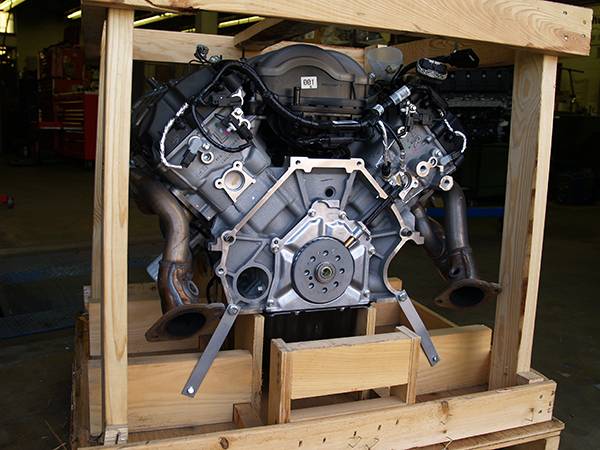
Gen I Coyote (2011-2014)
The Gen I Coyote engine features an aluminum block with cross-bolted main bearing caps and thick bearing bulkheads for strength. The block also incorporates piston cooling jets and unique oil drain back and windage control for high rpm performance.
“The bore centers were still the same as the Modular, so the factory could still make these things cheap,” says Michael Rauscher of L&M Engines. “It’s still a 3.937˝ bore center. The block was cast different with a different configuration from previous Modulars.”
The Coyote shares a similar platform to the 4.6L, except the bore diameter increased from 3.54˝ to 3.63˝ and the stroke increased from 3.54˝ to 3.65˝, giving the Coyote a 302.1 cid. The crankshaft is not interchangeable with the 4.6L either, because the main webbing designs of the Coyote block are wider. The crankshaft is forged steel and made from the same forging material as the 4.6L.
The biggest change to the crankshaft is the longer snout to accommodate the billet gear for the oil pump, and with the crank pin moved to increase stroke, the crankshaft also has straight-thru oiling, which is less complex than the cross-drilled passages of the 4.6L and 5.4L.
The crank sensor wheel is rear mounted compared to the front mounted designs of the other Modulars and the relocation of the crank sensor produces a more stable signal. The firing order for the Coyote changed from 1-3-7-2-6-5-4-8 to 1-5-4-8-6-3-7-2. With all the changes to this new platform, there is no interchangeability of ¬engine parts with its previous ¬predecessors. However, Gen I and Gen II Coyote engines are compatible. The Gen III versions are not.
The Gen I Coyote also features aluminum cylinder heads and the engine has an 11:1 compression ratio, which was quite a bit more than the typical 8:1 or 9:1 compression ratios most engines had at the time.
One obstacle that Ford faced when producing the engine was to make more power and efficiency than the 4.6L did, which would be accomplished by acquiring more airflow through the cylinder heads. In order for airflow to be gained, the ports of the cylinder head would have to be redesigned. Ford came up with the idea of moving the camshafts outward in the cylinder heads, which would place the camshafts over the head bolts. This would allow room for the port design changes to produce the needed airflow to gain volumetric efficiency.
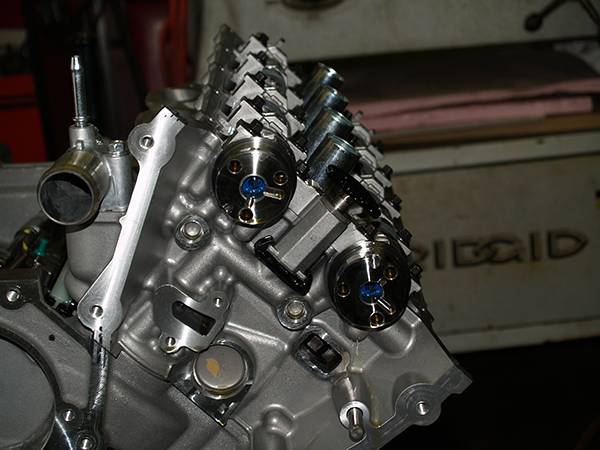
“The cylinder heads were a totally new deal and much improved as far as efficiency,” Rauscher says. “It also came out with four variable camshafts, which was new to the Modular platform. Intake cams were parked in full retard, so they would only advance. Exhaust cams were full advanced parked and both of them would move at a 50-degree authority.”
The valvetrain would now consist of a lightweight, roller-type, finger follower with a hydraulic lash adjuster with a 2:1 ratio. Both the intake and exhaust cams would now be controlled separately through the TI-VCT. The camshafts are controlled by the Powertrain Control Module (PCM) using cam torque actuated phasers. The separate phasing of the intake and exhaust cams allows for smoother idle and fuel economy along with quick response at high idle.
“Valvetrain geometry was the big difference from prior,” he says. “It had a smaller roller, a little smaller rocker arm with more ratio to it, which means a smaller base circle on the cam. It had considerably more valve timing than prior Modular engines, so it was more performance oriented.”
VCT is a technology developed by Ford that allows for greater fuel efficiency and lower emissions. Variable, or changing, camshaft timing is achieved through electronically changing the camshaft’s timing by speeding it up or decreasing the speed as needed based on engine load and rpm.
VCT typically was used on either the exhaust camshaft, which allowed for better emissions or the intake camshaft, which allowed for greater power. Naturally though, most people want power and better emissions, so the question became how to allow for variable timing on both the intake and the exhaust valves and allow them to function independently of one another.
The TI-VCT improved on VCT’s technology by allowing camshafts to act independently. The result was improved power and torque. The Gen I Coyote engine was capable of sustaining 412 horsepower and 390 ft.-lbs. of torque. It was so powerful they had to figure out how to improve the engine’s walls. Instead of increasing the thickness of the engine’s walls, webbing was built into the walls in order to allow the block to handle the increased power output of the stronger engine.
The Coyote differs from other TI-VCT engines put out in the same period in that it also utilizes Borg-Warner’s Cam Torque Actuation (CTA) to use torsional energy to rotate the camshaft instead of oil pressure driven cam phasing, like Hondas have.
What the technical details boil down to is that the first Coyote engine was incredibly powerful for its size based on some really creative engineering ideas. The Gen I 5.0L Coyote engine was able to create as much power as a 6.4L Hemi with a significantly smaller displacement.
The throttle body and intake also underwent some changes from the previous Modular engines. The alternator was moved from the valley of the engine to the side of the block. This allowed for improvements to airflow by optimizing the locations of the throttle body and redesigned intake ports. The new Mustangs would also incorporate electric power steering so the engine would not turn a belt-driven power steering pump.
Ford’s F-150 also incorporates the Coyote engine. The differences were seen in milder profiles for the intake camshafts along with different profiles of the exhaust cams compared to the Mustang. The truck version also has lower compression (10.5:1) offering 360 horsepower and 380 ft.-lbs. of torque.
“The basic engine, known as Gen I, was out from 2011 to 2014,” Rauscher says. “In 2012, it was the same engine, but they shortened up the head bolt considerably. Originally, the head bolt went into the main web and was 12mm on the 2011 models. Somewhere in 2012, they changed it to 11mm and made it shorter in the water jacket. They carried those same specs from ‘12 to ‘14.
“They also came out with a vastly improved windage system. They had a molded windage tray that segregated the drain oil from the crankshaft. They improved the oil pump by making it larger from prior engines.”
One thing Ford didn’t get right with the Gen I Coyote was the engine’s deck. Ford cast it into more of an open deck, removing some aluminum in the coolant jacket.
“They created a big, long, open coolant hole, particularly on the intake side,” he says. “They got rid of that, but it was a structure that segregated that longer hole into two smaller holes. The pressure wave goes to the intake side and it was pushing the cylinder at the very top and they were suffering burnt pistons because the rings leak. Some guys, when they boost them up, were blowing that section of the cylinder out. People would find piston problems on the left-side cylinders 5 through 8. If there’s going to be temperature failure, like a head gasket or a piston, it’s generally going to be the left side.”
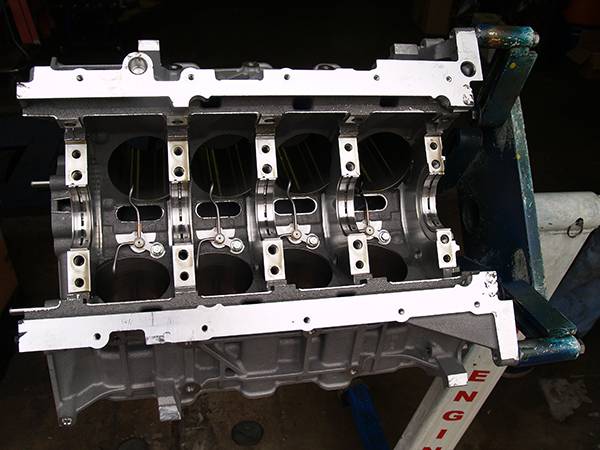
The Coyote engine had to remain close to the same physical size of the outgoing 4.6L, and shares other specifications with it such as bore spacing, deck height, and bell housing bolt pattern.
Gen II Coyote (2015-2017)
In 2015, Ford came out with its second-generation Coyote design that ran through 2017.
“In ‘15-‘17, they had what they called the Gen II, which had minor, minor differences to the block via the oil filter pad,” says Tim Eichorn of MPR Racing Engines. “It also had a revision on the cylinder heads where the cylinder heads were a little bit more efficient.”
The Gen II Coyote was the same basic engine, featuring the same block and head bolt configuration. However, the short head bolts were an issue.
“There was some structural changes that you won’t see,” Rauscher says. “With the short head bolt, it started cracking in the valley around the knock sensor, which is where the head bolt terminates. That was a problem.”
The more noticeable improvements were in the cylinder heads. Featuring a slightly bigger valve, which upped the power numbers, and a slightly different configuration, the Gen II cylinder heads accommodated a different variable valve timing phaser for the intake only.
“Prior engines on intake would only advance,” Rauscher says. “This engine would be parked in a more advanced position. The Gen I intake was parked depending on a phaser, anywhere from 133 center line to 135. The Gen II parked the intake in at about 109. The design of the phaser now has oil on either side of it to advance it and retard it, and it would go 20-degrees advance and 50-degrees retard.
“They needed more oil to accomplish that, so they changed the head gasket and the oiling in the head. They put a restrictor in the main galley to feed the lifters and gave full oil to the phasers.”
The Gen II Coyote also got put into Ford’s GT350, which came out in ‘15-‘16, and is a flat-plane crank with a better cylinder head that’s CNC ported. It was made for N/A horsepower.
“The GT350 platform is a totally different head and a bigger bore with the plasma coating,” he says. “It’s basically a Gen II with a bigger bore (3.700˝ bore) plasma coating and a 180-degree crankshaft. It makes stellar power – more than a Mustang – because of the broad torque with the firing order on that crank. The GT350 is a Gen II with a Gen III cylinder head on it.”
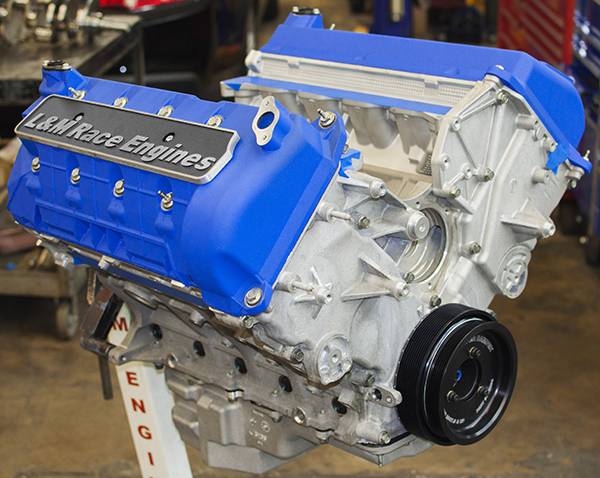
The Coyote was also put into the GT500. This is a 5.8L version seen here
Gen III Coyote (2018-2020)
The most recent update to the Coyote engine was made in 2018. The third generation of the Coyote is still a compact 5.0L engine, but now it reports 460 horsepower and 420 ft.-lbs. of torque and is frequently tuned beyond that.
Though any generation of Coyote is powerful, the third generation also added some smart features that allow the engine to be efficient even when it’s moving at lower rpm. Additionally, with the extra power the third generation Coyote has, it can maintain an rpm of 7,500, a full 500 rpm higher than its predecessor.
Despite all of its performance modifications and the addition of port fuel injection, the Coyote engine doesn’t require high octane fuel and can be run on regular 87 octane fuel and boasts a 12:1 compression ratio.
“Again, it was the same basic engine, but it has a different block deck configuration,” Rauscher says. “The coolant jackets are different. It has a slightly bigger bore at 3.66˝. They also put direct injection on it.
“Gen I and Gen II had a variable reluctor cam sensor. For 2018, Ford went to a different cam reluctor. The exhaust phaser is totally different and the camshaft configuration is totally different because of the direct injection pump. There’s also more oil requirement for the exhaust phaser because of the load from the direct injection pump.”
Ford also changed the valvetrain geometry in the Gen III Coyote by putting more rocker arm ratio in it, more lift in the cam, a taller install height, and a taller valve. The Gen III also has a different head bolt set up.
“They went back to the 12mm head bolt into the main web because they saw that was a problem,” Eichorn says. “They went back to the 2011 head bolt configuration.”
The Gen III Coyote also went to a plasma coating in the cylinders. However, they’re paying the price because they’re having left-side failures where the plasma is coming off, which then requires sleeves. “The engine can eat rings up and eat pistons up,” Rauscher says.
The latest version of the Gen III Coyote is featured in the 2020 GT500. “The 2020 GT500 uses the same cylinder head as the GT350, but they have a cross-plane crank back in it and it’s supercharged,” Eichorn says.
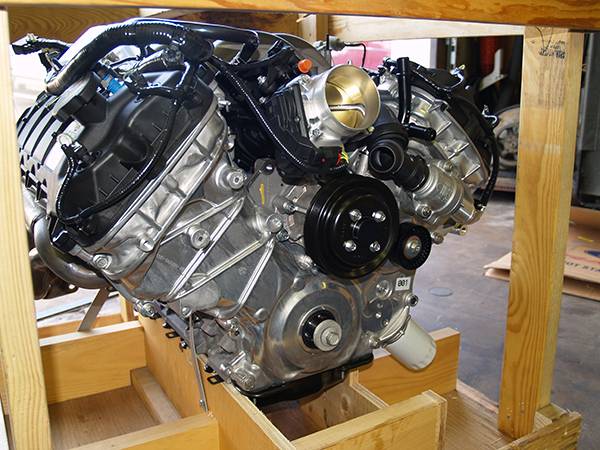
(Applications)
Gen I
Ford Mustang GT (2011 to 2012) with 6-speed auto/manual – 412 hp at 6,500 rpm and 390 lb.-ft. of torque at 4,250 rpm
Ford Mustang Boss 302 (2012 to 2013) with 6-speed manual – 444 hp at 7,500 rpm and 390 lb.-ft. of torque at 4,500 rpm
Ford F-150 (2011 to 2014) with 6-speed automatic transmission – 360 hp at 5,500 rpm and 380 lb.-ft. of torque at 4,250 rpm
Gen II
Ford F-150 (2015 to 2017) with 6-speed automatic transmission – 385 hp at 5,750 rpm and 487 lb.-ft. of torque at 3,850 rpm
Ford Mustang GT (2015 to 2017) with 6-speed auto/manual – 435 hp at 6,500 rpm and 400 lb.-ft. of torque at 4,250 rpm
Gen III
Ford Mustang GT (2018+) with 10-speed auto/manual – 460 hp at 7,000 rpm and 420 lb.-ft. at 4,600 rpm
Ford F-150 (2018+) with 10-speed automatic transmission – 395 hp at 5,750 rpm and 400 lb.-ft. of torque at 4,500 rpm
(Variants)
The Roadrunner – The new 2012 and 2013 Boss 302 models demanded something special due to the associations people have with the Boss nameplate. The Daytona race cars used an intake method that eliminated lag when the throttle was opened. This allows the engine to breathe more efficiently at higher rpm, allowing the Boss to exceed the GT’s 7,000 rpm redline and actually gain power at higher rpm. The engine is sometimes referred to as Road Runner.
The Voodoo – Out of all the Coyote variants, the Voodoo may be the most unique. It has a 5.2L displacement, but unlike other Modular V8 engines, the Voodoo uses a flat-plane crank. This does cause the engine to vibrate more and be louder than other V8 engines, but that’s kind of the point. Flat-plane cranks also allow engines to rev more quickly, making it a popular choice in racing engines. Ford used the Voodoo engine in the Shelby GT350 and GT350R.
The Aluminator – Ford wanted to ensure that the Voodoo engine was reserved specifically for the Shelby GT350R, but they also wanted a more powerful variant of the Coyote engine that they could add to the Ford Performance lineup. Hence, the Aluminator.
The Aluminator has a cross-plane crankshaft instead of a flat-plane crankshaft. Capable of reaching 580 horsepower and 445 ft.-lbs. of torque, it’s certainly a worthy addition. The Aluminator series engines do have different features and incorporate different components, such as forged pistons and tri-metal bearings for higher performance capabilities.
The Predator – The most recent addition to the Coyote variant line-up, the Predator is a Voodoo with a cross-plane crankshaft and some other goodies that pump it up to be worthy of the most powerful production Mustang ever, the 2020 GT500. The Predator has 760 horsepower and 625 ft.-lbs. of torque.
Rebuilding
In addition to being a powerful and unique engine, the Coyote is also a modifiable one. Coyote modifications are a popular way to improve on an already very good engine. With even a few basic bolt-on components it’s easy to drive the Coyote engine beyond factory capabilities. Something as simple as adding a cold air intake can increase your horsepower.
“All the Coyote engines are efficient,” Eichorn says. “If you put a blower or a turbo on these things, they just want to make stupid power.”
Like most performance engines these days, customers are looking for maximum horsepower and are asking engine builders to achieve 1,000 to 2,000 horsepower with the Coyote. To make those numbers realistic, there are strengths and weaknesses of the Coyote that builders must take into account.
“There’s a bunch of rules that you have to use on these engines to maintain oil delivery, so they last well,” Rauscher says. “These engines have a little oil pump and they use a ton of oil. They’ve got 32 valves, four cams and leaks up top. It has variable valve timing and all of it needs oil, so you’ve got to watch oil clearances. I don’t exceed 0.0020˝ – 0.0018˝ to 0.0020˝ is perfect.
“A big weakness is the open coolant jacket, particularly on the intake side. In 2010, we were having failures immediately and we ended up using a laser weld process and welded it all up and reconfigured it. Then we put ductile iron sleeves in them later on as the power went up.”
Weak spots in the later generations are the Gen II head bolts amongst the open coolant jacket and the Gen III plasma coating. The coating is hard as nails, if it holds up and doesn’t come off!
While every engine has some weaknesses, the Coyote only has a few. It does, however, have plenty of strengths such as the bottom end and the cylinder heads.
“They all have steel crankshafts and from a rebuilding perspective, the cylinder head is a strong point,” Rauscher says. “It’s far superior to the LS. It has good valve action because they have super light, little, tiny valves. They make a ton of power for the size. The valvetrain is superior and it’s stiff.”
If customers are looking to put high horsepower into the Coyote, connecting rods, pistons and sleeves are some of the key components engine builders will want to add.
“The connecting rods are a weak point,” he says. “The rods are a powder metal, which is no good. It needs an upgraded steel rod.”
According to Eichorn, his shop usually caps off the Gen I Coyote around 600 or 700 horsepower at the wheel with factory blocks.
“We do rods and pistons,” Eichorn says. “We generally rate them to 900 horsepower and then when we do the Darton sleeve conversions, they could go up to as much as 1,500 horsepower to the wheel with better rods, pistons and the Darton sleeves.
“The Gen II can hold a little bit more horsepower because they have a better rod in them with a bigger rod bolt. Some of those guys make 700-800 horsepower to the wheel with the factory engine. When it comes to rebuilding, it really doesn’t matter what generation we start with as far as the Gen I or Gen II because we’re doing basically the same thing to either one.
“The only thing that’s different is that if the customer is not going to do cylinder heads, the Gen II is a bit better out of the box. If the customer is going to port the heads, either Gen I or Gen II, we use the same casting to run our port program through, so it doesn’t matter what generation cast you have if you’re going with ported heads.”
Eichorn does warn that when you try to make big power with the Gen I and Gen II Coyote, you’re playing Russian roulette to a degree, because these engines were not meant to make huge power from the factory.
“Ford never designed either one of these generations of engines to make anything over 500 horsepower,” he says. “You’re playing a game trying to make big power by putting a blower or turbo on it. The rods and pistons fail on these things pretty quickly when you get up there in horsepower if the tune isn’t right of if the tune is a little aggressive. You’re going to crack a piston and it’s going to go right away.
“If you put new rods and pistons on a factory block, you’re going to be good to run 900 hp, but the next thing to fail will be the block. It will fail over time. It’s going to end up cracking the block into the water jacket. That’s why we go ahead with the Darton sleeves. We put the Darton sleeves in there and alleviate that problem of the block failures and the sky’s the limit from there.”
First developed to go head-to-head with the LS and the Hemi, the Coyote might not stack up in a naturally aspirated form, but built up with a blower or a turbo, it exceeds those other engines.
“In a naturally aspirated form, the Coyote isn’t that great of an engine,” Eichorn says. “It’s real efficient. It makes really good power and you’re going to turn some rpm compared to the LS or Hemi. But as far as putting a blower or a turbo on it, it kills those engines because the efficiency numbers just go right up. I’ll put any Coyote up against a blower LS compared to ours with comparable components.”
Obviously, the Gen III Coyote has horsepower advantages over the previous two generations, but those engines are still so new that guys have yet to find the limitations of the engine.
“The Gen III stuff is still pretty new and we’re still working out the bugs,” he says. “The tuners are getting used to the camshafts. We’re getting used to all the components that drive these things. Once we get them in the shop to rebuild them, we put in better rods, better pistons and everything else. The good thing about the Coyotes is the crankshafts are forged. We’ve got those stock crankshafts in cars making over 1,500 horsepower.
“All three generations remain popular motors. The Gen III stuff can hold a little bit more power via the 10R80 transmission because it doesn’t put as much of a load on the motor. Those guys aren’t breaking them on certain power levels like they did the Gen I and Gen II stuff. They seem to be able to hold out a little bit longer with the big power levels. I’ve got guys with stock engines making 1,000 horsepower.”
As noted, the 5.0L Coyote can make 1,000 whp pretty easily. Add 20% and that’s what you’ve got for bhp. Add a couple of little turbos, which is all the rage right now, and you can get 1,200-1,300 hp at tire easy. But remember, there’s rules you have to abide by to get the engine to survive, because it will come apart if you fail to build up the Coyote’s weak points.
With this kind of performance potential, the 5.0L Coyote gets utilized for a number of applications, namely street/strip, swaps and drag and road racing. The question remains, how much farther can the Gen III Coyote in the 2020 GT500 go beyond its previous iterations?
“The GT500 is still so new that guys haven’t found the factory limits of them yet,” Eichorn says. “We already have cylinder head programs. We already have camshaft programs. We already have rod and piston combos and Darton sleeves.
We already have that stuff ready to go, so it’s just one of those things that once these guys find the limitations of the factory motor, we’ll be able to make sure that they can go exceed those expectations quite a bit with all the aftermarket components.”
Eichorn guesses the rods, pistons and maybe the head gaskets are going to be areas to improve. As the boost increases, it puts a lot of stress on those factory parts.
“Ford rates the engine at 600-700 horsepower,” he says. “Guys are making 1,000 horsepower right now with these factory motors with tunes, porting the blowers, some pulley changes, and some long tube headers, etc. I think another limitation might be the blower.
“A factory engine making 1,000 whp with just minor upgrades is just astonishing. But again, it’s the transmission and everything else that’s really allowing these engines to be able to make that kind of power because they’re not really loading the motor down. When you start loading that motor down, you start coming into problems of these things breaking. The newer generation with that 10R80 transmission really keeps these things in a happy zone as far as efficiency goes. If you put a stick shift behind it, it’s not going to be as happy as it would with the automatic.”
Coyote Swapping
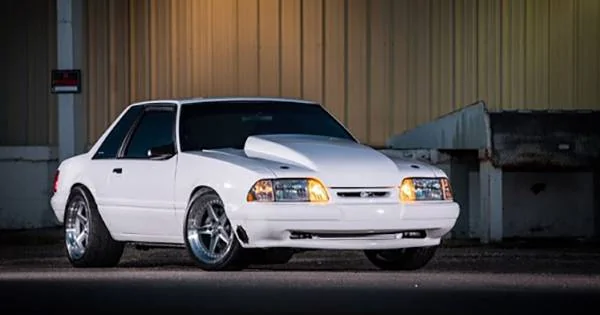
The Coyote engine has become a fan favorite, and Coyote swaps are a popular modification for restoration fans. Coyote swaps simply involve slipping the high-powered engine into older Mustang body styles, like the ever-popular Fox Body Mustang. In the lighter bodies, the engine can really fly.
Today, restoration projects seem to be at an all-time high. One thing that is becoming increasingly popular is known as a “RestoMod.” This is the art of combining the old with the new. Even though newer body styles are not sought after to restore, the technology is what’s important. When restoring a nostalgic car, things like fuel injection, bigger brakes, independent front suspension, air conditioning, and air ride tends to be a hot topic.
Engines of today outperform their predecessors along with five and six-speed automatic and manual transmissions. Why not mix the two and have the style of yesterday with the technology of today?
This where the Ford ¬Coyote engine can really shine. “The way they go in for swaps is awesome,” Eichorn says. “Having the technology of the newer stuff with the variable cam timing and everything, it’s crazy how smooth the motors make these cars feel.”
The Coyote’s Future
The Coyote engine has managed to warm the car community to the at first controversial overhead cam design, mostly by being incredibly powerful and efficient. The Coyote has won best engine awards and Mustang owners lucky enough to have a Coyote under the hood brag about their engine’s power and reliability.
Even better, as Ford has updated the engine, they haven’t chosen to sacrifice power for fuel-efficiency or vice versa. Instead, both attributes keep trending upwards as the outer limits of this technology’s possibilities are explored.
“As far as the Coyote stuff goes, it’s strong,” Eichorn says. “The aftermarket is with it. The Ford factory seems to be wanting to stick with it with no big changes. With them making this GT500 with a blower, I really think they’re going to want to hang on to it for at least another couple years before they do anything else in the Mustang.”
Article courtesy of Engine Builder.
Sponsored