Sponsored

Alternator Caught on Fire

tdstuart

Well-Known Member
Joined
Apr 6, 2021
Threads
72
Messages
2,565
Reaction score
1,292
Location
Arizona
First Name
Triston
Vehicle(s)
2015 Mustang Gt Premium
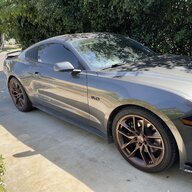
My ultima alternator caught on fire...

Went on about a 7 min drive to get food, parked, got food, and started driving home. Within a minute the car throws a warning saying some system features are disabled due to low battery. I check voltage and its at 10.8. I keep driving because I know if the alternator is going bad once I stop I probably wont get home very easily so I keep watching the voltage and it drops to 10.4. Right when I pull into the neighborhood it drops to 9.8 and I start losing power steering and infotainment. I reverse into the driveway and smoke is pouring from the hood.

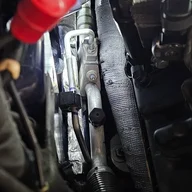
Sure enough alternator was smoking bad. Made sure no active flames and unplugged negative terminal on battery. Negative terminal seemed hot.

Only thing I have done recently was just before the drive I installed new headlight bulbs but its daytime so the headlights should be off so I'm not sure how that would mess up my alternator even if there was an issue.

Anyone have some insight, things I should check for, is it possible the battery is damaged? Or is this just a freak event of the alternator shorting. Wiring looks fine from what I could see up top.

I do want to note that I got the car (2015 gt) with what I believe was the original alternator in march 2021, around December 2023 I started noticing the car throwing random charging system codes, I replaced the alternator a few months later in early 2024 when the alternator finally died. A few months ago I was trying to diagnose an issue with the car and noticed in datalogs system voltage was all over the place so I replaced the alternator again which seemed to fix it. Is it possible I have some electrical problem?
Sponsored
 
OP
OP
tdstuart

tdstuart

Well-Known Member
Joined
Apr 6, 2021
Threads
72
Messages
2,565
Reaction score
1,292
Location
Arizona
First Name
Triston
Vehicle(s)
2015 Mustang Gt Premium
Tried to connect the battery again to roll up windows. When trying to put the negative wire to the nut and bolt for the negative terminal it was sparking a ton and the bolt got really hot. Got worried so I didn't bolt it on and throw the jump pack on.

Any thoughts?
 

Geodudes550

Well-Known Member
Joined
Feb 10, 2022
Threads
5
Messages
221
Reaction score
550
Location
Bakersfield, CA
First Name
Joseph
Vehicle(s)
S550 2018 Mustang GT Premium
If all this started with the light bulb, I’d remove them. Are they OEM or aftermarket? My old Subaru immediately developed electrical gremlins when I put in some aftermarket fog lights and the gremlins were gone when I went back to OEM.
 
OP
OP
tdstuart

tdstuart

Well-Known Member
Joined
Apr 6, 2021
Threads
72
Messages
2,565
Reaction score
1,292
Location
Arizona
First Name
Triston
Vehicle(s)
2015 Mustang Gt Premium
If all this started with the light bulb, I’d remove them. Are they OEM or aftermarket? My old Subaru immediately developed electrical gremlins when I put in some aftermarket fog lights and the gremlins were gone when I went back to OEM.
They are aftermarket but they are pretty high quality from what I’ve researched and are the same type of bulb as factory and others on the forum have used them.

They are Phillips 42403XV2C1
Here is a link:
https://www.amazon.com/gp/aw/d/B076BTWSP5
 

DougS550

Well-Known Member
Joined
May 18, 2020
Threads
317
Messages
4,735
Reaction score
2,703
Location
Fishers, Indiana
First Name
Doug
Vehicle(s)
2019 GT Premium A10 PP1 Whipple Stage 2
Sorry, I cannot see headlight bulbs will overheat and burn up your alternators. The headlight fuse would blow way before that plus I think the BMS would remove excitation for the alternator.
I would first make sure the BMS negative connection is all their and correctly installed. (Assuming your year has BMS).
I would reccomend doing a static engine off battery draw test to first check static electrical draw is within limits. Then I would do a electrical draw test with the engiine started and "ALL" electrical systems turned. Is the BMS regulating and supplying voltage within specs with no erratic voltage spikes or irregularities for charging. Then I would turn "ALL" electrical systems on and make sure the charging system is operating per OEM specs "OR" Just take it to Ford and have them go through the charging system from A through Z. Good Luck
 

Sponsored

OP
OP
tdstuart

tdstuart

Well-Known Member
Joined
Apr 6, 2021
Threads
72
Messages
2,565
Reaction score
1,292
Location
Arizona
First Name
Triston
Vehicle(s)
2015 Mustang Gt Premium
Sorry, I cannot see headlight bulbs will overheat and burn up your alternators. The headlight fuse would blow way before that plus I think the BMS would remove excitation for the alternator.
I would first make sure the BMS negative connection is all their and correctly installed. (Assuming your year has BMS).
I would reccomend doing a static engine off battery draw test to first check static electrical draw is within limits. Then I would do a electrical draw test with the engiine started and "ALL" electrical systems turned. Is the BMS regulating and supplying voltage within specs with no erratic voltage spikes or irregularities for charging. Then I would turn "ALL" electrical systems on and make sure the charging system is operating per OEM specs "OR" Just take it to Ford and have them go through the charging system from A through Z. Good Luck
Thank you this has given me some things to research.

Would you recommend I get a new alternator and battery then run said tests?
 

DougS550

Well-Known Member
Joined
May 18, 2020
Threads
317
Messages
4,735
Reaction score
2,703
Location
Fishers, Indiana
First Name
Doug
Vehicle(s)
2019 GT Premium A10 PP1 Whipple Stage 2
Thank you this has given me some things to research.

Would you recommend I get a new alternator and battery then run said tests?
If you had a alternator regulator smoke and also gave a CEL warning light, regardless I would I would replace. But, I would also replace my battery with a high quality AGM battery specific for your Mustang.
And if this happened to me for a second time, (Note: I am a very experienced mechanic?) I would not give this issue a second thought, I would take my car to a Ford Dealer to have them do a "Full" Electrical system test and give them a complete history on this issue and what you had done, to verify exactly what is causing this issue.
This issue can cost you in so many ways other than just replacing burned out alternators. Some times, one just has to suck up ones pride and pay for this If I cannot figure it out. Good Luck and keep use posted.
 

ice445

Well-Known Member
Joined
Apr 13, 2020
Threads
40
Messages
6,798
Reaction score
8,246
Location
Salt Lake City, UT
First Name
Ryan
Vehicle(s)
2020 Mustang GT 6MT
It's somewhat common for the alternator pigtail and associated wiring to suffer breaks because of the angle and how tightly routed it is. I'd be checking that first.
 

K4fxd

Well-Known Member
Joined
Apr 2, 2020
Threads
121
Messages
13,455
Reaction score
12,262
Location
NKY
First Name
Dan
Vehicle(s)
2017 gt, 2002 FXDWG, 2008 C6,
First thing you want to do is unhook the alternator. The heavy red cable and the plug. After you do this try hooking up your battery. If you still have heavy current draw then you need to keep isolating circuits till you find the short.
 

Sponsored
OP
OP
tdstuart

tdstuart

Well-Known Member
Joined
Apr 6, 2021
Threads
72
Messages
2,565
Reaction score
1,292
Location
Arizona
First Name
Triston
Vehicle(s)
2015 Mustang Gt Premium
First thing you want to do is unhook the alternator. The heavy red cable and the plug. After you do this try hooking up your battery. If you still have heavy current draw then you need to keep isolating circuits till you find the short.
Very new to anything electricity. Would I be able to hook up a volt meter to tell the current draw?
 

ORRadtech

Well-Known Member
Joined
Sep 12, 2019
Threads
25
Messages
4,053
Reaction score
3,988
Location
Atlanta, Georgia
First Name
Dave
Vehicle(s)
18 Mustang EcoBoost convertible, 14 Ford Fusion SE
I would first make sure the BMS negative connection is all their and correctly installed. (Assuming your year has BMS).
Pretty sure Ford started putting BMSs in all their cars around 2011/2012. I know that my '12 Edge has it. I assume that the newer the car the more sophisticated the system.
 

K4fxd

Well-Known Member
Joined
Apr 2, 2020
Threads
121
Messages
13,455
Reaction score
12,262
Location
NKY
First Name
Dan
Vehicle(s)
2017 gt, 2002 FXDWG, 2008 C6,
You need an amp meter, but with a dead short you should be able to see a large spark when you hook up the battery. I have whats called a buzz box. It is a circuit breaker hooked to a buzzer. I place it between battery and positive cable. If there is a short it will buzz then the breaker will trip. I'll then unhook another suspect item or circuit and if it keeps buzzing I found the circuit. Some use a light in the box.

You only want momentary connection if there is a short to keep from burning wires. Since the smoke was coming from your ALT, something in it probably shorted and isolating it will stop the short.

Good luck
 

DougS550

Well-Known Member
Joined
May 18, 2020
Threads
317
Messages
4,735
Reaction score
2,703
Location
Fishers, Indiana
First Name
Doug
Vehicle(s)
2019 GT Premium A10 PP1 Whipple Stage 2
Pretty sure Ford started putting BMSs in all their cars around 2011/2012. I know that my '12 Edge has it. I assume that the newer the car the more sophisticated the system.
[/QUOTE
- Parasitic draw tests should be done, *battery static, *with accessory power on, engine off, *then with engine operating.
- I would make sure to test the BMS
- I would test the battery negative current sensor.
- I would have my BMS module tested, (don't know if it's a separate module or part of the ECM)
- I would do a BMS reset
- Verify all wiring to and from battery, alternator are good.
- I would also disconnect ECM-BMS module connectors, inspect, clean and reconnect them.
**Ford Dealership**
 

Skye

Well-Known Member
Joined
Jan 18, 2022
Threads
13
Messages
2,926
Reaction score
4,105
Location
≈39N
Vehicle(s)
"Skye" Mach1 N2144
If you have a multimeter, see if it has a "mA" (milli-Amp) or "A" (Amp) symbol. Most do. If so, these settings can measure the amount of current, the load. But read the instructions first. Many meters have limits, from settings or the meter itself. An incorrect setting could damage the meter.

Attaching one test probe to the (-) end of the battery, one probe to the black or (-) cable, the multimeter set to the amperage setting could measure the amount of load. This is where the limits of the meter come in. If attaching a meter with a 10A limit to a 20A load, you're going to pop a fuse in the meter or damage it.

Voltage is the amount of electrical pressure, like water pressure.

Amperage is the amount of current flow, the volume of electricity moving.

Resistance is just that, the resistance to current flow.

As you could be experiencing, a direct short or a short circuit offers no resistance or regulation of current flow. The lane is wide open and the condition will drain systems as quickly as they can.

The headlight bulbs were the most recent change. The short seems pretty heavy. It's probably a coincidence, but I'd compare an old and new bulb to see they are the same connector end. Maybe just to baseline, put the old bulbs back in. Or while testing, remove the new bulbs and leave them out.

Attaching the negative battery cable to the battery and receiving a small or modest spark is normal. Attaching the cable and seeing excessive spark is not; this indicates a short circuit or heavy load of some type. A component or connection could be draining as much of the battery as it can access when connected. This aligns with your experience when driving.

The Powertrain Control Module controls the alternator and its output. Once the engine has started and is running, the PCM directs the alternator to power the car and service that load, while topping the battery back up. It would seem a short is producing such an excessive draw the systems were overwhelmed.

An alternative scenario is the regulator on the alternator is broken, the PCM unable to control the output of current from the unit. But other tells are indicating a short or heavy load instead. I lean towards a short or high load.

Along with the suggestions above, you could remove fuses and relays, to help isolate the issue. Tedious, but if you've confirmed a short, removing one fuse at a time could help find the area. The short condition should stop with that one fuse or relay removed.

As others have mentioned, the charging codes thrown previously are a concern. If you can get past your immediate issues yourself, I'd seek out an electronic tech or dealer to give the system and good going over. If anything, it'd give you peace of mind.
Sponsored

 
Last edited:


Top