
Sponsored

13GetThere
Well-Known Member
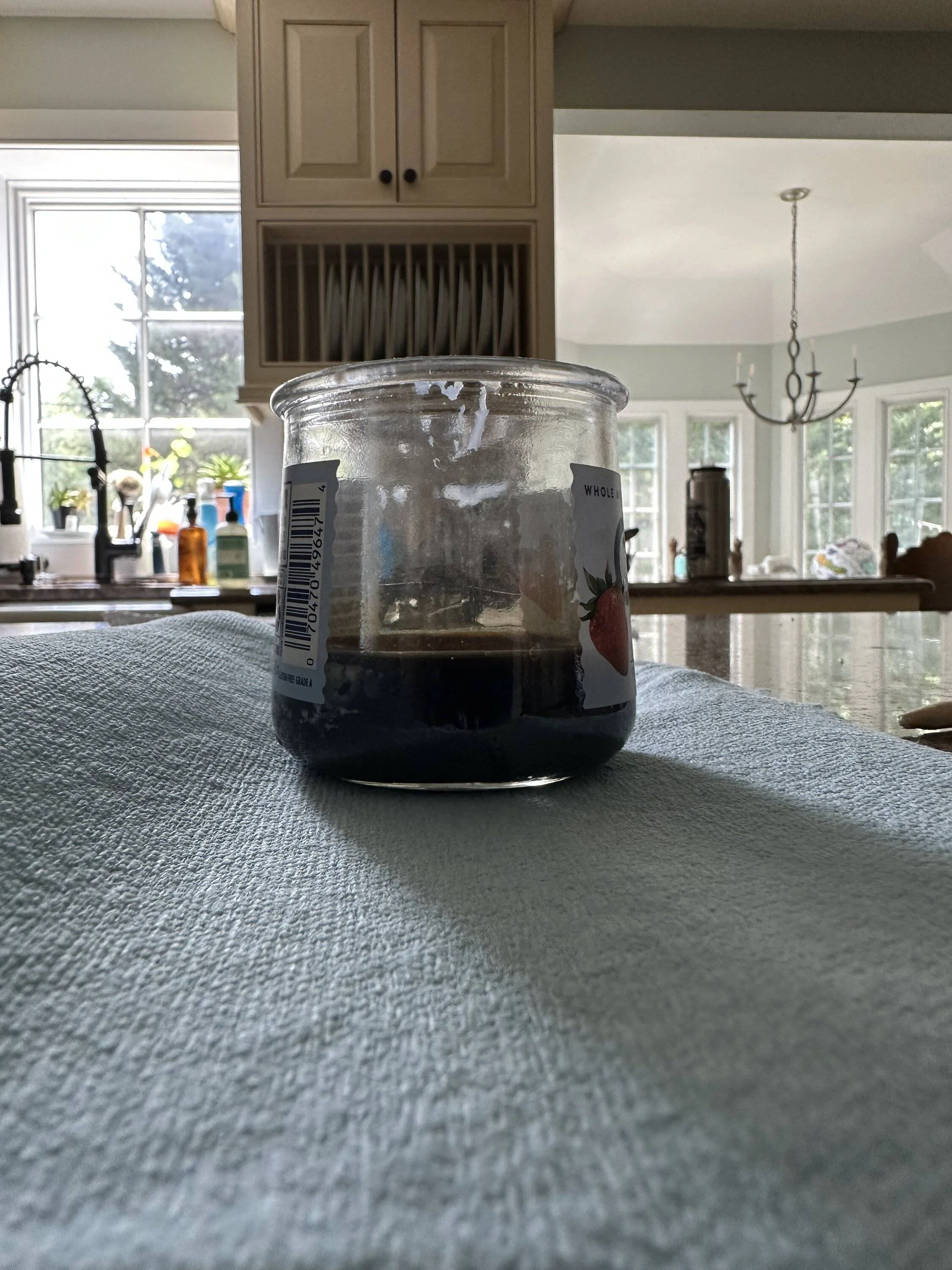
Is that after one or both oil changes?
That's a lot of oil.
That's a lot of oil.

PoCoBob
Well-Known Member
- Joined
- Jan 10, 2021
- Threads
- 9
- Messages
- 411
- Reaction score
- 476
- Location
- Port Coquitlam B.C.
- First Name
- Bob
- Vehicle(s)
- 2019 Mustang GT Premium, 2016 Edge Sport
On a port injected engine that amount of oil would be nothing. That would pass through the engine without harming anything. 10,000 miles is like driving from New York to Los Angeles 3 1/2 times, so it's a very small amount.
However if it's direct injected only, any amount of oil sticking to the back of the intake valve is bad. A catch can is way easier to maintain than having to pull the intake off and cleaning the back side of the valves.
However if it's direct injected only, any amount of oil sticking to the back of the intake valve is bad. A catch can is way easier to maintain than having to pull the intake off and cleaning the back side of the valves.

rcald
Well-Known Member
I check and empty my catch can every 4000 miles, collects about 2 oz's.
Sponsored
OP
OP

ing3nious
Well-Known Member

stannypack
Well-Known Member
Had the FRPP catch can on soon as I got my eco and now GT

young at heart
Well-Known Member
- Joined
- Apr 1, 2021
- Threads
- 73
- Messages
- 1,887
- Reaction score
- 2,782
- Location
- Deep South
- Vehicle(s)
- 20 GT vert, 24 Dark Horse HP Tremec, 24 Dark Horse HP A10
I’m sure this is an original thought that nobody’s ever brought up before, so whatever. But if they did anything at all toward improving longevity (read: reduce warranty expenditures) on a normal car, why wouldn’t Ford spend the 5 bucks a car to make them standard?

KilgoreLSU
Well-Known Member
- Joined
- May 17, 2023
- Threads
- 5
- Messages
- 87
- Reaction score
- 154
- Location
- Baton Rouge
- First Name
- Brian
- Vehicle(s)
- 2023 Mach 1, Ford Transit 250, BMW X5, 2000 Miata
I have been hesitant to post this.. but now I have a question...
Coyote is both Direct and Port Injection.. Port when cold and switches to Direct when warm... so is that preventing valve build up?
Link: Coyote Injection
Coyote is both Direct and Port Injection.. Port when cold and switches to Direct when warm... so is that preventing valve build up?
Link: Coyote Injection

SheepDog
Well-Known Member
It is for the intake valves, but not for the intake manifold. And, you really don't want that going into the combustion chamberI have been hesitant to post this.. but now I have a question...
Coyote is both Direct and Port Injection.. Port when cold and switches to Direct when warm... so is that preventing valve build up?
Link: Coyote Injection
Sponsored
PoCoBob
Well-Known Member
- Joined
- Jan 10, 2021
- Threads
- 9
- Messages
- 411
- Reaction score
- 476
- Location
- Port Coquitlam B.C.
- First Name
- Bob
- Vehicle(s)
- 2019 Mustang GT Premium, 2016 Edge Sport
There is only an issue with direct injected engines. The PCV system has been around for decades with no issues at all with carbed or port injected engines if the engine is in otherwise good condition.I’m sure this is an original thought that nobody’s ever brought up before, so whatever. But if they did anything at all toward improving longevity (read: reduce warranty expenditures) on a normal car, why wouldn’t Ford spend the 5 bucks a car to make them standard?
With only direct injection the carbon build up on the back of the valves doesn't cause a problem until it's so bad the air is restricted going into the cylinder. The warranty would be long gone before it gets that bad. So by the time it's a problem it's not Fords problem, it's the owners problem.
young at heart
Well-Known Member
- Joined
- Apr 1, 2021
- Threads
- 73
- Messages
- 1,887
- Reaction score
- 2,782
- Location
- Deep South
- Vehicle(s)
- 20 GT vert, 24 Dark Horse HP Tremec, 24 Dark Horse HP A10
I understand your point, but that would presuppose that Ford were willing to incur customer ill will and subsequent reputational harm over a very small amount of money. I know there are those who believe this to be the case but I’d say doubtful with something this easy. Likely they could simply change some design parameter that wouldn’t require an add-on piece if they felt it necessary. Strikes me a little like the jacking rails.There is only an issue with direct injected engines. The PCV system has been around for decades with no issues at all with carbed or port injected engines if the engine is in otherwise good condition.
With only direct injection the carbon build up on the back of the valves doesn't cause a problem until it's so bad the air is restricted going into the cylinder. The warranty would be long gone before it gets that bad. So by the time it's a problem it's not Fords problem, it's the owners problem.
PoCoBob
Well-Known Member
- Joined
- Jan 10, 2021
- Threads
- 9
- Messages
- 411
- Reaction score
- 476
- Location
- Port Coquitlam B.C.
- First Name
- Bob
- Vehicle(s)
- 2019 Mustang GT Premium, 2016 Edge Sport
Well it appears to me they have addressed the issue by adding the port injection as well as direct injection on the Gen 3 Coyote. The first two generations were only port injection so there is no issue.I understand your point, but that would presuppose that Ford were willing to incur customer ill will and subsequent reputational harm over a very small amount of money. I know there are those who believe this to be the case but I’d say doubtful with something this easy. Likely they could simply change some design parameter that wouldn’t require an add-on piece if they felt it necessary. Strikes me a little like the jacking rails.
I have a 2016 Edge with the turbo 2.7 V6, it is only direct injection and I did put a catch can on that vehicle. I believe that engine was updated in 2018 and it now has duel fuel systems so it is no longer an issue. But I have what I have, an engine that is susceptible to the carbon issue so for me it makes sense putting the catch can in. I have no interest in putting a can on my Mustang.
I did some reading on direct injection and from what a saw it is a result of stricter efficiency/emission standards set by the government. Fuel can be controlled much more precisely so those new targets could be met. But it does come with some drawbacks, mainly the carbon on the valves which hopefully was solved by having the port injection fueling the car during warm up. I'll let you know in 100,000 miles


Cyberbill
Well-Known Member
You make a valid point, but you and I both know that a lot of people don’t even change their oil or air filters at recommended intervals ….so changing the oil catch can would just open up the liability gate with a flood of chicken sheeet starving lawyers law suits against Ford.when their engine blows up. ain’t going to happen.I’m sure this is an original thought that nobody’s ever brought up before, so whatever. But if they did anything at all toward improving longevity (read: reduce warranty expenditures) on a normal car, why wouldn’t Ford spend the 5 bucks a car to make them standard?
Grandpa Bill

NOZ34ME
Member
10k miles, 15 mpg, ~ 665 gallons of fuel that would have 5 oz of oil in it. Sorry, but that is negligible.There is only an issue with direct injected engines. The PCV system has been around for decades with no issues at all with carbed or port injected engines if the engine is in otherwise good condition.
With only direct injection the carbon build up on the back of the valves doesn't cause a problem until it's so bad the air is restricted going into the cylinder. The warranty would be long gone before it gets that bad. So by the time it's a problem it's not Fords problem, it's the owners problem.
Sponsored


