Hi-PO Stang
Well-Known Member
If the next halo Mustang is supercharged, I am okay with that. No need to bring the turbo charged V8 right now. Ford can keep the Turbo V8 in reserve until the competition raises the bar for performance.
Sponsored


Man, spot on :clap2: :amen:The top level should be TT.
A RUNG UNDERNEATH could be an SC option.
Ford has established itself as the most forward of the big three.
No need to stay stuck in the "way it's always been done."
From the first modern supercharged mustang in 2003 to the new car will have been 16 years.
Ford has been showing a very thoroughly engineered ecoboost tech in lesser engines for some time. It's ridiculous for the biggest and best engines - and the most important "halo" car that's actually accessible to modern man - to use inferior tech.
Why not make it like the death star and sweep the rebellion with one swift stroke. Bring it and be done with it.If the next halo Mustang is supercharged, I am okay with that. No need to bring the turbo charged V8 right now. Ford can keep the Turbo V8 in reserve until the competition raises the bar for performance.
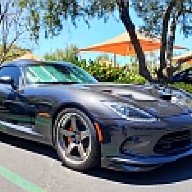
Z06 anyone? That thing is supercharged. GM isnt new to supercharging, they've had supercharged cars before Ford used it in the lightning. The previous ZL1 and ZR1 and even a cobalt have had blowers on them.I disagree. Most turbocharged applications have as much to do with fuel economy as they do performance. It's not coincidence that the big 2.5 still leverage supercharging for their performance needs. These cars are not lightweight. The off-idle torque from supercharging is well documented and is still undefeated in what it does. Supercharging is also much easier to tune and package. If the goal is power, and you can get their cheaper using supercharging, with less packaging issues, then why not? No need to engineer yourself out of the box that turbocharging puts you on when you already know supercharging will work. Not to mention you understand the cooling requirements of that application.
It's lazy true but it's easy. I rather ford get it right doing something know how to do well vs being different for the sake of being different only to have the customer base deal with limp mode (Z06 anyone).
Typically speaking, the cost associated with getting a turbocharged application to make usable power throughout the engine RPM range as a function of both efficiency and overall output is a significantly bigger engineering effort that using a positive displacement supercharger. Yes, you can use variable geometry turbos, turbos working in sequential order, trick waist gates, specialized blowoff values and other mechanisms to squeeze as much efficiency and get into boost as quickly as possible. And none of these methods will ever match the off-idle torque a positive displacement supercharger can give. And you gonna have to pay for that in a more complex design with more moving parts and so and and so forth.Bo, the reason for turbocharging is for efficiency and extracting all the possible units of energy from the fuel. And as you said, for fuel economy & performance. Which is just really performance. Inherently, turbochargers are much better at this, than your typical/traditional supercharger. Although that may about to change given newer viable-chargers, that Ford is rumored to be experimenting with.
I do agree about SC being easy packaging, but superchargers are not as trouble free and easy as you claim. There is still associated noise/whine and other issues, as well. So..
I never said it wasn't. What I was saying was...GM paid a price by creating a more complex direct injected small block V8, adding a supercharger at the last minute because the packaging problems in the Corvette wouldn't allow turbocharging, and finding out the hard way that they had cooling problems and STILL selling it to the public anyway.Z06 anyone? That thing is supercharged. GM isnt new to supercharging, they've had supercharged cars before Ford used it in the lightning. The previous ZL1 and ZR1 and even a cobalt have had blowers on them.
So let me make sure I understand you correctly...you believe that a turbocharged application offers superior cooling mechanisms and is LESS prone to heat-soak than supercharging? You do know that turbos run off hot exhaust gas don't you? And that pressurizing air adds heat?Last sentence is hilarious, superchargers are akin to heat soak. Let me know when there is an endurance car that uses a supercharger, because last I looked the only supercharged cars in racing are doing it a straight line for a short period of time. :tsk:
Also for the sake if being different? Yea okay, wtf do you think the GT350 is?
Turbo engines have great powerbands. Speciality turbo components exist to make the experience better, not to fix a huge problem. "Off-idle torque" is not a thing. Turbos are not complex.Typically speaking, the cost associated with getting a turbocharged application to make usable power throughout the engine RPM range as a function of both efficiency and overall output is a significantly bigger engineering effort that using a positive displacement supercharger. Yes, you can use variable geometry turbos, turbos working in sequential order, trick waist gates, specialized blowoff values and other mechanisms to squeeze as much efficiency and get into boost as quickly as possible. And none of these methods will ever match the off-idle torque a positive displacement supercharger can give. And you gonna have to pay for that in a more complex design with more moving parts and so and and so forth...
...I'm not saying it can't be done, but what I am saying is that the cost to do so and still match the low end gains you get from a regular ole blower often-times are not worth it. Not to mention you will still have some manager of turbo lag. It will never fully go away...
...The only time turbos show their advantage over superchargers is the lack of a the parasitic power-loss that plague superchargers. Turbos will always have an efficiency gain, but you inherit a more complex application to use it...
...GM paid a price by creating a more complex direct injected small block V8, adding a supercharger at the last minute because the packaging problems in the Corvette wouldn't allow turbocharging...
...you believe that a turbocharged application offers superior cooling mechanisms and is LESS prone to heat-soak than supercharging?...
...With the exception of the economy gains, there isn't a lot more that turbos add (IHMO)...
The lag you described earlier is not a problem. The whole off-idle torque is ridiculous. Torque converters blow through low rpm. On manual cars people launch at higher rpm. The car will probably have launch control to help build boost off the line. If you're driving normal you don't need boost down low and if you're driving fast you don't stay at 1,000-2,500 rpm long or at all.I would sit here and break down how turbocharging actually works and how anyone who says hey don't have lag doesn't know what they are talking about. Lucky for me Motor trend has already done this.
Time stamp: 5:06
Did you watch the video, or do you just think you somehow know better?The lag you described earlier is not a problem. The whole off-idle torque is ridiculous. Torque converters blow through low rpm. On manual cars people launch at higher rpm. The car will probably have launch control to help build boost off the line. If you're driving normal you don't need boost down low and if you're driving fast you don't stay at 1,000-2,500 rpm long or at all.
There's another type of lag. Most turbo guys call it response. It's the ability to spool the turbo after an up-shift or after cornering. Response is not a problem either. Most electronic throttle controls on NA engines detune throttle response more than correctly sized turbo's transient response. This keeps people from jerking the vehicle. It's all about choosing the correct size turbo for the application.

It's not the LT4 that over heated, it was the automatic transmissions that would over heat. They did improve the cooling recently, but the issues were cooling the transmissions.Typically speaking, the cost associated with getting a turbocharged application to make usable power throughout the engine RPM range as a function of both efficiency and overall output is a significantly bigger engineering effort that using a positive displacement supercharger. Yes, you can use variable geometry turbos, turbos working in sequential order, trick waist gates, specialized blowoff values and other mechanisms to squeeze as much efficiency and get into boost as quickly as possible. And none of these methods will ever match the off-idle torque a positive displacement supercharger can give. And you gonna have to pay for that in a more complex design with more moving parts and so and and so forth.
I'm not saying it can't be done, but what I am saying is that the cost to do so and still match the low end gains you get from a regular ole blower often-times are not worth it. Not to mention you will still have some manager of turbo lag. It will never fully go away.
The only time turbos show their advantage over superchargers is the lack of a the parasitic power-loss that plague superchargers. Turbos will always have an efficiency gain, but you inherit a more complex application to use it.
As for the supercharger wine...well some people like that sound.
I never said it wasn't. What I was saying was...GM paid a price by creating a more complex direct injected small block V8, adding a supercharger at the last minute because the packaging problems in the Corvette wouldn't allow turbocharging, and finding out the hard way that they had cooling problems and STILL selling it to the public anyway.
Had they stuck with what they know how to do in the first place, they would have identified and solved their cooling issues sooner, and that issue with a Z06 that can only do a single lap wouldn't have happened. By the time the new Camaro ZL1 came around, GM had figured out how to cool the new DI LS LT1, but the reputation damage was already done in the Z06.
So let me make sure I understand you correctly...you believe that a turbocharged application offers superior cooling mechanisms and is LESS prone to heat-soak than supercharging? You do know that turbos run off hot exhaust gas don't you? And that pressurizing air adds heat?
With respect to any racing, the most advantageous solution is no power adder at all. Naturally aspirated if at all possible. My point is that Ford knows the ins-and-outs of supercharging very well and have done many production vehicles using this method. With the exception of the economy gains, there isn't a lot more that turbos add (IHMO). They do compliment DI applications for the reasons I listed above, but unless Ford plans do downsize the 5.0 and make less profit than before, it just makes more since to use a supercharger.


