
Sponsored
OP
OP

tdstuart
Well-Known Member
- Thread starter
- #872
Ya PCM tec makes it look like you can go past 20 but I tried and anything past 20 won't appear.Excuse me it should be 20 total cells. 0-19, 0 being one of the available cells.
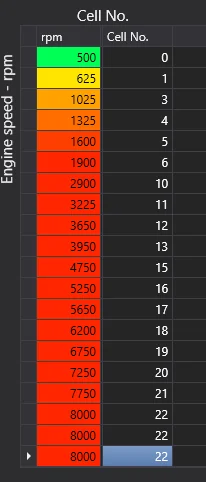
This for example won't show any values past 6750. So I can't expand the table but I can rescale it for higher rpm values
markmurfie
Well-Known Member
Pretty typical tuning software stuff.Ya PCM tec makes it look like you can go past 20 but I tried and anything past 20 won't appear.

This for example won't show any values past 6750. So I can't expand the table but I can rescale it for higher rpm values
I think HPT has made custom OS for other cars that expanded the tables axis. Im sure if some how 20 cells was not enough, PCMtech could expanded it. 20 cells should be more than enough.
Im sure PCMtech could expand it, but why would they when its not needed.
OP
OP
tdstuart
Well-Known Member
- Thread starter
- #874
I wonder why there software shows that you can expand this particular table but then won't actually let you do it.Pretty typical tuning software stuff.
I think HPT has made custom OS for other cars that expanded the tables axis. Im sure if some how 20 cells was not enough, PCMtech could expanded it. 20 cells should be more than enough.
Im sure PCMtech could expand it, but why would they when its not needed.
What do you think I should scale it to? I currently plan to rev to ~8000. Will have to see what the car runs faster on but from previous testing I know it likes to rev high.
Also what MP do you think I should test the SD correction on? Im planning on going out and getting some data and try to do the math like you showed to correct. I would prefer to do a point that is decent for driveability to start with.
Car seems to like MP20 but It doesn't have a corresponding imrc closed point. Should I just lock imrc open?
markmurfie
Well-Known Member
8000 is a good value for a 18+ manifold and cams. You have a lot of scaling to do to have a calibration that fully covers up to 8000 for everything. There is a lot thats goes behind properly scaling not just changing the axis values. You don't want to inadvertently change table values for the given axis values. This is very important when scaling as many new tuners unknowningly cause major changes to values and get into dangerous operating conditions.I wonder why there software shows that you can expand this particular table but then won't actually let you do it.
What do you think I should scale it to? I currently plan to rev to ~8000. Will have to see what the car runs faster on but from previous testing I know it likes to rev high.
Also what MP do you think I should test the SD correction on? Im planning on going out and getting some data and try to do the math like you showed to correct. I would prefer to do a point that is decent for driveability to start with.
Car seems to like MP20 but It doesn't have a corresponding imrc closed point. Should I just lock imrc open?
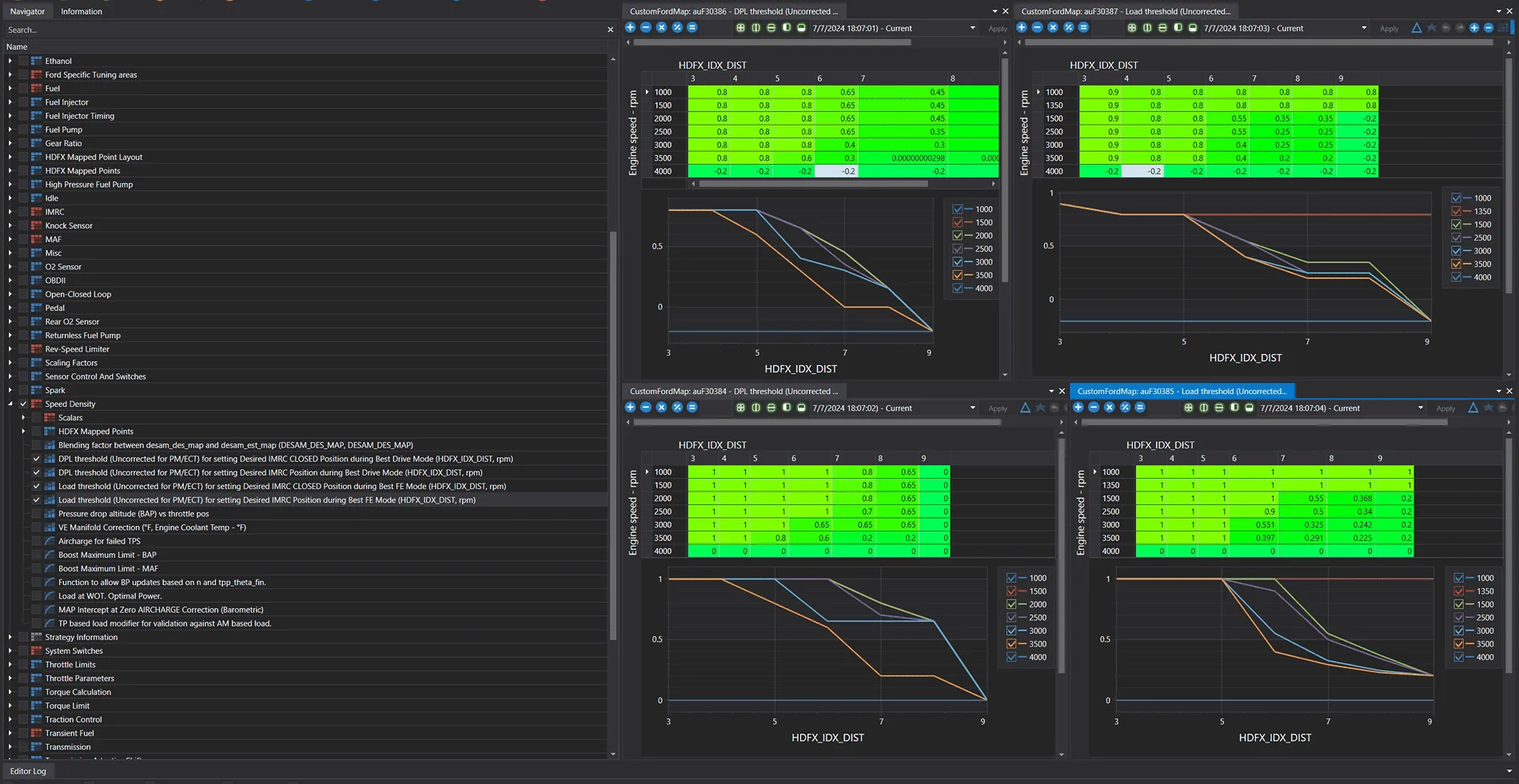
I know why you started at MP5 as the stock distance tables puts you at this MP pretty much right off idle and its a good place to start with what is in a base file. Just commanding distance 5 may be too limiting as IMRC is commanded to be closed even at high torque/ load demands. Its not til distances 6-9 that the IMRC opens at lower loads. Try commanding MP 17 which is MP 5/ distance 5 but with the IMRC commanded open. You do this by lowering the desired percentage load values at distance 5 in the best FE and best drive open/close tables. If this allows your load to get higher than .45-5 in those low RPM ranges then you know its not your cams but the IMRC remaining closed thats causing that MP to feel weak. You would need to adjust the IMRC open and close tables for what you determine best suits fuel economy and drivability modes. If load is still limited then you know its the cam positions and you may consider just not commanding those angles.
Funny enough in PCMtech these are under SD and not in a seperate IMRC section like in HPT.
Sponsored
OP
OP
tdstuart
Well-Known Member
- Thread starter
- #876
I think even when imrc was open with MP17 it was still slow but I’ll try locking it open and commanding and see what happens8000 is a good value for a 18+ manifold and cams. You have a lot of scaling to do to have a calibration that fully covers up to 8000 for everything. There is a lot thats goes behind properly scaling not just changing the axis values. You don't want to inadvertently change table values for the given axis values. This is very important when scaling as many new tuners unknowningly cause major changes to values and get into dangerous operating conditions.
I know why you started at MP5 as the stock distance tables puts you at this MP pretty much right off idle and its a good place to start with what is in a base file. Just commanding distance 5 may be too limiting as IMRC is commanded to be closed even at high torque/ load demands. Its not til distances 6-9 that the IMRC opens at lower loads. Try commanding MP 17 which is MP 5/ distance 5 but with the IMRC commanded open. You do this by lowering the desired percentage load values at distance 5 in the best FE and best drive open/close tables. If this allows your load to get higher than .45-5 in those low RPM ranges then you know its not your cams but the IMRC remaining closed thats causing that MP to feel weak. You would need to adjust the IMRC open and close tables for what you determine best suits fuel economy and drivability modes. If load is still limited then you know its the cam positions and you may consider just not commanding those angles.

markmurfie
Well-Known Member
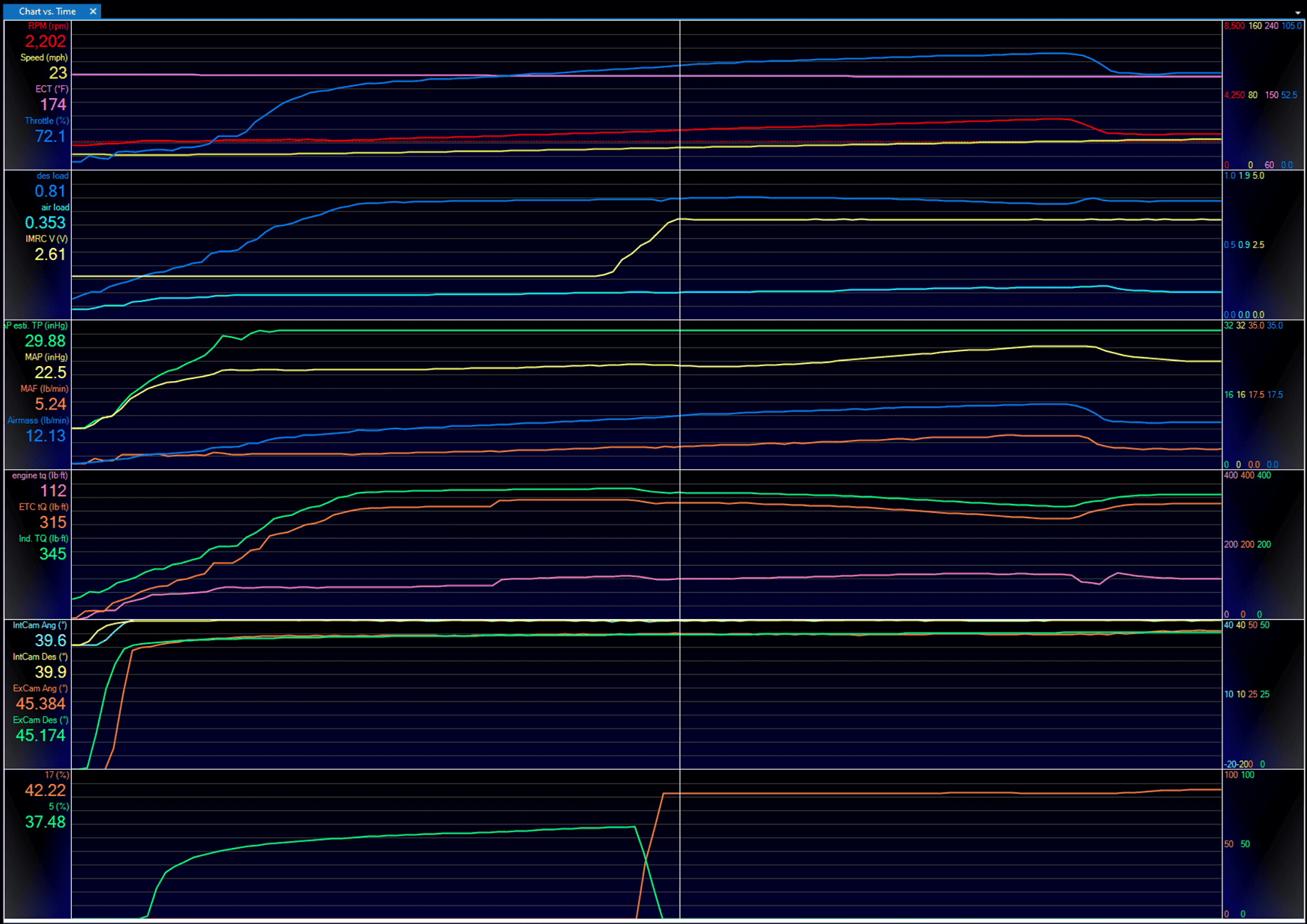
This was the only spot I saw MP5 to 17 transition with IMRC opening. MAF, load, torque did not change from the event, so I don't think this was commanded open and it was more the vacuum, or lack of vacuum just allowing the IMRC to open. I Just want to confirm that and this wasn't a commanded open and nothing changed from them opening because the throttle was still in control of airflow.I think even when imrc was open with MP17 it was still slow but I’ll try locking it open and commanding and see what happens
MAP being inffered, I can't just assume there was no vacuum available to pull the IMRC closed.
By commanding IMRC open and getting SD info for MP17 with a vacuum in the manifold, it will really tell a lot about those cam angles and the engines VE.
markmurfie
Well-Known Member
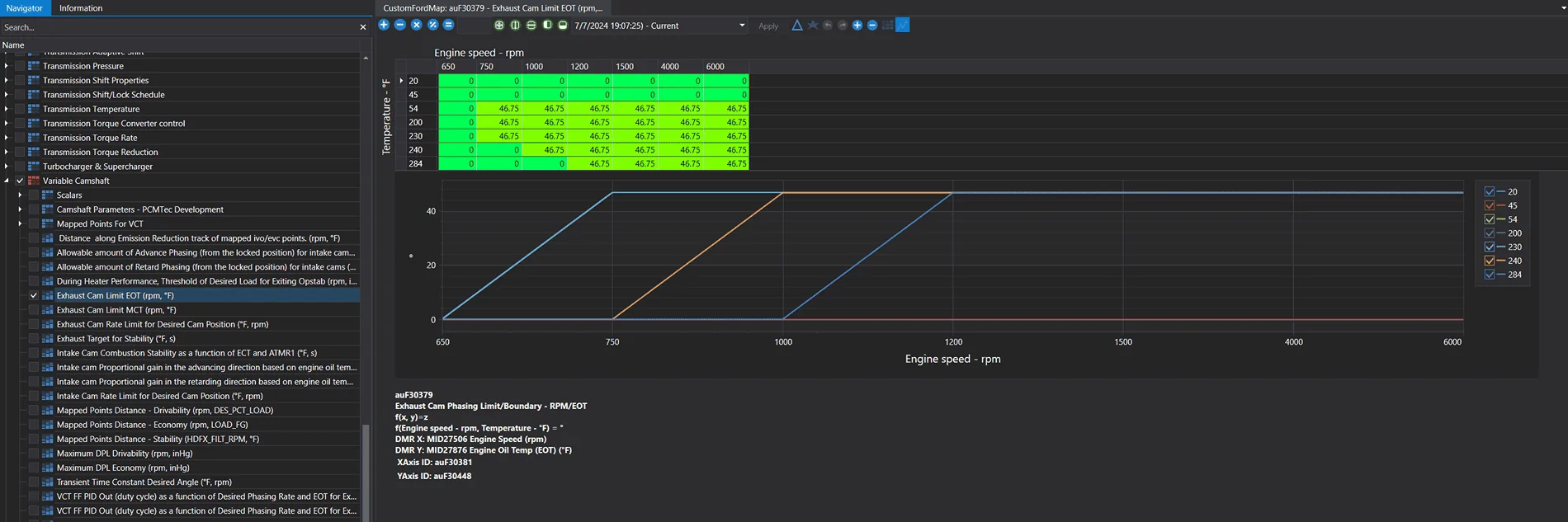
Then I think this table is preventing your exhaust cam from getting to the 50* angle it needs to for weight to fully be in MP 5,6,17,18.

OP
OP
tdstuart
Well-Known Member
- Thread starter
- #880
@markmurfie looks like you know a lot about the 6r80 and shifting. Ill wait to ask about it till I get the SD and torque stuff closer, don't want to sidetrack too much
Sponsored
markmurfie
Well-Known Member
Trans TV Pressure Slope - Non Shifting: This is the Slope value for TV Pressure per Ft. Lbs. of Torque the engine is producing. When not shifting, TV Pressure is calculated by taking the current torque and multiplying against the slope and adding the intercept value. When shifting, the TV Pressure tables for the shift is added.
What this basically says is tune the engine brake torque value the ECU thinks the engine is making to an accurate value and the pressures in the transmission will increase but also remain accurate and not be too high. Engine torque tuning is the most important thing to do.
Then raise the torque values in these shift modulation tables, the axis torque values need to be raised to cover what torque the engine is making. This will give harder/ faster shifts. This is also where you will break things like your torque converter, intermediate shafts, ect. So don't go too crazy here unless you have a built transmission and after market TC meant for abuse.

Then set the desired shift RPM in the OSS tables, making sure your engines RPM limits are a fare bit above the shift points as to not interfere with the shift trying to limit engine RPM.
Thats basically it.
6R80s are slow shifting, compared to modern day standards, but they are still near 350-400ms shifts and can be full power on shifts that feel great. its the torque reduction of the engine that makes the shifts feel slow. There's a reason they are so aggressive with the torque reduction stock and that's because they want these things to last.
What this basically says is tune the engine brake torque value the ECU thinks the engine is making to an accurate value and the pressures in the transmission will increase but also remain accurate and not be too high. Engine torque tuning is the most important thing to do.
Then raise the torque values in these shift modulation tables, the axis torque values need to be raised to cover what torque the engine is making. This will give harder/ faster shifts. This is also where you will break things like your torque converter, intermediate shafts, ect. So don't go too crazy here unless you have a built transmission and after market TC meant for abuse.
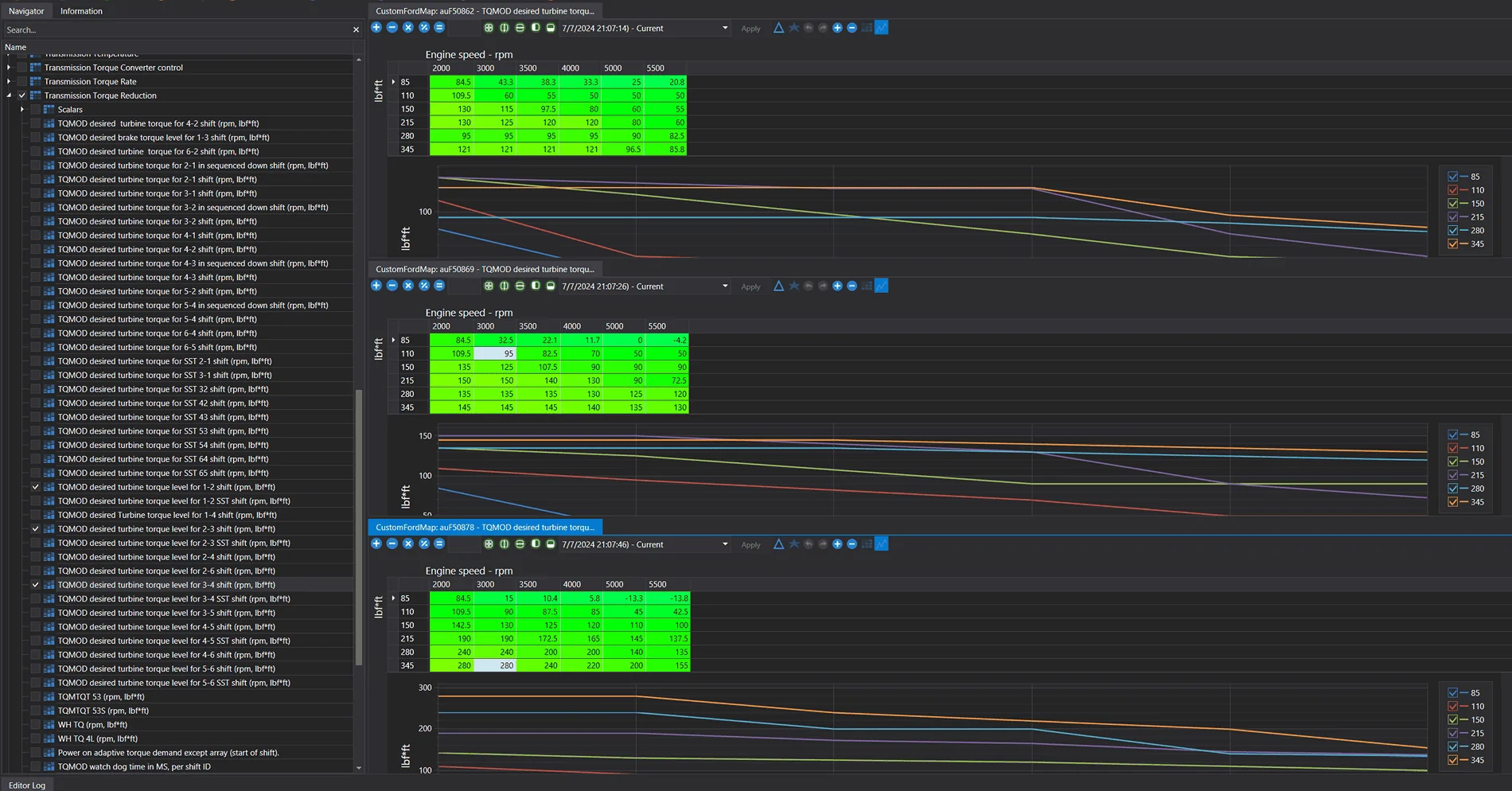
Then set the desired shift RPM in the OSS tables, making sure your engines RPM limits are a fare bit above the shift points as to not interfere with the shift trying to limit engine RPM.
Thats basically it.
6R80s are slow shifting, compared to modern day standards, but they are still near 350-400ms shifts and can be full power on shifts that feel great. its the torque reduction of the engine that makes the shifts feel slow. There's a reason they are so aggressive with the torque reduction stock and that's because they want these things to last.
Last edited:
OP
OP
tdstuart
Well-Known Member
- Thread starter
- #882
I just started playing with commanding shifts from what I understand it is based on the OSS table and an rpm table and it will shift at whichever comes first?Then set the desired shift RPM in the OSS tables, making sure your engines RPM limits are a fare bit above the shift points as to not interfere with the shift trying to limit engine RPM.
Thats basically it.
6R80s are slow shifting, compared to modern day standards, but they are still near 350-400ms shifts and can be full power on shifts that feel great.
I’m noticing commanded and when the transmission actually shifts is way off. It can be several hundred rpm different.
For example looking at a log of a first to second shift I see the log report commanded change from 1st to 2nd at 4.86 seconds and 6686rpm and then the rpms actually start dropping for the shift at 5.396 seconds and 7257rpm.
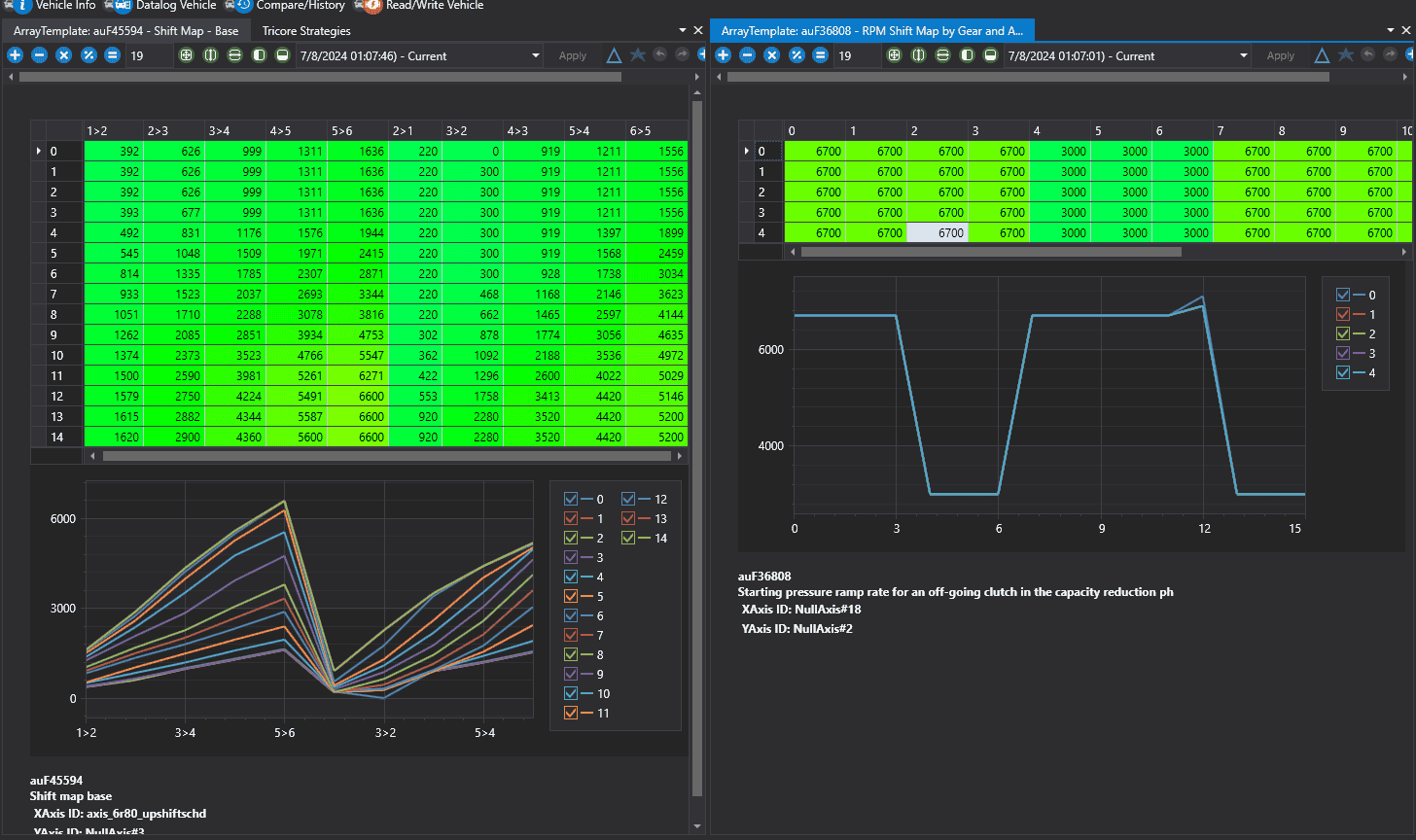
RPM Shift Map Labeled Properly in HPT:

Does it make sense to set my OSS shift out of the way then use the rpm map for my wot shifting or should I set my wot rpm point to a max point to shift and dial in the OSS shift map for shifting?
I was trying the second way and didn't seem to have great results shifting at a targetted speed. Does the car start commanding the shift at the set OSS speed or is it commanding earlier attempting to shift at the commanded OSS speed?
markmurfie
Well-Known Member
You need to get this part right and not skip it. WOT shifting when this is not right is not good, you could get slipping from pressures too low or dragging from pressures that are too high. Not being able to command a shift via the OSS table is a bad sign. All shifts are done with this table, WOT shouldn't have to be done differently.
"Trans TV Pressure Slope - Non Shifting: This is the Slope value for TV Pressure per Ft. Lbs. of Torque the engine is producing. When not shifting, TV Pressure is calculated by taking the current torque and multiplying against the slope and adding the intercept value. When shifting, the TV Pressure tables for the shift is added.
What this basically says is tune the engine brake torque value the ECU thinks the engine is making to an accurate value and the pressures in the transmission will increase, but also remain accurate and not be too high. Engine torque tuning is the most important thing to do. "
"Trans TV Pressure Slope - Non Shifting: This is the Slope value for TV Pressure per Ft. Lbs. of Torque the engine is producing. When not shifting, TV Pressure is calculated by taking the current torque and multiplying against the slope and adding the intercept value. When shifting, the TV Pressure tables for the shift is added.
What this basically says is tune the engine brake torque value the ECU thinks the engine is making to an accurate value and the pressures in the transmission will increase, but also remain accurate and not be too high. Engine torque tuning is the most important thing to do. "
Last edited:
OP
OP
tdstuart
Well-Known Member
- Thread starter
- #884
So you think once I get SD and the torque model better the shifts will be more accurate?You need to get this part right and not skip it. WOT shifting when this is not right is not good, you could get slipping from pressures too low or dragging from pressures that are too high. Not being able to command a shift via the OSS table is a bad sign. All shifts are done with this table, WOT shouldn't have to be done differently.
"Trans TV Pressure Slope - Non Shifting: This is the Slope value for TV Pressure per Ft. Lbs. of Torque the engine is producing. When not shifting, TV Pressure is calculated by taking the current torque and multiplying against the slope and adding the intercept value. When shifting, the TV Pressure tables for the shift is added.
What this basically says is tune the engine brake torque value the ECU thinks the engine is making to an accurate value and the pressures in the transmission will increase, but also remain accurate and not be too high. Engine torque tuning is the most important thing to do. "
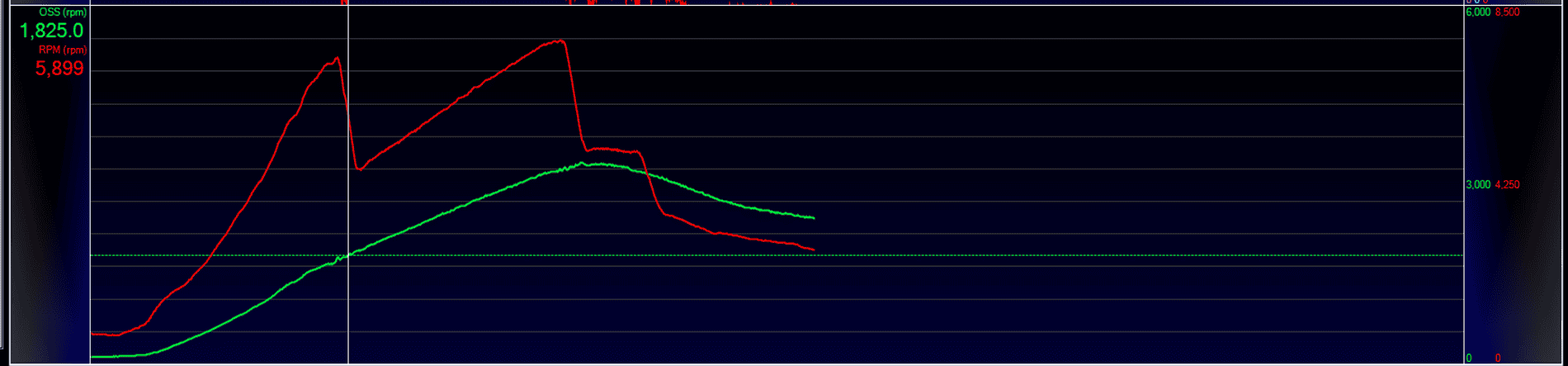
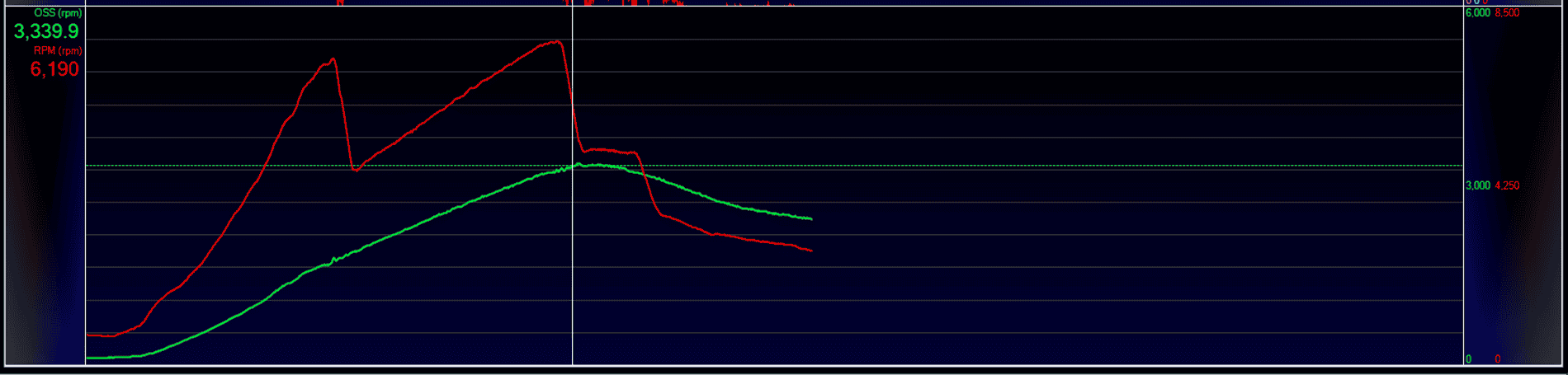
Is the OSS shifting commanding the shift when it hits the target OSS or is it commanding sooner to try and target the shift at the OSS?
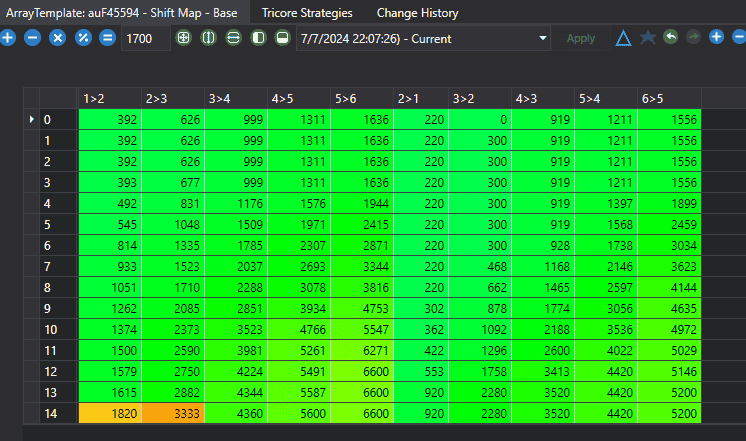
Here is a log and here is what my OSS shift table was set to
Attachments
-
60.7 KB Views: 47
markmurfie
Well-Known Member
Shift are anticipated.So you think once I get SD and the torque model better the shifts will be more accurate?
Is the OSS shifting commanding the shift when it hits the target OSS or is it commanding sooner to try and target the shift at the OSS?
Here is a log and here is what my OSS shift table was set to

The commanded gear change will occur shortly before the target so that the shift happen at the target.
You made it seem like it was way off, this is dead on OSS.
Sponsored


