CrazedAntelope
Well-Known Member
- Joined
- Jul 12, 2015
- Threads
- 4
- Messages
- 256
- Reaction score
- 71
- Location
- San Jose, CA
- First Name
- Chad
- Vehicle(s)
- Ecoboost Premium PP
Dang, thanks for the detailed response. I knew I was forgetting some of the stuff I learned in school. I guess that's what happens when a M.E. goes off and works in software/networking...Hi I will do the best I can to answer the question. I feel I have relevant information to pass along here. My experience is in multi-physics CFD modeling of turbine diffusers and aerodynamics of turbine blades and vanes. The stuff Velox does is amazing. I am really excited to see them coming out with true engineered components.
That being said, you cannot increase the angle of the diffuser lest you risk flow separation. Flow separation creates a huge pressure drop, unwanted drag and tons of turbulence. The optimal angle for a diffuser is around 7-8 degrees. Any more than that and you blow the boundary layer right off the surface of the diffuser and it will be pointless drag. They are using real aerodynamic approach number 1. by simulating their design using CFD analyses and 2. implementing industry standard practices that have been used for nearly a century in the design of aerospace components.
There are hundreds of research papers written on the topic of flow diffusion. You can google the following term, static pressure recovery ratio. This number is the amount of pressure you can recover from a moving stream by slowing it down into a static stream, the most effective way to do this is with a proper divergence angle, 7 degrees or so. The angle also varies, a very rough surface can actually handle a higher angle 8-9 degrees or more. This is due to the boundary layer thickness, of course you will need to analyze the Reynolds number, verify your Y+ and ensure you are capturing the correct flow at the boundary layer using the correct turbulence model.
I cant speak for velox, but I can assume they are doing it right from what I have seen on their Instagram. I follow them and I really like their approach, true flow simulated engineering and the rigors of aerodynamics are NOT just crunching numbers, it takes experience and R&D, and that is not easy. Props to them.
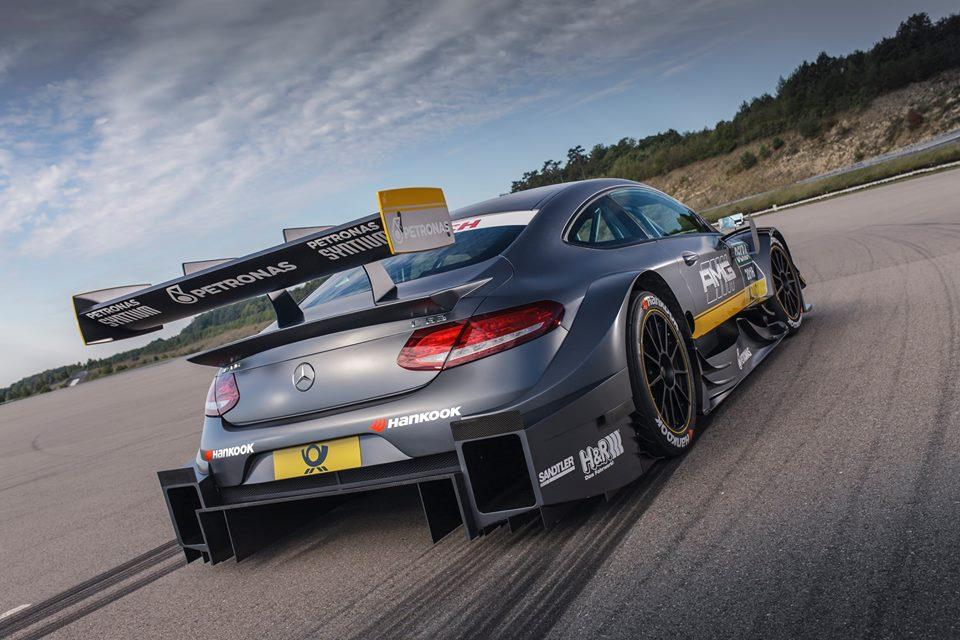
I suppose that's why DTM race cars have their diffusers stick out so far. The angle has to be shallow or else you get flow separation.
Sponsored