Brigadir
Well-Known Member
- Thread starter
- #1
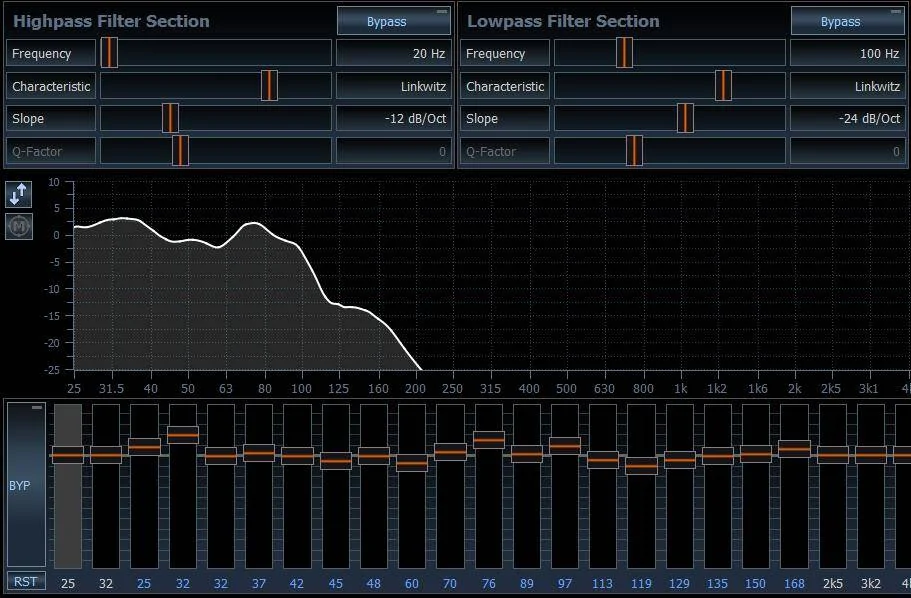
Is it true that audio tuning is possible to start but impossible to complete?  Since I replaced the factory audio with aftermarket gears (https://www.mustang6g.com/forums/th...ts-a-magic-step-to-make-sound-perfect.185530/) I also changed the amp to Helix M SIX DSP. It's surprisingly good toolset for EQ tuning and time alignment, so easy to work with it! After some work was done the only my complain remained that the door carts vibrate on high volume. When everything else works flawless this moment annoys. How to resolve it - of course with subwoofer.
After some investigations these options appeared:
- the factory sub - it isn't actually an option since it performs poorly
- aftermarket sub in place of the factory one in the trunk (https://www.skaraudio.com/products/...5-up-ford-mustang-L-VD-VS-1X10FORDMUS-2015-UP or https://www.americanmuscle.com/stealthbox-subwoofer-upgrade-kit-kit-part-15117.html)
- a canonical big-box sub in the trunk
- a small sub in place of factory rear speakers - has anybody done it already?
So, I decided to go with a sub in place of the rear deck speakers since I want to preserve the trunk space. The idea is to mount the sub in place of the speaker within small enclosure hanged to the deck. From ergonomics perspective it looks promising: it will occupy a little space that's rarely in use.
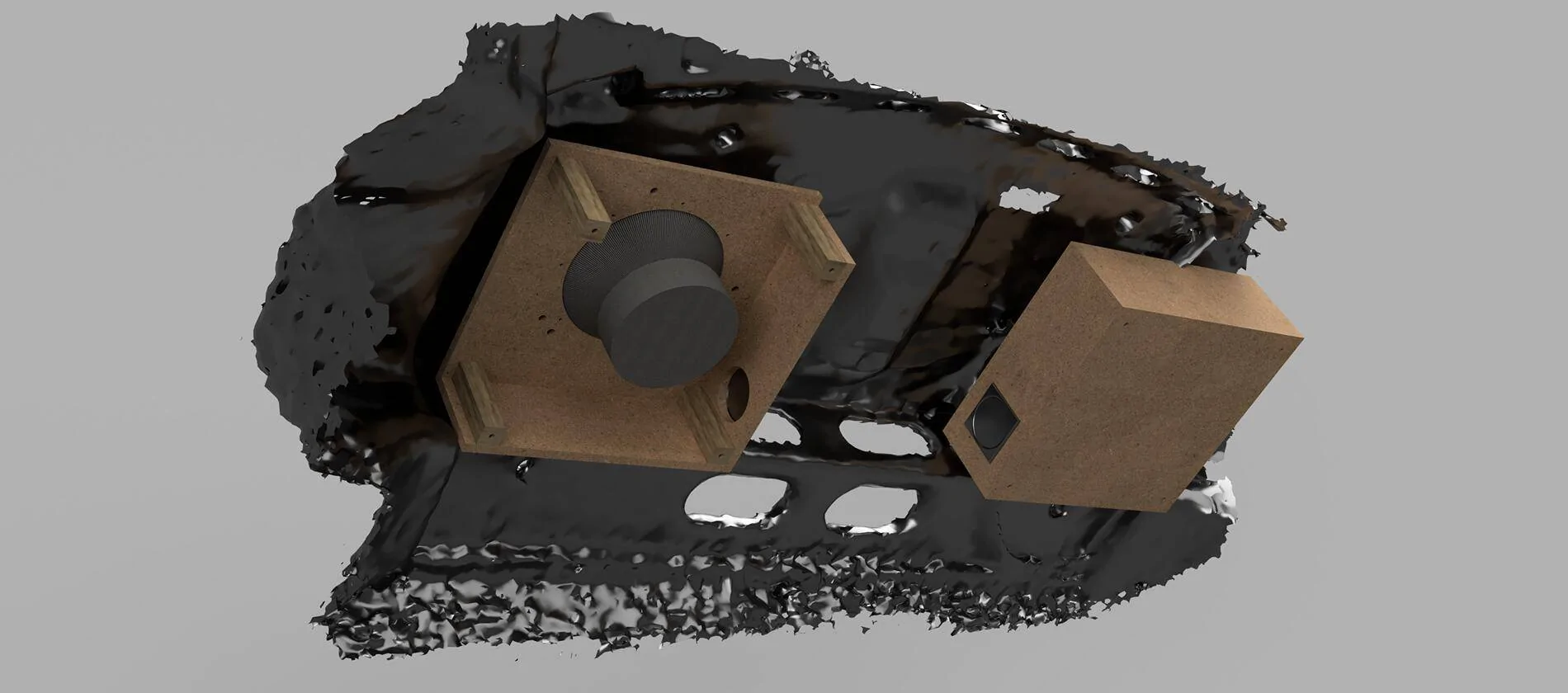
I made 3D scan of the trunk and modeled the enclosures. Surprisingly, the accuracy of iPhone front-face camera for scanning is precise enough (using Scaniverse app), all distances and sizes match up to millimeter. For the mount I utilized 5 existing holes in the deck that fit 1/4" bolts. I ordered laser-cut of the enclosure tap that mounts into the deck and it fit well from the first attempt.

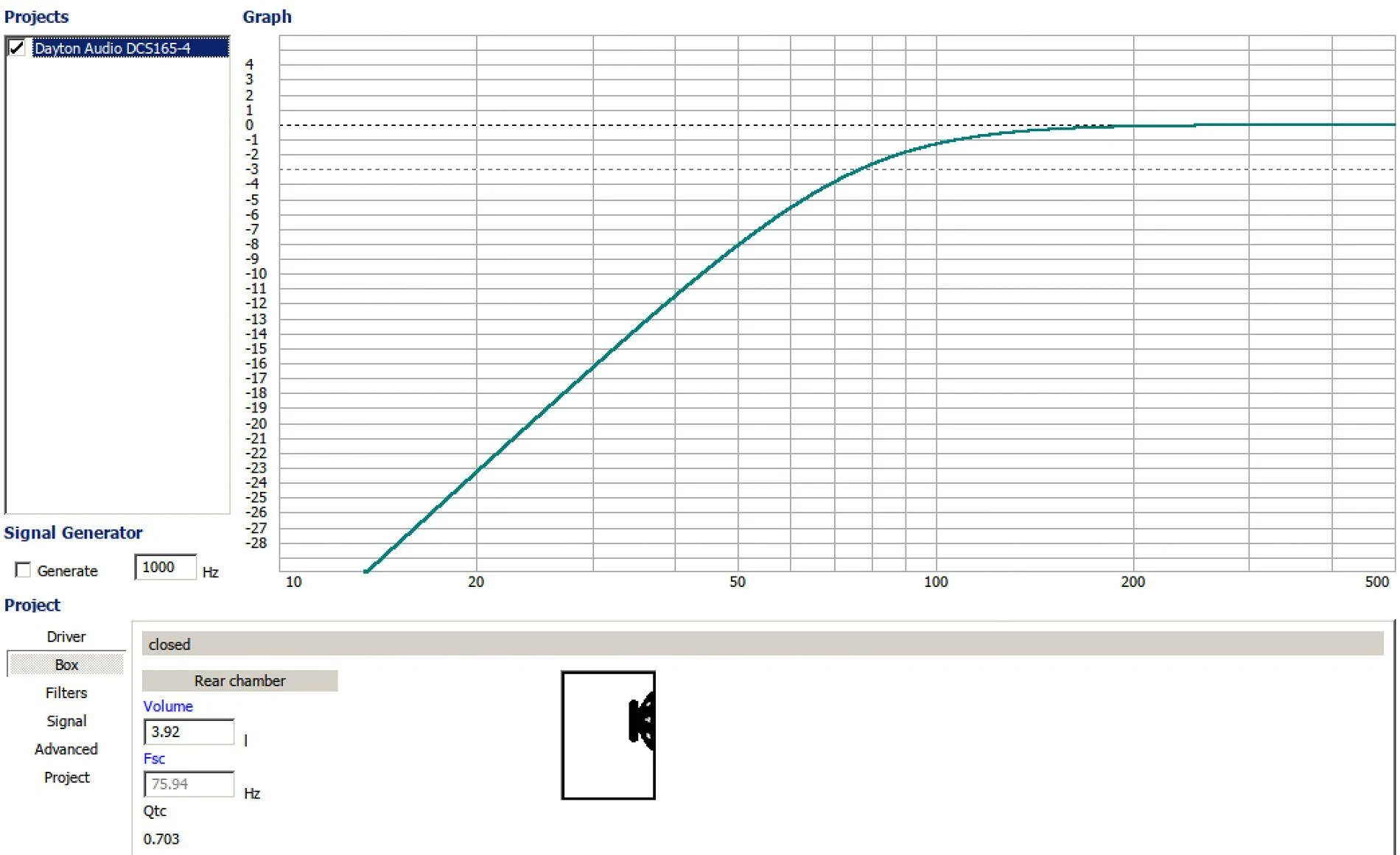
Regarding 6.5" subwoofers folks recommend Dayton Audio DCS165-4. I considered also Tang Band W6-1139SIF 6-1/2" as it provides outstanding performance for it's size and Skar Audio EVL-65 D4 6.5" as a popular cheap one. After modelling enclosed frequency response in WinISD I got good enough results for Dayton DCS165-4. The ideal enclosure was calculated as 3.92L.

For enclosure design I came with two ideas:
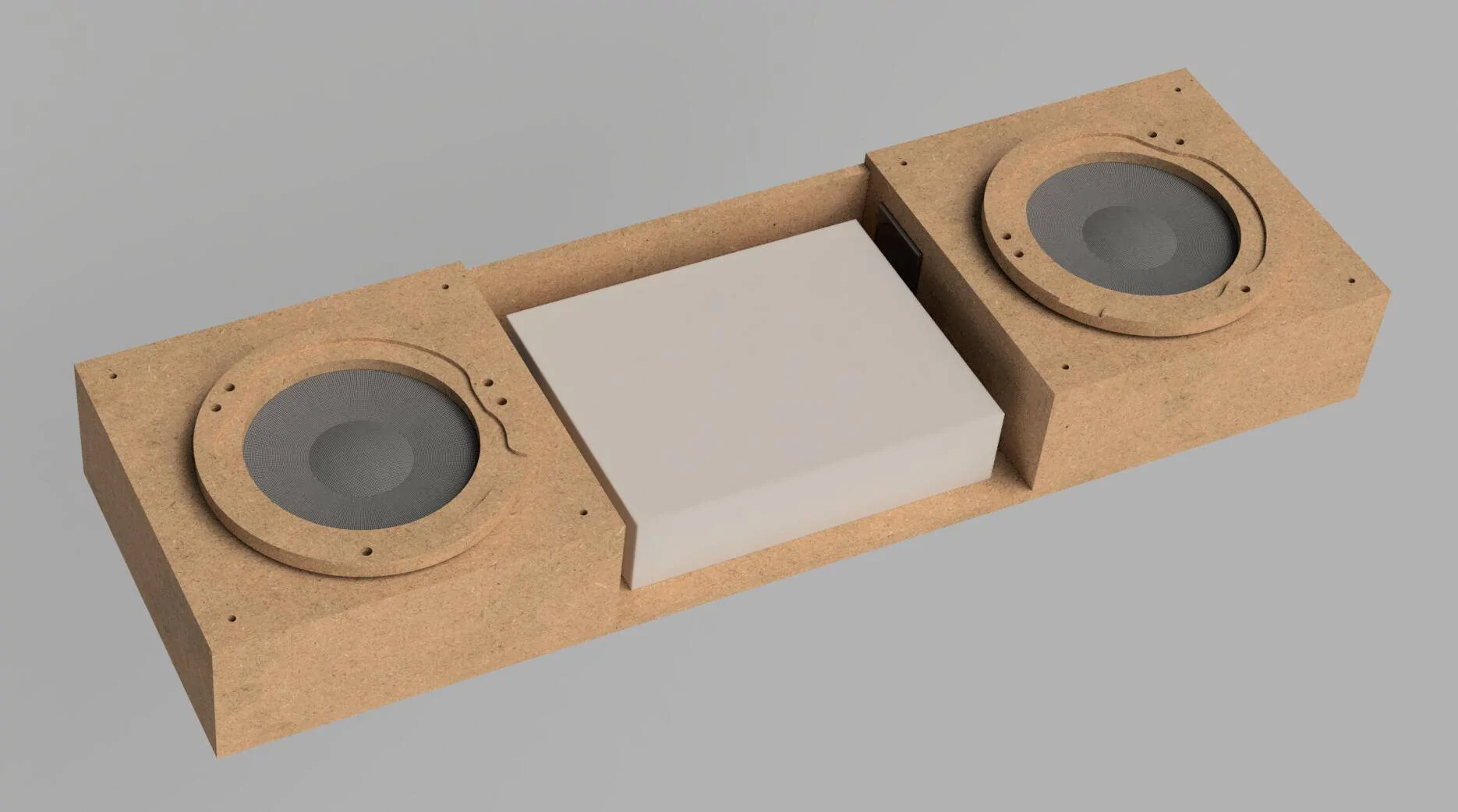
- two boxes sitting on one wide board. It provides place in the center for a dedicated amp and has additional strength for rigidity. The cons: it weights more than two individual boxes.

- two individual boxes. In this case the amp will be placed somewhere else. The pros: less weight, not occupied space in the center, easier to mount, possibility to install only one box.

As for material I chose triply of 9mm - it's stronger and lighter than MDF, and weight matters in this case. Here are the photos of the box work in progress:


The final part of this post, probably the most interesting for readers - what are the results. So far I installed only one subwoofer. First time I used it without enclosure (roughly like infinite baffle but actually there are holes in the rear deck, so it's not a baffle).
And some time later I mounted the enclosure and currently have it installed in this way. Here are the frequency response measurements:

The red graph is background noise, blue - the subwoofer without enclosure, purple - with enclosure.
As expected, the enclosure added low freq sound. What's not seen on the charts - the sound differs as well. The enclosure makes it more accurate, clear, it fits better into the music scene. Without enclosure it used to be like some ambient hum, at least for my taste of music - I use "Map Of The Problematique" by Muse as benchmark (in FLAC of course). People on audio forums point out that rear deck happens to rattle. In my case the rattle starts on high volume, but it goes from the trunk overall. It sounds more like some parasite resonance. During daily listening it actually doesn't occur. From mechanical side the mount is super rigid - 5 bolts do their work.
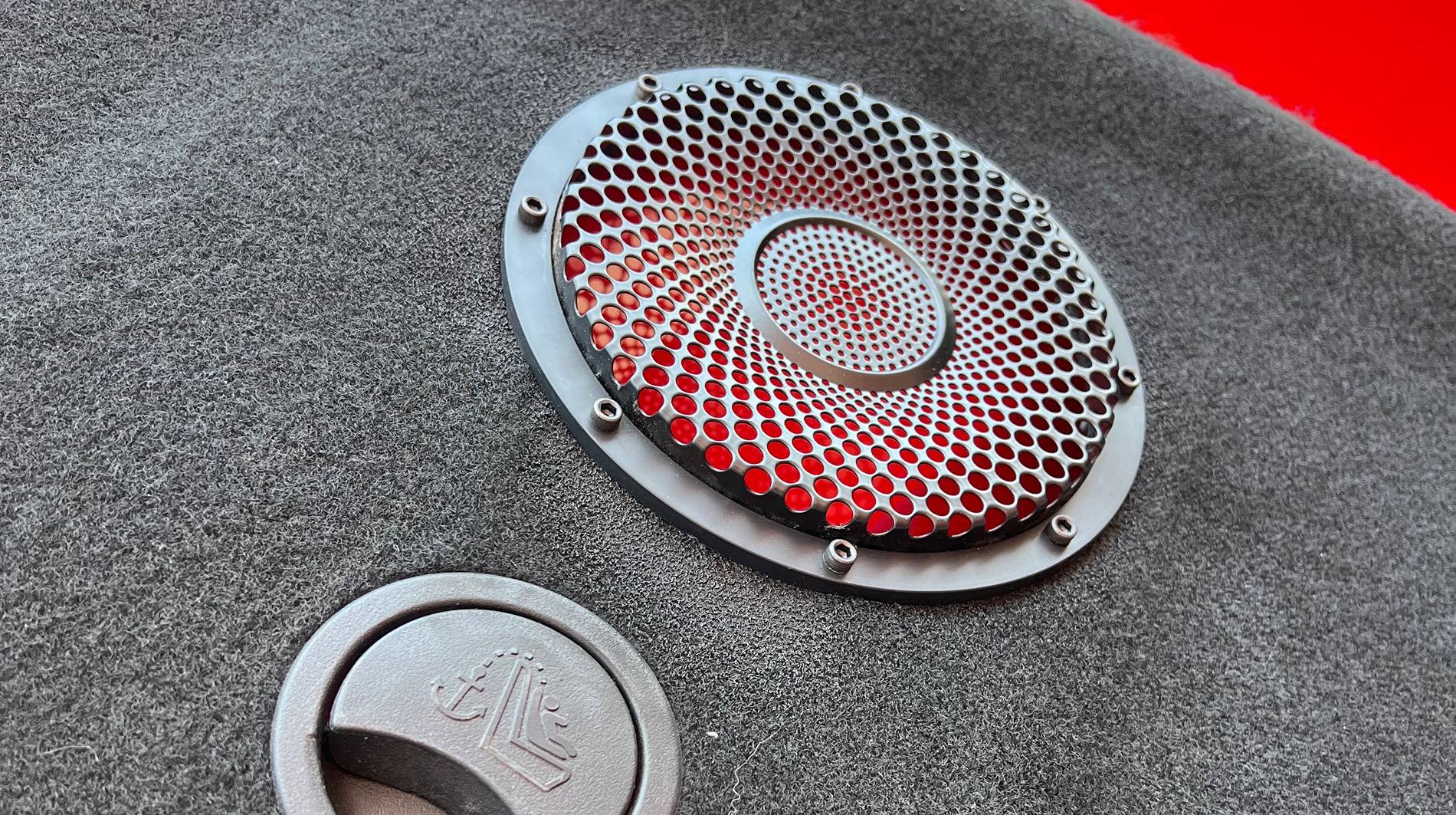
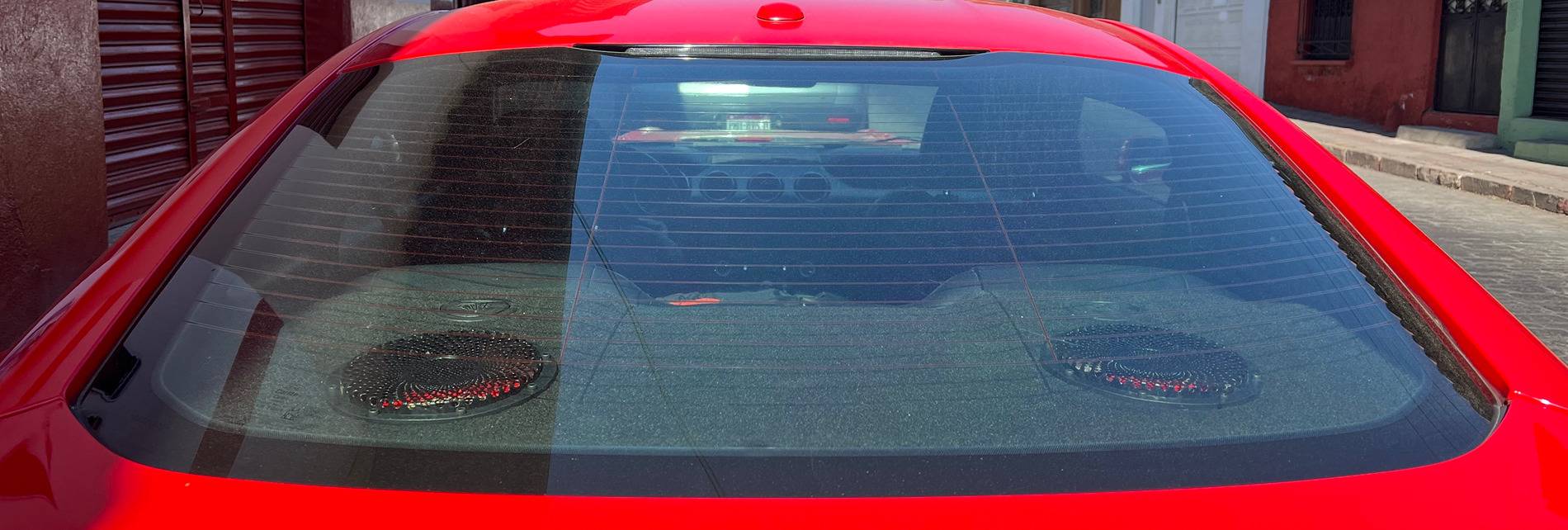
One not covered moment so far: the rear deck lid needs some improvements since it isolates the sound. Ford made something like holes there for the factory speakers, but they are useless, as far as the rear speakers themselves. I bought this grill https://a.co/d/cUOMgOu - it differs by look and quality from others on Amazon/Aliexpress. And ordered a laser cut for 6.5" holes in the deck lid. Here's the result:


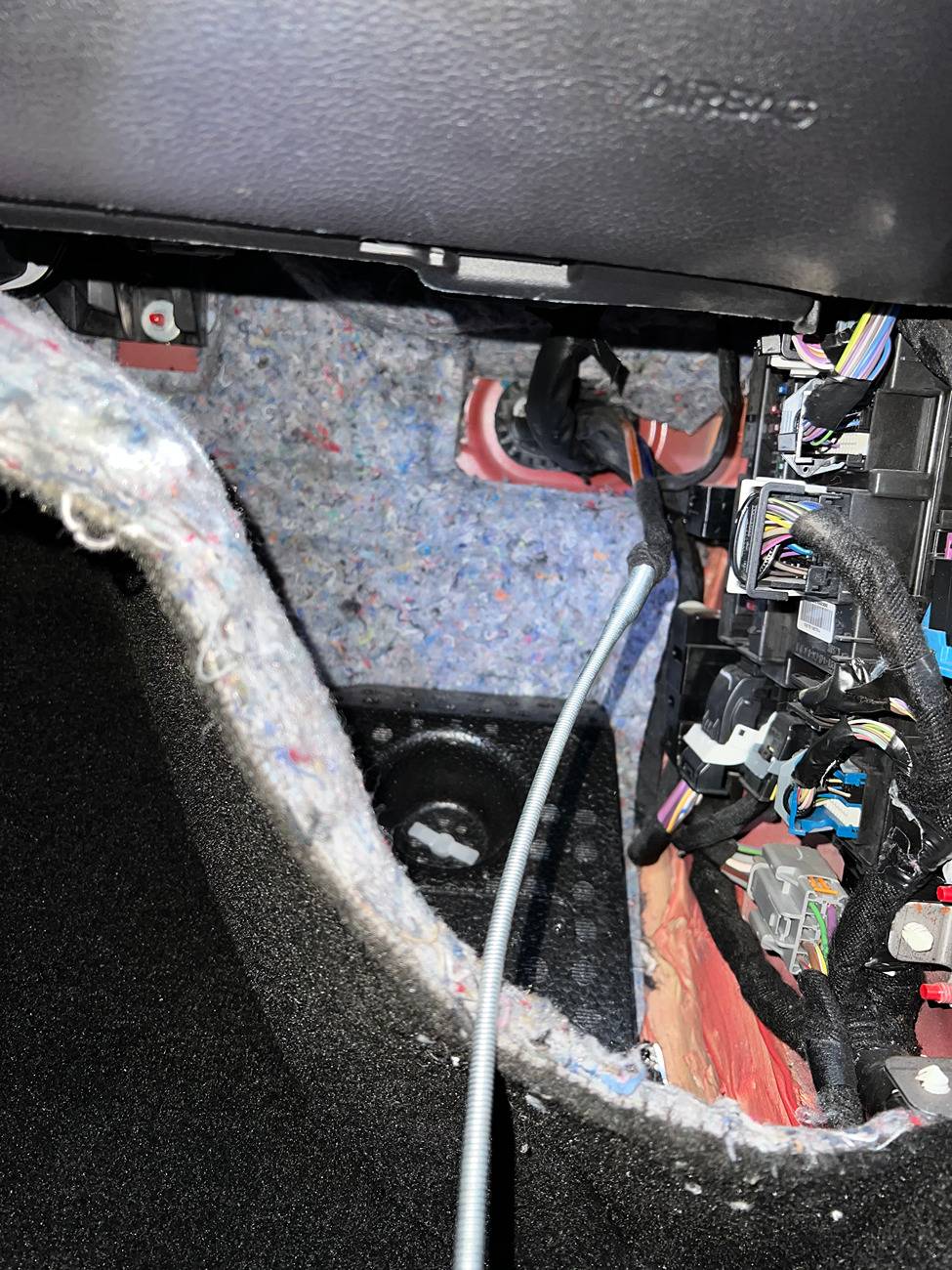
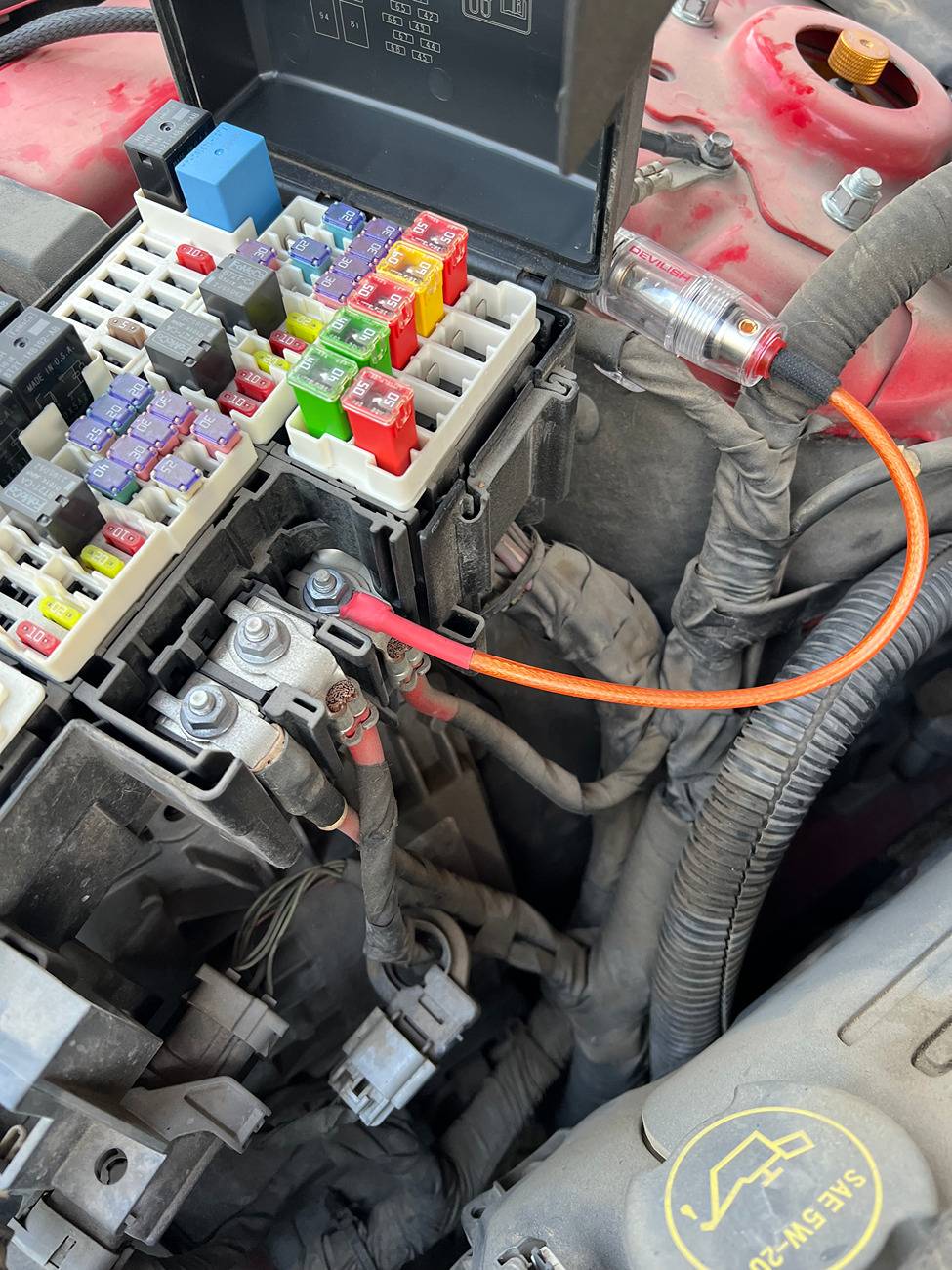
One more moment, if anyone is interested how to wire power supply from the battery, here are some pictures that speak by themselves:

By the way, this tool is indispensable:

Thanks for the reading, hoping that it will inspire other DIY-ers.
Since I replaced the factory audio with aftermarket gears (https://www.mustang6g.com/forums/th...ts-a-magic-step-to-make-sound-perfect.185530/) I also changed the amp to Helix M SIX DSP. It's surprisingly good toolset for EQ tuning and time alignment, so easy to work with it! After some work was done the only my complain remained that the door carts vibrate on high volume. When everything else works flawless this moment annoys. How to resolve it - of course with subwoofer.After some investigations these options appeared:
- the factory sub - it isn't actually an option since it performs poorly
- aftermarket sub in place of the factory one in the trunk (https://www.skaraudio.com/products/...5-up-ford-mustang-L-VD-VS-1X10FORDMUS-2015-UP or https://www.americanmuscle.com/stealthbox-subwoofer-upgrade-kit-kit-part-15117.html)
- a canonical big-box sub in the trunk
- a small sub in place of factory rear speakers - has anybody done it already?
So, I decided to go with a sub in place of the rear deck speakers since I want to preserve the trunk space. The idea is to mount the sub in place of the speaker within small enclosure hanged to the deck. From ergonomics perspective it looks promising: it will occupy a little space that's rarely in use.
I made 3D scan of the trunk and modeled the enclosures. Surprisingly, the accuracy of iPhone front-face camera for scanning is precise enough (using Scaniverse app), all distances and sizes match up to millimeter. For the mount I utilized 5 existing holes in the deck that fit 1/4" bolts. I ordered laser-cut of the enclosure tap that mounts into the deck and it fit well from the first attempt.
Regarding 6.5" subwoofers folks recommend Dayton Audio DCS165-4. I considered also Tang Band W6-1139SIF 6-1/2" as it provides outstanding performance for it's size and Skar Audio EVL-65 D4 6.5" as a popular cheap one. After modelling enclosed frequency response in WinISD I got good enough results for Dayton DCS165-4. The ideal enclosure was calculated as 3.92L.
For enclosure design I came with two ideas:
- two boxes sitting on one wide board. It provides place in the center for a dedicated amp and has additional strength for rigidity. The cons: it weights more than two individual boxes.
- two individual boxes. In this case the amp will be placed somewhere else. The pros: less weight, not occupied space in the center, easier to mount, possibility to install only one box.
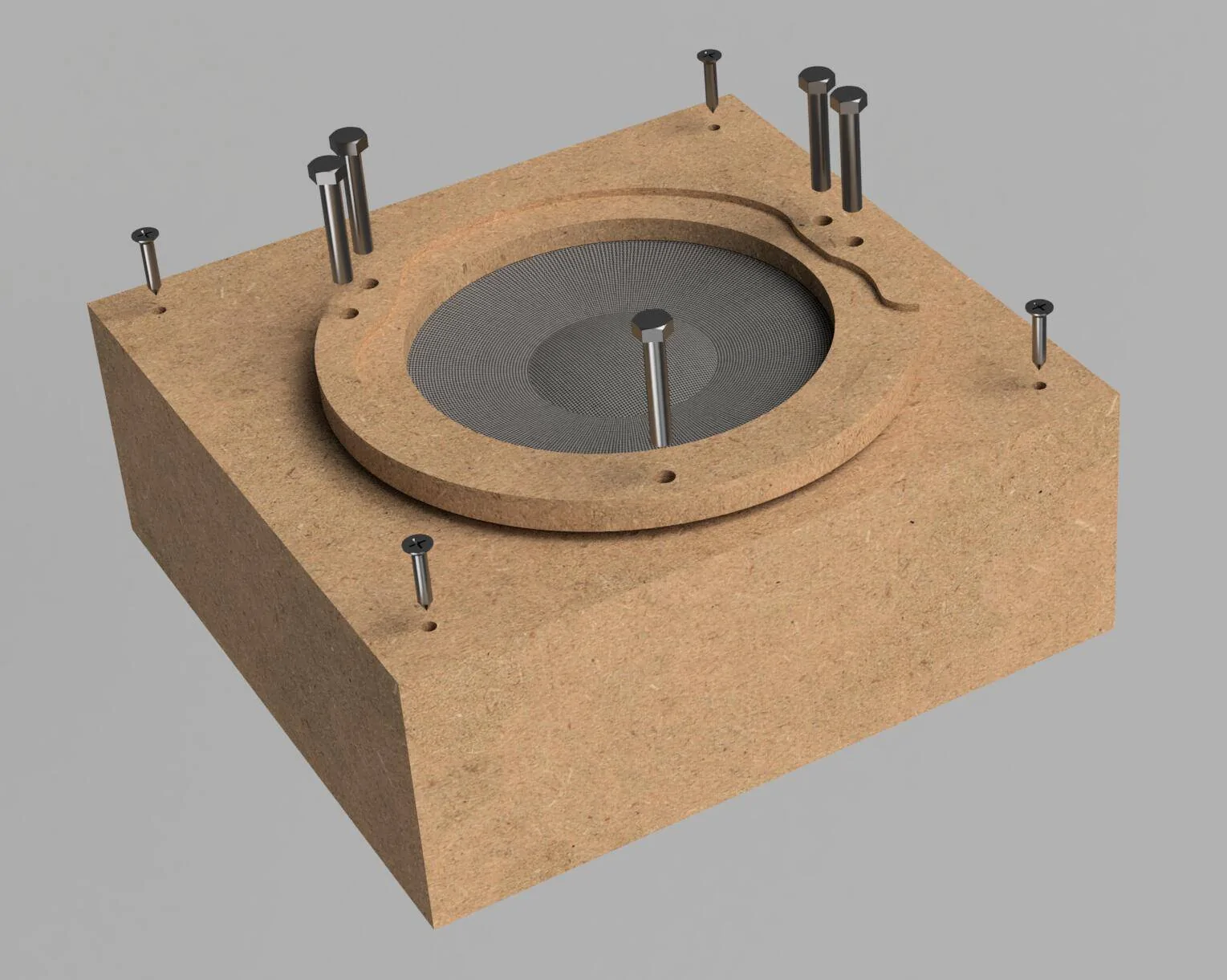
As for material I chose triply of 9mm - it's stronger and lighter than MDF, and weight matters in this case. Here are the photos of the box work in progress:
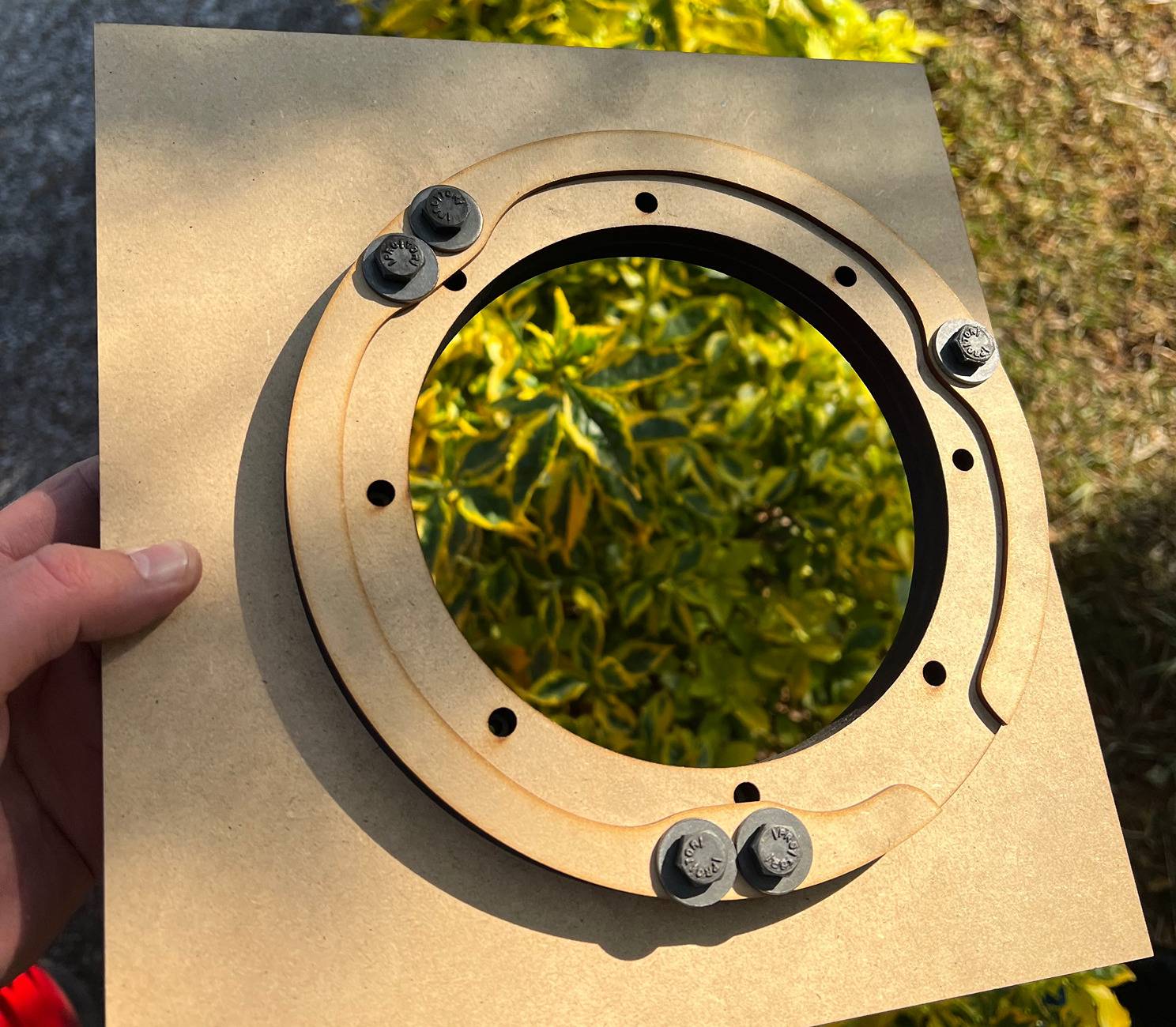
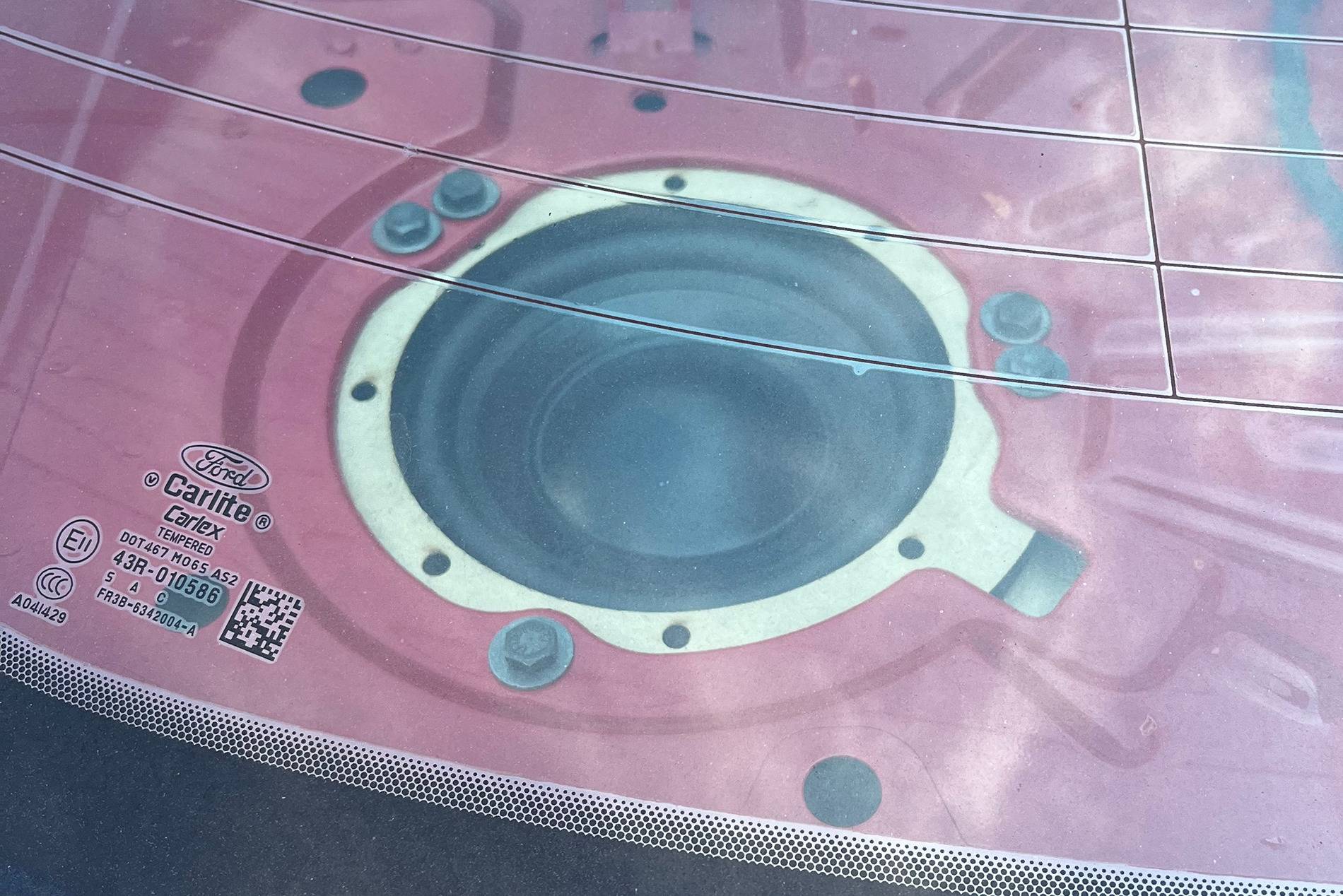
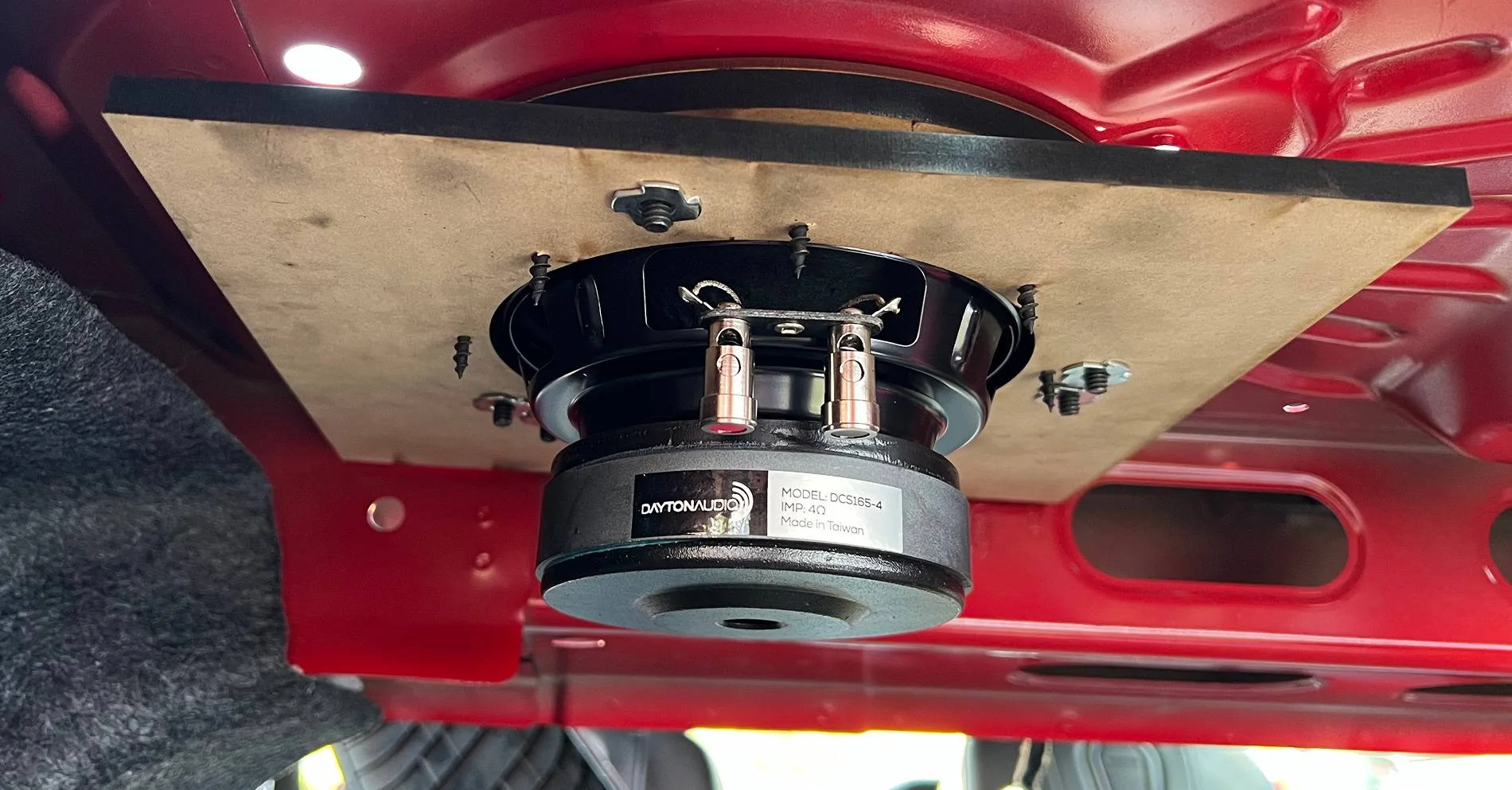
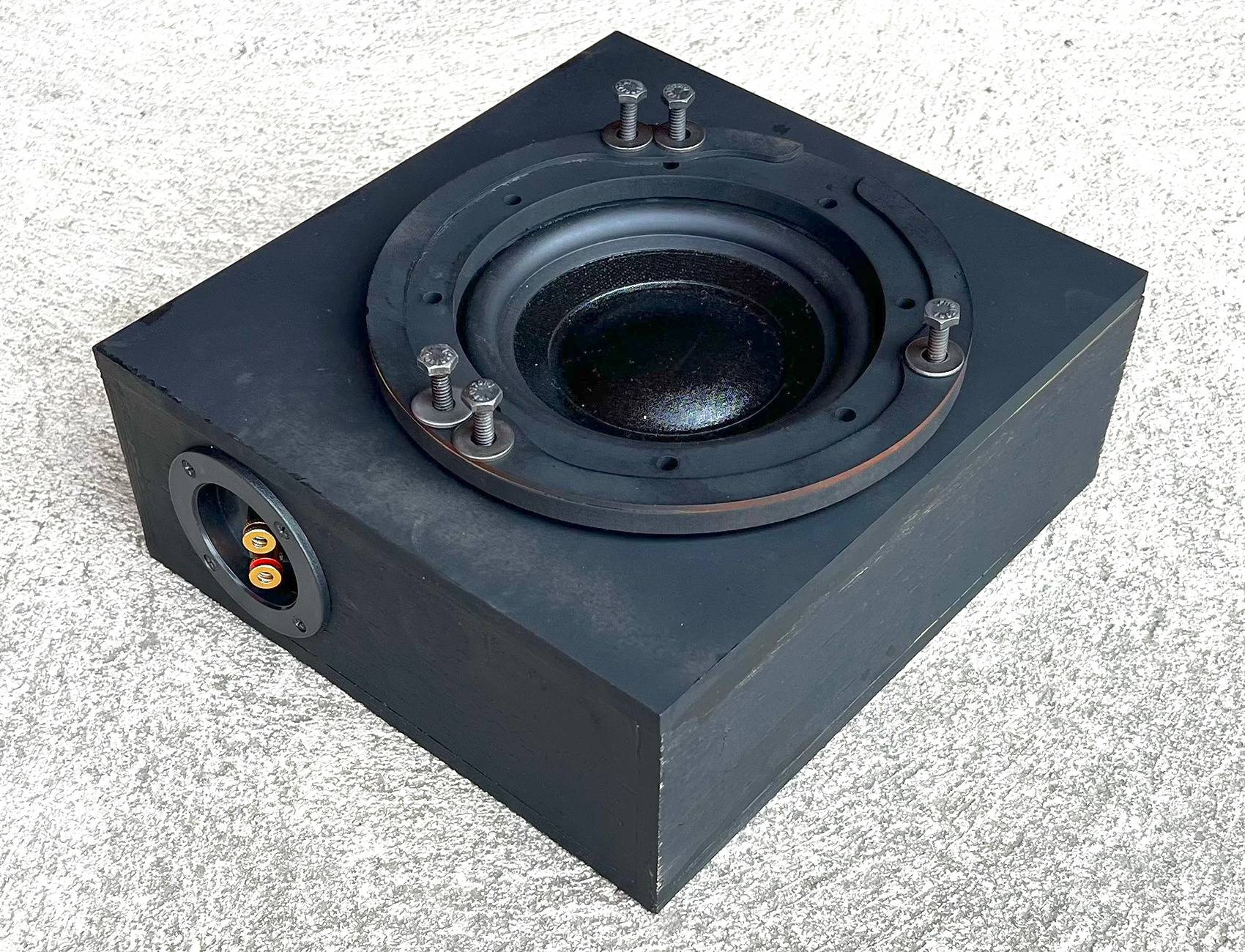
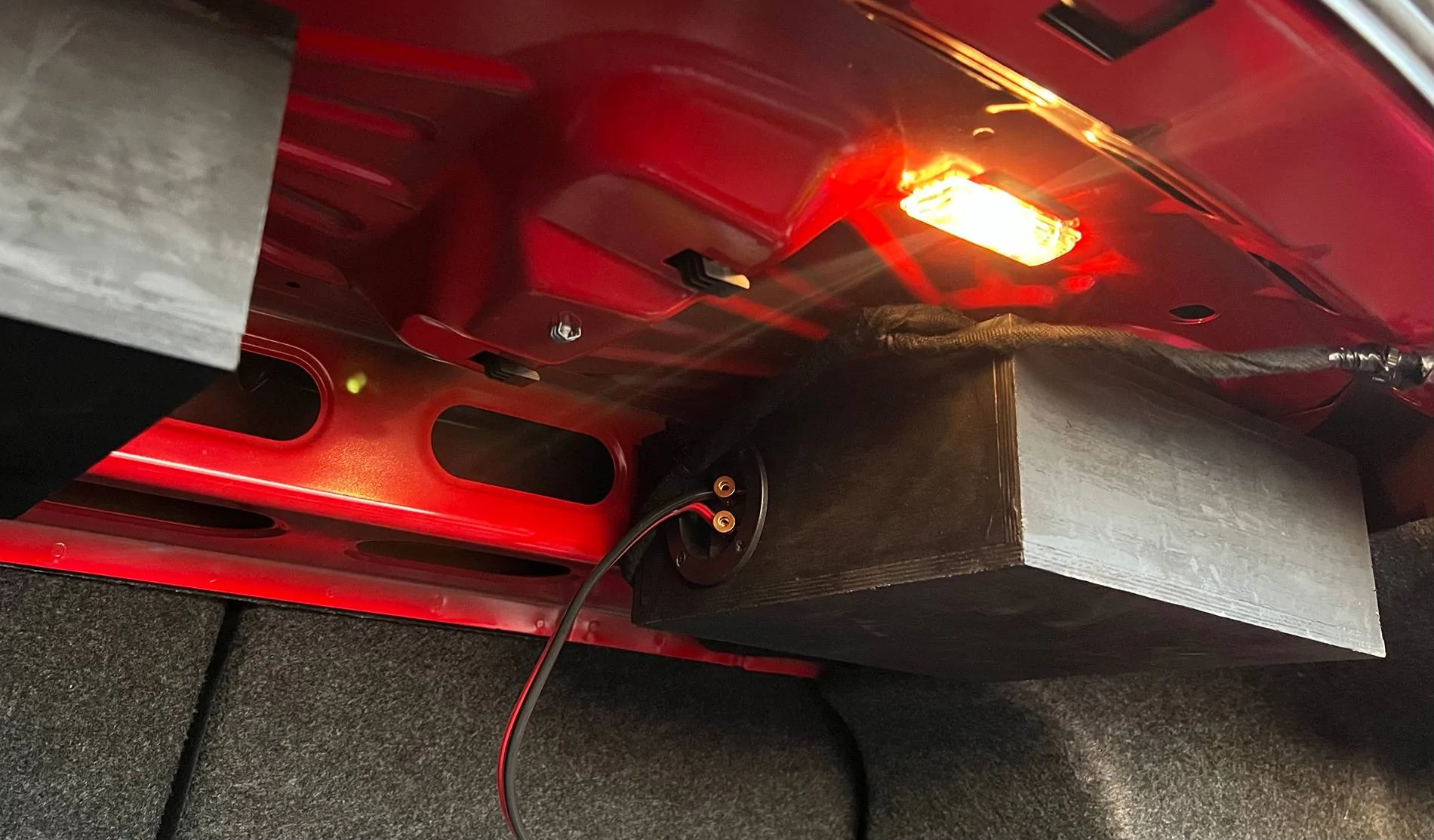
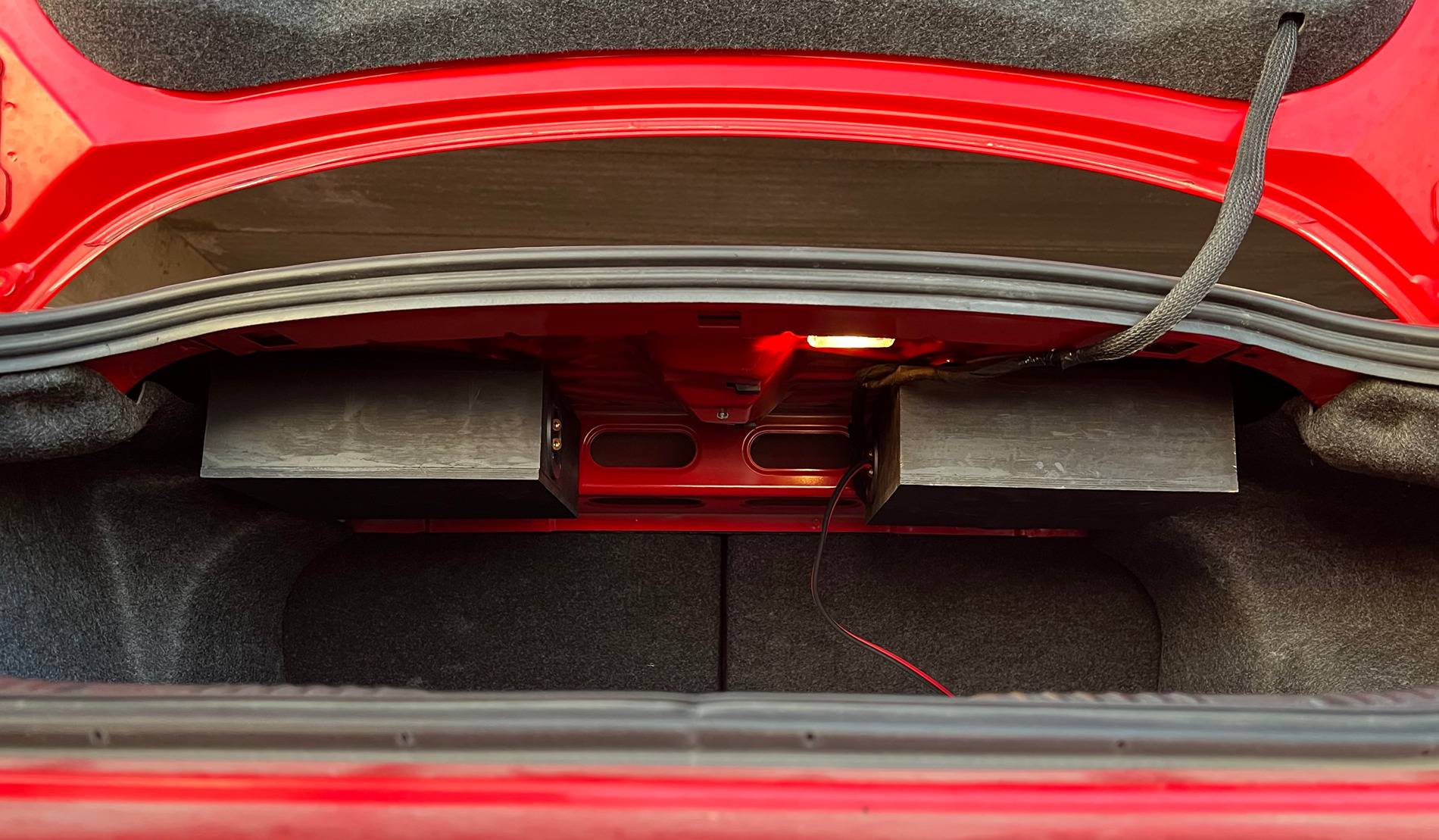
The final part of this post, probably the most interesting for readers - what are the results. So far I installed only one subwoofer. First time I used it without enclosure (roughly like infinite baffle but actually there are holes in the rear deck, so it's not a baffle).
And some time later I mounted the enclosure and currently have it installed in this way. Here are the frequency response measurements:
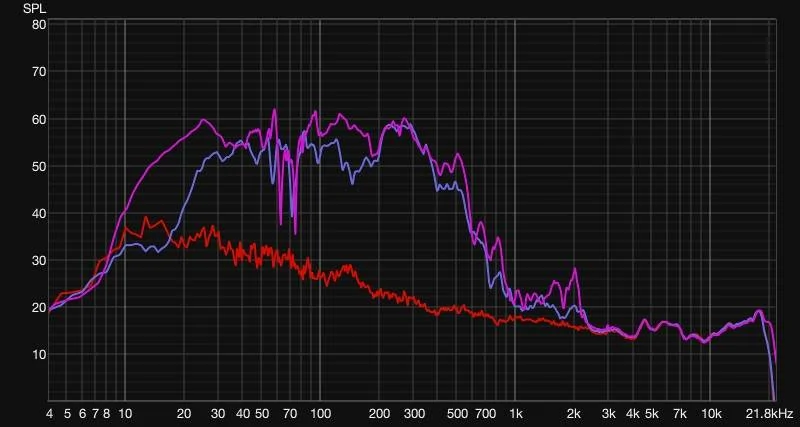
The red graph is background noise, blue - the subwoofer without enclosure, purple - with enclosure.
As expected, the enclosure added low freq sound. What's not seen on the charts - the sound differs as well. The enclosure makes it more accurate, clear, it fits better into the music scene. Without enclosure it used to be like some ambient hum, at least for my taste of music - I use "Map Of The Problematique" by Muse as benchmark (in FLAC of course). People on audio forums point out that rear deck happens to rattle. In my case the rattle starts on high volume, but it goes from the trunk overall. It sounds more like some parasite resonance. During daily listening it actually doesn't occur. From mechanical side the mount is super rigid - 5 bolts do their work.
One not covered moment so far: the rear deck lid needs some improvements since it isolates the sound. Ford made something like holes there for the factory speakers, but they are useless, as far as the rear speakers themselves. I bought this grill https://a.co/d/cUOMgOu - it differs by look and quality from others on Amazon/Aliexpress. And ordered a laser cut for 6.5" holes in the deck lid. Here's the result:
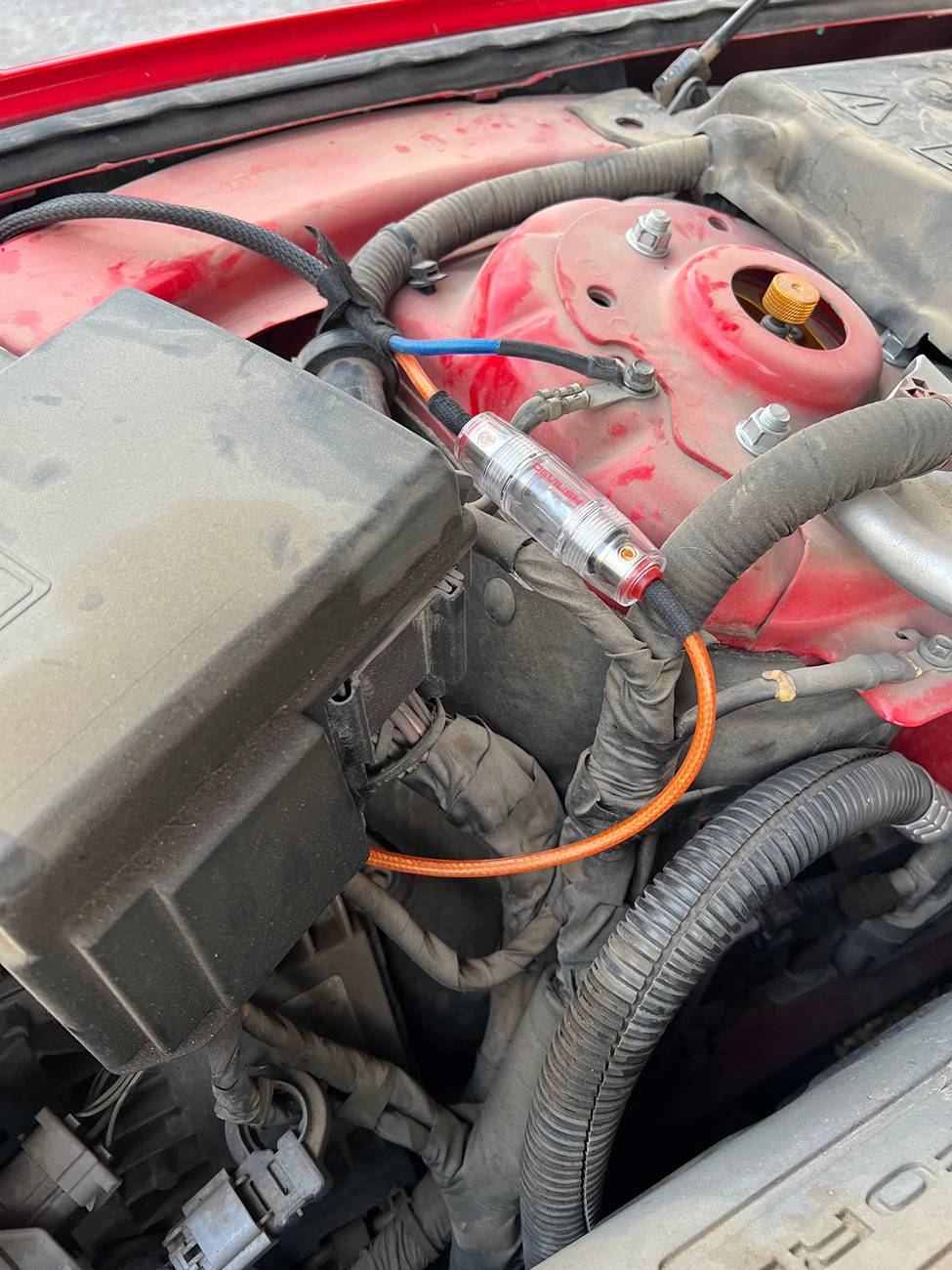
One more moment, if anyone is interested how to wire power supply from the battery, here are some pictures that speak by themselves:

By the way, this tool is indispensable:

Thanks for the reading, hoping that it will inspire other DIY-ers.
Sponsored