Sponsored

Catch Can for Procharged 2015 Mustangs

tienlo

Well-Known Member
Joined
Jul 30, 2015
Threads
3
Messages
81
Reaction score
83
Location
South Australia
Website
www.facebook.com
First Name
Tien
Vehicle(s)
2017 Black Manual GT, S2000, 350z, MT-03
what happens if u do not have imcr ie im running procharger on a 18manny with locks outs so i blocked off the line to the imrc am i good or do i need to supple it with vacuum of some short
+1 very curious about this

Actually, I'm very curious about how the IMRC line even interacts with a catch can - are the pressures running through this line negligible compared to the gas pressure flowing from the engine via the PCV, or the negative pressure generated by the Procharger itself?
Sponsored


 

Jackhammer

Member
Joined
Oct 10, 2017
Threads
2
Messages
21
Reaction score
16
Location
Illinois
Vehicle(s)
2017 Mustang GT
what happens if u do not have imcr ie im running procharger on a 18manny with locks outs so i blocked off the line to the imrc am i good or do i need to supple it with vacuum of some short
Has anybody received an answer yet for installing the UPR Catch Can on a Procharged 15-17 Mustang GT with a 2018 intake and lockouts?
I’m getting ready to install the UPR Catch Can, 2018 intake and MMR lockouts on my Procharged 2017.
Any help would be greatly appreciated.
Jack
 
OP
OP
AdrianMAK

AdrianMAK

Well-Known Member
Diamond Sponsor
Joined
Oct 16, 2014
Threads
50
Messages
1,216
Reaction score
326
Location
Miami, FL
Website
www.makperformance.com
Vehicle(s)
2015 TY Mustang GT Premium
Has anybody received an answer yet for installing the UPR Catch Can on a Procharged 15-17 Mustang GT with a 2018 intake and lockouts?
I’m getting ready to install the UPR Catch Can, 2018 intake and MMR lockouts on my Procharged 2017.
Any help would be greatly appreciated.
Jack

Shoot me a PM and I can send you over some pictures, we have changed the way this system is run if you have a new kit.
 

UPRjoe

Well-Known Member
Diamond Sponsor
Joined
Dec 19, 2014
Threads
24
Messages
592
Reaction score
260
Location
750 S. Eastcoast St, Lake Worth Fl. 33460
Website
www.uprproducts.com
First Name
Joe
Vehicle(s)
UPR 2015 Ecoboost Mustang
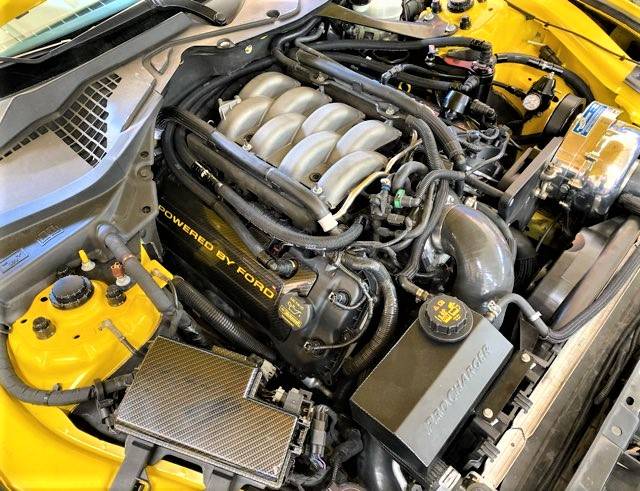
The picture is of Adrian's car ( MAK Performance) . Basically, the Catch Can does not care which intake manifold is on it. This Dual Valve catch can kit (5030-146-1-CSS) was developed with Adrian at MAK on his car. The dirty side hose runs from the passenger valve cover PCV fitting to the top of the catch can. The Vacuum hose runs from the side fitting on the catch can to the intake manifold vacuum port just behind the throttle body. This hose will have a check valve in it facing away from the can. The third hose on the kit will go from the other side port on the can to the supercharger air inlet tube. This is the WOT (Wide Open Throttle) Hose. This set up works well on street driven cars since during normal driving, the catch can uses intake manifold vacuum to circulate crankcase fumes through the catch can. When the engine sees boost, the positive crankcase pressure will close the check valve in the hose going to the intake manifold. The check valve in the WOT hose will then open allowing air to keep moving through the catch can by using air being pulled into the supercharger in the intake tube. The last component is on the driver side valve cover. It is the Clean Side Separator. The CSS also has a hose that is connected to the air intake tube. This allows clean air to be pulled into the crankcase during normal driving. ( Intake manifold vacuum would be pulling air out of the passenger valve cover, so the driver valve cover is air going in or 'makeup' air. If oil mist or splash tries to escape out of the driver side CSS when the engine is seeing boost, it will be trapped in the CSS until normal operation resumes.

This kit does require the WOT and CSS hoses connect to the air inlet tube on the supercharger.

Sound complicated? Kinda. It is the same Dual Valve catch can layout UPR has used on EcoBoost F150s for years.

If you're concerned about the HP difference between using the Procharger air inlet tube and filter assembly, MAK has their Hurricane inlet upgrade that makes great power and keeps the engine happy with a real air filter.
B65D7E37-.jpg


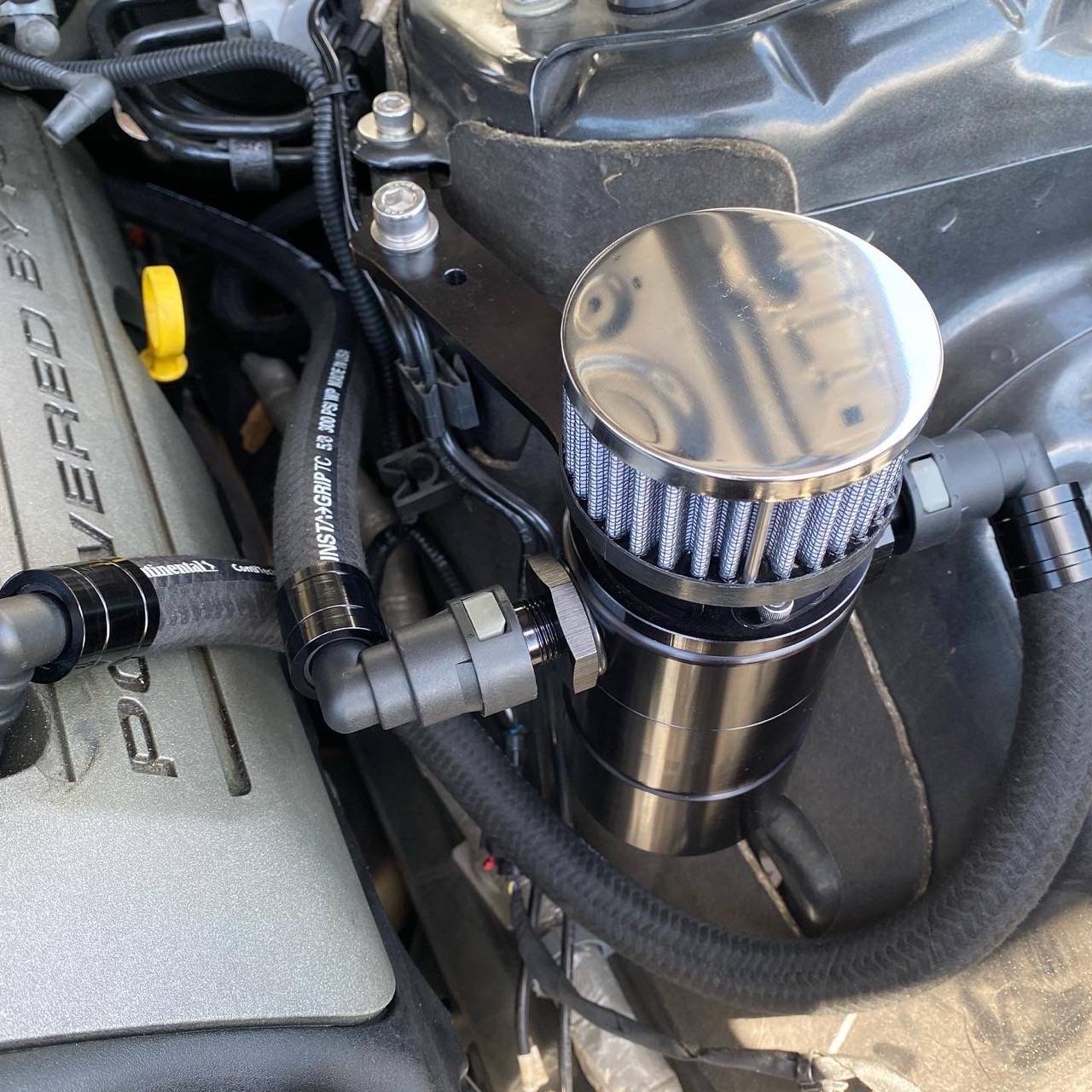
If you are looking to eliminate the air inlet tube, and run the supercharger open or with just a screen type filter, I'd recommend a Breather tank ( picture below) instead of a Dual Valve catch can. A breather tank would connect to both valve covers only. There would be no connection to the intake manifold vacuum or the supercharger inlet, so this set up will not care about what is happening with the intake at all. With an open to atmosphere breather tank, you will get some fumes / odor in the cabin so if you're sensitive to that, be aware.
15-17 Dual Inlet Breather 2.jpg


If any of this goes against forum rules, I apologize. Not trying to advertise, just trying to answer the question the best I can.
 
OP
OP
AdrianMAK

AdrianMAK

Well-Known Member
Diamond Sponsor
Joined
Oct 16, 2014
Threads
50
Messages
1,216
Reaction score
326
Location
Miami, FL
Website
www.makperformance.com
Vehicle(s)
2015 TY Mustang GT Premium
The picture is of Adrian's car ( MAK Performance) . Basically, the Catch Can does not care which intake manifold is on it. This Dual Valve catch can kit (5030-146-1-CSS) was developed with Adrian at MAK on his car. The dirty side hose runs from the passenger valve cover PCV fitting to the top of the catch can. The Vacuum hose runs from the side fitting on the catch can to the intake manifold vacuum port just behind the throttle body. This hose will have a check valve in it facing away from the can. The third hose on the kit will go from the other side port on the can to the supercharger air inlet tube. This is the WOT (Wide Open Throttle) Hose. This set up works well on street driven cars since during normal driving, the catch can uses intake manifold vacuum to circulate crankcase fumes through the catch can. When the engine sees boost, the positive crankcase pressure will close the check valve in the hose going to the intake manifold. The check valve in the WOT hose will then open allowing air to keep moving through the catch can by using air being pulled into the supercharger in the intake tube. The last component is on the driver side valve cover. It is the Clean Side Separator. The CSS also has a hose that is connected to the air intake tube. This allows clean air to be pulled into the crankcase during normal driving. ( Intake manifold vacuum would be pulling air out of the passenger valve cover, so the driver valve cover is air going in or 'makeup' air. If oil mist or splash tries to escape out of the driver side CSS when the engine is seeing boost, it will be trapped in the CSS until normal operation resumes.

This kit does require the WOT and CSS hoses connect to the air inlet tube on the supercharger.

Sound complicated? Kinda. It is the same Dual Valve catch can layout UPR has used on EcoBoost F150s for years.

If you're concerned about the HP difference between using the Procharger air inlet tube and filter assembly, MAK has their Hurricane inlet upgrade that makes great power and keeps the engine happy with a real air filter.
B65D7E37-.jpg


If you are looking to eliminate the air inlet tube, and run the supercharger open or with just a screen type filter, I'd recommend a Breather tank ( picture below) instead of a Dual Valve catch can. A breather tank would connect to both valve covers only. There would be no connection to the intake manifold vacuum or the supercharger inlet, so this set up will not care about what is happening with the intake at all. With an open to atmosphere breather tank, you will get some fumes / odor in the cabin so if you're sensitive to that, be aware.
15-17 Dual Inlet Breather 2.jpg


If any of this goes against forum rules, I apologize. Not trying to advertise, just trying to answer the question the best I can.

Couldn't explain it better than that.
Sponsored


Top