BmacIL
Enginerd
- Joined
- Sep 21, 2014
- Threads
- 69
- Messages
- 14,989
- Reaction score
- 8,911
- Location
- Naperville, IL
- Vehicle(s)
- 2015 Guard GT Base, M/T
- Vehicle Showcase
- 1
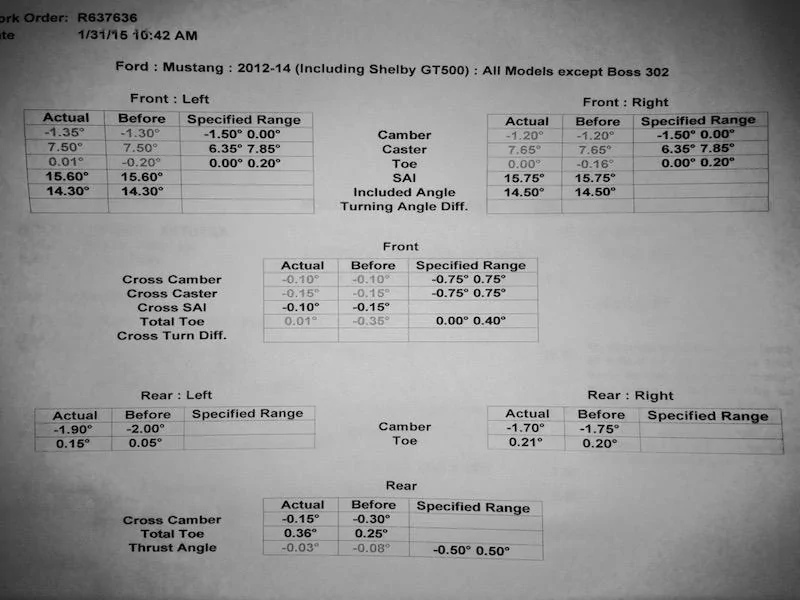
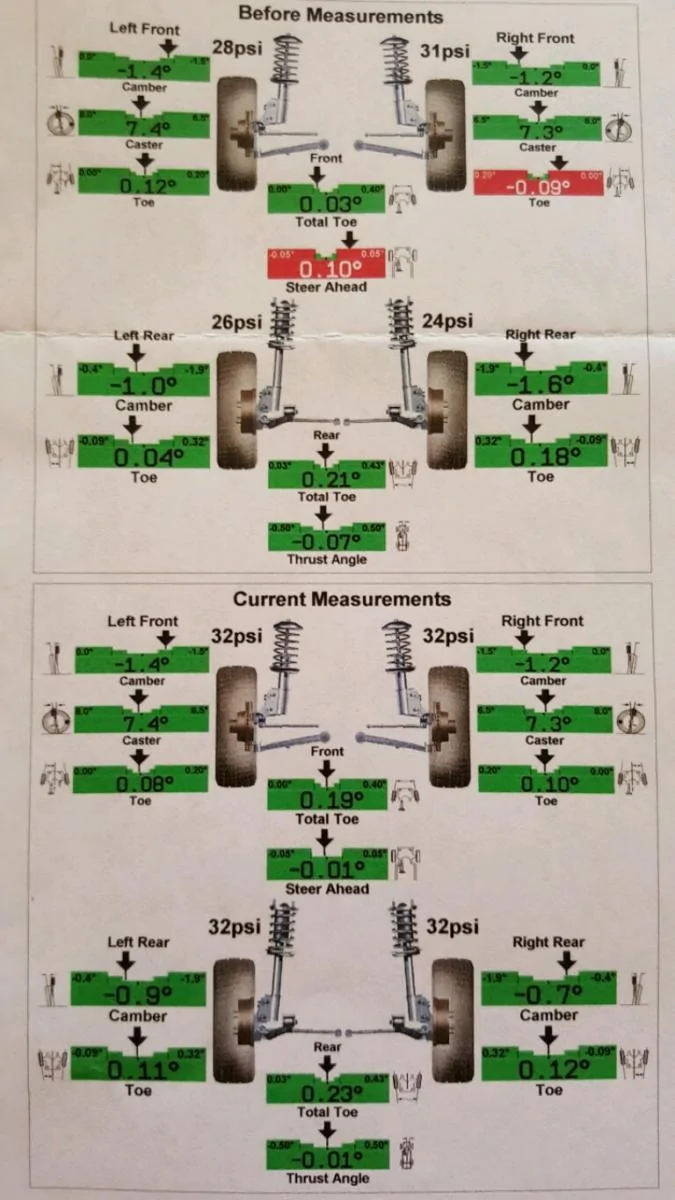
0 rear camber would be borderline dangerous to drive in anything but a straight line. You could get some nasty snap oversteer. It's an IRS, so as the car rolls, the outside tire camber goes more positive. You want to set static camber such that the tire gets its max contact patch during cornering. This is different for every car due to the geometry of the suspension and its associated camber gain through the wheel travel. - 2.0 in the front is also too much for any street car, particularly with a strut suspension. - 1.0-1.5 is desirable here. More than this will not gain you anything unless you're only using for road course track use, and will just wear the insides of the tires more. Also, positive toe values = toe in.Actually that does not look good. Toe should be 0.0 up front. And I would say also 0.0 in the rear, but if you want closer to factory spec in rear that's fine.
But why so much toe out in the front? Really should be 0.0.
Camber should be same side-to-side. The actual amount doesn't mean a whole lot as long as side-to-side is within 0.2 degrees IMO. I would want closer to 0 camber in rear and closer to -2.0 in front. I know stock can't get 2.0, but if you lower you get more than spec so anything closer to that is fine as long as it is the same side-to-side.
Norm,
It's been my experience that any positive front toe from zero does a good deal to calm the initial response to steering input. That will also vary car to car depending on the steering ratio, suspension stiffness and geometric trail from the suspension design/wheel offset. You do make a good point about bushing compliance, though.
Sponsored