Sponsored

2018 whipple cal. pulley experimenting

SVT-DADDY

World's heaviest S550
Joined
Apr 28, 2016
Threads
94
Messages
1,514
Reaction score
472
Location
CT
Vehicle(s)
2015 GT Convertible
Vehicle Showcase
1
Yes this is basically what I was saying. Adding boost with fuel octane limits maxed usually results in no additional peak power or maybe even reduction depending on knock activity and timing pulled. Whipple SC aka Dustin Whipple has told me many times I would make more peak power on 93 octane fuel with a 3.65" pulley over a 3.5" pulley.
Also a lot more dangerous for when you get a bad tank of gas or someone puts 87 in it. Very little margin for error.
Sponsored


Burkey

Well-Known Member
Joined
Feb 9, 2016
Threads
87
Messages
5,524
Reaction score
3,512
Location
Australia
Vehicle(s)
2016 Mustang GT
Vehicle Showcase
1
Just for kicks....

A whipple Stage 2 on a stock 18 gains around 320 rwhp (290-350 seems to the the range) at 11 psi. That’s about 30 rwhp per psi boost. They also run about 10 deg less timing than stock. Due to diminishing returns (losing 1 deg at 16 hurts more than losing 1 degree at 28), I would venture to guess that the first psi adds closer to 40 rwhp while the 11th psi adds closer to 20. We’ve seen several cars and my old coyote truck gain about 20 rwhp per psi of boost beyond 10. We’ve also seen e85 gain up to 40 rwhp per psi added, as you said, likely due to the timing remaining in.

That said, I do believe that 1 psi can add up to 40 rwhp as long as you don’t have to retard the timing any. If you pull 1 deg, that 40 is probably closer to 20 rwhp. If you pull 2+ deg per added 1 psi, you’re probably making less power now than before you raised the boost.

Make any sense or no?
Makes sense to me.
 

markmurfie

Well-Known Member
Joined
Jun 6, 2015
Threads
15
Messages
1,320
Reaction score
625
Location
Hawaii
First Name
Mark
Vehicle(s)
2015 Ford Mustang GT
Cylinder pressure is king, Not just peak, but BMEP brake mean effective pressure. This is the power produced from the pressure pressing on the piston during the power stroke.

MBT timing gives you the best BMEP.

Detonation prevents you from getting to MBT timing. Detonation occurs when the peak pressure goes above the threshold of the fuel self ignition, This happens as the piston is traveling down in the power stroke. Don't confuse it with preignition which happens as the piston is traveling up in the compression stroke, before the spark happens. increasing airflow increases cylinder pressure, but also pushes the fuel into a more detonation limited zone, or at least closer to it, if the engine is achieving MBT spark. To increase engine power, add octane, efficient airflow, or displacement. you will reach a point where the physical material and design of the engine just cant hold the cylinder pressures. This is where forged rods and pistons, sleeves, Etc. Come in to play.
Detonation causes a hammering effect with cylinder pressure. any one who has used an impact gun, compared to constant pressure on a breaker bar, knows what hammering can do to metal. Things tend to snap and break much easier with hammering.

You can reduce your upper pulley size on your Whipple down until you run into detonation. You can then increase your octane and pulley down some more. At some point you will be producing enough cylinder pressure that your stock engine just inst capable of holding the pressures produced. The range at where this happens is wide 750-1000+, but who really knows what these engines failed because of, its not like we have a bunch of data from expert analysis after failures. Which were making too much cylinder pressure, which ones failed as the fuel detonated, which ones failed from engine build issues.
 
OP
OP

engineermike

Well-Known Member
Joined
Jul 15, 2018
Threads
31
Messages
6,198
Reaction score
6,482
Location
La
Vehicle(s)
2018 GTPP A10
While I appreciate the qualitative technical description, I was hoping to learn more quantitatively about exactly what pulley sizes worked, what the timing response was, what were the effects of octane, and what power changes to expect with the above with a whippled 2018.

I did do some logging, but it’s hard to get consistent data. Ambient temps play a part and sometimes the timing is different even in the same conditions, so my repeatability isn’t great. Even still, it appears as though I lost 1-2 deg of timing when I switched from the 3.875 to 3.75 pulley. Based on that, I might have gained 0-20 rwhp. The whipple 2018 manual says the 3.75 pulley is recommended for 93 octane. I can say based on my logs, with some confidence, that dropping to the 3.625 probably wouldn’t gain any more power on 93 so the whipple manual is probably accurate.

I added 6 oz of boostane to a full 16 gallon tank. According to the mixing chart, the result should be near 99 octane. Log data seems to indicate I gained 1-2.5 deg timing, still running some positive KR at the top of 5th. My 2 conclusions are 1) it’s probably not 99 octane and 2) it gained back the timing lost with the pulley swap and probably picked up 20-40 rwhp. It will take more boostane to reach max timing and more still if I want to drop another pulley. I went ahead and added 3 more oz to the remaining half a tank of gas which, oddly, is only supposed to add 1 to the octane. I will log this one next week.
 

Tommy V

Well-Known Member
Joined
Jul 24, 2014
Threads
72
Messages
3,651
Reaction score
604
Location
Brookly park Md
First Name
Tommy
Vehicle(s)
2015 race red gt pp manual, recaros, 401al DOA "too much boost on 93", 2017 GT Auto
I think in Mark was trying to tell u that theirs more to timing and knock then just octane and iat's.Cylinder pressure which is calculated but can be read by looking at load can also pull timing.Bad part is u have to see what is commaded in the tune and compare it to an actual log to see if cylinder pressure is causing u to lose timing.I take a snap shot of load versus rpm versus knock in the tune and then log a pass and see if my load at different rpms is going pass its limits,which is kind of a little easier way to explain it.It all depends what is written in your tune!!.
 

Sponsored

OP
OP

engineermike

Well-Known Member
Joined
Jul 15, 2018
Threads
31
Messages
6,198
Reaction score
6,482
Location
La
Vehicle(s)
2018 GTPP A10
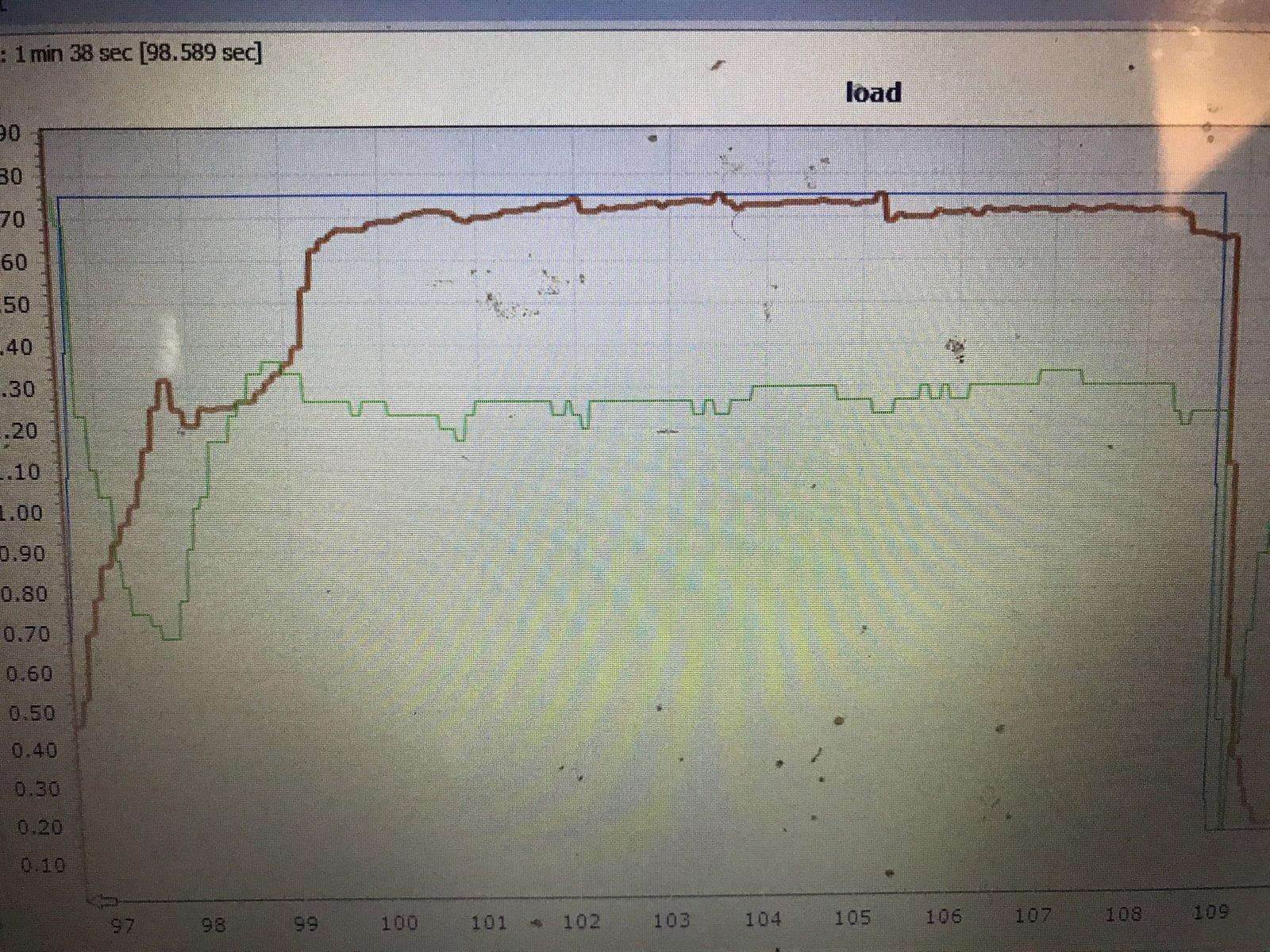
I have logged the load curves and it appears as though the smaller pulley resulted in roughly a 3.5% increase (174-176 up to 176-182, peak)

However, unless my understanding is way off here, the cal is floating the timing at the threshold of knock. If that’s the case, then as long as I’m not hitting max timing (-2 KR), then I am seeing an accurate representation of what is working in my favor and what isn’t. In other words, hypothetically, if I increase boost 1 psi and the resulting commanded timing drops 1 deg, then KR pulls out another 2, the result is -3 deg timing vs before the change and I likely netted a loss in power. I was simply wondering if anyone else has played with these things and what data they gathered.
 

TX-Ripper

Well-Known Member
Joined
Nov 10, 2017
Threads
16
Messages
637
Reaction score
282
Location
SE Texas
Vehicle(s)
2019 Mustang GT PP1 Whipple Stage 2 / 2018 F150 5.0 Whipple Stage 2
@Whipple SC could probably answer this part as they have done the testing.
 

olaosunt

Well-Known Member
Joined
Jan 10, 2015
Threads
72
Messages
4,291
Reaction score
1,575
Location
Indiana
Vehicle(s)
Guard,base,M6,KB-2.DIB,auto,Hellion TT,2016 GT 350/Gen 3 Whipple ,2018 Mustang GT/Gen 5 Whipple
I gained about 2 mph when I went down a 3.625 from a 3.75 pulley on 93 but I always add a can of boostane to 93 /98 when racing .
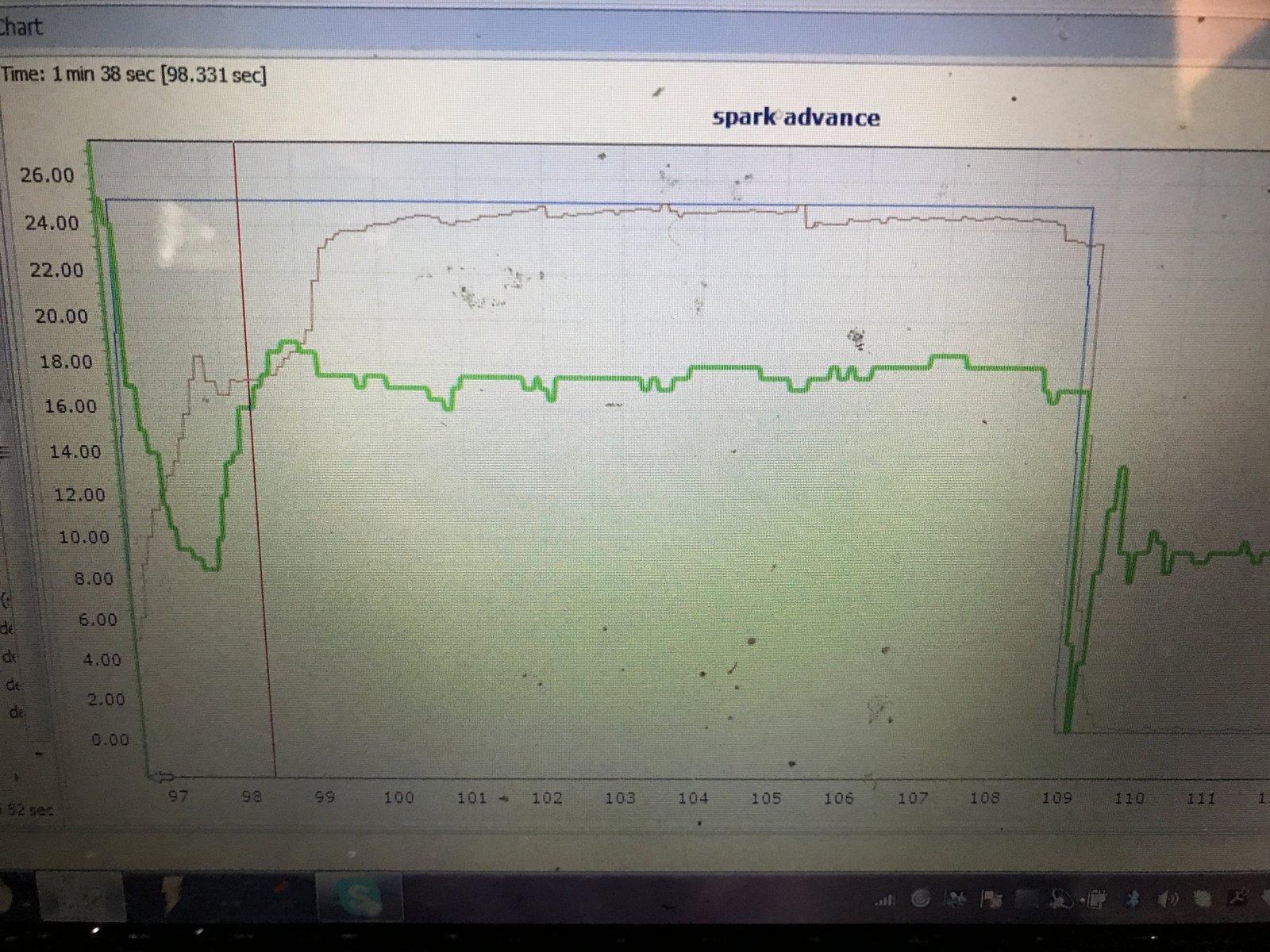
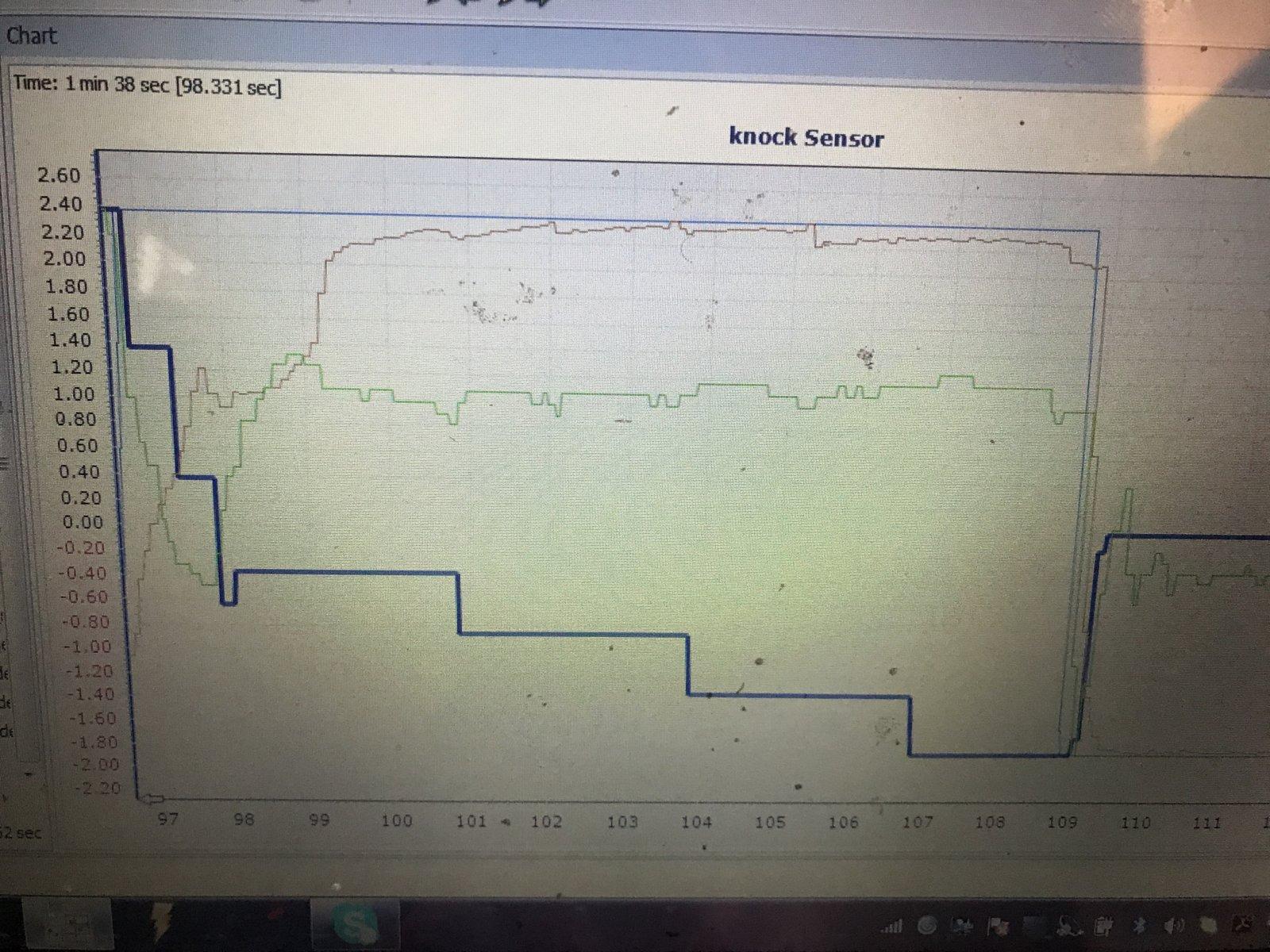
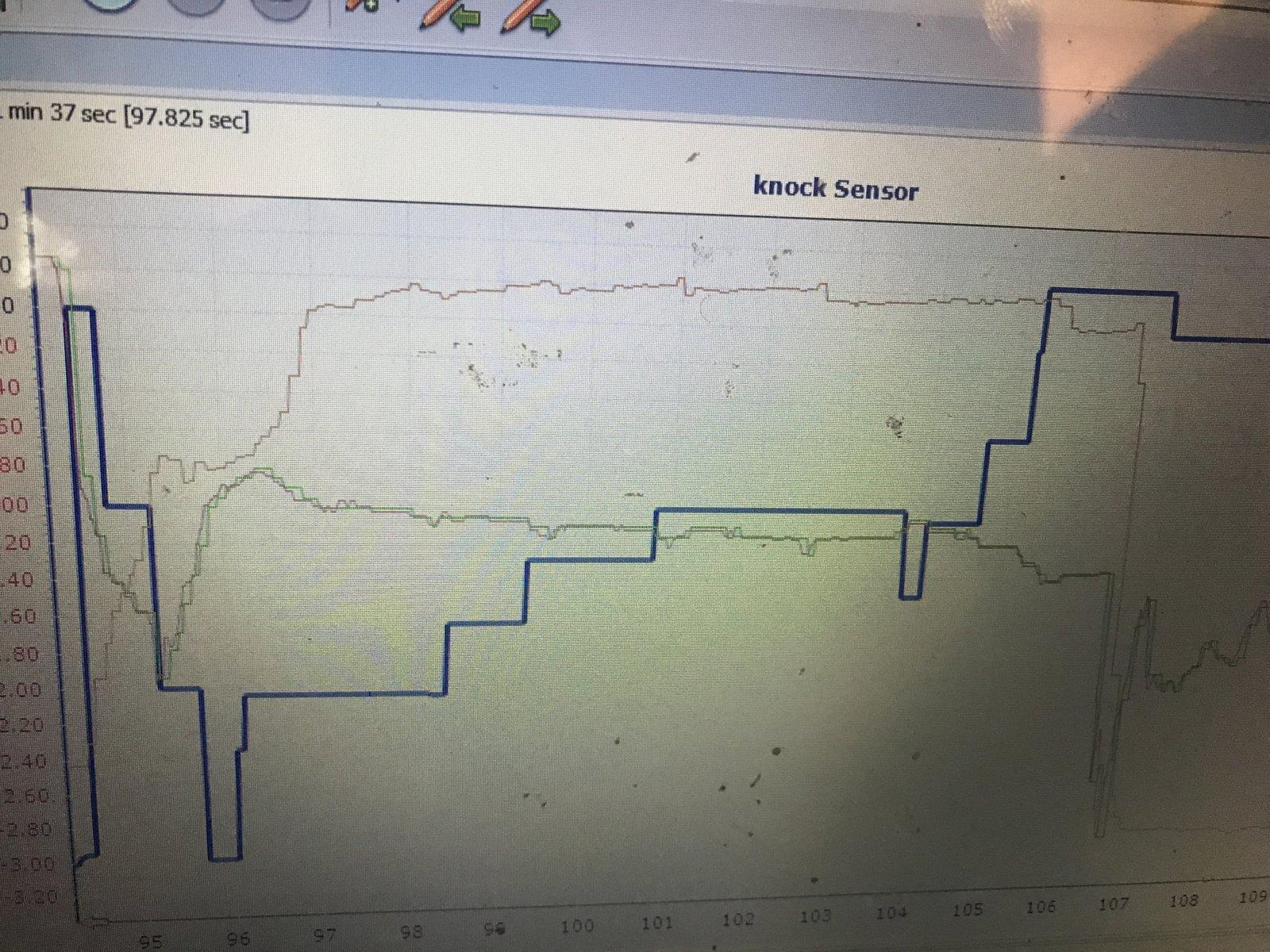
Below are the log graphs - load/spark and KR
It made the same amount of max timing as with the 3.75 pulley .
4C0A5DD5-9E7D-44A3-A05F-DD607FF37E89.jpeg
09563224-8615-4B89-8730-662AAC50D7CF.jpeg
D5E2BD03-CD60-4371-AC99-482314720E41.jpeg
 

olaosunt

Well-Known Member
Joined
Jan 10, 2015
Threads
72
Messages
4,291
Reaction score
1,575
Location
Indiana
Vehicle(s)
Guard,base,M6,KB-2.DIB,auto,Hellion TT,2016 GT 350/Gen 3 Whipple ,2018 Mustang GT/Gen 5 Whipple
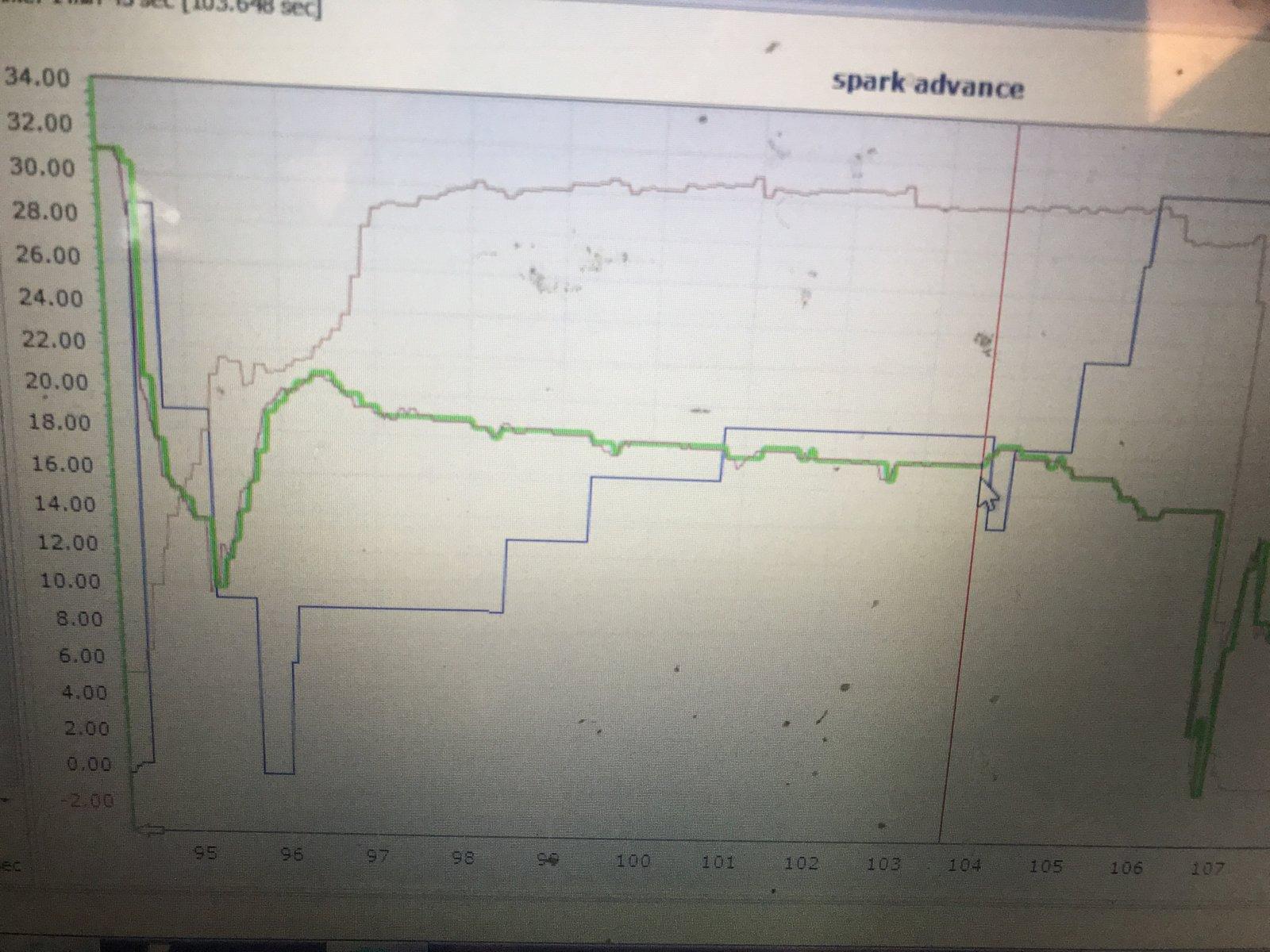
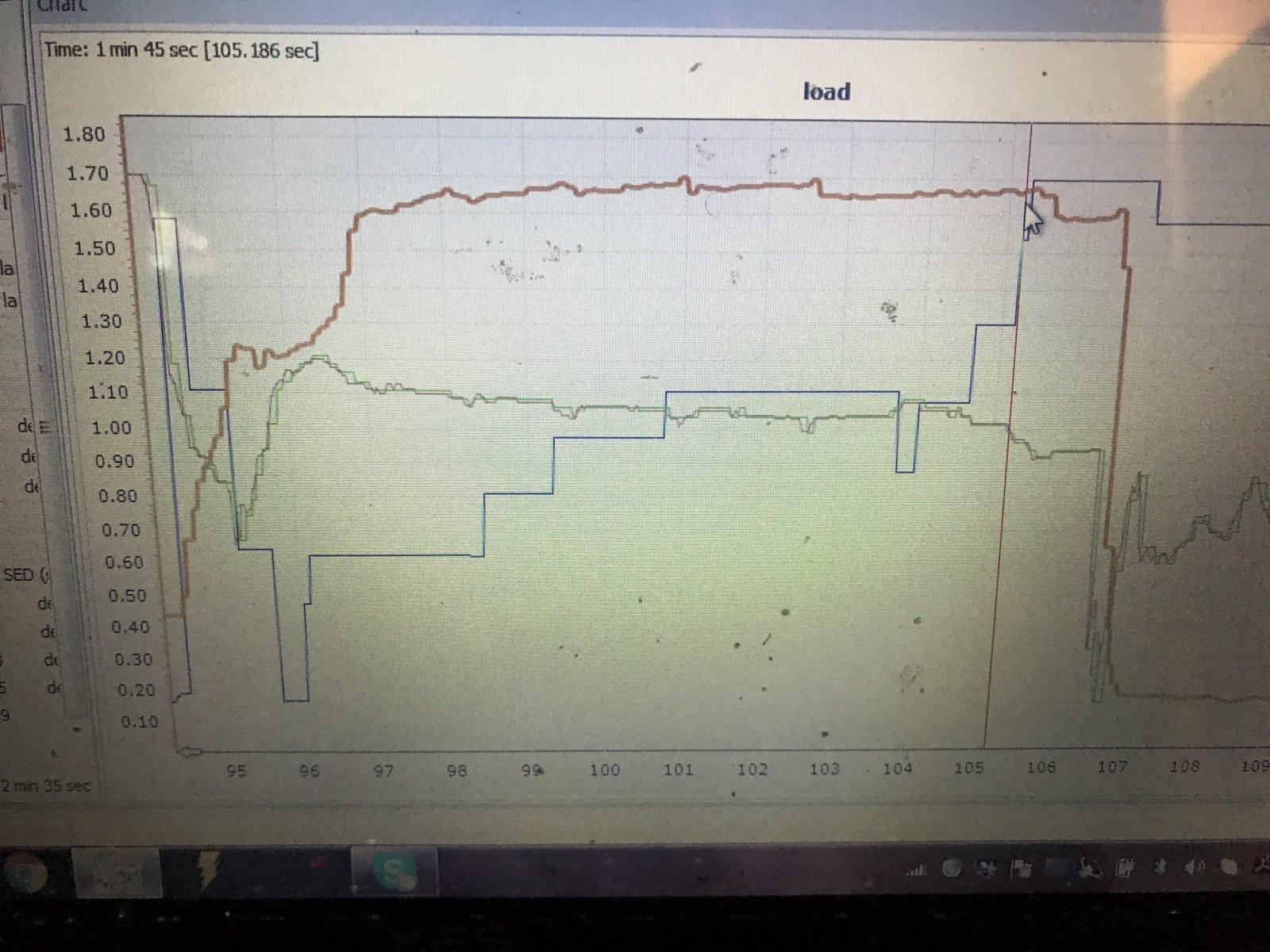
Here is log of a pass with the 3.75 pulley /135 mph (above was 137 mph but different day )
35841991-92E7-44B7-A882-C94BBDCDC878.jpeg
31DD9337-EC6E-4C82-9136-A6DAD61B09DC.jpeg
0C022FCD-B930-4D1C-8B35-FDB7E1D4380E.jpeg
 

Whipple SC

Well-Known Member
Diamond Sponsor
Joined
Jan 7, 2015
Threads
22
Messages
1,710
Reaction score
1,639
Location
Fresno
Vehicle(s)
2015 5.0
The 11-17 motors don't act like this motor so what was before does not fully carry over. Since we are so far from MBT (over 30deg), every 1 deg in our range is 25RWHP, give or take 3hp. If boost goes up 1psi, timing and all else equal, it will pick up 25rwhp. So its a balance of boost and timing. You can't run 8psi and 6deg more timing, so more boost, less timing is good to a point which happens to be in the 10-12psi range. But, whatever you can do to get 1-2deg more timing is massive on power. E85 allows for roughly 6deg more timing over 93 octane, therefore we are seeing a 125RWHP gain with E85, same boost.
 

Sponsored

markmurfie

Well-Known Member
Joined
Jun 6, 2015
Threads
15
Messages
1,320
Reaction score
625
Location
Hawaii
First Name
Mark
Vehicle(s)
2015 Ford Mustang GT
To have an easier time comparing logs, you don't want to look at your drag strip runs, definitely with how fast the A10 goes through gears. You want to start in a higher gear 1:1 or close to it, have the RPMS at 2500-3000 then do a WOT pull up to redline. Like a dyno pull, this will give you a wide view across the RPMS, eliminate any shift corrections, and allow time for the channels to collect data. At the dragstrip 1st is about the only gear that goes through much of the RPM range and it goes by much too fast to collect any data from the OBDii port. Not many people are comfortable going from speeds like 40-120 on public roads, so its best to just go to a dyno.

I've seen a few people say their timing isn't consistent pull to pull, It should be unless you have some factor cutting in like traction control or torque management. If you have days in between pulls, the environmental changes can cause a change, but its usually not much. With the 18's you are going to want to look at what your octane adjustment ratio is doing. If you have been getting knock the ecu will correct the base borderline values to a point where the sensor can add in up to the actual detonation borderline, and not have to start out by removing timing. If its adding up to the borderline its actually riding the borderline. If its pulling timing its not trying to find borderline its trying to save the engine, so you are probably below the borderline to some factor. That can lead to inconsistent timing as well.

Your car with your fuel, is going to have different result from my car and my fuel. You might struggle to run a 3.75" pulley while I have no problem running a 3.5" pulley or vise versa. Even gas stations in the same town can yield a big difference in results. Understanding how to log your car and what to look for, you can actually find the good gas stations and the bad ones. You don't even need to change the calibration and with how sensitive these cars are you can probably optimize your cars power by finding the good gas stations. Octane booster will do this for you, but you still want to start with the best fuel available to you if performance is your goal.
 

TX-Ripper

Well-Known Member
Joined
Nov 10, 2017
Threads
16
Messages
637
Reaction score
282
Location
SE Texas
Vehicle(s)
2019 Mustang GT PP1 Whipple Stage 2 / 2018 F150 5.0 Whipple Stage 2
I don’t think the whipple tune has the octane adjustment ratio tables active
 
OP
OP

engineermike

Well-Known Member
Joined
Jul 15, 2018
Threads
31
Messages
6,198
Reaction score
6,482
Location
La
Vehicle(s)
2018 GTPP A10
Mark, I do all my logging on 4th gear pulls from 3000 to 7500 for the reasons you mention.

However, I have noticed that the timing drops 1-2 deg on the 4-5 shift and doesn’t seem to recover.
 
OP
OP

engineermike

Well-Known Member
Joined
Jul 15, 2018
Threads
31
Messages
6,198
Reaction score
6,482
Location
La
Vehicle(s)
2018 GTPP A10
Ok I have some decent data on boostane now. All tests were on 93 octane shell and 3.75 pulley.

Test 1: No boostane, 72 deg iat, KR at the top of the gear was 0.7.

Test 2: No boostane, 86 deg iat, KR top of gear was 1.2-2.5.

Test 3: 6 oz boostane to 16 gallons. 90 deg iat, KR top of gear was 1.

Test 4: 12 oz boostane to 16 gallons. 77 deg iat, KR top of gear was -1 to -2.

I believe part of the effect in test 4 was due to cooler iat, but if you compare test 4 to test 1 it’s still getting more timing in with the boostane added.
 

TX-Ripper

Well-Known Member
Joined
Nov 10, 2017
Threads
16
Messages
637
Reaction score
282
Location
SE Texas
Vehicle(s)
2019 Mustang GT PP1 Whipple Stage 2 / 2018 F150 5.0 Whipple Stage 2
Would one of the whipple LTR cooling mods work?

Not sure what whipple offers for the 2018 fans or an larger LTR?
Sponsored


Top