Sponsored

2015 mustang weight?

OP
OP

BlueVenom

Guest
The issue will always be with cost. There's going to be so much R&D and new technology/engineering costs passed down to buyers already. The base price cant increase by $2k with camaro prices remaining where they are. Although the C7 did manage to use new materials, carbon fiber and an all aluminum frame with no sigifnicant price increase so it can be done.
It's easier to save weight with cars like the Mustang since they use really ordinary (and some pretty subpar) materials. They can easily upgrade certain parts to aluminum without increasing price too much. The issue with super cars is they have to use more and more expensive and exotic materials just to save a few ounces here and there. There's much less room for improvement as there is with the Mustang.
Sponsored

 
OP
OP

BoostedSVT

Guest
The update is of engines and transmissions... so no weight savings there. Unless the Nano replaces the 3.7... and that would be minimal.
Yea Ive never known a mid cycle refresh to have any real big affect on weight. If anything it usually adds to the weight and not other way around. They really have one shot at this right now until the next platform change so I really hope they are using that gram strategy and looking at every single part and components or we'll be hearing from the Camaro 'tards in the future brag about not just better engines but a lighter car.
 
OP
OP

BoostedSVT

Guest
Also if Ford is unable to shed the weight off the s550, you can always do it yourself (less ideal). If they can't get it down another 200 pounds I'll look to gut the trunk, rear seat delete, battery relocate, lighter wheels, tubular bumpers, radio, lighter valve covers, etc. Do a gram strategy of your own and see what you absolutely need and what you can live without. This of course works better if it's not your DD, like in my case.
 
OP
OP

fastback69

Guest
If 200 pounds is the goal it HAS to be for the entire line and not just the weight savings between the 4 banger and 5.0. The 4-cyl, v6 and v8 should all lose that much, but the 4-cyl could be a little over 300 pounds lighter than the current base model. This makes its weight to power ratio much more attractive than the current 0.12 of the V6 if it offered with the rumored 300HP of the next Focus RS.

hugely attractive if is offered with equal power. Not only that, but the V6 has 54/46 weight distribution right now. With the IRS and smaller front end, the 4 banger would be around 52/48.
 
OP
OP

Ricky35

Guest
Also if Ford is unable to shed the weight off the s550, you can always do it yourself (less ideal). If they can't get it down another 200 pounds I'll look to gut the trunk, rear seat delete, battery relocate, lighter wheels, tubular bumpers, radio, lighter valve covers, etc. Do a gram strategy of your own and see what you absolutely need and what you can live without. This of course works better if it's not your DD, like in my case.
Damm we got some hardcore members here. Already talking about gram saving strategy on a new car :eyebulge: :thumbsup:
 

Sponsored

OP
OP

groundnpounder

Guest
Had a thought last night...

It's too bad there's no halo sports car model even above the Mustang. If the Mustang had a bigger brother like the Corvette is to the Camaro, I think we could see even more advances in things like weight savings. Something like a halo no-holds-barred engineered model where the company could really push the engineering, some of which could then be inherited by the Mustang.
 
OP
OP

StangFX

Guest
It'd be hard to imagine loosing 300 pounds for this rework... unless they spent some big money somewhere we can't see yet.
Like dropping the middle of the frame out of the car like ye olde SN95/Fox. That would take some weight out of the middle of the car.. with the added benefit of putting the subframe market back into business again ;-)
Even dropping 6 inches from the wheelbase may not do much. We have all that tech and safety/creature comfort features to thank for that. SYNC, GPS, airbags, speakers, heated 10 way power seats, sound deadening material, etc. I would not be surprised if the mustang didn't lose any weight at all.
 
OP
OP

KZStang

Guest
Ford is tackling the weight and efficiency issue primarily by using smaller EcoBoost engines, reducing overall mass (not necessarily length or cabin space) and better aerodynamics through design.

BTW, dont expect to see CF used in the body of any Ford vehicles anytime soon. If anyone missed it last year, Ford embarked on a project to develop more cost efficient carbon fiber that can be produced quickly, in greater volume, and be less labor intensive.

Ford Develops Carbon Fibre Technology that Could Deliver More Fuel-Efficient Vehicles

  • Ford Motor Company demonstrates a prototype carbon fibre bonnet that could cut vehicle weight and improve fuel economy
  • Ford Focus carbon fibre prototype bonnet weighs more than 50 percent less than steel version with production times significantly reduced by new processes that can also be applied to other components
  • Ford European Research Centre involvement in the Hightech.NRW research project follows Ford partnership with Dow Automotive Systems to research advanced material usage, development and manufacturing
  • Carbon fibre reinforced plastic component is manufactured using new techniques developed as part of advanced research project involving Ford engineers

Ford Develops Carbon Fibre Technology

DUSSELDORF,
Germany, Oct. 9, 2012 – Ford Motor Company today demonstrated a prototype carbon fibre bonnet that could help lower fuel consumption for Ford customers.

The carbon fibre reinforced plastic Ford Focus bonnet displayed at the Composites Europe event in Dusseldorf, Germany is constructed from the super-strong material usually associated with bespoke racing vehicles or high-performance sports cars.

The prototype bonnet weighs more than 50 percent less than a standard steel version. As a result of progress made during an on-going research project involving engineers from the Ford European Research Centre, production time for an individual carbon fibre bonnet is fast enough to be employed on a production line – a significant step towards increased usage of lightweight materials in Ford vehicles.

“It’s no secret that reducing a vehicle’s weight can deliver major benefits for fuel consumption, but a process for fast and affordable production of carbon fibre automotive parts in large numbers has never been available,” said Inga Wehmeyer, advanced materials and processes research engineer, Ford European Research Centre. “By partnering with materials experts through the Hightech.NRW research project, Ford is working to develop a solution that supports cost efficient manufacturing of carbon fibre components.”

The involvement of Ford European Research Centre in the Hightech.NRW research project follows Ford’s partnership with Dow Automotive Systems; a collaboration announced earlier this year that will investigate new materials, design processes and manufacturing techniques.
Dow Automotive Systems and Ford will focus on establishing an economical source of automotive-grade carbon fibre, as well as high-volume manufacturing methods: both critical to increasing the range of future Ford battery electric vehicles and plug-in hybrid electric vehicles.
Carbon fibre offers a very high strength-to-weight ratio. It is up to five times as strong as steel, twice as stiff, and one-third the weight. Advanced materials such as carbon fibre are key to Ford’s plans to reduce the weight of its cars by up to 340kg by the end of the decade.

“There are two ways to reduce energy use in vehicles: improving the conversion efficiency of fuels to motion and reducing the amount of work that powertrains need to do,” said Paul Mascarenas, Ford chief technical officer and vice president, Research and Innovation. “Ford is tackling the conversion problem primarily through downsizing engines with EcoBoost and electrification while mass reduction and improved aerodynamics are keys to reducing the workload.”

Ford has partnered with specialists from the Institute of Automotive Engineering at RWTH Aachen University, Henkel, Evonik, IKV (Institute of Plastics Processing), Composite Impulse and Toho Tenax for the course of the Hightech.NRW research project.

Funded by the German state of North Rhine-Westphalia, the project began in 2010 and, despite being set to continue until September 2013, has already made significant progress towards its targets of:

  • Developing a cost effective method to manufacture carbon fibre composites for body panel applications that can be incorporated into existing vehicle production processes
  • Significantly reducing individual component production times
  • Reducing the amount of finishing work required to acceptable standards
  • Meeting requirements for painting
  • At least 50 percent reduction in component weight
The refined gap-impregnation process works by introducing resin to pre-formed carbon fibre textile material in a fast, stable and adaptable manner, with high quality results.

Initial testing suggests that CFRP components such as the prototype Ford Focus bonnet will meet Ford’s high standards for stiffness, dent resistance and crash performance. The component has also performed well in pedestrian protection head-impact tests, thanks to its innovative construction of a special foam core sandwiched between two layers of CFRP.

“Customers of Ford’s multi-million selling passenger cars should not expect to see carbon fibre-bodied examples on sale in the near future," said Inga Wehmeyer. “But the techniques we have refined and developed for the prototype Focus bonnet could be transferred to higher volume applications at a later date.”
 
OP
OP

BenH

Guest
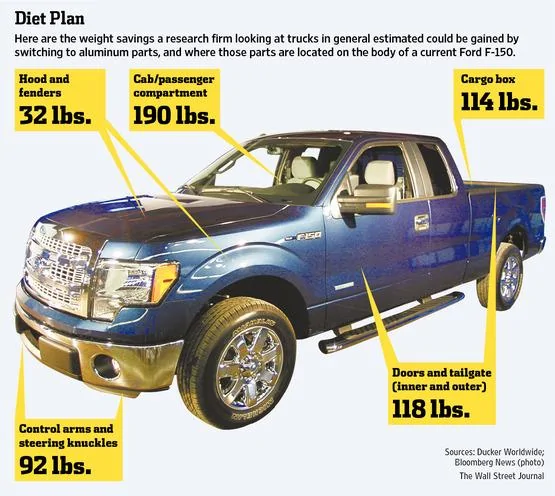
The rumors suggest that the next F150 will have up to 700 pounds in weight savings or about 15% by switching in large part from steel to aluminum.

I know the F150 is the cash cow but the P552 shares with the S550 the burden of coming out of 2014 with a new chassis that has to be capable of hitting the new fuel standards through 2020 unless there is another major redesign scheduled before then, which may or may not happen. Their target is around 25% MPG improvment and here's where the weight will come out of.

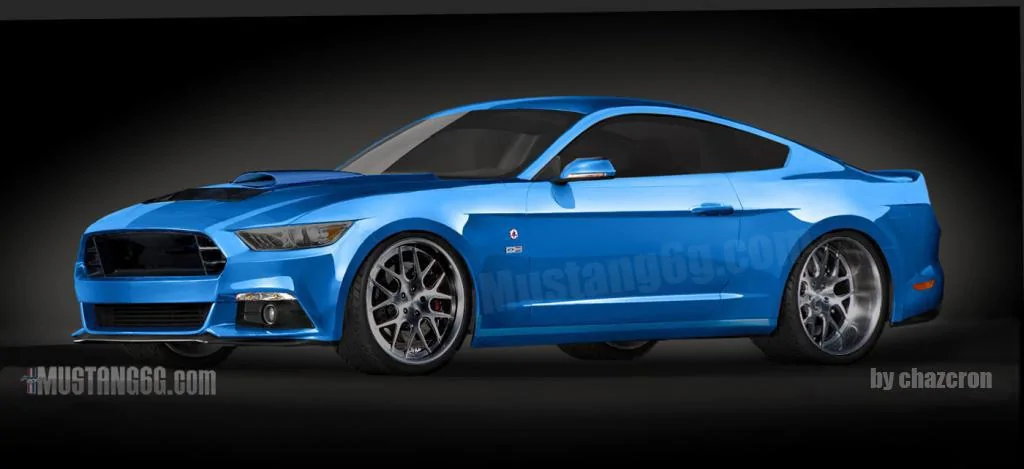
2015-Mustang-3D-Rendering-Based-on-CADcopia_zps94babc28.webp


I believe SOME things the F150 doesn't share with the Mustang might make it an even better candidate for this. Diehard truck guys care about strength and toughness of materials and less about weight. Mustangs have only gotten heavier over the years and there's no hauling it has to do. Big plus for using lighter materials that may sacrifice some rigitidy/strength especially for "selling" the price increase to its buyers.

I've read it costs between $1.50 and $2 to cut one pound of weight out of a car using aluminum instead of steel. 800 pounds could be cut out of a '08 full size pickup by replacing steel with aluminum and a few other lightweight metals and it would cost about $1500 extra in material costs to build an F-150 using that much aluminum.

Is it too much to expect that the Mustang will utilize a fraction of the aluminum parts for the S550? There's definitely cost issues I understand but savings would have been made by spreading some costs invested by the F150 line and going global.
F150 aluminum weight savings diagram.webp
 

Overboost

Well-Known Member
Joined
Sep 6, 2012
Threads
1
Messages
348
Reaction score
0
Location
Earth
Vehicle(s)
S197
The beautiful thing about weight reduction is that the little battles add up. Mazda's gram strategy is a great idea and is a prime example of this. Small things add up, and before you know it, the target is met, or even exceeded.

That said, knowing where S550 is going, knowing the volumes, and understanding it's slot in the marketplace, I don't expect it to lose any weight. Going to an all-new platform, with new tech, and keeping costs attainable for all trims is going to be challenging. My suspicion is if the P552 weight loss works out in the long run, those applications will cross over to other vehicles, like S550, and make the car drop weight it may have added at the platform change.

My personal ideas would be to go with aluminum on the hood (already done), roof panel, and decklid, along with suspension components and bracketry in the cabin. Lowering the center of gravity slightly and keeping the 'big stuff' steel (use of UHSS would benefit even more) keeps the costs low and repair costs from skyrocketing.
 

Sponsored
OP
OP

OKCfan

Guest
The beautiful thing about weight reduction is that the little battles add up. Mazda's gram strategy is a great idea and is a prime example of this. Small things add up, and before you know it, the target is met, or even exceeded.

That said, knowing where S550 is going, knowing the volumes, and understanding it's slot in the marketplace, I don't expect it to lose any weight. Going to an all-new platform, with new tech, and keeping costs attainable for all trims is going to be challenging. My suspicion is if the P552 weight loss works out in the long run, those applications will cross over to other vehicles, like S550, and make the car drop weight it may have added at the platform change.

My personal ideas would be to go with aluminum on the hood (already done), roof panel, and decklid, along with suspension components and bracketry in the cabin. Lowering the center of gravity slightly and keeping the 'big stuff' steel (use of UHSS would benefit even more) keeps the costs low and repair costs from skyrocketing.
My fear is that you're right and that the 'weight savings' will be nominal and only used as a marketing point where they can call it the "All new lighter Mustang" when technically it's only 20-30 pounds lighter kind of situation.

Hopefully Ford has used a gram strategy type approach with the s550 and we'll be surprised. But without significantly downsizing the car or resorting to exotic materials (i.e. carbon fiber), there probably just aren't too many big ticket items that can be thrown out of the car altogether or changed to some other material for large weight savings.
 
OP
OP

Icy

Guest
The rumors suggest that the next F150 will have up to 700 pounds in weight savings or about 15% by switching in large part from steel to aluminum.

I know the F150 is the cash cow but the P552 shares with the S550 the burden of coming out of 2014 with a new chassis that has to be capable of hitting the new fuel standards through 2020 unless there is another major redesign scheduled before then, which may or may not happen. Their target is around 25% MPG improvment and here's where the weight will come out of.

2015-Mustang-3D-Rendering-Based-on-CADcopia_zps94babc28.webp


I believe SOME things the F150 doesn't share with the Mustang might make it an even better candidate for this. Diehard truck guys care about strength and toughness of materials and less about weight. Mustangs have only gotten heavier over the years and there's no hauling it has to do. Big plus for using lighter materials that may sacrifice some rigitidy/strength especially for "selling" the price increase to its buyers.

I've read it costs between $1.50 and $2 to cut one pound of weight out of a car using aluminum instead of steel. 800 pounds could be cut out of a '08 full size pickup by replacing steel with aluminum and a few other lightweight metals and it would cost about $1500 extra in material costs to build an F-150 using that much aluminum.

Is it too much to expect that the Mustang will utilize a fraction of the aluminum parts for the S550? There's definitely cost issues I understand but savings would have been made by spreading some costs invested by the F150 line and going global.
Does the $1.50 to $2 factor in all the R&D and capital they will have to invest in new manufacturing equipment, new assembly etc? I doubt it. If a 200 pound savings only cost $350 in total costs, it would be an easier decision I think.

The prob is aluminum isn't just lighter, its also more difficult for them to work with in high volume production since it doesnt have the same magnetism that is used to transport the steel in the plants and also requires more caution/slows down the process since it is easier to damage.

I read GM is going a different path with its trucks and decided the extra cost isnt worth it. You can get the same % mileage improvement with sleeker design, better aero and just a little use of aluminum, which is exactly what the Mustang should do.
 

thePill

Camaro5's Most Wanted
Joined
Aug 13, 2012
Threads
37
Messages
6,561
Reaction score
699
Location
Pittsburgh
Vehicle(s)
S550
Does the $1.50 to $2 factor in all the R&D and capital they will have to invest in new manufacturing equipment, new assembly etc? I doubt it. If a 200 pound savings only cost $350 in total costs, it would be an easier decision I think.

The prob is aluminum isn't just lighter, its also more difficult for them to work with in high volume production since it doesnt have the same magnetism that is used to transport the steel in the plants and also requires more caution/slows down the process since it is easier to damage.

I read GM is going a different path with its trucks and decided the extra cost isnt worth it. You can get the same % mileage improvement with sleeker design, better aero and just a little use of aluminum, which is exactly what the Mustang should do.
Yes, GM decided to drill holes in their chassis's to save weight instead of using Boron/UHSS or Hydro-formed panels. Drilling holes is about the cheapest route you can go... Not sure if they are aware of this but, once you drill into galvanized steel, it corrodes... very quickly...

What if, just what if the GT does lose 200lbs? Lots of sh!tted pants over at Chevy I would say.
 

S550Boss

Well-Known Member
Joined
Apr 12, 2013
Threads
15
Messages
563
Reaction score
72
Location
USA
Vehicle(s)
2016 GT350; 2018 Focus RS
No need to be dramatic.
Why would Chevy be worried? They have their own new Camaro on the Alpha chassis coming up, and it's far lighter. The chassis is drilled all over. Every pointless ounce is taken out. And the suspension architecture is better than S550.


door.jpg


GM has put it's big money into this. It's not just a simple evolution of an existing chassis, as is the S550. It's brand new, from the ground up, purpose built to be rear or all wheel drive and purpose built for an IRS. And it's got a rich uncle, Cadillac, paying all the bills. And the standard V-8 will have 450HP and 450 torque.
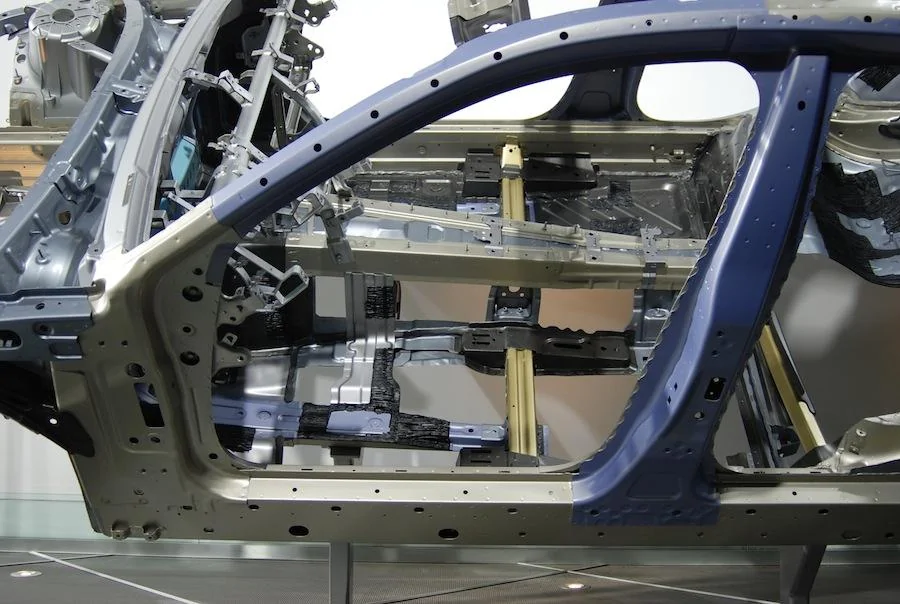
2012_Cadillac_ATS_Body_Structure_B-Pillar.webp
 

jjw

Well-Known Member
Joined
Jun 12, 2013
Threads
5
Messages
498
Reaction score
46
Location
upper midwest
Website
www.shelbyparts.com
Vehicle(s)
'19 PP2, 05 STI 475whp, 04 cayenne turbo, Shelbys
It's not just a simple evolution of an existing chassis, as is the S550.
You keep saying this like its a fact.

Many other sources (not all of which are discussed here) disagree.

You have lots of good points and info, but I wonder what info lets you make this assertion with such authority. Or is it mainly educated guessing like the report on the IRS pics? Those were not taken in a Ford warehouse btw.
Sponsored


Top