Sponsored

2015+ GT350 Mustang official power specs: 526 HP / 429 LB-FT!

15wile

Well-Known Member
Joined
Apr 22, 2015
Threads
44
Messages
1,245
Reaction score
548
Location
USA
Vehicle(s)
15 GT
Was doing some reading on volumetric efficiency and came across an article that showed that most factory performance engines (Voodoo, Coyote, etc) Produce torque values of 1-1.3 ft-lbs/ci at peak RPM. Standard engines (3.5 NA, 3.7 etc) of .75-1 ft-lb/ci, and racing/boosted engines of 1.3-1.75ft-lbs/ci (that's from memory but pretty close). I decided to take a look at some common engines. Here are the results:

Voodoo
5.2l
7500 p(eak)RPM
526 hp
1.16 ft-lbs/ci

Coyote
5.0l
6500 pRPM
435 hp
1.151 ft-lbs/ci

F150 6.2
6.2l
5500 pRPM
411 hp
1.037 ft-lb/ci

Ecoboost
3.5l
5000pRPM
365 hp
1.795 ft-lb/ci
...
The 2.3 EcoBoost rates pretty high in this metric...
Sponsored


ohmy350

Well-Known Member
Joined
Mar 14, 2015
Threads
0
Messages
92
Reaction score
14
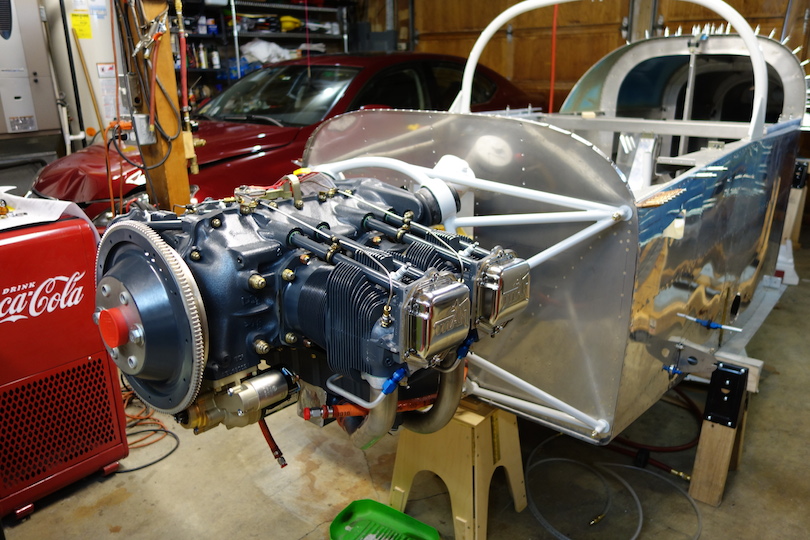
Concur. I'm much more interested in HP or TQ per pound of engine weight than per liter of displacement.


My low tech OHV air cooled motor makes 205HP, but only weighs 270lbs or so, including cooling system. :-)


Nice!!

Sorry about the other car, though!


Sent from my iPad using Tapatalk
 

grayforge

Well-Known Member
Joined
May 4, 2015
Threads
1
Messages
57
Reaction score
7
Location
United States
Vehicle(s)
Magnum SRT8, Solstice GXP, '65 Vette
Nice!!

Sorry about the other car, though!


Sent from my iPad using Tapatalk
Thanks!

Yeah, some idiot backed her jeep into my wife's parked car, got out, looked at the damage, got back in her jeep and drove away. A witness later told my wife this.
 

krt22

Well-Known Member
Joined
May 27, 2015
Threads
8
Messages
4,555
Reaction score
2,014
Location
CA
Vehicle(s)
2016 GT350 Track Pack
Look at the dimensions of these two engines. Why does the displacement matter if they make similar power and are about the same size? It's just two different methods. One revs higher, the other has more torque. They use different gearing and it equals out. Hp per liter is what civic fanboys have been doing for years to justify their 200hp.
Its really not that simplistic, its more than just peak torque vs peak engine speed. Its about usable power under the curve, power delivery, how quickly and how high you can rev, etc, since those all come into play when putting the power to the road, especially on a road course where the GT350 was designed to shine

. And its a bit more than just 2 methods, its older tech vs newer tech. The LS motors are only so compact because they have a single cam that sit between the bank of cylinders, its nothing magical, its just the only place to put a single came that controls 2 banks of cylinders. This valve train also isnt design to handle high RPM use, so the only way to coax out more power is to increase displacement.

The coyote (and almost every other modern high performance engines) take up more space since they have 4 cams, which with the introduction of variable valve timing allow the engineers to fine tune the entire rev range. if you cant understand the merrits of this arrangement, not really sure what to tell you. And ford ahs done what honda did decades ago, but at a much larger scale. The only engines anywhere close to the voodoo in terms of tech/efficiency are found in 200k+ f-cars.:shrug:
 

Hack

Well-Known Member
Joined
Nov 26, 2014
Threads
86
Messages
12,821
Reaction score
8,239
Location
Minneapolis
Vehicle(s)
Mustang, Challenger
Look at the dimensions of these two engines. Why does the displacement matter if they make similar power and are about the same size? It's just two different methods. One revs higher, the other has more torque. They use different gearing and it equals out. Hp per liter is what civic fanboys have been doing for years to justify their 200hp.
There is nothing in the center of the mod motors (cam, lifters, pushrods, etc.), so the external dimensions are deceptive. Weight is a better way to judge.

The best comparison is to look at the full package. Can you put a given engine into a car and make the entire car competitive? Cost, acceleration, handling, everything.

Do you have to do tricks like turning off cylinders that glaze the cylinder walls in short order, make the car really crummy to drive and sound like crap on the highway?

Is the resulting car fun to drive?

I think the 5.0 is an amazing motor and Coyote-equipped cars are a blast to drive. I expect that the 5.2 Voodoo will be even better. I know what the Camaro drives like and I didn't want one.
 

Sponsored

Erik427

Well-Known Member
Joined
Oct 5, 2014
Threads
2
Messages
1,421
Reaction score
287
Location
Huntington
Vehicle(s)
1979 Mustang
There is nothing in the center of the mod motors (cam, lifters, pushrods, etc.), so the external dimensions are deceptive. Weight is a better way to judge.

The best comparison is to look at the full package. Can you put a given engine into a car and make the entire car competitive? Cost, acceleration, handling, everything.

Do you have to do tricks like turning off cylinders that glaze the cylinder walls in short order, make the car really crummy to drive and sound like crap on the highway?

Is the resulting car fun to drive?

I think the 5.0 is an amazing motor and Coyote-equipped cars are a blast to drive. I expect that the 5.2 Voodoo will be even better. I know what the Camaro drives like and I didn't want one.
Well said......
 

MadCow

Well-Known Member
Joined
Sep 9, 2013
Threads
5
Messages
475
Reaction score
156
Location
Bama
Vehicle(s)
Civic
Just to clear something up that some people have a misconception on. OHC is actually older than OHV.
 

Mr Monte

Well-Known Member
Joined
Dec 7, 2014
Threads
2
Messages
396
Reaction score
106
Location
Oregon
Vehicle(s)
2013 GT Premium
Its about usable power under the curve, power delivery.... especially on a road course where the GT350 was designed to shine

. And its a bit more than just 2 methods, its older tech vs newer tech. The LS motors are only so compact because they have a single cam that sit between the bank of cylinders.... This valve train also isnt design to handle high RPM use, so the only way to coax out more power is to increase displacement.
From 4,000-8,000 rpms the new GT350 should be a rock star but on the street it will look awesome but will feel underpowered compared to the 5.0 which has more hp & tq below 3,500rpms.

Since OHC came out BEFORE OHV does that mean the new GT350 is running an older tech engine? Both Dodge & GM have been using VVT in pushrod V8s for awhile now. 100 years ago you could get a 4.7L flat plane crank V8 in your new Caddy.

OHC & OHV both have their + and -. Current offerings are awesome versions of 100+ year old technologies. I have a LS3 & a Coyote as daily drivers and enjoy the different driving experience each gives.


Just to clear something up that some people have a misconception on. OHC is actually older than OHV.
You beat me to it. I started my comment a couple of hrs ago then came back to finish a few minutes ago.
 

krt22

Well-Known Member
Joined
May 27, 2015
Threads
8
Messages
4,555
Reaction score
2,014
Location
CA
Vehicle(s)
2016 GT350 Track Pack
From 4,000-8,000 rpms the new GT350 should be a rock star but on the street it will look awesome but will feel underpowered compared to the 5.0 which has more hp & tq below 3,500rpms.

Since OHC came out BEFORE OHV does that mean the new GT350 is running an older tech engine? Both Dodge & GM have been using VVT in pushrod V8s for awhile now. 100 years ago you could get a 4.7L flat plane crank V8 in your new Caddy.

OHC & OHV both have their + and -. Current offerings are awesome versions of 100+ year old technologies. I have a LS3 & a Coyote as daily drivers and enjoy the different driving experience each gives.


You beat me to it. I started my comment a couple of hrs ago then came back to finish a few minutes ago.
First introduction and mass implementation/adoption are two different things. And even though they have introduced vvt, its still largely a bandaid to an old problem and doesn't offer the same tuning space as DOHC arrangements

And not really where all this speculation is coming from that the coyote is going to be superior below 3500rpm (as if it mattered anyway). If there is any performance advantage that low, it will be negligible at best. The voodoo is still larger and makes 30ftlbs more peak torque only a few hundred rpm later in the rev range
 

Honus

Well-Known Member
Joined
Jun 9, 2015
Threads
2
Messages
256
Reaction score
128
Location
Southern Tier, NY
Vehicle(s)
2016 RR GT350 Tech
And not really where all this speculation is coming from that the coyote is going to be superior below 3500rpm (as if it mattered anyway). If there is any performance advantage that low, it will be negligible at best. The voodoo is still larger and makes 30ftlbs more peak torque only a few hundred rpm later in the rev range
Exactly this.

Supposing that the difference is sensible; for just how long exactly? The voodoo is supposed to wind up quickly and in torque-seconds (not a thing), how long are you going to feel inferior? 0.05s? Even on road courses how much time are you really going to spend in that particular range?

So the only time that's going to matter is when you're doing street pulls, against a coyote, in the wrong gear, which is just absolutely stupid anyway.

I feel like 1/2 of people in here are either :crazy: or just pedantic for the sake of it.
 

Sponsored

krt22

Well-Known Member
Joined
May 27, 2015
Threads
8
Messages
4,555
Reaction score
2,014
Location
CA
Vehicle(s)
2016 GT350 Track Pack
I for one am not even paying attention to 2-4k in my coyote, its mostly *yawwn* until after then anyway. Only time it will ever matter is a 1st gear pull and the gearing is so short then anyway 2-4k is a blink of an eye :shrug:
 

Hack

Well-Known Member
Joined
Nov 26, 2014
Threads
86
Messages
12,821
Reaction score
8,239
Location
Minneapolis
Vehicle(s)
Mustang, Challenger
From 4,000-8,000 rpms the new GT350 should be a rock star but on the street it will look awesome but will feel underpowered compared to the 5.0 which has more hp & tq below 3,500rpms.
I expect the 3.73 rear gears will negate any torque differences in actual driving. The larger and stickier rear tires will make an even more significant difference if you are comparing stock versus stock.


The Voodoo should be an absolute animal.
 

Mr Monte

Well-Known Member
Joined
Dec 7, 2014
Threads
2
Messages
396
Reaction score
106
Location
Oregon
Vehicle(s)
2013 GT Premium
And not really where all this speculation is coming from that the coyote is going to be superior below 3500rpm (as if it mattered anyway). If there is any performance advantage that low, it will be negligible at best. The voodoo is still larger and makes 30ftlbs more peak torque only a few hundred rpm later in the rev range
At the track I doubt you would see below 4,000rpms in a GT350 so it doesn't really matter but a street driven car that lives in the 4,000+ rpm range gets old or maybe its just me getting old. I ran 4.88 gears in my tunnel rammed dual 4bl 1957 Chevy Belair back in high school with a cam that made power from 4,000-8,000 rpms. I could of used VVT back then.

I still enjoy spirited driving, I do track my cars but on the street most of my driving is below 4,000rpms. I just get to the speed limit really quickly:D. It probably boils down more to my power preference. I've had many built big blocks & even with my motorcycles I'm a 1,000cc guy with my FZ1 where my son has a Ninja 636. Both fast bikes but the 636 doesn't get real until 10-15,000 rpms but the FZ1 has power even at low rpms.


I expect the 3.73 rear gears will negate any torque differences in actual driving. The larger and stickier rear tires will make an even more significant difference if you are comparing stock versus stock.


The Voodoo should be an absolute animal.
Good point & yes the GT350 should be an awesome car and may be my next Mustang.
 

krt22

Well-Known Member
Joined
May 27, 2015
Threads
8
Messages
4,555
Reaction score
2,014
Location
CA
Vehicle(s)
2016 GT350 Track Pack
I had two dedicated track bikes, both 600CC mills, so yeah I never saw below 10k, so I get what you are saying.

But The coyote/voodoo difference is going to be minimal, not anywhere close to a 600/1000CC trade off, if anything the voodoo will best the coyote down low with its extra displacement. Really hard to tell since FOMOCO dingdongs screwed up the engine dyno plot, but in a few months im sure these will get on the rollers and get a true apples to apples comparison
 

Trackaholic

Well-Known Member
Joined
Nov 9, 2013
Threads
7
Messages
3,035
Reaction score
1,474
Location
USA
Vehicle(s)
2003 350Z, 2016 GT350, 2018 Pacifica Hybrid
I had two dedicated track bikes, both 600CC mills, so yeah I never saw below 10k, so I get what you are saying.

But The coyote/voodoo difference is going to be minimal, not anywhere close to a 600/1000CC trade off, if anything the voodoo will best the coyote down low with its extra displacement. Really hard to tell since FOMOCO dingdongs screwed up the engine dyno plot, but in a few months im sure these will get on the rollers and get a true apples to apples comparison
Not sure what is screwed up about the plot? Just that the scales for power and torque are different (which I agree is dumb marketing)? Or is there something else going on that is funky?

The only thin I find "interesting" (in a non-positive way) about the Voodoo dyno plot is the relatively low torque below 3500 RPM and then the relatively massive (and sudden) jump.

I typically daily drive my cars below 2000 RPM (usually 1500-2000) except for the brief occasions where I need to clean out the fuel injectors....

I know the Voodoo will still have plenty of torque for me, but that jump is an interesting artifact. I do wonder if it will show up on chassis dyno runs as well, and if it will be noticeable with the butt dyno (or hienymometer).

-T
Sponsored


Top