Sponsored

2015+ GT350 Mustang official power specs: 526 HP / 429 LB-FT!

Rated R

Well-Known Member
Joined
Aug 8, 2014
Threads
21
Messages
975
Reaction score
526
Location
'Merica
Vehicle(s)
'20 GT350 R Heritage, '23 Raptor R,'24 Braptor, '26 Porsche GT3 Touring
I have a 2013 Yamaha R1 that is the only cross plane crank I-4 sport bike. Being a control rider for a few track day providers I do approximately 20 track days a year. The experience I've had with my bike is that, because of the power pulses of the cross plane crank, along with traction control the power is more linear than a typical flat crank I-4 (CBR, GSX-R etc) It's power delivery is similar to a twin but still has some of the typical I-4 liter bike power. It really is the best of both worlds.

Now that I have an order for a GT350 I'll have a car that's a FPC. I'm wondering if the power pulses will be similar to a typical I-4 liter bike. Those bikes have a massive hit of power from 7K to redline. If you're not careful and ham fist the throttle you will pay for it. I'm wondering if the traction control of the GT350 will intervene more often than one would care for?
Sponsored

 

DrumReaper

Well-Known Member
Joined
May 17, 2015
Threads
114
Messages
4,978
Reaction score
3,700
Location
South East
Vehicle(s)
1971 429CJ Mach 1, 2012 Boss 302
I'm sure that the "Traction Control Off" settiing will fix any hampering from the traction control device.
 

Rated R

Well-Known Member
Joined
Aug 8, 2014
Threads
21
Messages
975
Reaction score
526
Location
'Merica
Vehicle(s)
'20 GT350 R Heritage, '23 Raptor R,'24 Braptor, '26 Porsche GT3 Touring
I'm sure that the "Traction Control Off" settiing will fix any hampering from the traction control device.
I'm sure it will, however you better be ready for that surge of power...;)
 

krt22

Well-Known Member
Joined
May 27, 2015
Threads
8
Messages
4,555
Reaction score
2,014
Location
CA
Vehicle(s)
2016 GT350 Track Pack
I have a 2013 Yamaha R1 that is the only cross plane crank I-4 sport bike. Being a control rider for a few track day providers I do approximately 20 track days a year. The experience I've had with my bike is that, because of the power pulses of the cross plane crank, along with traction control the power is more linear than a typical flat crank I-4 (CBR, GSX-R etc) It's power delivery is similar to a twin but still has some of the typical I-4 liter bike power. It really is the best of both worlds.

Now that I have an order for a GT350 I'll have a car that's a FPC. I'm wondering if the power pulses will be similar to a typical I-4 liter bike. Those bikes have a massive hit of power from 7K to redline. If you're not careful and ham fist the throttle you will pay for it. I'm wondering if the traction control of the GT350 will intervene more often than one would care for?
I really don't think it will be an issue either way, especially looking at the supplied dyno curves from ford. Big difference between an extra 10k rpms of fun (at least on my old 07 R6 it reved to the moon) that puts out 100hp+ on a 400lb bike with a single tiny contact patch vs this motor in a 3700lb car with two huge rear tires.

Also good to note, the firing order of this is is like 2 I4s in parallel, so im guessing it will be very smooth.
 

Lucky7s

Member
Joined
Jun 6, 2015
Threads
0
Messages
24
Reaction score
2
Location
Birmingham, AL
Vehicle(s)
Mustang GT 2012
Power Surge!!

I'm sure it will, however you better be ready for that surge of power...;)
If you look at the Torque Curve Randy it jumps 100ft/lbs between 3500 and 4000 rpms. There's your Surge. If you launch at 4000, no problems with surge at the track if you are racing your arent going to drop below that with a 8250 redline.
 

Sponsored

10splaya22

Well-Known Member
Joined
Nov 14, 2014
Threads
2
Messages
418
Reaction score
124
Location
CLT
First Name
Drew
Vehicle(s)
F150
If you look at the Torque Curve Randy it jumps 100ft/lbs between 3500 and 4000 rpms. There's your Surge. If you launch at 4000, no problems with surge at the track if you are racing your arent going to drop below that with a 8250 redline.
I'm not sure if the torque curve will be exactly like that. It looks like it was made in excel and has a data point every 500 rpm. I'm betting it will be smoother in that area with better data points.
 

65Terdlingua

Well-Known Member
Joined
Apr 29, 2015
Threads
3
Messages
297
Reaction score
203
Location
Kansas City
Vehicle(s)
1965 Mustang
Was doing some reading on volumetric efficiency and came across an article that showed that most factory performance engines (Voodoo, Coyote, etc) Produce torque values of 1-1.3 ft-lbs/ci at peak RPM. Standard engines (3.5 NA, 3.7 etc) of .75-1 ft-lb/ci, and racing/boosted engines of 1.3-1.75ft-lbs/ci (that's from memory but pretty close). I decided to take a look at some common engines. Here are the results:

Voodoo
5.2l
7500 p(eak)RPM
526 hp
1.16 ft-lbs/ci

Coyote
5.0l
6500 pRPM
435 hp
1.151 ft-lbs/ci

F150 6.2
6.2l
5500 pRPM
411 hp
1.037 ft-lb/ci

Ecoboost
3.5l
5000pRPM
365 hp
1.795 ft-lb/ci

Ecoboost
2.7l
5750 pRPM
325 hp
1.8 ft-lb/ci

V6
3.5l
6250 pRPM
282 hp
1.11 ft-lbs/ci

LT1
6.2l
6000 pRPM
460 hp
1.065 ft-lb/ci

LS3
6.2l
5900 pRPM
430 hp
1.012 ft-lbs/ci

LS7
7l
6300 pRPM
505 hp
.985 ft-lbs/ci

Now people will argue that hp/l (which is basically what this is) doesn't really matter, but look at what happens if ford made a 6.2 or 7 liter engine assuming the same rating as the Voodoo. Or if the 5.2l can be bumped to 1.2-1.25 ft-lbs/ci. Pretty impressive
 
Last edited:

Trackaholic

Well-Known Member
Joined
Nov 9, 2013
Threads
7
Messages
3,035
Reaction score
1,474
Location
USA
Vehicle(s)
2003 350Z, 2016 GT350, 2018 Pacifica Hybrid
Was doing some reading on volumetric efficiency and came across an article that showed that most factory performance engines (Voodoo, Coyote, etc) Produce torque values of 1-1.3 ft-lbs/ci at peak RPM. Standard engines (3.5 NA, 3.7 etc) of .75-1 ft-lb/ci, and racing/boosted engines of 1.3-1.75ft-lbs/ci (that's from memory but pretty close).

...
...
...

Now people will argue that hp/l (which is basically what this is) doesn't really matter, but look at what happens if ford made a 6.2 or 7 liter engine assuming the same rating as the Voodoo. Or if the 5.2l can be bumped to 1.2-1.25 ft-lbs/ci. Pretty impressive
Well, you are talking about torque/liter, which is actually very different from HP/liter, and much more meaningful from an efficiency perspective.

HP/liter looses its efficiency meaning because it is mostly a measure of how high something can rev.

Torque/liter (for a naturally aspirated engine) actually correlates to how well the engine can move air into and out of its cylinders. Remember that torque (force X distance) is work, which is equivalent to energy. So, you can think of torque/liter as roughly equivalent to energy/liter, which corresponds to how efficient the engine is at generating work/energy based on its capacity.

Engines that make good torque/liter, are pretty well optimized at maximizing airflow and/or reducing friction and other losses.

-T
 

Belobog

Well-Known Member
Joined
Jan 15, 2015
Threads
0
Messages
65
Reaction score
26
Location
Texas
Vehicle(s)
2016 Viper, 2012 Boss 302
I think it's more important to look at the external dimensions and weight of the engine than the displacement. Why should I really care if its a 5.0 or a 6.2 if the power is similar. It's not like the 6.2 engine is necessarily 24% larger or weighs more than the 5.0.

A better metric to use would be hp / (length x width x height).
 

65Terdlingua

Well-Known Member
Joined
Apr 29, 2015
Threads
3
Messages
297
Reaction score
203
Location
Kansas City
Vehicle(s)
1965 Mustang
Well, you are talking about torque/liter, which is actually very different from HP/liter, and much more meaningful from an efficiency perspective.

HP/liter looses its efficiency meaning because it is mostly a measure of how high something can rev.

Torque/liter (for a naturally aspirated engine) actually correlates to how well the engine can move air into and out of its cylinders. Remember that torque (force X distance) is work, which is equivalent to energy. So, you can think of torque/liter as roughly equivalent to energy/liter, which corresponds to how efficient the engine is at generating work/energy based on its capacity.

Engines that make good torque/liter, are pretty well optimized at maximizing airflow and/or reducing friction and other losses.

-T
Actually this is exactly what I was saying. I called it hp/liter for anyone who may not understand. TQ/liter was the point I was trying to make. Just throwing it out there because it's pretty impressive.
 

Sponsored

krt22

Well-Known Member
Joined
May 27, 2015
Threads
8
Messages
4,555
Reaction score
2,014
Location
CA
Vehicle(s)
2016 GT350 Track Pack
Well, you are talking about torque/liter, which is actually very different from HP/liter, and much more meaningful from an efficiency perspective.

HP/liter looses its efficiency meaning because it is mostly a measure of how high something can rev.

Torque/liter (for a naturally aspirated engine) actually correlates to how well the engine can move air into and out of its cylinders. Remember that torque (force X distance) is work, which is equivalent to energy. So, you can think of torque/liter as roughly equivalent to energy/liter, which corresponds to how efficient the engine is at generating work/energy based on its capacity.

Engines that make good torque/liter, are pretty well optimized at maximizing airflow and/or reducing friction and other losses.

-T
well, yes and no. HP/liter is very relevant for the exact reasons you state, it factors in RPM and thus time, since power is the measure of work over time. So the engines ability to continue to operate efficiently in the higher RPM ranges is very important, it also plays a roll in gearing selection and thus torque multiplication which is what puts that power to the ground
 

Hack

Well-Known Member
Joined
Nov 26, 2014
Threads
86
Messages
12,821
Reaction score
8,239
Location
Minneapolis
Vehicle(s)
Mustang, Challenger
I think it's more important to look at the external dimensions and weight of the engine than the displacement. Why should I really care if its a 5.0 or a 6.2 if the power is similar. It's not like the 6.2 engine is necessarily 24% larger or weighs more than the 5.0.

A better metric to use would be hp / (length x width x height).
Such an obvious troll. :tsk:
 

Belobog

Well-Known Member
Joined
Jan 15, 2015
Threads
0
Messages
65
Reaction score
26
Location
Texas
Vehicle(s)
2016 Viper, 2012 Boss 302
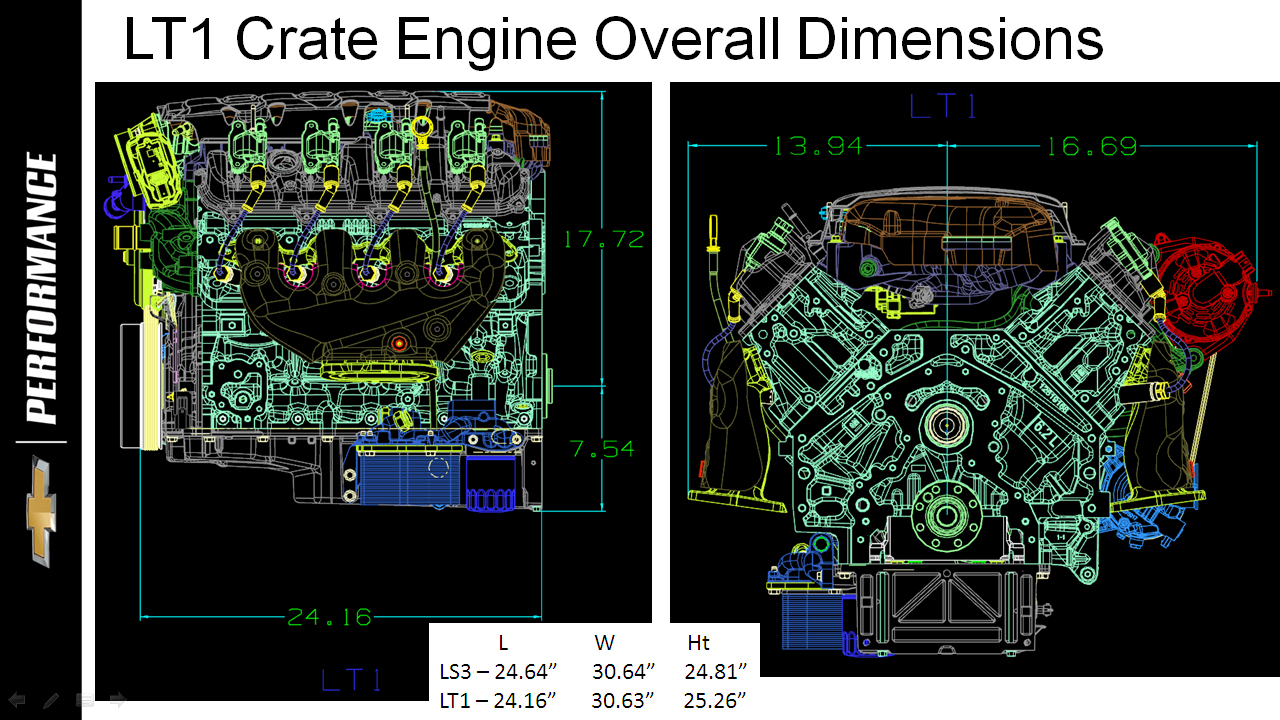
Look at the dimensions of these two engines. Why does the displacement matter if they make similar power and are about the same size? It's just two different methods. One revs higher, the other has more torque. They use different gearing and it equals out. Hp per liter is what civic fanboys have been doing for years to justify their 200hp.


grayforge

Well-Known Member
Joined
May 4, 2015
Threads
1
Messages
57
Reaction score
7
Location
United States
Vehicle(s)
Magnum SRT8, Solstice GXP, '65 Vette
I think it's more important to look at the external dimensions and weight of the engine than the displacement. Why should I really care if its a 5.0 or a 6.2 if the power is similar. It's not like the 6.2 engine is necessarily 24% larger or weighs more than the 5.0.

A better metric to use would be hp / (length x width x height).
Concur. I'm much more interested in HP or TQ per pound of engine weight than per liter of displacement.

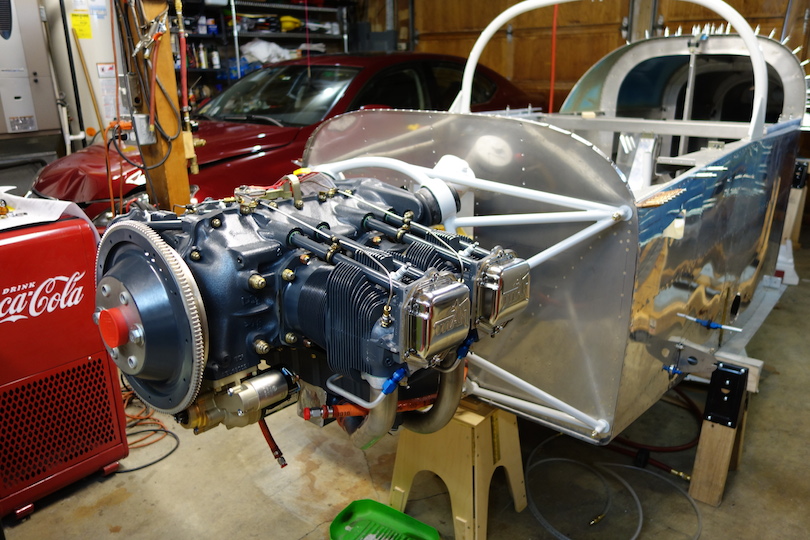
My low tech OHV air cooled motor makes 205HP, but only weighs 270lbs or so, including cooling system. :-)


Top