Sponsored

Fuel starvation on track

Bossdog

Well-Known Member
Joined
Feb 6, 2016
Threads
29
Messages
321
Reaction score
163
Location
SE Michigan
Vehicle(s)
2019 GT PP2
To clarify again, I know almost noting about fuel systems in general nor specifically the S550 GT. That being said, I've been researching as much as I can, I've come up with the following questions for a possible improvement in the scavenging from the passenger side tank.
Aftermarket Industries has a fuel system upgrade, FS1000-MGT, that uses their high performance venturi pump, scavenging 200 l/hr, making it virtually impossible to develop fuel starvation. As I looked further, I see they sell their venturi pump used in there system as a stand alone item.
I'm of the impression the S550 venturi is in the return line, scavenging fuel from the passenger tank. Would it be possible to swap in the Ai venturi pump/fitting for the factory one? Its likely to not work as efficiently as when used their own FS1000-MGT fuel delivery system, but perhaps, it would be a large enough improvement to resolve said issues that develop during extended hard left track events.
Venturi-Jet-Vacuum-Pump-1.png


I'm hoping others here that have a familiarity with our GT fuel system could weigh in on this idea.
Sponsored


JAJ

Well-Known Member
Joined
Apr 9, 2016
Threads
4
Messages
2,232
Reaction score
1,987
Location
Vancouver BC
Vehicle(s)
2016 GT350 Track Pack
To clarify again, I know almost noting about fuel systems in general nor specifically the S550 GT. That being said, I've been researching as much as I can, I've come up with the following questions for a possible improvement in the scavenging from the passenger side tank.
Aftermarket Industries has a fuel system upgrade, FS1000-MGT, that uses their high performance venturi pump, scavenging 200 l/hr, making it virtually impossible to develop fuel starvation. As I looked further, I see they sell their venturi pump used in there system as a stand alone item.
I'm of the impression the S550 venturi is in the return line, scavenging fuel from the passenger tank. Would it be possible to swap in the Ai venturi pump/fitting for the factory one? Its likely to not work as efficiently as when used their own FS1000-MGT fuel delivery system, but perhaps, it would be a large enough improvement to resolve said issues that develop during extended hard left track events.
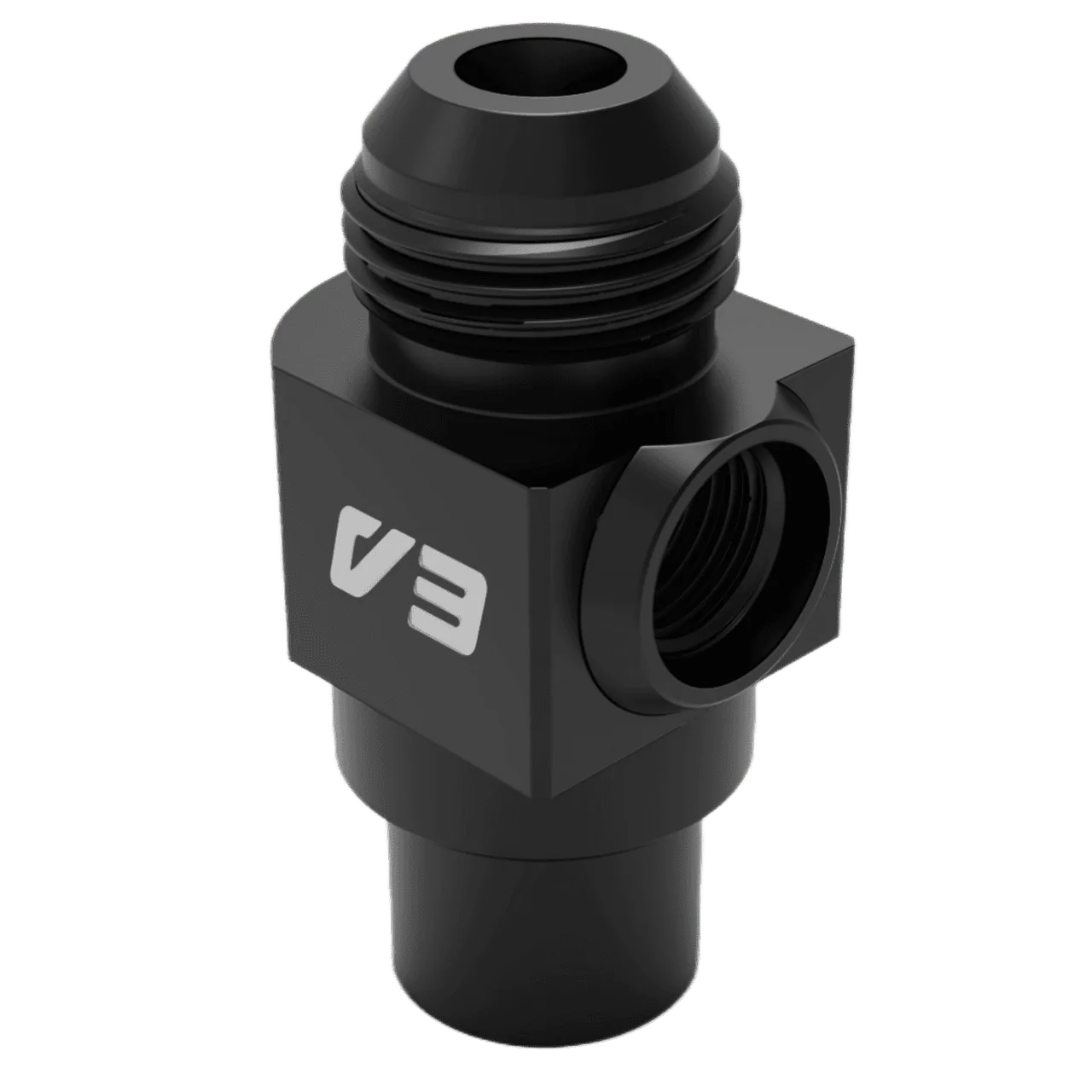
Venturi-Jet-Vacuum-Pump-1.webp


I'm hoping others here that have a familiarity with our GT fuel system could weigh in on this idea.
Your car came from the factory with one of those. That's exactly how the factory system in a Mustang GT works. There's a venturi pump built into the main pump. FP vehicles, GT350 and so on, have a second electric pump managed by the ECU.

There's no way to know if this venturi pump is better than the OEM one. Thing is, when you're holding maintenance throttle in a long left-hander, there's not a lot of fuel flow and a venturi pump relies on fuel flow to generate vacuum. It'll work great under heavy throttle but it's hard to say how it'll be at partial throttle.
 

Bossdog

Well-Known Member
Joined
Feb 6, 2016
Threads
29
Messages
321
Reaction score
163
Location
SE Michigan
Vehicle(s)
2019 GT PP2
Funny I don't have this issue until about 1/4 tank but whenever I run on E it is way more sensitive. It doesn't make sense.
Based on what I have researched on this issue, it does make sense. With an e85 tune you are using 30% more fuel and under demanding conditions, the fuel reservoir/bucket that houses the pump(s) is being drained faster than it can refill. The Stock GT is not designed with a rapid refill capacity and with demanding driving has reduced the amount of fuel on the driver side fuel tank/saddle-bag.
 

2morrow

DesignR/DriveR/RiceEatR
Joined
Nov 15, 2015
Threads
58
Messages
6,497
Reaction score
6,113
Location
NorCal Bay Area
First Name
Todd
Vehicle(s)
'16 Mustang GTPP
Based on what I have researched on this issue, it does make sense. With an e85 tune you are using 30% more fuel and under demanding conditions, the fuel reservoir/bucket that houses the pump(s) is being drained faster than it can refill. The Stock GT is not designed with a rapid refill capacity and with demanding driving has reduced the amount of fuel on the driver side fuel tank/saddle-bag.
And there you go! Next time i'm in 'The Mitt, first round of beers are on me!
 

Sponsored

Bossdog

Well-Known Member
Joined
Feb 6, 2016
Threads
29
Messages
321
Reaction score
163
Location
SE Michigan
Vehicle(s)
2019 GT PP2
Your car came from the factory with one of those. That's exactly how the factory system in a Mustang GT works. There's a venturi pump built into the main pump. FP vehicles, GT350 and so on, have a second electric pump managed by the ECU.

There's no way to know if this venturi pump is better than the OEM one. Thing is, when you're holding maintenance throttle in a long left-hander, there's not a lot of fuel flow and a venturi pump relies on fuel flow to generate vacuum. It'll work great under heavy throttle but it's hard to say how it'll be at partial throttle.
Yes, I was thinking about that as well. The Venturi pump is limited by its design and the amount of fluid flow through its primary. With a non-return system I am assuming you are limited to how much fuel you can flow through the return, limiting how much the venturi can draw. I'm not qualified to design my own fuel system but I was thinking that if I utilized a return style fuel system like the Sai Li system, you could utilize a fuel pump with flow in excess of what you need, giving a high return flow rate. And when you reduce throttle input, the return flow increases, increasing the venturi draw.

Regarding if the design of the ford venturi is better suited for our fuel system over the aftermarket one form Ai; Ai is claiming 200 l/hr. Radium claims its venturi is improved over the factory, and radium claims 15 to 45 l/hr depending on flow. so my assumption is that the Ai should be MUCH better. I've sent Ai an email asking how much fluid flow is required to achieve a venturi max flow/draw of 200 l/hr.

By the time I purchase a Sai Li return style fuel system ( A modified GT500 system for the GT - return style) and then figure out how to implement the Ai 200 l/hr venturi, I'll have about the same dollars as just installing the Ai system, and have a system professionally designed by fuel system engineers.
But, it would be fun to work on a solution like this on a bench! Perhaps I'll ask Li Tunning to see if they would try and implement a high draw Venturi for the road course guys.
 

JAJ

Well-Known Member
Joined
Apr 9, 2016
Threads
4
Messages
2,232
Reaction score
1,987
Location
Vancouver BC
Vehicle(s)
2016 GT350 Track Pack
Yes, I was thinking about that as well. The Venturi pump is limited by its design and the amount of fluid flow through its primary. With a non-return system I am assuming you are limited to how much fuel you can flow through the return, limiting how much the venturi can draw. I'm not qualified to design my own fuel system but I was thinking that if I utilized a return style fuel system like the Sai Li system, you could utilize a fuel pump with flow in excess of what you need, giving a high return flow rate. And when you reduce throttle input, the return flow increases, increasing the venturi draw.

Regarding if the design of the ford venturi is better suited for our fuel system of the aftermarket one form Ai; Ai is claiming 200 l/hr. Radium claims its venturi is improved over the factory, and radium claims 15 to 45 l/hr depending on flow. so my assumption is that the Ai should be MUCH better. I've sent Ai an email asking how much fluid flow is required to achieve a venturi max flow/draw of 200 l/hr.

By the time I purchase a Sai Li return style fuel system ( A modified GT500 system for the GT - return style) and then figure out how to implement the Ai 200 l/hr venturi, I'll have about the same dollars as just installing the Ai system, and have a system professionally designed by fuel system engineers.
But, it would be fun to work on a solution like this on a bench! Perhaps I'll ask Li Tunning to see if they would try and implement a high draw Venturi for the road course guys.
It occurred to me later that you might be able to push fuel from the stock pump through the Ai pump to get the two pumps working at the same time. Would take some plumbing, but it might help.
 

Angrey

Well-Known Member
Joined
Jun 21, 2020
Threads
104
Messages
2,794
Reaction score
2,984
Location
Coral Gables
Vehicle(s)
2016 GT350
It gets a bit complicated, but I'll explain it as simply as I can.

OE condition features a returnless feed with a secondary port/feed that drives the siphon system. That second port flows directly back into the tank, along with whatever fuel its drawing/siphoning from the other saddle. Even if it were 100% efficient, which is impossible, the waste from the drive flow is of no benefit. It's quite literally a "leak" in your fuel pump primary feed. If the motor is needing 300 l/h, the pumps have to take up 300 l/h AND whatever additional flow they need to overcome the leak and drive the siphon system. So putting it directly back into the bucket doesn't help with the immediate needs of the motor and fuel delivery system. The additional siphon flow from the other side is contributing however. The problem is that it's a self defeated affair. The system could never siphon enough from the other side to keep up with the fuel flow demand of the motor, because the secondary nipple for the siphon and the restriction at the jet is smaller than the primary feed. I've never found actual flow ratings for the oem siphon system. Nearest I've found is an article/report that indicates you lose approximately 40 l/h by having a parasitic siphon being driven by the primary pumps. Even if you can improve the efficiency and flow, it will never be enough to adequately supply the needs of the pump (primary flow + siphon system) it is truly intended to be a slow transfer from the passenger side to the driver side.

For an after market return style system, some employ the siphon on the return line. This is both a help and a hindrance. The return flow is truly "free" flow thats being wasted, however again, it's much smaller than the primary flow in relevant conditions at high draw. For low duty conditions the regulator is sending more fuel back to the tank than the rails are drinking but that's only in a very inefficient setup that runs the pumps full boogie all the time. For anything with variable control, that low demand condition isn't inverted as much. In either case, the flow from the siphon isn't enough to supply the needs of the motor AND the return/siphon system.

The two effective strategies at keeping the pump pickups from starving are to keep the fuel in place (either globally or locally). Globally you could employ a fuel mat or foam setup that keeps the fuel in the primary saddle. Locally we can use a reservoir or bucket with a one way check valve that allows flow in but not out. Both are somewhat effective for short durations.

The only long term condition solutions that truly resolve the issue is either keep the fuel pumps completely submerged even with fuel shift (ie run a higher total fuel level) or have some form of fuel inflow that's independent of the primary pump system.

In the end, lots of smart people have tried to wizard this and there's no magic bullet. The particular inputs and outputs and constraints with size of the bucket and the saddle mean if you want to run in a left hand turn condition at high fuel consumption for long periods, you're going to need either lift pumps in the other saddle OR a surge tank (which is essentially the same thing just creating a new separate reservoir).

I wish someone with the time and knowledge would develop a a surge tank that can fit below the car in the available space (rather than inside the firewall). That would truly be the best solution.
 

Bossdog

Well-Known Member
Joined
Feb 6, 2016
Threads
29
Messages
321
Reaction score
163
Location
SE Michigan
Vehicle(s)
2019 GT PP2
It gets a bit complicated, but I'll explain it as simply as I can.

OE condition features a returnless feed with a secondary port/feed that drives the siphon system. That second port flows directly back into the tank, along with whatever fuel its drawing/siphoning from the other saddle. Even if it were 100% efficient, which is impossible, the waste from the drive flow is of no benefit. It's quite literally a "leak" in your fuel pump primary feed. If the motor is needing 300 l/h, the pumps have to take up 300 l/h AND whatever additional flow they need to overcome the leak and drive the siphon system. So putting it directly back into the bucket doesn't help with the immediate needs of the motor and fuel delivery system. The additional siphon flow from the other side is contributing however. The problem is that it's a self defeated affair. The system could never siphon enough from the other side to keep up with the fuel flow demand of the motor, because the secondary nipple for the siphon and the restriction at the jet is smaller than the primary feed. I've never found actual flow ratings for the oem siphon system. Nearest I've found is an article/report that indicates you lose approximately 40 l/h by having a parasitic siphon being driven by the primary pumps. Even if you can improve the efficiency and flow, it will never be enough to adequately supply the needs of the pump (primary flow + siphon system) it is truly intended to be a slow transfer from the passenger side to the driver side.

For an after market return style system, some employ the siphon on the return line. This is both a help and a hindrance. The return flow is truly "free" flow thats being wasted, however again, it's much smaller than the primary flow in relevant conditions at high draw. For low duty conditions the regulator is sending more fuel back to the tank than the rails are drinking but that's only in a very inefficient setup that runs the pumps full boogie all the time. For anything with variable control, that low demand condition isn't inverted as much. In either case, the flow from the siphon isn't enough to supply the needs of the motor AND the return/siphon system.

The two effective strategies at keeping the pump pickups from starving are to keep the fuel in place (either globally or locally). Globally you could employ a fuel mat or foam setup that keeps the fuel in the primary saddle. Locally we can use a reservoir or bucket with a one way check valve that allows flow in but not out. Both are somewhat effective for short durations.

The only long term condition solutions that truly resolve the issue is either keep the fuel pumps completely submerged even with fuel shift (ie run a higher total fuel level) or have some form of fuel inflow that's independent of the primary pump system.

In the end, lots of smart people have tried to wizard this and there's no magic bullet. The particular inputs and outputs and constraints with size of the bucket and the saddle mean if you want to run in a left hand turn condition at high fuel consumption for long periods, you're going to need either lift pumps in the other saddle OR a surge tank (which is essentially the same thing just creating a new separate reservoir).

I wish someone with the time and knowledge would develop a a surge tank that can fit below the car in the available space (rather than inside the firewall). That would truly be the best solution.
All good input @Angrey!
What if we keep the non-return fuel system from the factory, use a 2-pump hanger, one pump to fuel the engine, the other to run a high efficiency venturi pump. the secondary pump would be drawing from the driver side like the primary, but all its doing is "recycling" the drivers side fuel, drawing and pumping back into the drivers side, while connected to the Venturi pump drawing 150 to 200 l/hr from the passenger side with the Ai-V3 Ventrui pump all the time. IF / when the passenger side is empty, the secondary pump is still drawing from the drivers side, the venturi just stops drawing and you don't have to worry about a pump running dry in the passenger side.

Your final comment is the key through, we need sone who does this for a living to develop a safe, reliable solution.
 

Angrey

Well-Known Member
Joined
Jun 21, 2020
Threads
104
Messages
2,794
Reaction score
2,984
Location
Coral Gables
Vehicle(s)
2016 GT350
All good input @Angrey!
What if we keep the non-return fuel system from the factory, use a 2-pump hanger, one pump to fuel the engine, the other to run a high efficiency venturi pump. the secondary pump would be drawing from the driver side like the primary, but all its doing is "recycling" the drivers side fuel, drawing and pumping back into the drivers side, while connected to the Venturi pump drawing 150 to 200 l/hr from the passenger side with the Ai-V3 Ventrui pump all the time. IF / when the passenger side is empty, the secondary pump is still drawing from the drivers side, the venturi just stops drawing and you don't have to worry about a pump running dry in the passenger side.

Your final comment is the key through, we need sone who does this for a living to develop a safe, reliable solution.
The only advantage is not having to modify the passenger side. The venturi is wildly inefficient. My low level lift pumps draw about 4 amps each, so the two of them flow 400 lh directly into the primary side pump basket. You could run a single pump in a 3 pump configuration just for running the venturi, but the load would be higher and the flow would be less. The ONLY advantage would be the simplicity of having it all operated out of the primary hanger/basket.

Of course then there's the complexity of pump control. If you run the pumps full boogie, that's 3 pumps drawing anywhere from 40-60 amps depending on which high flow pump you choose. If you run variable, then the venturi pump would also be variable and much less effective at low engine load/pump duty conditions.

You could stage them, with a typical hobbs switch or some sort of activation, but then you're relying on another failure point.

Honestly the BEST solution would be a surge tank that fits somewhere beneath the car. You could then maintain the OE venturi setup to slowly draw fuel from the passenger side, have surge/slosh protection and not have it sitting inside the firewall with you. But until someone creates one that's tailored to the underside space of a mustang, that's not an option.

Honestly, I think guys are overthinking the lift pumps on the passenger side. I made it more complicated than it absolutely needs to be. You could easily modify the bottom of the pickup tube, clamp in a couple of low draw lift pumps, put the relays on a switch and then just have the switch on for spirited conditions. It's only once you want it more automated that stuff gets complicated and difficult. And honestly, if Ford had simply employed a level sender typical of the rest of the automotive world for the better part of a century, it would be pretty easy to automate all of it.
 

Sponsored

Bossdog

Well-Known Member
Joined
Feb 6, 2016
Threads
29
Messages
321
Reaction score
163
Location
SE Michigan
Vehicle(s)
2019 GT PP2
My plan is to run with a full tank for a few seasons till I get the car sorted out. If all things are the same as today in 3 years, I’d likely put in the Aftermarket Industries FS1000-MGT, in tank surge tank/ fuel system. . It’s a spendy solution but very clean.
 

Angrey

Well-Known Member
Joined
Jun 21, 2020
Threads
104
Messages
2,794
Reaction score
2,984
Location
Coral Gables
Vehicle(s)
2016 GT350
My plan is to run with a full tank for a few seasons till I get the car sorted out. If all things are the same as today in 3 years, I’d likely put in the Aftermarket Industries FS1000-MGT, in tank surge tank/ fuel system. . It’s a spendy solution but very clean.
Again, it's not really solving the problem for higher hp/flow cars. Might be a solution for OE level cars.

For one, the Radium bucket is essentially the same "tank" and has one way in flow. The older models featured a simple ball check valve, the newer hats have a membrane bladder valve. Fuel flows in but not out.

That volume, once you subtract all the pumps, fittings, hoses, etc, isn't spectacular. Depending on your power levels, it might provide a few seconds of reserve volume.

Using OE level power (526 hp) on E85, you're talking about a peak demand of around 275 liters/hour. That's roughly 4.6 liters/minute. That means the pumps to feed JUST THE RAILS need about a liter of E85 every 13 seconds. I did some crude volumetric calcs on the Radium bucket (after accounting for the displacement from all the gear inside the bucket) and it has about .6-.7 liters worth of volume available as reserve. Meaning at stock power levels it would have about 8 or 9 seconds worth of reserve before the pumps start to starve. Keep in mind, once the pumps start to draw more than is available, even if there's partial flow, the result is a pressure drop at the rails and a lean condition. It doesn't take much to put a high compression motor in jeopardy, even a 5 psi loss at the rails starts to put the injector duty beyond limits and the factory ECU can is intentionally limited in how much it can add to the short term fuel trims, once that's max'ed, the computer won't add any more injector duration (for fear of burning up or damaging the injectors, among other things).

The pumping action to drive the venturi doesn't contribute, it's just recycling fuel in the bucket, so it takes flow to suck/draw additional flow from the siphon side, so let's say that you're feeding 200 liters/hour to drive the venturi, that 200 liters/hour is being picked up by the pumps and sent right back into the bucket (circling) and it's drawing something WAY less in additional fuel from the other side. Their claims of 200 liters/hour are wild. In order to draw 200 liters/hour from the other side, you'd need something WAY WAY bigger in terms of venturi flow. Again, the only testing data I've ever seen was from Radium who quoted something like 40 liters/hour. Off of who knows what venturi flow to draw that.

So if we make some reasonable assumptions, let's assume that 40 l/h is coming in on the low end and 200 l/h is coming in on the high end. Some simple math means that we could extend that reserve from 8 or 9 seconds to 13 seconds (at 40 liters/hour) or 31 seconds (at 200 liters/hour).

I question the legitimacy of the 200/liter/hour claim and I would venture that it's not net, that it's gross flow (meaning they're counting the venturi total outflow, not how much of it is from the other side).

In any case, it's probably enough to resolve the issue for a decent amount of time on OE power levels (which is what most track rats are concerned with).

For higher HP cars, the flow jumps considerably meaning the amount of time to suck the bucket dry drops significantly.

This analysis of course makes some pretty BIG assumptions. Under "normal" or less than max output conditions, and low fuel level, (ie. lower than the top of the bucket) the siphon would have to keep the bucket "topped off" which is probably feasible because at lower duty the pumps aren't drawing much. But again, unless you're running a dedicated pump JUST for the venturi that you use at 100% load all the time, the amount of fuel that you're drawing over will vary along with pump duty (meaning it'll draw a little bit at low levels and the most it can at full duty).

In summary, I think this probably will solve for many/most of the conditions that OE power level cars face. You won't be able to accelerate for 20 seconds and even the most sweeping left hand turns aren't going to last that long.

But to totally resolve the issue for everyone (meaning the bigger power guys) a dedicated lift pump (either from the passenger side into the driver's side or the drivers side into a separate surge tank) is probably going to be the required solution.
 

KPM Fuel Systems

Well-Known Member
Diamond Sponsor
Joined
Nov 15, 2023
Threads
16
Messages
72
Reaction score
157
Location
Adelaide
First Name
David
Vehicle(s)
FN Mustang
KPM Fuel Systems have now developed direct drop in replacement pump modules that have solved the track starvation issues many are experiencing.
 

Biggsy

Well-Known Member
Joined
May 3, 2018
Threads
206
Messages
2,636
Reaction score
2,104
Location
MD
First Name
Warren
Vehicle(s)
'17 GT PP, '10 Tundra


Top