Sponsored

TPMS change parameters

sdskinner73

Well-Known Member
Joined
Dec 26, 2020
Threads
22
Messages
303
Reaction score
262
Location
Indiana, United States
First Name
Shawn
Vehicle(s)
2018 premium GT A10 3.55s
Is there a way to change the parameters of the TPMS sensors? I had the 20" upgraded wheels on mine when I bought it. (265/35/20). Changed them to 19" wheels with 275/40/19. Calculator says to use 29 psi instead for these, not the 35 psi for stock size. With the weather change, my light came on because one is at 28. That's not low, so the annoying light is on. Is there a way to reset the parameters or do I just have to ignore it basically?

To add, I do have the ford performance sensors and they are about 5000 miles old. So I don't expect them to be faulty. Crazier things have happened.
Sponsored

 

Farkel

Well-Known Member
Joined
Oct 14, 2019
Threads
11
Messages
678
Reaction score
831
Location
Cartoon City, Nirvana
First Name
Marc
Vehicle(s)
'20 GT Premium PP1, 2012 Jeep JK, 2022 Harley 48
Not sure what caculator you're referring to that says to run 29 psi, but 275/40/19 is a stock PP1 rear size and Ford specifies 32 psi for them. Try that and you probably won't have to worry about changing parameters.
 
OP
OP
sdskinner73

sdskinner73

Well-Known Member
Joined
Dec 26, 2020
Threads
22
Messages
303
Reaction score
262
Location
Indiana, United States
First Name
Shawn
Vehicle(s)
2018 premium GT A10 3.55s
Not sure what caculator you're referring to that says to run 29 psi, but 275/40/19 is a stock PP1 rear size and Ford specifies 32 psi for them. Try that and you probably won't have to worry about changing parameters.
I used this one. Stock on the 265/35/20s was 35. Unless this is wrong?
https://tiresize.com/pressure-calculator/
 

Skye

Well-Known Member
Joined
Jan 18, 2022
Threads
13
Messages
2,911
Reaction score
4,082
Location
≈39N
Vehicle(s)
"Skye" Mach1 N2144
"**Although this pressure meets the load capacity, 28 psi may be too low for optimum tread wear.
Assessing tire contact patch for proper treadwear is always recommeded."

I tried the site just now. From my experience this morning, the recommended pressure from the site is much to low for street driving.

I changed from factory to aftermarket rims and tires in the first month of ownership. On the change, I kept to the 3% rule, where the diameter of the tire stayed +/- 3% from the originals, all four corners.

As to the recommended pressures with the new tires, taking the placard, I used 33 psi / 2.27 bar as my baseline. I gave myself +/- 3% (1 psi, .07 bar) in each direction. That left me with 32-34 as my recommended pressure.

If I'd really wanted to get into the weeds, I would have formally calculated the volume of the tires (donuts) and gotten more exact.

I started at 32 psi. Every few hundred miles, I measured the tread depth. I'd also take note of any differences in traction.

https://miltonindustries.com/produc...8SbI1YL7htitDz9KEuDIduxK1FBdX8if6LHl025RpD-gb

I've settled on 33 psi / 2.27 bar. I'm getting a tread pattern that works for me. I will deviate on pressure a bit, depending on the time of year. For example, in the Summer, if I start at 32 psi, I leave it. I expect to see a greater increase with the hotter surface. Similarly, I might be at 34 in the Fall, knowing the cooler temps will have an effect once I leave the garage.

My math was not exact or scientific. The only way I could quantify I was in the right place was with a tread depth gauge, which I continue to use anyway, to confirm the alignment and suspension are doing well.

YMMV.

Edit,

As to changing the reference level in the TPMS system, I have read FORScan and other products can do that.

As to the set point, I've learned from other vehicles TPMS will alarm when the tire is roughly 20+% away from the reference, up or down. As the example by so many, the pressure was to low. In my own experiments with my truck, I confirmed if I set my spare to a higher level (by 20 some-odd %) than the other tires, TPMS will also alarm. "If one is soo high and the others so low, something is wrong."

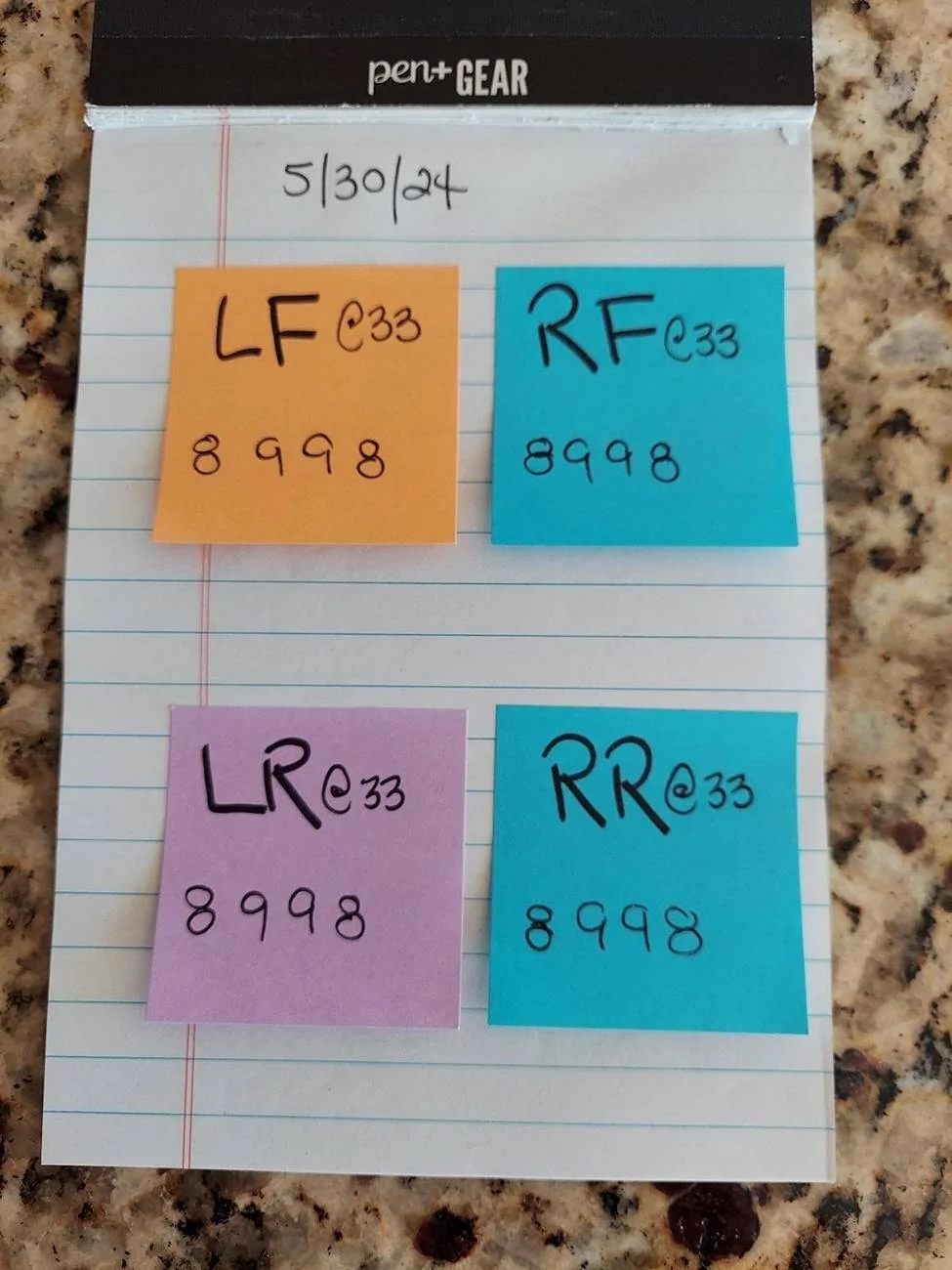
20240531_080929.jpg
 
Last edited:
OP
OP
sdskinner73

sdskinner73

Well-Known Member
Joined
Dec 26, 2020
Threads
22
Messages
303
Reaction score
262
Location
Indiana, United States
First Name
Shawn
Vehicle(s)
2018 premium GT A10 3.55s
"**Although this pressure meets the load capacity, 28 psi may be too low for optimum tread wear.
Assessing tire contact patch for proper treadwear is always recommeded."

I tried the site just now. From my experience this morning, the recommended pressure from the site references is too low. By a lot. For street driving.

I changed from factory to aftermarket rims and tires in the first month of ownership. On the change, I kept to the 3% rule, where the diameter of the tire stayed +/- 3% from the originals, all four corners.

As to the recommended pressures with the new tires, taking the placard, I used 33 psi / 2.27 bar as my baseline. I gave myself +/- 3% (1 psi, .07 bar) in each direction. That left me with 32-34 as my recommended pressure.

If I'd really wanted to get into the weeds, I would have formally calculated the volume of the tires (donuts) and gotten more exact.

I started at 32 psi. Every few hundred miles, I measured the tread depth. I'd also take note of any differences in traction.

https://miltonindustries.com/produc...8SbI1YL7htitDz9KEuDIduxK1FBdX8if6LHl025RpD-gb

I've settled on 33 psi / 2.27 bar. I'm getting a tread pattern that works for me. I will deviate on pressure a bit, depending on the time of year. For example, in the Summer, if I start at 32 psi, I leave it. I expect to see a greater increase with the hotter surface. Similarly, I might be at 34 in the Fall, knowing the cooler temps will have an effect once I leave the garage.

My math was not exact or scientific. The only way I could quantify I was in the right place was with a tread depth gauge, which I continue to use anyway, to confirm the alignment and suspension are doing well.

YMMV.

20240531_080929.jpg
That explains it. I thought their calculation seemed low, but haven’t had any issues until now. Going to go up to 33 today and see if that changes it. Idk the formula for it, and didn’t really feel it to be necessary with that calculator. Seems I was wrong. Thank you!
 

Sponsored

S550HPP

Well-Known Member
Joined
Jun 6, 2024
Threads
32
Messages
1,954
Reaction score
1,025
Location
PDC
Vehicle(s)
2022 HPP Vert
Last GT I drove has 32 on door. My EB has 33 I use 30-31 really helps smooth out the urban broken pavement and manhole chop. No affect on hwy economy.

The placard spec is for the economy rating. If plan on cornering hard stick to 33-36 on front.
 

WD Pro

Well-Known Member
Joined
Jan 18, 2018
Threads
132
Messages
6,761
Reaction score
13,547
Location
United Kingdom
Vehicle(s)
Lime GT
Vehicle Showcase
1
Also reset the system after changing pressure.

I ‘think’ it looks for a pressure change, rather than absolute number.

That would also explain why you triggered at 28 with your new wheels, as you had a baseline of 35 for your old wheels.

WD :like:
 

Skye

Well-Known Member
Joined
Jan 18, 2022
Threads
13
Messages
2,911
Reaction score
4,082
Location
≈39N
Vehicle(s)
"Skye" Mach1 N2144
Also reset the system after changing pressure.

I ‘think’ it looks for a pressure change, rather than absolute number.
This is a topic I still do not completely understand. I've recently learned a few bits, a lot of which has to do with the age of the vehicle.

2008 Toyota Tacoma: I have a physical reset button in the interior, specifically for the TPMS. If I press that, it re-trains the truck to the sensors.

As to the logic, the Owner's manual implies I can make my own pressure set point. For example, I set the air at 28 psi/1.93 bar, then press the button: it learns the new set point and confirms which sensor is at which wheel. If I change the pressures, I can simply press the button again.

What I've confirmed is the system alarms if there is a difference in pressures to the set point. If too low, or two high, by like 20%, the system alarms. Someone else I discussed the topic with also aligns with your thought: it's looking more for a relative change from a point versus the actual pressures themselves.

2022 Ford: without FORScan or like device, I can't reset anything.

It's my belief the set point is programmed to the car and that is that. If I stray too far %-wise from the programmed point, the system will alarm. Edit: the car auto-senses if I have installed new TPMS sensors and synchs them to the car. In older models, there was a physical button or a dash setting to reset TPMS. But in these older units, I'm not sure if it both re-trained the sensors and set the point or just re-trained the new sensors.

I suspect manufacturers went in the direction they did over the years for safety. If I can set my own pressure reference, I might not know what I'm doing, or just reset it because I'm annoyed by the alarm, causing me to drive around with tires under/over-inflated and risking an accident.
 
Last edited:

WD Pro

Well-Known Member
Joined
Jan 18, 2018
Threads
132
Messages
6,761
Reaction score
13,547
Location
United Kingdom
Vehicle(s)
Lime GT
Vehicle Showcase
1
2022 Ford: without FORScan or like device, I can't reset anything.
It's in my 2020 euro :like:

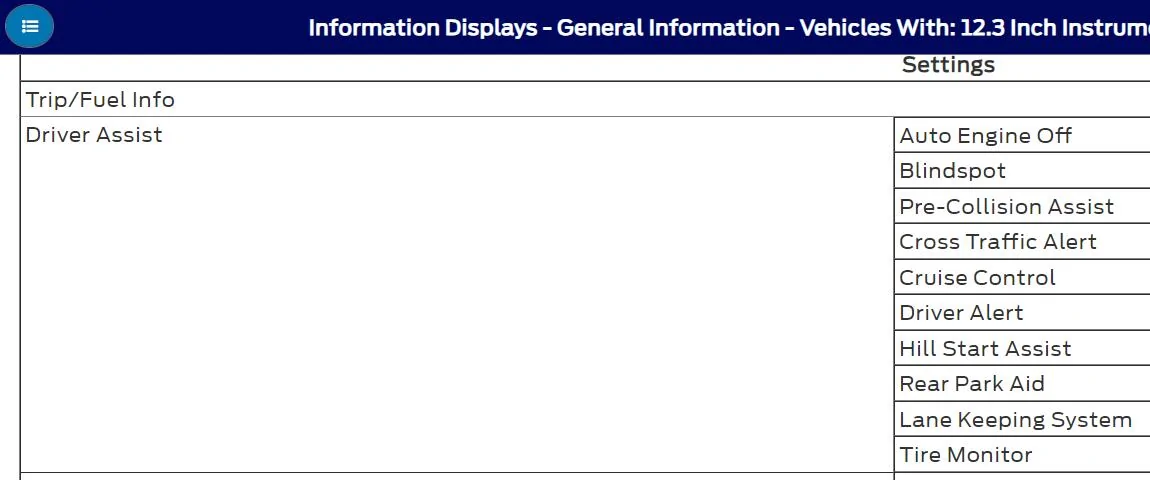
Settings (from the button on the wheel) - Driver assistance (or similar name) - tyre pressure monitor (or similar name) - reset (or similar name) - then you hold the OK button to reset them.

Maybe it changed on later models or for non digital dash cars ? :frown:

WD :like:
 

Skye

Well-Known Member
Joined
Jan 18, 2022
Threads
13
Messages
2,911
Reaction score
4,082
Location
≈39N
Vehicle(s)
"Skye" Mach1 N2144
Maybe it changed on later models or for non digital dash cars ?
A few weeks ago I learned a few things. I then went out to study the logic and couldn't go much further. Not a lot of authoritative references on-line. Compounding that is differences in Model Year, manufacturer, regulatory regions. :crazy:

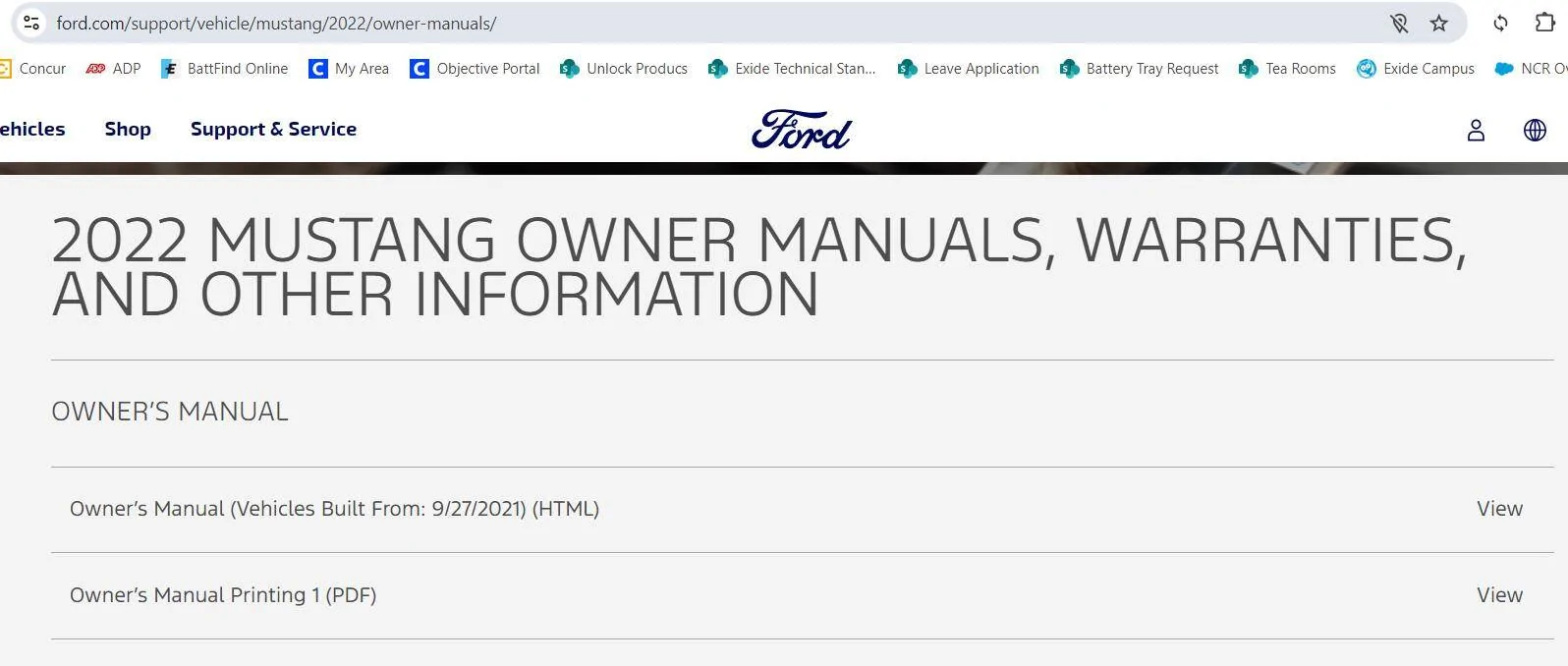
For my Mach, there is no button, nothing in the dash I can change, no reference in the Owners Manual to clear anything. Videos on-line involving previous MYs and generations, one could go in through the dash menus and reset TPMS. Times past, Ford has also had a physical button one could press.

Edit,

I'm left with the belief that, the car looks for a % difference from the pre-programmed reference. If one wheel is too high or too low, the system alarms. If all four wheels are too high or too low, the system alarms.
 
Last edited:

Sponsored

WD Pro

Well-Known Member
Joined
Jan 18, 2018
Threads
132
Messages
6,761
Reaction score
13,547
Location
United Kingdom
Vehicle(s)
Lime GT
Vehicle Showcase
1
What do you have under the bottom setting :

1726646451193-si.webp


That screenshot is from :

1726646493756-8t.webp


WD :like:
 

Skye

Well-Known Member
Joined
Jan 18, 2022
Threads
13
Messages
2,911
Reaction score
4,082
Location
≈39N
Vehicle(s)
"Skye" Mach1 N2144
So...I went down the rabbit hole this morning. LOL. 🐰🐰🐰🐰🐰

A long read follows, but provides many references on this topic.

I'm left with the impression that, the actual TPMS set point is not programmable, cannot be changed, by the Owner/Operator by pressing a button or using in-dash menus. There is the possibility the set point could be changed by the Dealer or when using FORScan. The reset button or in-dash menu re-learns where the wheel is, and re-checks pressure of each wheel.

Ultimately, it goes back to the placard, vehicle wheel, tire and towing safety. The manufacturer sells a vehicle of a prescribed standard and specification. Deviating from that, or having the ability to, changes all kinds of things. The simplest and safest process, through several years and owners, is to fix the car to a standard, then list that in the door jamb.

Jamb: an upright piece or surface forming the side of an opening (as for a door, window, or fireplace)

Jam: a food made by boiling fruit and sugar to a thick consistency :giggle:

***Throughout these readings, if anyone is going to reset their TPMS, there's another Ford or vehicle on the same frequency nearby, put some distance between yourself and the other vehicle. Performing these resets might train on other wheels, other vehicles. Ford recommends 1 yard/ 1 meter distance from others.***

- National Highway Traffic Safety Administration (NHTSA) Federal Motor Vehicle Safety Standard (FMVSS) 138

- The minimum standard is to alert the driver within 20 minutes when one or more tire's pressure is 25% or more below the preset reference. Different manufacturers, models or regions might have more-strict standards. For example, a high-performance or high MPG vehicle might alarm when one tire is only 15% low.

- Manufacturers are required to sell a new vehicle with tires operating at the door jamb placard reference. Aftermarket tires with different pressures are not allowed at the time of a new car sale.

What do you have under the bottom setting :
You're right, I did see that. But when I attempted to learn what it actually does, this is what I found:

https://www.akinsford.com/blog/how-to-reset-tire-pressure-sensors-on-ford-vehicles/

"If you’ve gotten a tire rotation done lately, you may notice your TPMS display has the tire positions all out of whack. Because the sensors are located inside each tire, you may have to reset the Tire Pressure Monitoring System and help it relearn the new positions of your tire sensors. "

https://www.thedieselstop.com/threads/can-tpms-set-point-adjusted-from-factory-setting.658280/

^ A discussion of late model Fords and the inability to change the set point.

https://www.f150forum.com/f38/how-do-i-lower-pressure-setting-my-tpms-310570/

^ Going back to 2015.

https://www.f150forum.com/f2/tpms-higher-tire-pressures-534237/

^ Post #6 references a comment I made earlier: having the ability to create your own set point by pressing a button or using in-dash menus raises a safety issue.

With that, I began reading the NHTSA reference, specifically, Section G.

https://www.federalregister.gov/doc...andards-tire-pressure-monitoring-systems#h-34

"G. TPMS Reprogrammability

Under the final rule, vehicle manufacturers are permitted, but not required, to provide a TPMS reprogrammability feature. However, the final rule made clear that the agency will conduct compliance testing with the tires installed on the vehicle at the time of initial sale and will follow any manufacturer instructions in the owner's manual related to resetting the TPMS. (

See70 FR 18136, 18146 (April 8, 2005))

According to SEMA, replacement tires for a vehicle may require higher inflation pressure than the vehicle's original equipment tires, and unless the TPMS is reprogrammed to reflect this new placard pressure, those replacement tires may become more than 25 percent under-inflated by the time the TPMS low tire pressure warning telltale illuminates. SEMA argued that this situation would both defeat the purpose of the rule and also give drivers a false sense of security, although SEMA acknowledged that it does not have specific information to demonstrate how significant this problem currently is or will be in the future. SEMA recommended that the standard be amended to require TPMS reprogrammability.

We have decided to deny SEMA's request that we amend FMVSS No. 138 to require TPMS reprogrammability, because there is no evidence to demonstrate an actual problem in this area. We believe that vehicle manufacturers installing TPMSs that may require reprogramming in certain situations are well aware of this issue and will provide this feature, as necessary. Thus, in the final rule, we expressly stated that TPMSs are permitted to be reprogrammable. Once again, although we are uncertain as to the exact details of system reprogrammability, we assume that it will be fairly easy for the service industry to reprogram TPMSs to accommodate different tires and rims."

Edit,

My DD truck is older and has a full-sized spare. With this topic and my recent experimenting, I confirmed the spare has a TPMS unit. Some manufacturers have installed TPMS sensors in their spares. Others, not. If unsure, someone with a scanner can buzz the wheel out and confirm.
 
Last edited:
OP
OP
sdskinner73

sdskinner73

Well-Known Member
Joined
Dec 26, 2020
Threads
22
Messages
303
Reaction score
262
Location
Indiana, United States
First Name
Shawn
Vehicle(s)
2018 premium GT A10 3.55s
So...I went down the rabbit hole this morning. LOL. 🐰🐰🐰🐰🐰

A long read follows, but provides many references on this topic.

I'm left with the impression that, the actual TPMS set point is not programmable, cannot be changed, by the Owner/Operator by pressing a button or using in-dash menus. There is the possibility the set point could be changed by the Dealer or when using FORScan. The reset button or in-dash menu re-learns where the wheel is, and re-checks pressure of each wheel.

Ultimately, it goes back to the placard, vehicle wheel, tire and towing safety. The manufacturer sells a vehicle of a prescribed standard and specification. Deviating from that, or having the ability to, changes all kinds of things. The simplest and safest process, through several years and owners, is to fix the car to a standard, then list that in the door jamb.

Jamb: an upright piece or surface forming the side of an opening (as for a door, window, or fireplace)

Jam: a food made by boiling fruit and sugar to a thick consistency :giggle:

***Throughout these readings, if anyone is going to reset their TPMS, there's another Ford or vehicle on the same frequency nearby, put some distance between yourself and the other vehicle. Performing these resets might train on other wheels, other vehicles. Ford recommends 1 yard/ 1 meter distance from others.***

- National Highway Traffic Safety Administration (NHTSA) Federal Motor Vehicle Safety Standard (FMVSS) 138

- The minimum standard is to alert the driver within 20 minutes when one or more tire's pressure is 25% or more below the preset reference. Different manufacturers, models or regions might have more-strict standards. For example, a high-performance or high MPG vehicle might alarm when one tire is only 15% low.

- Manufacturers are required to sell a new vehicle with tires operating at the door jam placard reference. Aftermarket tires with different pressures are not allowed at the time of a new car sale.


You're right, I did see that. But when I attempted to learn what it actually does, this is what I found:

https://www.akinsford.com/blog/how-to-reset-tire-pressure-sensors-on-ford-vehicles/

"If you’ve gotten a tire rotation done lately, you may notice your TPMS display has the tire positions all out of whack. Because the sensors are located inside each tire, you may have to reset the Tire Pressure Monitoring System and help it relearn the new positions of your tire sensors. "

https://www.thedieselstop.com/threads/can-tpms-set-point-adjusted-from-factory-setting.658280/

^ A discussion of late model Fords and the inability to change the set point.

https://www.f150forum.com/f38/how-do-i-lower-pressure-setting-my-tpms-310570/

^ Going back to 2015.

https://www.f150forum.com/f2/tpms-higher-tire-pressures-534237/

^ Post #6 references a comment I made earlier: having the ability to create your own set point by pressing a button or using in-dash menus raises a safety issue.

With that, I began reading the NHTSA reference, specifically, Section G.

https://www.federalregister.gov/doc...andards-tire-pressure-monitoring-systems#h-34

"G. TPMS Reprogrammability

Under the final rule, vehicle manufacturers are permitted, but not required, to provide a TPMS reprogrammability feature. However, the final rule made clear that the agency will conduct compliance testing with the tires installed on the vehicle at the time of initial sale and will follow any manufacturer instructions in the owner's manual related to resetting the TPMS. (

See70 FR 18136, 18146 (April 8, 2005))

According to SEMA, replacement tires for a vehicle may require higher inflation pressure than the vehicle's original equipment tires, and unless the TPMS is reprogrammed to reflect this new placard pressure, those replacement tires may become more than 25 percent under-inflated by the time the TPMS low tire pressure warning telltale illuminates. SEMA argued that this situation would both defeat the purpose of the rule and also give drivers a false sense of security, although SEMA acknowledged that it does not have specific information to demonstrate how significant this problem currently is or will be in the future. SEMA recommended that the standard be amended to require TPMS reprogrammability.

We have decided to deny SEMA's request that we amend FMVSS No. 138 to require TPMS reprogrammability, because there is no evidence to demonstrate an actual problem in this area. We believe that vehicle manufacturers installing TPMSs that may require reprogramming in certain situations are well aware of this issue and will provide this feature, as necessary. Thus, in the final rule, we expressly stated that TPMSs are permitted to be reprogrammable. Once again, although we are uncertain as to the exact details of system reprogrammability, we assume that it will be fairly easy for the service industry to reprogram TPMSs to accommodate different tires and rims."

Edit,

My DD truck is older and has a full-sized spare. With this topic and my recent experimenting, I confirmed the spare has a TPMS unit. Some manufacturers have installed TPMS sensors in their spares. Others, not. If unsure, someone with a scanner can buzz the wheel out and confirm.
My last Mustang had no TPMS installed for my winter set. Because there were other fords (nowhere near me) in my parking lot, they would randomly read 2-3 tires every morning until I got about halfway to work.

To add to my original post- I set them all to 33. Light went off. Will see how the tread looks in a few days. I don’t necessarily care what the psi should be, just that I have it correct for the tires. So if 28-30 is the correct number, I will do that and ignore the light. Not a big deal🤷‍♂️
Sponsored


Top