galaxy
Well-Known Member
You’d be absolutely correct, but it sure does look bad ass!Function wise, I see zero difference between this and the factory setup.
Sponsored

You’d be absolutely correct, but it sure does look bad ass!Function wise, I see zero difference between this and the factory setup.

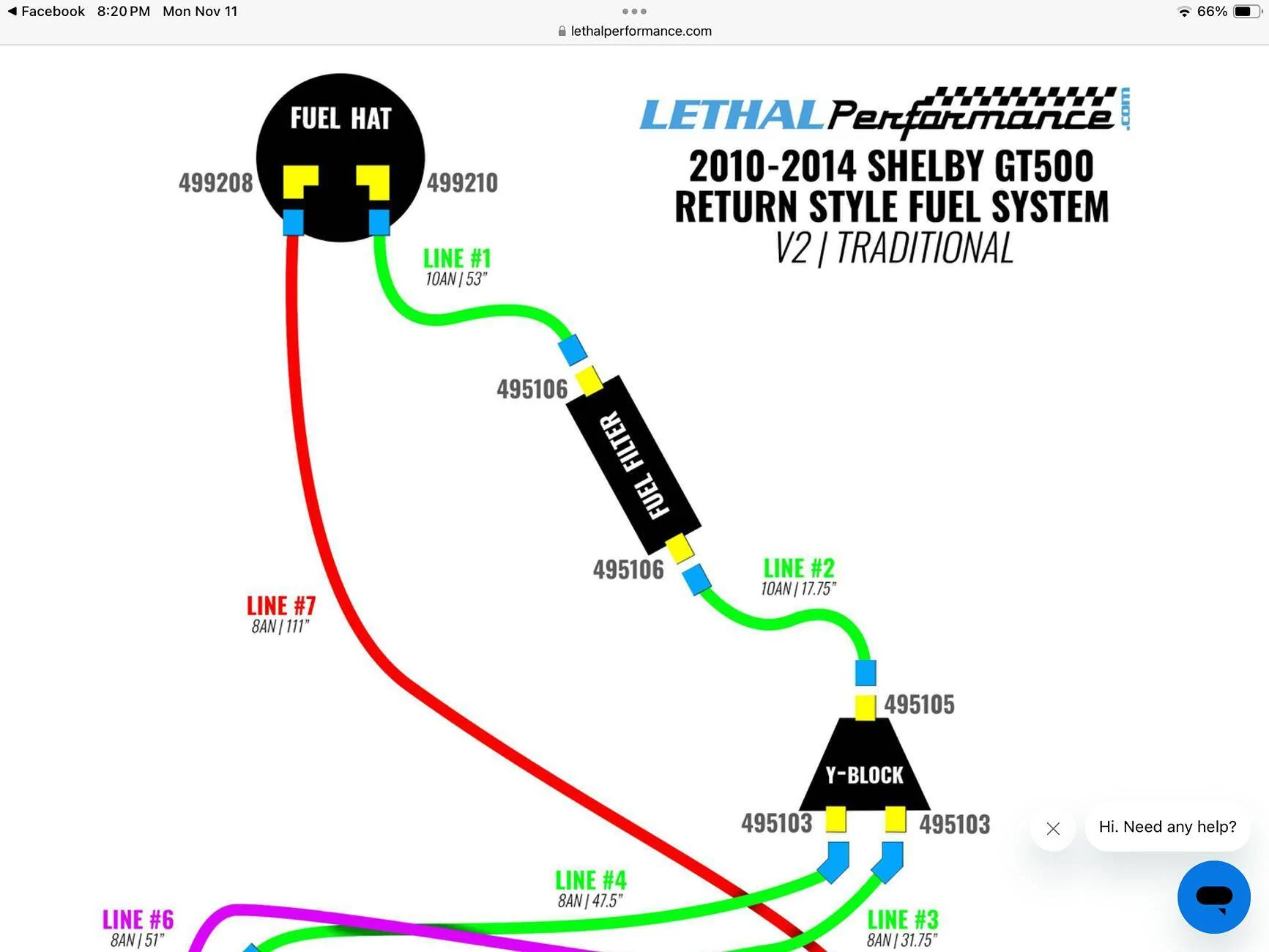
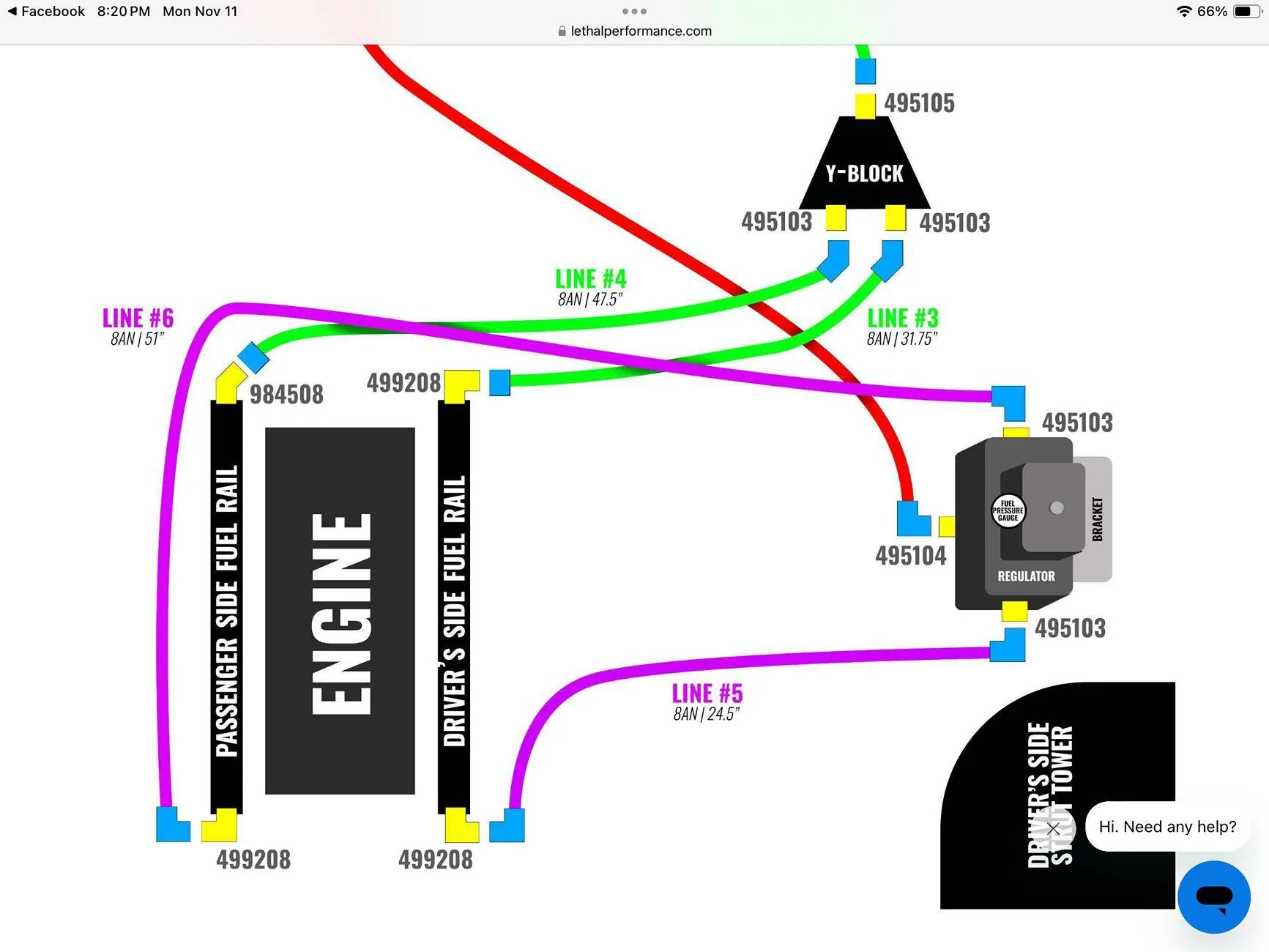
Keep in mind now the DI which uses a good bit of fuel is fed directly from one rail and right before the farthest away injector so actually as they route it it's worse then stock. If pressure drops then that front most injector is starved.Factory line comes into the rail on the driver side, then travels through the rail and through the crossover solid line to the passenger side rail.
This set up feeds from the factory line and splits into the back side of each rail. Passenger side theoretically speaking should get fed at the same time as the driver side rail. It's definitely better. Whether it makes any difference or not though is another story.
Stock also does the same though. The fuel has a shorter path to the passenger rail with the radium set up though with the Y. So to me the stock is the weakest set up for that injector. An added crossover in the front of the rails should help keep that injector fueled though. You're referring to the front passenger injector correct? Do we know which cylinder that is?Keep in mind now the DI which uses a good bit of fuel is fed directly from one rail and right before the farthest away injector so actually as they route it it's worse then stock. If pressure drops then that front most injector is starved.
Stock is not the same, the stock gen 3 rail has the dedicated main line to the DI nipple it does not feed off of one fuel rail. So stock the main feed line tees off and feeds both rails slightly offset from the middle and then the main line continues over to the DI. The bottle neck in that setup is the small crossover T branch to the rails that needs to feed 8 port injectors. The volume in the stock rails is plenty but at higher rpms it's limited by the tiny crossover so pressure drops off in the rails fast.Stock also does the same though. The fuel has a shorter path to the passenger rail with the radium set up though with the Y. So to me the stock is the weakest set up for that injector. An added crossover in the front of the rails should help keep that injector fueled though. You're referring to the front passenger injector correct? Do we know which cylinder that is?
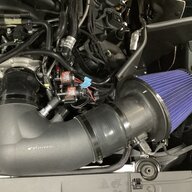
Yeah their install kit is garbage, dosen't even look good.I got all of it together tonight. No time to start it or anything, I'll do that another day. I'm not going to lie I'm not very impressed with the routing of everything. The 90 degree right off the main line and just where the Y fitting is at. I think it's stupid... Lol.
I don't know why they couldn't give you a 12-inch hose from the main fitting to the Y and have it near the back of the manifold and have 2 evenly measured lines teeing off to one side and one to another. I don't get why they designed the Y fitting to be so close to the main line connector and on a 90 degree turn at that. Liquid doesn't like to flow through 90 degree turns, neither does air, or electricity.

Not quite. When air flows through a pipe and encounters a bend, it experiences something called "flow separation." This means that the air near the outside of the bend tends to separate from the wall and form a zone of recirculating flow, known as a "separation bubble." The size and shape of this separation bubble depends on the angle of the bend. For a 30° bend, the separation bubble is relatively small and doesn't significantly disrupt the flow of air. However, as the angle of the bend increases, the size of the separation bubble increases, and it begins to block more of the airflow. At a 90° bend, the separation bubble reaches its maximum size, completely blocking the inner half of the bend. This causes the airflow to detach from the inner wall of the bend and form a tight spiral, known as a "Dean vortex." While this may seem counterintuitive, the Dean vortex actually helps to improve airflow through the bend, as it reduces the pressure losses associated with flow separation. As a result, air can flow more smoothly through a 90° bend than through a 30° bend, despite the sharper angle.neither does air
Whatever you say, nerd.Not quite. When air flows through a pipe and encounters a bend, it experiences something called "flow separation." This means that the air near the outside of the bend tends to separate from the wall and form a zone of recirculating flow, known as a "separation bubble." The size and shape of this separation bubble depends on the angle of the bend. For a 30° bend, the separation bubble is relatively small and doesn't significantly disrupt the flow of air. However, as the angle of the bend increases, the size of the separation bubble increases, and it begins to block more of the airflow. At a 90° bend, the separation bubble reaches its maximum size, completely blocking the inner half of the bend. This causes the airflow to detach from the inner wall of the bend and form a tight spiral, known as a "Dean vortex." While this may seem counterintuitive, the Dean vortex actually helps to improve airflow through the bend, as it reduces the pressure losses associated with flow separation. As a result, air can flow more smoothly through a 90° bend than through a 30° bend, despite the sharper angle.
I just ordered a bunch more different shit so I can make this look and hopefully flow a bit better. After I was done, I was staring at it and said, "for the money, this looks like shit". Seems to me like minimum effort was used. Oh well.Yeah their install kit is garbage, dosen't even look good.