Sponsored

How difference between H/O and Regular Ecoboost?

Meatball

Well-Known Member
Joined
Apr 21, 2018
Threads
20
Messages
590
Reaction score
349
Location
CA
Vehicle(s)
17 GT
Here is a piece from Car & Driver on the 2.3 HPP:

With the development of the Ford Mustang Shelby GT500 in the bag and its official on-sale date on the horizon, Ford has turned its attention to the base 2.3-liter EcoBoost Mustang and cooked up the new High-Performance package for the 2020 model year. It was inspired by an in-house one-off Mustang build featuring a Focus RS engine, and the build proved to be so entertaining that the Mustang team submitted a formal plan to migrate it into the production lineup.

To get things started, Ford confirmed production availability of the Valencia, Spain-built turbocharged 2.3-liter engine from the Focus RS. Desirable for its die-cast alloy block and high-performance extra-strength cylinder head, it required a bit of engineering to utilize it for a rear-wheel-drive-only setting. While they were at it, Ford tweaked the head gasket, specified a 5 percent larger 63-mm twin-scroll turbo compressor and a larger radiator. Completed, the engine is rated for 330 horsepower; that’s 20 ponies shy of the 350-hp tune as utilized in the Focus RS application but 20 more than the 310-hp version of the 2.3-liter EcoBoost in the 2019 Mustang. Torque is unchanged at 350 lb-ft, the same in all three cars.

______________________________________________

I doubt Car & Driver was just making stuff up for the article, while Ford itself in its own marketing releases has been more subdued as far as information they have talked to these magazines giving them more information then they have through there own press releases to the public.

Again why would any company spend the money to retool the Focus RS 2.3 block if the standard Mustang Block was the same. We know from other pieces of information add to this Car & Driver piece the 2.3 HPP was retooled to fit the Mustang, the Focus RS block was desired for its die-cast alloy block which from other pieces of information also contains high tensile strength cylinder liners and the head is well know to be cast from a stronger alloy to cope with the higher pressures of the larger turbo charger and the more aggressive ECU tune and the head is a high flow design.

Also the 2.3 HPP package has a lower compression ratio of 9.37 to 1.
I wouldn’t get worked up about this. People said the same thing about the Bullitt being no stronger/faster than a GT despite a new IM, tune, etc. Ford is an OEM and has to be very, very conservative when upping the power of a production car so that warranty claims don’t sink the company and its reputation, unlike an aftermarket supplier or tuner. So I definitely believe they invested in that engine even though it makes “only” 20 more hp, just like I believe the Bullitt makes 20 more and the heads, cams, DI and compression ratio differences made “only” 25 more from the gen2 to gen3 coyote.
Sponsored


robvas

Well-Known Member
Joined
Nov 18, 2023
Threads
15
Messages
3,485
Reaction score
3,276
Location
MI
Vehicle(s)
2011 GT
I wouldn’t get worked up about this. People said the same thing about the Bullitt being no stronger/faster than a GT despite a new IM, tune, etc.
Well, the Bullitt never seemed to run any faster than a regular GT. GT350 IM/TB aren't exactly big power adders. Also didn't help that you could only get it with the poorly geared MT-82D4.

Motorweek went 12.9 seconds @ 113 mph and Car and Driver recorded a 12.6 sec @ 115 mph
 

Meatball

Well-Known Member
Joined
Apr 21, 2018
Threads
20
Messages
590
Reaction score
349
Location
CA
Vehicle(s)
17 GT
Well, the Bullitt never seemed to run any faster than a regular GT. GT350 IM/TB aren't exactly big power adders. Also didn't help that you could only get it with the poorly geared MT-82D4.

Motorweek went 12.9 seconds @ 113 mph and Car and Driver recorded a 12.6 sec @ 115 mph
You’re right that 480 vs 460hp is a small (4%) difference that probably gets lost in the noise of variability between tests. I love MW but they don’t standardize their tests or correct numbers for envtl conditions like temp/density altitude. C&D does, and they got a 115mph trap speed for the Bullitt and Mach 1 (6speed) and 114-115 for the GT (6speed), which is prob about right.

point is, Ford really did invest a little and up the power of the Bullitt/M1 a little, just like they did for the EB HPP. They’re not bs-ing their customers, esp after the 2001 Cobra debacle.
 

robvas

Well-Known Member
Joined
Nov 18, 2023
Threads
15
Messages
3,485
Reaction score
3,276
Location
MI
Vehicle(s)
2011 GT
You’re right that 480 vs 460hp is a small (4%) difference that probably gets lost in the noise of variability between tests. I love MW but they don’t standardize their tests or correct numbers for envtl conditions like temp/density altitude. C&D does, and they got a 115mph trap speed for the Bullitt and Mach 1 (6speed) and 114-115 for the GT (6speed), which is prob about right.

point is, Ford really did invest a little and up the power of the Bullitt/M1 a little, just like they did for the EB HPP. They’re not bs-ing their customers, esp after the 2001 Cobra debacle.
Yea, they got the same result for the 2018 GT

https://www.caranddriver.com/reviews/a14500071/2018-ford-mustang-gt-manual-test-review/

I think part of the Bullitt brand etc was the reason for the intake manifold. The 2008 only got the cold air intake, but the 2001 got a different intake manifold and throttle body for the 4.6 V8 (although it didn't really add much power)

The Bullitt is a cool enough car on it's own, so the other little differences are just icing on the cake.
 

Meatball

Well-Known Member
Joined
Apr 21, 2018
Threads
20
Messages
590
Reaction score
349
Location
CA
Vehicle(s)
17 GT
Yea, they got the same result for the 2018 GT

https://www.caranddriver.com/reviews/a14500071/2018-ford-mustang-gt-manual-test-review/

I think part of the Bullitt brand etc was the reason for the intake manifold. The 2008 only got the cold air intake, but the 2001 got a different intake manifold and throttle body for the 4.6 V8 (although it didn't really add much power)

The Bullitt is a cool enough car on it's own, so the other little differences are just icing on the cake.
Agreed, icing on the cake. But the icing is real, which some people have disputed.

btw that first 18 GT test got 115, but C&D tested the manual 18-23 GT three other times (PP1, vs Camaro SS, vs GT350) and got 114 each of those times.
 

Sponsored

robvas

Well-Known Member
Joined
Nov 18, 2023
Threads
15
Messages
3,485
Reaction score
3,276
Location
MI
Vehicle(s)
2011 GT
Isn't the Focus head different than the Mustang head? Any chance that all the Mustangs have the 'cosworth' head?
 

robvas

Well-Known Member
Joined
Nov 18, 2023
Threads
15
Messages
3,485
Reaction score
3,276
Location
MI
Vehicle(s)
2011 GT
Agreed, icing on the cake. But the icing is real, which some people have disputed.

btw that first 18 GT test got 115, but C&D tested the manual 18-23 GT three other times (PP1, vs Camaro SS, vs GT350) and got 114 each of those times.
I wonder how many runs they do and take the best of? Especially with a stickshift car.
 

Meatball

Well-Known Member
Joined
Apr 21, 2018
Threads
20
Messages
590
Reaction score
349
Location
CA
Vehicle(s)
17 GT
I wonder how many runs they do and take the best of? Especially with a stickshift car.
I’m not sure. I think they do take the best run of a bunch, but they do all sorts of good things to standardize, like temp corrections, two-way average, etc.
 

Sponsored

Meatball

Well-Known Member
Joined
Apr 21, 2018
Threads
20
Messages
590
Reaction score
349
Location
CA
Vehicle(s)
17 GT
This happens...
My bad. I didn’t mean to go off topic. I don’t have one but love the EB too…looks great also but has a different and still interesting flavor.

my point in bringing up the Bullitt was that, like the HPP, people doubted it was really any different than the GT power-wise. Like the HPP Ford invested a lot even though it was only a bump in hp. It takes a lot of engineering and work to increase hp and maintain reliability knowing most people are going to flog it, at least during the warranty period.

The only thing Ford failed at with the HPP is the stupid and anonymous, generic name. Should have called it “SVO” but I’m guessing that’s been debated a lot here already
 

BlueHPP

Well-Known Member
Joined
Aug 13, 2020
Threads
1
Messages
76
Reaction score
34
Location
95628
First Name
Lloyd
Vehicle(s)
2020 Mustang HPP/HP 6MT, 2013 Boxster S, 2026 Chevy Equinox EV
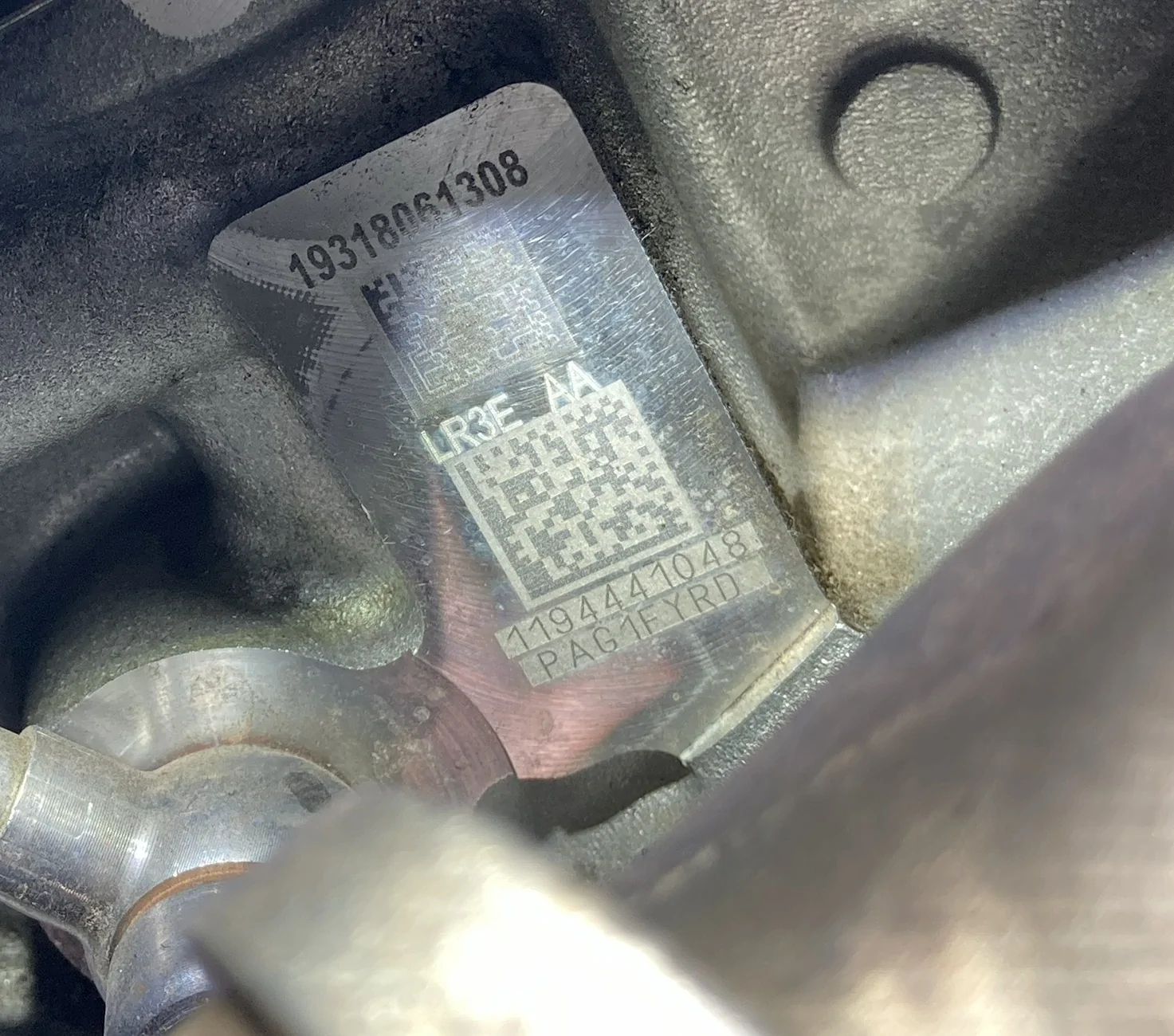
Finally something different I went and checked my engine block casting number:
PAG1FYRD.
Googled it an found:
PAG1FYRD refers to a specific engine block code (OEM: G1FYRD) for a 2018 Ford Focus ST with a 257kW (approx. 350hp) petrol engine. This part is generally found in used auto part markets (e.g., OVOKO, eBay) for the Ford Focus ST model.
So definitely different block from regular ecoboost. Is it the same block as the Focus ST? Numbers match. Same casting. Machining could be different, but I would expect a different laser marking if so. In the future (nort sure when) I will check cylinder head numbers.
1771019421385-wv.webp
 

Gentlestang

New Member
Joined
Mar 5, 2026
Threads
0
Messages
2
Reaction score
0
Location
CA
Vehicle(s)
2016 Mustang EB/PP
One important point often overlooked and contradicts the theory of casting is that early S550 Mustang EcoBoost engines were also assembled in Valencia, Spain, the same facility associated with the HPP engine. Ford later began producing Mustang EcoBoost engines at the Cleveland Engine Plant as production expanded. Because standard Mustangs originally received engines built in Valencia, it demonstrates that the Valencia-built engines were not exclusive to the HPP program. In fact, if anything, it suggests that a Valencia-built engine in a standard Mustang would logically be equivalent or arguably even preferable by default since the same manufacturing line was used before Cleveland production began. By these facts you would have to concede that standard eb's with Valencia Engines got a "stronger block", which would be non sense.

From a manufacturing standpoint, it would be highly unlikely for Ford to maintain two different block castings for what is otherwise the same 2.3-liter EcoBoost architecture, especially when the engines share the same bore spacing, liners, and overall structural design. Automakers typically avoid duplicating castings unless there is a major engineering change, because separate tooling and validation significantly increase cost and complexity. So is the HPP engine of course is better, it has some upgrades and a more aggressive tune out the box, but the block casting is the same besides the drilled cooling passages.

Additional circumstantial evidence supporting this comes from Ford’s crate engine pricing. The difference between a standard 2.3 EcoBoost crate engine and the HPP version is only about $200, which strongly indicates that the core long-block components including the block and cylinder sleeves are largely identical. The small price difference is consistent with changes to external components such as the turbocharger, calibration, or supporting hardware rather than a fundamentally different block, which a lot of the vague words spoken about the block was just marketing not facts.

In practical terms, the HPP engine’s additional performance comes primarily from components around the block, such as a larger turbocharger, revised cylinder head materials, cooling improvements, and different ECU tuning. The base block and cylinder liner design remain part of the same 2.3 EcoBoost engine family architecture used throughout Ford’s lineup.
Sponsored


Top